

Short answer: A garage door won’t open because of dead remote batteries, no power to the opener, or lock mode being on. Check the remote battery, wall button, breaker and GFCI, then the lock and sensors. If you heard a bang, or the door feels heavy to lift, stop — that points to a broken spring, and springs are a pro-only repair.
Garage Door Hub connects you with a trusted local pro. Get a clear price for your garage door repair or replacement first.
Table of Contents
-
1. Dead Remote Batteries
-
2. No Power to the Opener: Breaker, GFCI, or Unplugged
-
3. Lock Mode or Vacation Mode Is On
-
4. The Manual Slide Lock Is Engaged
-
5. Safety Sensors Are Blocked or Misaligned
-
6. Broken Spring
-
7. Opener Motor, Drive Gear, or Track Obstruction
- 8. Stop and Call a Pro If…
- 9. Symptom to Cause: What to Check First
- 10. What NOT to Do When Your Garage Door Won’t Open
Video: Garage Door Won’t Open? 7 Causes & What to Check First (2026) (Coming Soon)
Frequently Asked Questions
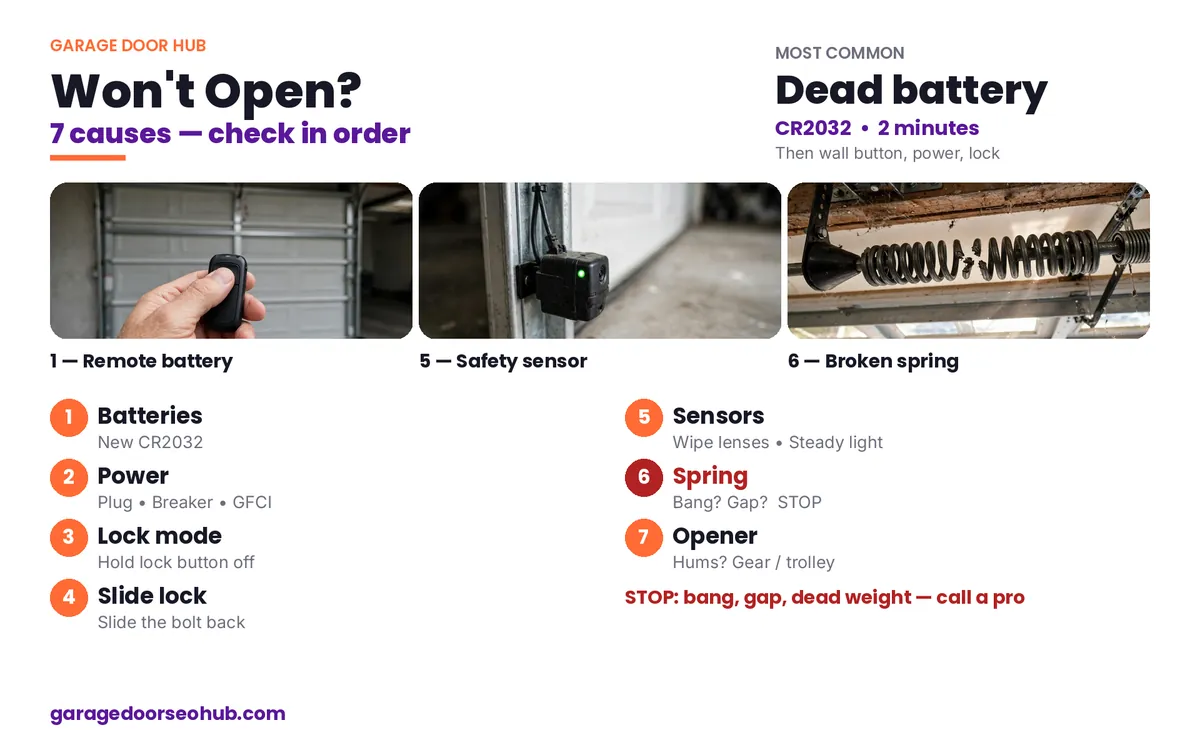
A garage door that won’t open is the most searched problem in our Garage Door Repair Guide, and one of the most fixable. Most of the time the cause is small: a battery, a tripped breaker, a forgotten lock, or a blocked sensor. Check in order, cheapest fix first, and stop the moment the signs point to a spring or a cable.
Check in this order:
- Dead remote batteries
- No power to the opener
- Lock or vacation mode
- Manual slide lock
- Safety sensors
- Broken spring
- Opener motor, drive gear, or track obstruction
1. Dead Remote Batteries
Dead batteries are the most common cause, and the cheapest to rule out. Below: the signs of a dying battery, the CR2032 most remotes take, and what to try if a fresh battery fails.
Battery signs
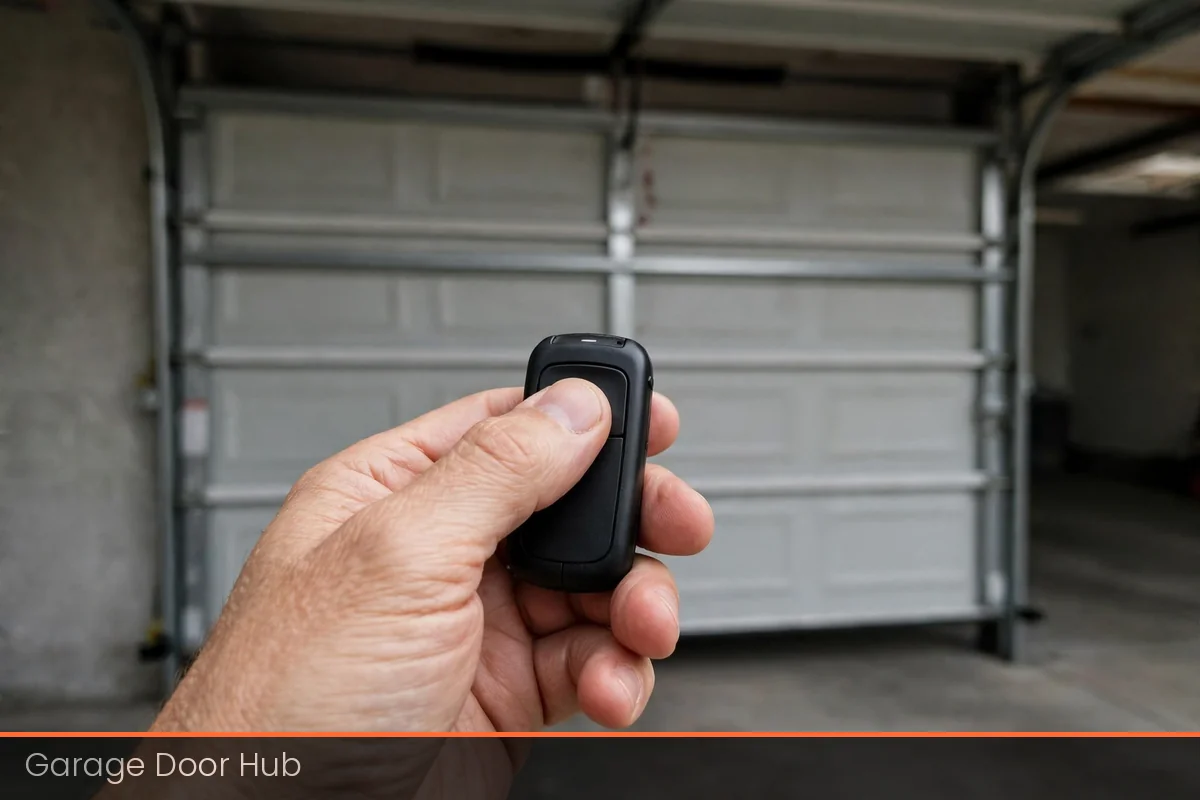
Start here — the most common cause, and two minutes to rule out. Remote batteries last two to three years and often die without warning. Most remotes take a CR2032 coin battery — swap in a fresh one and try again.
- The wall button works but the remote doesn’t.
- A dim light, or no light.
If a new battery doesn’t help, reprogram the remote. If neither works, move on to power.
2. No Power to the Opener: Breaker, GFCI, or Unplugged
An opener with no power does nothing at all: no lights, no hum, no response. Below: the three power checks — plug, breaker, GFCI — and what it means if the motor has lights but the door won’t move.
Power checks
An opener with no power does nothing at all: no lights, no hum, and no response from any button — often the answer after a power outage or a storm. Check power:
- Check the opener is plugged in.
- Check the breaker panel for a tripped breaker.
- Press Reset on the GFCI outlet — it can trip after a storm.
After an outage it may have lost its travel limits. If the motor unit has lights but the door won’t move, skip to the broken spring and opener motor sections below.
3. Lock Mode or Vacation Mode Is On
Lock mode switches the remote off on purpose while you are away. Below: how to tell it is on, and how to switch it off.
Lock mode off
Many modern openers have a lock or vacation mode: when it is on, the remote is disabled on purpose and only the wall button works — designed for holidays, so the door can’t be opened while you are away. It is easy to switch on by accident. The clue: the wall button works, the remote doesn’t, and the battery is fresh. Find the padlock light or “Lock” button, press and hold it until the light goes out, then try the remote. With a smart opener, check the app.
- Wall button works, remote doesn’t, battery fresh — that is the clue.
- Press and hold Lock until the light goes out, then try the remote.
- Smart opener: check the app.
4. The Manual Slide Lock Is Engaged
The manual slide lock is a metal bolt inside the door that slides into the track. Below: where to find it, how to slide it back, and why forcing the opener can strip the gear or bend the track.
Slide lock
Most garage doors have a manual slide lock: a metal bolt on the inside of the door that slides into the track, so you can lock the door from inside. If someone slides it shut, the opener will try to lift a locked door and fail. Look for a sliding bolt near the middle of each side, inside the door, and slide it back if it is shut. Never force the opener against a locked door — it can strip the drive gear or bend the track. If the lock is rusted shut, lubricant can free it.
- Bolt near the middle of each side, inside the door — slide it back.
- Never force the opener against a locked door.
- Rusted shut? Lubricant can free it.
5. Safety Sensors Are Blocked or Misaligned
The two photo-eye sensors sit low on each side of the door, and they can stop it opening as well as closing. Below: what they do, and the safe checks for a blocked, dirty, or out-of-line sensor.
Sensor checks
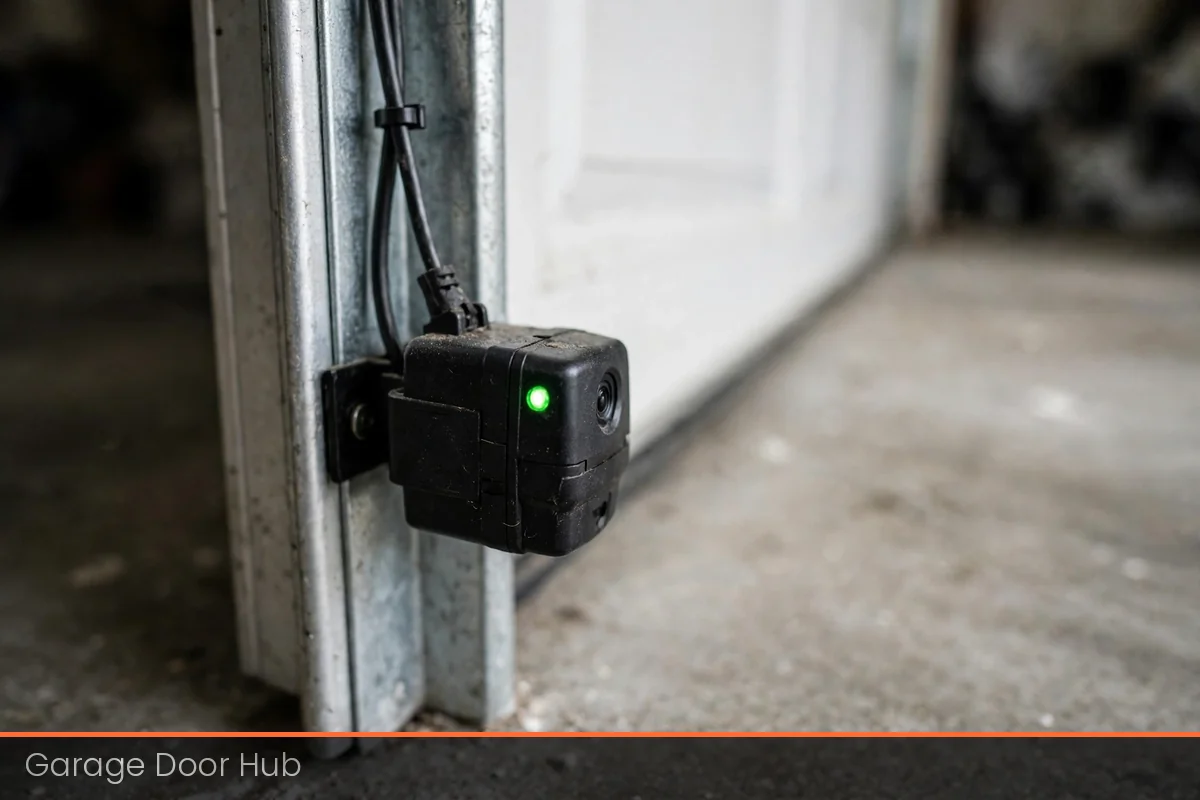
The two photo-eye sensors sit four to six inches off the ground, one on each side of the door. They are a safety device, required since 1993, and a blocked sensor usually stops closing, not opening, but a dirty or out-of-line sensor can stop it in either direction, so check it when a door opens a few inches then stops. Safe checks:
- Clear the path.
- Wipe both lenses.
- Check both lights are steady, not blinking.
A blinking light means the sensor is out of line — nudge it until the light goes steady, then tighten. If the door only closes while you hold the wall button down, that also points to the sensors, so do not bypass them. Full detail: Garage Door Sensors, Remote & Keypad Troubleshooting.
6. Broken Spring
A broken spring is the most common major cause, and the one you must not touch. Below: the signs, the replacement cost, and why the work is pro-only.
Spring signs
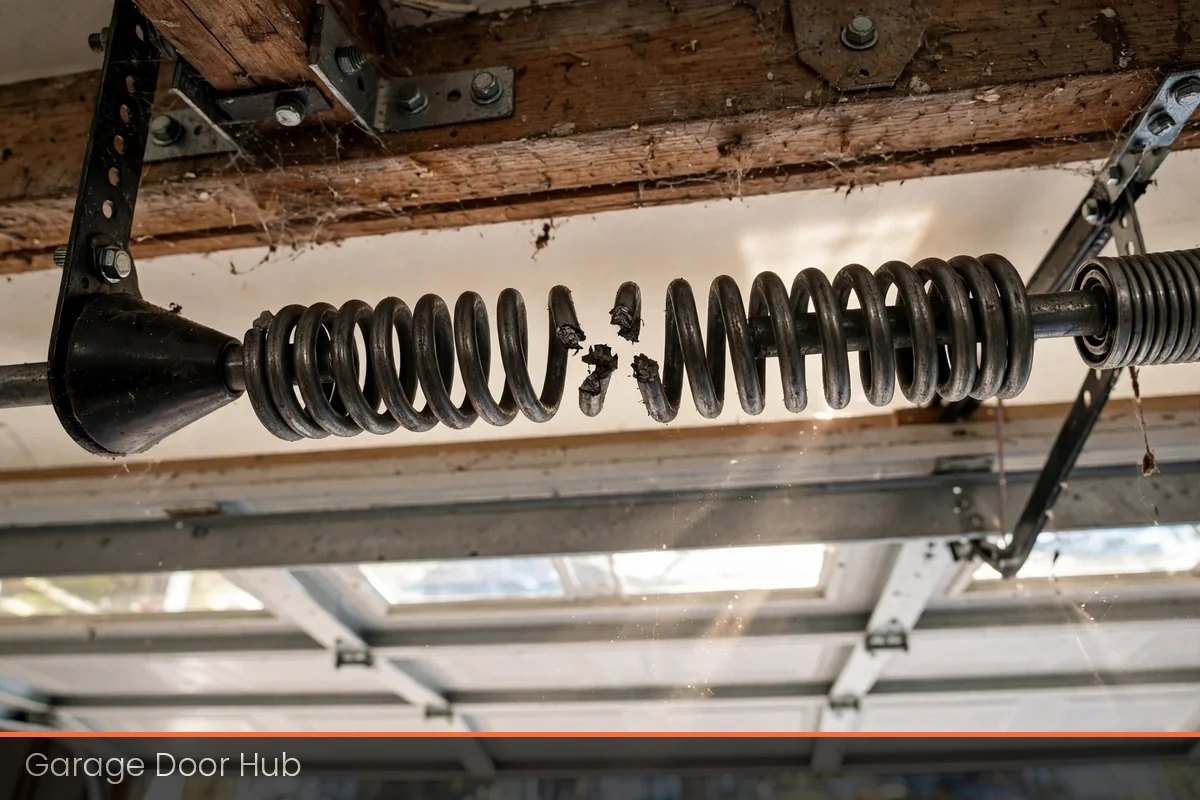
A broken spring is the most common major cause of a garage door that won’t open, and the one you must not touch. Torsion springs sit above the door; extension springs run along the sides. They carry the full weight of the door, so when one breaks the opener cannot lift it. The signs are clear:
- A loud bang, like a gunshot, when nobody was using the door.
- A visible gap in the coil of the torsion spring above the door.
- A door that lifts a few inches, then stops.
Spring prices
A single torsion spring typically costs $140 to $270 installed (HomeGuide via TrueRepairCost, 9 November 2026). A pair is $200 to $350 (Fixr, January 2025; HomeGuide, November 2026). Replace both springs even if only one broke. Full signs, costs and what a pro does: Broken Garage Door Spring? Signs, Cost & Why It’s Pro-Only. Do not repair a spring yourself. A wound torsion spring stores enough force to break bones, and DASMA says spring systems should be repaired only by trained professionals.
- Single torsion spring: $140–$270 installed.
- Pair: $200–$350.
- Replace both, even if one broke.
- Pro-only — DASMA.
7. Opener Motor, Drive Gear, or Track Obstruction
If the opener runs but the door doesn’t move, the fault is usually between the motor and the door. Below: the release cord, the drive gear, and track obstructions, with prices.
Cord and gear
If the opener runs but the door doesn’t move, the problem is often between the motor and the door. Start with the emergency release cord: if someone pulled the red cord, the trolley comes loose so you can lift the door by hand. Reconnect it by pulling the cord toward the door until the trolley clicks back. A humming motor with no movement often means a stripped drive gear — the motor spins, but the gear is worn out. Opener repair typically costs $100 to $300 (Fixr, January 2025; HomeGuide, November 2026). A full opener replacement, installed, runs $300 to $800 (Fixr, January 2025). Price your exact job with our Garage Door Opener Cost Calculator.
The track is the other suspect: a tool, a box, or a bent section can jam the rollers. Clear blockages, but do not straighten a bent track or loosen track bolts yourself, because a mistake can drop the door. Track alignment typically costs $125 to $300 (Housecall Pro via Zarla, March 2026).
- Red cord pulled? Pull it toward the door until the trolley clicks.
- Humming motor, no movement: stripped drive gear.
- Opener repair $100–$300; replacement $300–$800.
- Track alignment $125–$300; don’t straighten a bent track yourself.
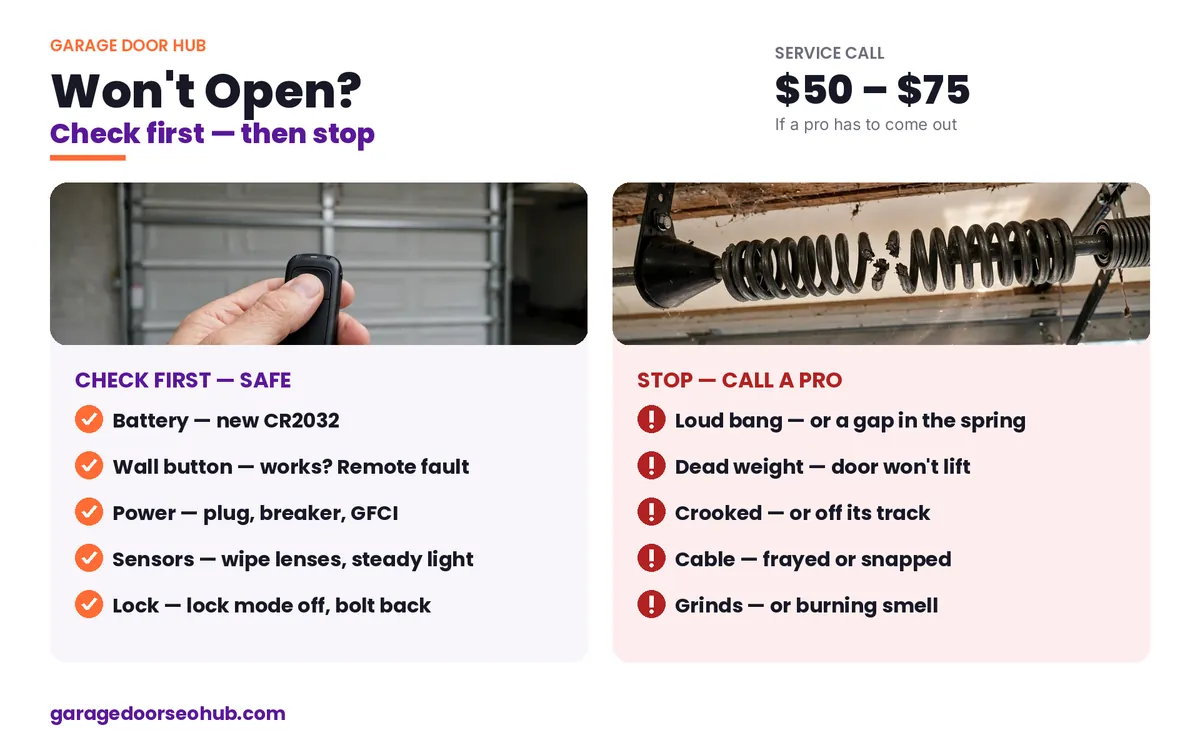
8. Stop and Call a Pro If…
Stop checking and call a local pro right away if any of these are true. Each sign below points to a spring, cable, or track fault — parts that hold dangerous tension.
- You heard a loud bang, or you can see a gap in the spring coil.
- You can see a frayed, loose, or snapped lift cable.
- The door feels like dead weight when you try to lift it by hand.
- The door hangs crooked.
- The door came off its track.
- The opener grinds or smells like burning.
These are spring, cable, and track problems — dangerous tension, pro-only. A service call typically costs $50 to $75 (HomeAdvisor, June 2026).
9. Symptom to Cause: What to Check First
Not sure which cause matches your door? Match what it is doing to the likely cause below, with the safe check to try first and whether to call a pro.
| Symptom | Likely cause | Safe check | Call a pro? |
|---|---|---|---|
| Nothing happens | Dead battery or no power | New CR2032; check plug, breaker, GFCI | No |
| Wall button works, remote doesn’t | Battery, or lock mode on | New battery; hold lock button off | No |
| Motor hums, door doesn’t move | Trolley disconnected or stripped gear | Re-engage the trolley | Yes, if stripped |
| Opens a few inches, then stops | Broken spring or sensor fault | Look for a spring gap; wipe sensors | Yes, if spring |
| Loud bang, door won’t lift | Broken spring | Don’t lift it; look for a spring gap | Yes — pro-only |
| Won’t open or close | Sensor blocked or track jammed | Clear the path; wipe lenses; check track | Yes, if bent |
10. What NOT to Do When Your Garage Door Won’t Open
A stuck door tempts quick fixes that make things worse — or dangerous. Below: the four things not to do, from pressing the button again to bypassing the sensors.
- Don’t keep pressing the button against a door that won’t lift — each press can strip the opener gear.
- Don’t lift a heavy door by hand if you suspect a broken spring — it can drop without warning.
- Don’t disconnect the emergency release and leave the door open, or wedge it open with a ladder — if the spring or cable lets go, it can fall.
- Don’t bypass the safety sensors; they stop the door closing on a person, a pet, or a car.
If the door won’t close at all, read our guide on the reverse problem: Garage Door Reverses or Won’t Close? Causes & Fixes.
Most of the time, the fix is a battery, a breaker, or a lock. Work through the seven causes in order, and get a clear price before you agree to any repair. Start at the Garage Door Hub homepage.
Video: Garage Door Won’t Open? 7 Causes & What to Check First (2026) (Coming Soon)
A 60 to 120 second video for this guide is coming soon. It will cover the seven causes in order, the wall-button and power checks first, and when to stop and call a pro. No video is embedded here yet.
Garage Door Hub connects homeowners with trusted local garage door pros. Whether you need a repair or a replacement, start by finding out what it should cost, then price your exact job with our free calculator and find a pro near you. Clear prices, honest guides, and a local pro you can call today — no jargon, no guesswork, and no surprise bills.
Frequently Asked Questions
Why won’t my garage door open?
Dead remote batteries, no power to the opener, lock or vacation mode on, the manual slide lock engaged, blocked sensors, a broken spring, or a stripped opener gear. Check them in that order.
What should I check first when my garage door won’t open?
Check the remote battery first — most take a CR2032 — then try the wall button. If the wall button works and the remote doesn’t, it’s the remote or lock mode. If nothing works, check the plug, breaker, and GFCI.
Can a broken spring stop a garage door opening?
Yes — it is the most common major cause. The opener cannot lift the door alone, and the door feels like dead weight. Signs include a loud bang, a gap in the spring coil, or a door that lifts a few inches then stops. Springs are pro-only.
Why does my opener hum but the door doesn’t move?
The trolley may be disconnected, usually because someone pulled the emergency release cord. Pull the cord toward the door until it clicks. If the trolley is connected and the motor still hums, the drive gear is likely stripped, and the opener needs repair or replacement.
Why does my garage door open a few inches then stop?
That usually means a broken spring or a sensor fault. Look for a gap in the torsion spring. If the spring looks fine, wipe both sensor lenses and check both lights are steady, not blinking. If the spring is broken, stop and call a pro.
Why won’t my garage door open after a power outage?
Check the breaker and GFCI first — either can trip during an outage or a surge. If the opener has power but still won’t run, it may have lost its travel limits. Check your manual.