

Short answer: An insulated garage door is worth it for most attached garages in 2026. Polystyrene gives R-6 to R-9, polyurethane gives R-12 to R-18, and Clopay Intellicore runs R-12.9 to R-18.4. Aim for R-12 to R-18 on an attached garage and R-6 to R-9 on a detached garage. The insulated premium is $200 to $800 (Titanium Garage Door, 31 May 2026).
Garage Door Hub connects you with a trusted local pro. Get a clear price for your garage door repair or replacement first.
Table of Contents
Garage Door R-Value at a Glance (2026)
-
1. What R-Value Means — and What It Does Not Measure
-
2. Garage Door R-Value by Construction
-
3. What Garage Door R-Value Do You Need?
-
4. What Insulation Costs — and What It Saves
-
5. How to Check R-Value Before You Buy
Video: Garage Door Insulation & R-Value 2026 | What You Need & What It Saves (Coming Soon)
Garage Door Insulation & R-Value — Frequently Asked Questions
- What R-value should my garage door be?
- Does an insulated garage door save on energy bills?
- Is an insulated garage door worth it?
- What is the difference between polystyrene and polyurethane insulation?
- What is U-factor, and how is it different from R-value?
- Is there a tax credit for an insulated garage door in 2026?
Garage door R-value is a simple idea with a tricky label. The R-value tells you how well one section of a door resists heat flow, and a higher number means more resistance. It does not tell you how the whole door performs once it is fitted, with gaps, joints and a frame. This guide explains what the number means, what the DASMA warning is, which R-value fits your garage, what insulation costs, and what it honestly saves.
Use the table first to find your door type, then read the section that fits your garage. Prices name their source and year, and where the sources disagree or a claim has no sound test behind it, this guide says so.
Garage Door R-Value at a Glance (2026)
Four builds cover almost every insulated garage door on sale. A single-layer door has no insulation at all, a polystyrene door has foam boards fitted inside the panels, a polyurethane door has foam sprayed in so it fills the space and bonds to the steel, and a premium polyurethane door such as Clopay Intellicore uses a denser foam for a higher rating. The table below gives the R-value band for each build. Our new garage door guide covers the whole buying job, from material to size to when to replace.
| Door construction | R-value | Source |
|---|---|---|
| Single-layer, no insulation | R-0 | Topical map, 15 Nov 2026 |
| Polystyrene, foam boards | R-6 to R-9 | Multiple sources, 2026 |
| Polyurethane, foam filled | R-12 to R-18 | Multiple sources, 2026 |
| Clopay Intellicore, polyurethane | R-12.9 to R-18.4 | Clopay, 2026 literature |
| Clopay Canyon Ridge, up to | R-20.4 | DoorServPro from Clopay 2026 literature, 5 Jul 2026 |
R-value at a glance
The jump from polystyrene to polyurethane is the big one: R-6 to R-9 becomes R-12 to R-18, or about double. The jump from plain polyurethane to a premium foam such as Intellicore is smaller, and the top figure of R-20.4 is for one premium model, not for polyurethane doors as a whole. Work out the rating you need with our Garage Door R-Value Calculator before you compare quotes.
- Single-layer: R-0, no insulation, cheapest and coldest.
- Polystyrene: R-6 to R-9, good for a detached garage.
- Polyurethane: R-12 to R-18, the pick for most attached garages.
- Intellicore: R-12.9 to R-18.4, the top of the polyurethane range.
- Canyon Ridge: up to R-20.4, one premium model, not a whole class.
1. What R-Value Means — and What It Does Not Measure
R-value measures how well a material resists heat flow. A higher R-value means heat moves through it more slowly, so the garage stays warmer in winter and cooler in summer. For a garage door, the number is worked out for one section of the door, not for the whole door as fitted. That gap is the whole point of this section, because a big R-value on a sales sheet can hide a draughty door.
The DASMA warning
The Door and Access Systems Manufacturers Association warns about this in its technical data sheet TDS 163, revised July 2022. A door R-value is calculated for one section only, not measured on the whole door. Joints between sections, the frame, the bottom seal and the sides all let heat through, and none of them are in that one-section number.
- DASMA TDS 163, revised July 2022: door R-value is a section-only calculation.
- It is not a whole-door test, so do not read it as one.
- Joints, frame and seals are not in the number.
- Two doors with the same R-value can feel different once fitted.
U-factor, the whole-door test
U-factor is the whole-door test, and it is the number to ask for when you want to compare fitted doors. It measures how much heat passes through the whole door, including its joints and frame, and a lower U-factor means less heat passes through. Not every maker prints a U-factor, so if one quote gives it and another does not, ask the second maker for it before you compare the two.
- U-factor tests the whole door, not one section.
- Lower U-factor means less heat loss; higher R-value means more resistance.
- Ask for the U-factor on every quote you compare.
- Compare U-factors only where both doors were tested the same way.
2. Garage Door R-Value by Construction
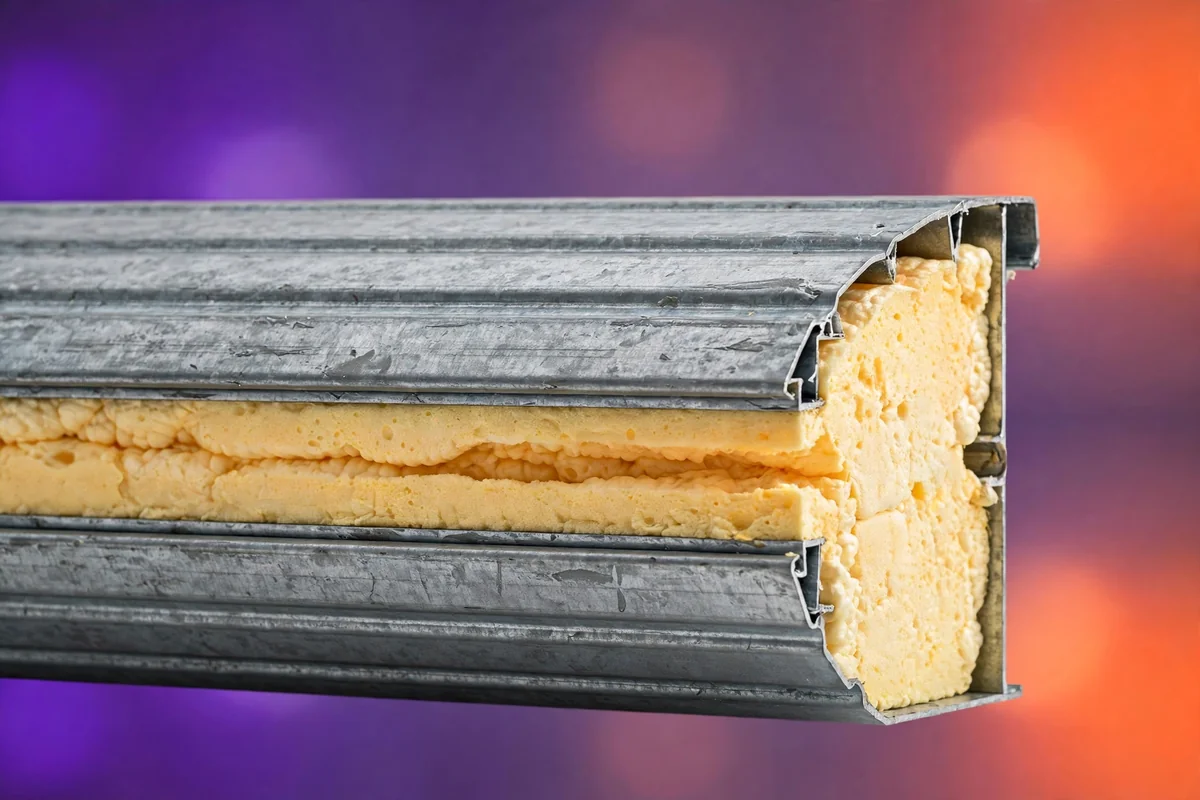
How a door is built sets its R-value more than its brand does. A single steel skin has almost no resistance to heat. Foam boards add a useful amount, and foam that fills the whole panel adds about double that. Thickness matters too: a thicker panel holds more foam, so it rates higher than a thin panel of the same type.
Single-layer doors
A single-layer door is one skin of steel, with no insulation and no back panel. Its R-value is R-0, so it does almost nothing to slow heat flow. It is the cheapest door to buy, the lightest to lift, and the noisiest and coldest to live with. It suits a detached garage that is used only to store a car, and little else.
- R-value: R-0, no insulation.
- Build: one steel skin, no back panel.
- Feel: cold to the touch in winter, loud when it moves.
- Best for: a detached garage used only for parking.
Polystyrene doors
A polystyrene door has rigid foam boards fitted inside the steel panels. It gives R-6 to R-9 (multiple sources, 2026). The boards do not fill every gap, and they do not bond to the steel, so the door is less stiff and less quiet than a foam-filled door. It is a fair middle step: much warmer than a single-layer door, and much cheaper than polyurethane.
- R-value: R-6 to R-9 (multiple sources, 2026).
- Build: foam boards fitted inside the panels.
- Feel: warmer and quieter than single-layer, less stiff than foam-filled.
- Best for: a detached garage, or an attached garage in a mild place.
Polyurethane doors
A polyurethane door has liquid foam sprayed into the panel, where it sets, fills the space and bonds to the steel on both faces. It gives R-12 to R-18 (multiple sources, 2026). Clopay Intellicore, a denser polyurethane foam, runs R-12.9 for a 1 3/8 inch panel to R-18.4 for a 2 inch panel (Clopay, 2026 literature). The bonded foam makes the door stiffer, stronger and quieter as well as warmer, which is why it costs more.
- R-value: R-12 to R-18 (multiple sources, 2026).
- Clopay Intellicore: R-12.9 to R-18.4 (Clopay, 2026 literature).
- Build: foam fills the panel and bonds to both steel faces.
- Feel: warm, stiff, strong and quiet, the best of the three builds.
3. What Garage Door R-Value Do You Need?
What you need depends on how the garage is used, not on the door alone. An attached garage shares a wall with the house, so heat that leaves the garage also cools the rooms next to it. A detached garage stands alone, so its heat loss matters less. A heated workshop, or a room above the garage, needs the most insulation of all. The material you pick shapes this too, so read our best garage door material guide before you settle on a build.

Attached garages
An attached garage needs R-12 to R-18. That is polyurethane, not polystyrene, because the garage shares a wall with heated rooms and the door is the largest opening in that wall. A polystyrene door at R-6 to R-9 will leave the garage cold in winter, and the rooms next to it will feel it too.
- Aim for R-12 to R-18 on an attached garage.
- That means polyurethane, or Clopay Intellicore at R-12.9 to R-18.4.
- Check the seal round the door too, or the R-value will not do its job.
- If the garage has a room above it, read the heated-workshop section below.
Detached garages
A detached garage needs R-6 to R-9. That is polystyrene, and it is enough where the garage is used only to park cars and store tools. Heat loss from a detached garage does not cool the house, so paying for polyurethane there buys comfort you may not feel. If you heat the detached garage in winter, treat it like an attached garage and aim higher.
- Aim for R-6 to R-9 on a detached garage used only for parking.
- That means polystyrene, not polyurethane.
- If you heat the garage, aim for R-12 to R-18 instead.
- A single-layer door at R-0 is still a cold choice, even for a detached garage.
Heated workshop or room above
A heated workshop, or a room above the garage, needs R-16 or more. That is the top end of polyurethane, such as Intellicore at R-18.4 on a 2 inch panel, or Canyon Ridge at up to R-20.4. The garage floor and ceiling matter here too, so a high R-value door alone will not keep a room above warm if the ceiling has no insulation. Ask a pro to look at the whole garage, not just the door.
- Aim for R-16 or more where the garage is heated or has a room above.
- That means top-end polyurethane, such as Intellicore R-18.4 or Canyon Ridge up to R-20.4.
- Check the garage ceiling and walls too, or the door will not fix the cold room.
- Seals matter most here, because a gap under the door wastes the best insulation.
4. What Insulation Costs — and What It Saves
Insulation costs extra, and the extra is not small. An insulated door costs $200 to $800 more than the same door without insulation (Titanium Garage Door, 31 May 2026). A second source, AboveBoardPros, 2026, gives $300 to $800, so the two agree on the top end and differ by $100 at the low end. An insulated door as a whole costs $1,100 to $4,200 (Angi, 21 September 2026), which covers the door, the insulation and the fitting. What it saves is harder to pin down, and this section is honest about that.
The price premium
The premium is the gap between the same door with and without insulation, not the price of the whole door. Polyurethane costs more than polystyrene, because the foam fills the panel and bonds to the steel. Work out what the saving could be worth to you with our Garage Door Insulation Savings Calculator before you pay the premium.
- Premium: $200 to $800 more (Titanium Garage Door, 31 May 2026).
- Second source: $300 to $800 (AboveBoardPros, 2026), kept separate, not blended.
- Insulated door, whole job: $1,100 to $4,200 (Angi, 21 September 2026).
- Polyurethane costs more than polystyrene, and premium foam costs most.
Honest savings
Honest savings are hard to prove, because no controlled test of whole-house energy bills before and after a garage door change was found in the sources used here. Dealers often quote a temperature difference of 10 to 20 degrees Fahrenheit between an insulated and a non-insulated garage, but that is dealer anecdote, not a controlled test, so this guide does not present it as a measured saving. The “up to 71%” energy saving figure is a Clopay engineers’ comparison study, not a US Department of Energy study: no DOE garage-door study was found in an energy.gov search on 15 November 2026, so do not take the 71% figure as a DOE finding.
- Temperature difference of 10 to 20 degrees Fahrenheit: dealer anecdote, not a controlled test.
- “Up to 71%” saving: a Clopay engineers’ comparison study, not a DOE study.
- No DOE garage-door study was found (energy.gov search, 15 November 2026).
- Real savings depend on the garage use, the climate, the seals and the rest of the house.
5. How to Check R-Value Before You Buy
Check the rating before you sign, not after the door is fitted. A quote that says only “insulated” tells you nothing, because polystyrene at R-6 and polyurethane at R-18 are both insulated. The steps below run in order, and they take a few minutes on the phone or in the showroom. Measure the opening first, because the size sets the price: our standard garage door sizes guide shows how to measure it.
- Ask for the exact door model, the insulation type and the R-value in writing.
- Ask for the U-factor as well, so you can compare whole doors, not sections.
- Check the panel thickness: Intellicore is R-12.9 at 1 3/8 inches and R-18.4 at 2 inches.
- Compare doors of the same size, or the prices will not line up.
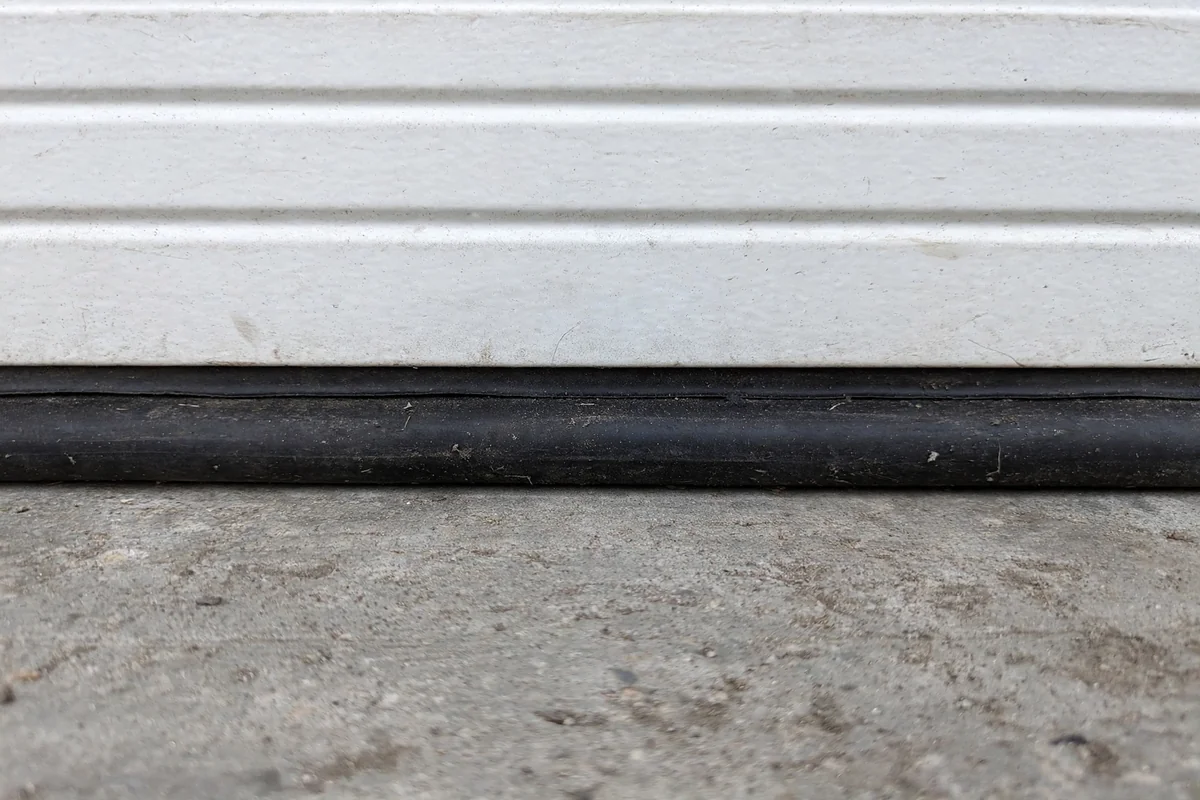
- Check the quote names the seals, the frame and the fitting, not just the door.
Read the label
Many doors carry a label on the inside face with the model, the maker and the rating. Read it before the old door is taken away, and keep a photo of it. If the label gives only an R-value, ask the maker for the U-factor too, because the label alone does not tell you how the whole door performs once fitted.
- Find the label on the inside face of the door.
- Note the model, the maker and the R-value, and keep a photo.
- Ask for the U-factor if the label does not give it.
- Check the label matches the model named on your quote.
Questions to ask
Ask these questions before you sign, and get the answers in writing on the quote. A good installer will answer them all without fuss, and a vague answer is a sign to get a second quote.
- What insulation type is this: polystyrene or polyurethane?
- What R-value, and for which panel thickness?
- What is the U-factor for the whole door?
- What seals come with the door, and are they in the price?
- What warranty covers the door, the insulation and the fitting?
Video: Garage Door Insulation & R-Value 2026 | What You Need & What It Saves (Coming Soon)
A 60 to 120 second video for this guide is coming soon. It will cover what R-value means, the DASMA warning, R-value by construction, what R-value you need for your garage, the cost premium, and honest savings. No video is embedded here yet.
Garage Door Hub connects homeowners with trusted local garage door pros. Need a repair? Need a replacement? Start here. First, find out what it should cost. Then, price your exact job with our free calculator. Next, find a pro near you. Fast. No jargon. No guesswork. No surprise bills. Just clear prices, honest guides, and a local pro you can call today.
Garage Door Insulation & R-Value — Frequently Asked Questions
What R-value should my garage door be?
Aim for R-12 to R-18 on an attached garage, R-6 to R-9 on a detached garage, and R-16 or more where the garage is heated or has a room above it.
Does an insulated garage door save on energy bills?
It can help, most of all on an attached garage, but no controlled test of whole-house energy bills was found in the sources used here. Do not take the “up to 71%” figure as a DOE finding: it is a Clopay engineers’ comparison study.
Is an insulated garage door worth it?
Yes, for most attached garages, where polyurethane at R-12 to R-18 keeps the garage and the rooms next to it warmer and quieter. For a detached garage used only for parking, polystyrene at R-6 to R-9 is enough.
What is the difference between polystyrene and polyurethane insulation?
Polystyrene is foam boards fitted inside the panels, giving R-6 to R-9. Polyurethane is foam sprayed in so it fills the panel and bonds to the steel, giving R-12 to R-18. Polyurethane is warmer, stiffer and quieter.
What is U-factor, and how is it different from R-value?
R-value is calculated for one section of a door, and a higher number means more resistance to heat flow. U-factor is the whole-door test, and a lower number means less heat passes through the whole fitted door.
Is there a tax credit for an insulated garage door in 2026?
No. The 25C federal tax credit, 30% up to $250 per door, ended for property placed in service after 31 December 2025. Do not count on it in a 2026 quote.