

Short answer: A new garage door lasts 15 to 30 years, depending on its material (Angi, updated 10 April 2026). Steel lasts 15 to 30 years, solid wood 20 to 30 years, and vinyl or composite 25 to 35 years (First Choice, 2026). The opener lasts 10 to 15 years, and springs last about 10,000 cycles, or 7 to 10 years.
Garage Door Hub connects you with a trusted local pro. Get a clear price for your garage door repair or replacement first.
Table of Contents
-
1. How Long Does a New Garage Door Last by Material?
-
2. What Shortens a Garage Door’s Life?
-
3. Maintenance That Adds Years
-
4. Signs Your Door Is at the End of Its Life
- 5. When Age Alone Means Replace
Video: How Long Does a New Garage Door Last? 2026 (Coming Soon)
How Long Does a New Garage Door Last? — Frequently Asked Questions
A garage door does not wear out on a fixed date. Its life depends on what it is made of, how often it opens, how much care it gets and how hard the weather is on it. Most households open and close the door three to four times a day, so the moving parts work far harder than the panels do. This guide gives the lifespan for each material, the parts that give out first, what takes years off a door, and the simple care that adds them back. It is one part of our full new garage door guide, which covers cost, materials, insulation, styles and choosing a new door in depth.
1. How Long Does a New Garage Door Last by Material?
Lifespan is set first by material and second by how the door is built. A single-layer steel door lasts less long than a triple-layer steel door, even though both are steel, and a wood door that is kept painted lasts far longer than one left to the weather. The table below gives the typical lifespan for each material (Angi, updated 10 April 2026), with vinyl and composite from First Choice (2026). Read your own door against the row that matches it, not against the overall range.
| Material / part | Typical lifespan | Source |
|---|---|---|
| Overall, all materials | 15–30 years | Angi, 10 Apr 2026 |
| Steel | 15–30 years (single-layer 15–20, triple-layer 25–30) | Angi, 10 Apr 2026 |
| Solid wood | 20–30 years | Angi, 10 Apr 2026 |
| Wood composite | 15–20 years | Angi, 10 Apr 2026 |
| Aluminium | 15–25 years | Angi, 10 Apr 2026 |
| Fibreglass | 20–25 years | Angi, 10 Apr 2026 |
| Vinyl / composite | 25–35 years | First Choice, 2026 |
| Opener | 10–15 years | Angi; NAHB, 2007 |
| Springs | 10,000 cycles / 7–10 years | Angi, 10 Apr 2026 |
What the table shows
The spread is wide, and that is the point: the longest-lived doors last about twice as long as the shortest-lived ones. Vinyl and composite sit at the top at 25 to 35 years, triple-layer steel reaches 25 to 30 years, and solid wood reaches 20 to 30 years when it is cared for. Wood composite and single-layer steel sit at the bottom of the range. If you are choosing a door now, our comparison of the best garage door material sets cost, care and lifespan side by side for each material.
- Vinyl and composite last longest overall: 25 to 35 years (First Choice, 2026).
- Triple-layer steel lasts 25 to 30 years, while single-layer steel lasts 15 to 20 years.
- Solid wood lasts 20 to 30 years, but only with regular care and refinishing.
- Aluminium lasts 15 to 25 years, and fibreglass lasts 20 to 25 years.
- The overall range for any new door is 15 to 30 years (Angi, 10 April 2026).
The parts that wear out first
Springs are the shortest-lived working part: about 10,000 cycles, or 7 to 10 years. Work out your own door’s remaining life with our Garage Door Lifespan Calculator, then plan for the parts below, which all give out before the panels do.
- Opener: 10 to 15 years (Angi; NAHB, 2007), so most doors need one new opener in their life.
- Rollers: they wear, get noisy and run rough long before the panels fail.
- Cables: they fray with use, and a frayed cable is a job for a pro, not a home fix.
- Panels: they last longest, unless rust, rot or a hard knock gets to them first.
2. What Shortens a Garage Door’s Life?
A door rarely fails all at once. It loses years a little at a time, through care that is skipped, a door that runs out of line, weather that is never kept out, and use that is heavier than the parts were built for. The good news is that most of these are in your hands. Heat is the hardest to fix by care alone, and that is where insulation helps: our guide to garage door insulation and R-value explains what level suits an attached garage and what it costs.
No maintenance and a door out of balance
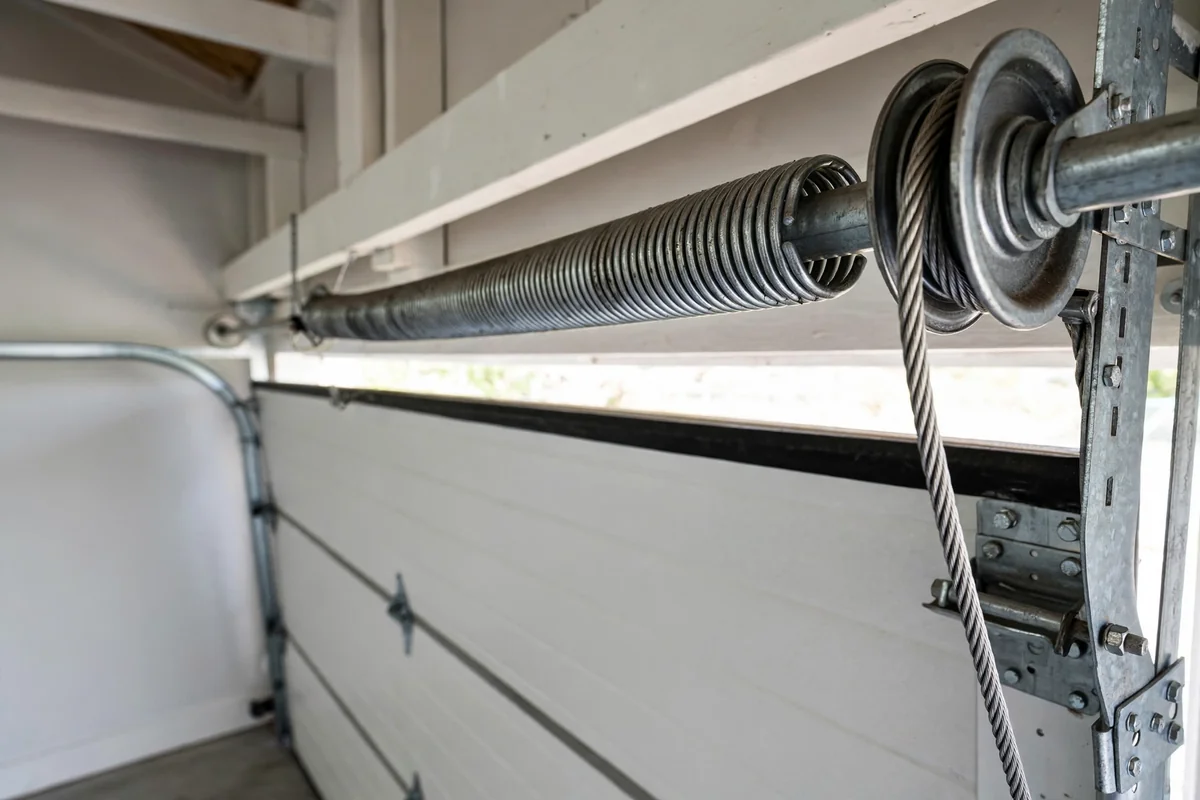
A door that gets no care wears out years early, because dry hinges and rollers grind instead of rolling, and loose bolts let the door shake itself out of line. A door out of balance is worse still: one side carries more weight than the other, so the springs, cables and opener all work harder on every cycle. The fix is small and regular, and it is covered in the next section.
- No lubrication: hinges, rollers and springs run dry and wear fast.
- Loose hardware: bolts work loose with vibration and let the door run out of line.
- A door out of balance: springs and opener strain on every open and close.
- Dirty tracks: grit in the track wears rollers and makes the door run rough.
Rust, heat and high daily use
Weather and use set the pace of wear even on a door that is cared for. Rust starts where the coating is scratched or where damp air sits against bare steel, and it eats through panels if it is left alone. Heat dries out seals and fades finishes, and a household that opens the door six or eight times a day will wear springs and rollers out far sooner than one that opens it twice.
- Rust and humidity: worst on bare or scratched steel, and in damp or coastal air.
- Heat and sun: dries seals, fades finishes and warps some materials.
- High daily cycles: more opens and closes means fewer years from the same springs.
- WD-40 as a lubricant: it is not a lasting lubricant for a garage door, so use silicone or white lithium lubricant instead.
3. Maintenance That Adds Years
Maintenance is the cheapest way to add years to a garage door, and it takes less than an hour a year. The routine below has two parts: a short check every three months that you can do yourself, and a pro inspection once a year for the parts that are not safe to touch at home. Springs and cables are pro-only, so the yearly visit covers those, while the three-month check covers lubrication, bolts and tracks.
Your three-month check, in order
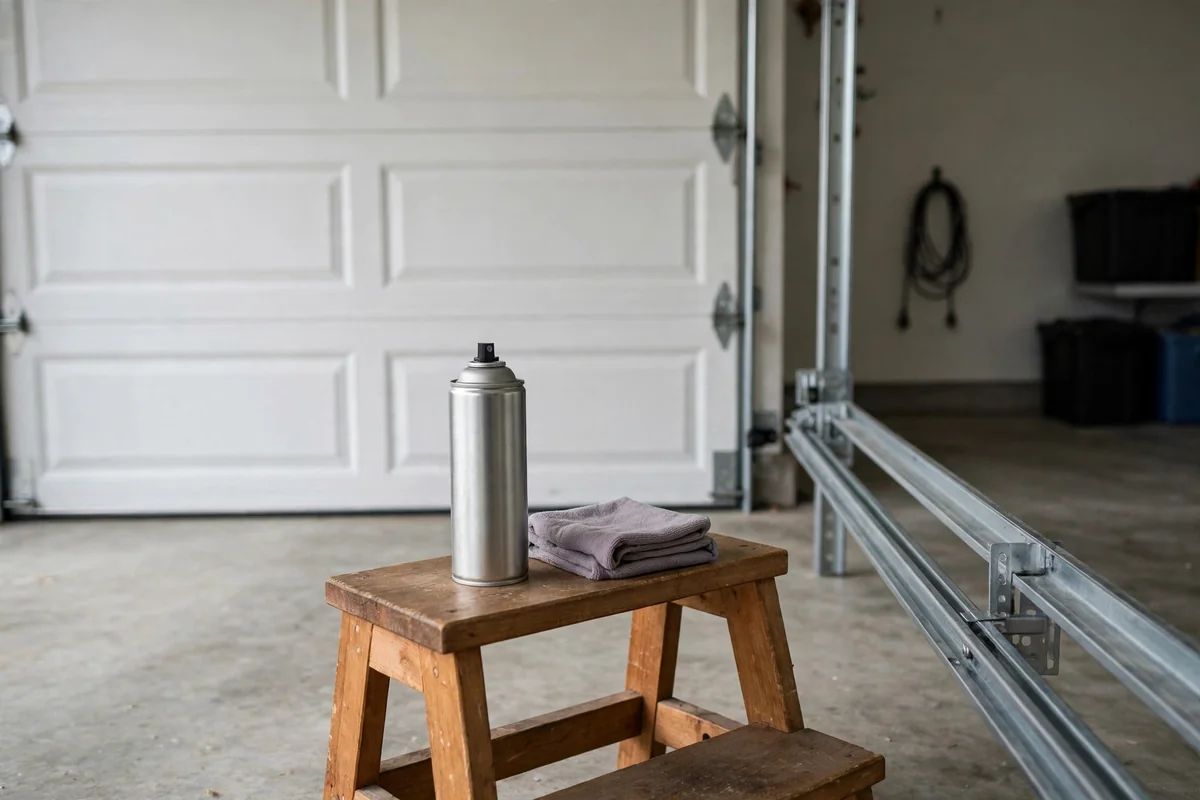
Do these three steps in order, every three months. They take about fifteen minutes, and each one is safe to do at home with the door closed and the opener unplugged.
- Lubricate the hinge pivots, roller bearings and springs with silicone or white lithium lubricant. Do not use WD-40 as a lubricant, and do not grease the tracks.
- Tighten any loose bolts and hardware, and check the brackets that hold the tracks to the wall.
- Wipe the tracks clean and clear away grit, then wipe the sensor lenses clean.
Once a year: a pro inspection
Once a year, have a pro look at the door. The yearly visit is the one that catches the faults you cannot see from the floor: worn springs, frayed cables, a door out of balance and an opener safety reverse that no longer works as it should. Book it at the same time each year, so it does not slip.
- Springs and cables checked by a pro: never try to adjust them yourself.
- Door balance checked, and track alignment checked.
- Opener safety reverse tested, and opener force settings checked.
- Weather seal and bottom seal checked for gaps and wear.
4. Signs Your Door Is at the End of Its Life
End of life does not arrive as one big failure. It shows as a set of small signs that keep coming back, even after a repair. The signs below mean the door is worn out, not that one part has failed, so the next step is to have a pro look at the whole door rather than to keep fixing parts one by one. Our Repair guides cover each of these faults in full, with costs and what to do next.
Slow, jerky and noisy
A door that has slowed down, moves in jerks or has grown loud is telling you its moving parts are worn. Rollers wear flat, hinges dry out, and the opener strains to lift a door that no longer runs free. Noise on its own can be fixed with lubrication, but noise that stays after care, on a door past its expected life, points to wear across the whole system.
- Slow: the door takes far longer to open or close than it used to.
- Jerky: the door stops, starts or shudders as it moves.
- Noisy: grinding, squealing or rattling that stays after lubrication.
- Heavy: the door feels far heavier by hand than it used to, which points to worn springs.
Sagging and worn panels
Panels show age in a way you can see from the street. A door that sags, hangs out of line or has panels that are warped, cracked or rusted through has reached the end of its structural life, and no single part swap will put it right. Call a pro to look at the whole door, and ask for a replacement price alongside any repair price.
- Sagging: one side sits lower than the other, or the door hangs crooked.
- Warped or cracked panels, often from heat, damp or a hard knock.
- Rust through the bottom panel, or rot through a wood panel.
- Gaps at the edges where the door no longer seals against the frame.
5. When Age Alone Means Replace
Age alone does not force a replacement. A sound steel door that is 20 years old and still runs smooth can have years left in it, while a neglected door can be worn out at 12. What matters is age plus condition: a door past the top of its range in the table above, that keeps needing parts, is at the end of its life even if each single fix still looks cheap. Two or three repairs in a year on an old door usually cost more over time than a new door, and they leave you with an old door at the end of it.
For the full repair-or-replace maths, including the 50 percent rule and a worked example, see our guide Repair vs Replace Your Garage Door? The 50% Rule + Cost Per Year. This post stays with age and lifespan only, and that guide carries the decision itself.
Video: How Long Does a New Garage Door Last? 2026 (Coming Soon)
A 60 to 120 second video for this guide is coming soon. It will cover lifespan by material, the parts that wear out first, what shortens a door’s life, and the maintenance that adds years. No video is embedded here yet.
Garage Door Hub connects homeowners with trusted local garage door pros. Need a repair? Need a replacement? Start here. First, find out what it should cost. Then, price your exact job with our free calculator. Next, find a pro near you. Fast. No jargon. No guesswork. No surprise bills. Just clear prices, honest guides, and a local pro you can call today.
How Long Does a New Garage Door Last? — Frequently Asked Questions
How long does a new garage door last?
A new garage door lasts 15 to 30 years overall (Angi, 10 Apr 2026). Steel lasts 15 to 30 years, solid wood 20 to 30 years, and vinyl or composite 25 to 35 years (First Choice, 2026).
How long does a garage door opener last?
A garage door opener lasts 10 to 15 years (Angi; NAHB, 2007). Most doors need one new opener in their life, and the opener usually gives out before the panels do.
What shortens a garage door’s lifespan?
No maintenance, a door out of balance, rust and humidity, heat, high daily use, and WD-40 used as a lubricant. Regular care and a yearly pro inspection add years back.
Does garage door maintenance really extend its life?
Yes. Lubricate every 3 months, tighten hardware quarterly, and get a pro inspection once a year. Springs and cables are pro-only, so leave those to the yearly visit.
When should I replace my garage door?
When it is past its expected lifespan, keeps needing parts, sags, or its panels are warped or rusted through. Age plus condition decides it, not age alone.
Which garage door material lasts longest?
Vinyl or composite lasts longest at 25 to 35 years (First Choice, 2026). Triple-layer steel is next at 25 to 30 years (Angi, 10 Apr 2026).