

Short answer: A hurricane-rated garage door in Miami starts from $2,250 for a single door and $3,800 for a double door, installed (CMC Door Service, October 2026). The rating is a design pressure in pounds per square foot, not a wind speed. A 9×7 single door on a one-storey home must hold +35.2/−39.8 PSF, and Miami-Dade design winds reach 175 mph. Doors there must also pass large-missile impact tests.
Garage Door Hub connects you with a trusted local pro. Get a clear price for your garage door repair or replacement first.
Table of Contents
Hurricane-Rated Garage Doors at a Glance (2026)
-
1. Clopay WindCode W1–W9 — Ratings Explained
-
2. Florida Rules — HVHZ, Miami-Dade and Broward
-
3. How to Check If Your Door Is Hurricane Rated
-
4. Hurricane Garage Door Cost in Florida (2026)
-
5. Insurance — What an Impact-Rated Door Saves You
-
6. What to Ask Before You Buy
Video: Hurricane & Impact-Rated Garage Doors 2026 (Coming Soon)
Hurricane & Impact-Rated Garage Doors — Frequently Asked Questions
A garage door is the largest opening in most homes, and in a hurricane it is often the weakest one. When wind gets in through a failed door, pressure builds inside the house and can lift the roof off. That is why Florida’s toughest counties demand rated doors, and why the rating is measured in pressure, not in miles per hour. This guide explains hurricane rated garage doors, what the WindCode bands mean, what Florida asks for, what the doors cost in 2026, and what they can save on insurance. For a price on your exact job first, work out the wind load with our Garage Door Wind Load Calculator.
Hurricane-Rated Garage Doors at a Glance (2026)
Every figure below names its source and year, and city prices are kept apart because they disagree. Do not blend them into one national number. Miami starts from $2,250 for a single door and $3,800 for a double, installed (CMC Door Service, October 2026), while Coral Gables runs higher and Fort Myers runs lower. The rating itself is a design pressure in pounds per square foot, and the two counties with the strictest rules in the country are Miami-Dade and Broward.
| What matters | Figure | Source |
|---|---|---|
| Miami, installed, single / double | From $2,250 single / from $3,800 double | CMC Door Service, Oct 2026 |
| Miami-Dade design wind speed | 175 mph | CMC Door Service, Oct 2026 |
| Broward design wind speed | 170 mph | CMC Door Service, Oct 2026 |
| Required pressure, 9×7 single, 1 storey | +35.2/−39.8 PSF | Clopay Florida Edition brochure, 2014 code |
| Required pressure, 16×7 double, 1 storey | +33.7/−37.5 PSF | Clopay Florida Edition brochure, 2014 code |
| Rated vs non-rated premium | $800–$1,500 | Palm Beach, 2026 |
Wind speed is not the rating
Dealers often quote a wind speed, but the code asks for a design pressure, and the two are not the same thing. Wind speed is what the storm brings. Design pressure is the force that speed puts on your exact door, at your exact address, and it changes with the size of the door, the height of the house, and how open the land around it is.
- Wind speed is the storm. Design pressure is the force on your door.
- The same wind speed gives a different pressure on a big door than on a small one.
- Compare doors by their PSF rating, not by a miles-per-hour claim.
The three numbers that matter
Three numbers decide whether a door passes: the design pressure it can hold, the impact test it passed, and the approval number that proves both. Ask for all three before you sign, and check the approval number yourself.
- Design pressure in PSF, positive and negative.
- Impact test passed: large-missile or small-missile.
- Approval number: Florida Product Approval or Miami-Dade NOA.
1. Clopay WindCode W1–W9 — Ratings Explained
Clopay’s WindCode scale is the most used way to sort hurricane-rated garage doors, and it runs from W1 up to W9. Each step is a design-pressure band in pounds per square foot, and the whole scale covers wind speeds from 90 mph to more than 150 mph (Clopay, accessed 15 November 2026). A higher W number means the door holds more pressure, not that it survived a higher wind speed in a test.
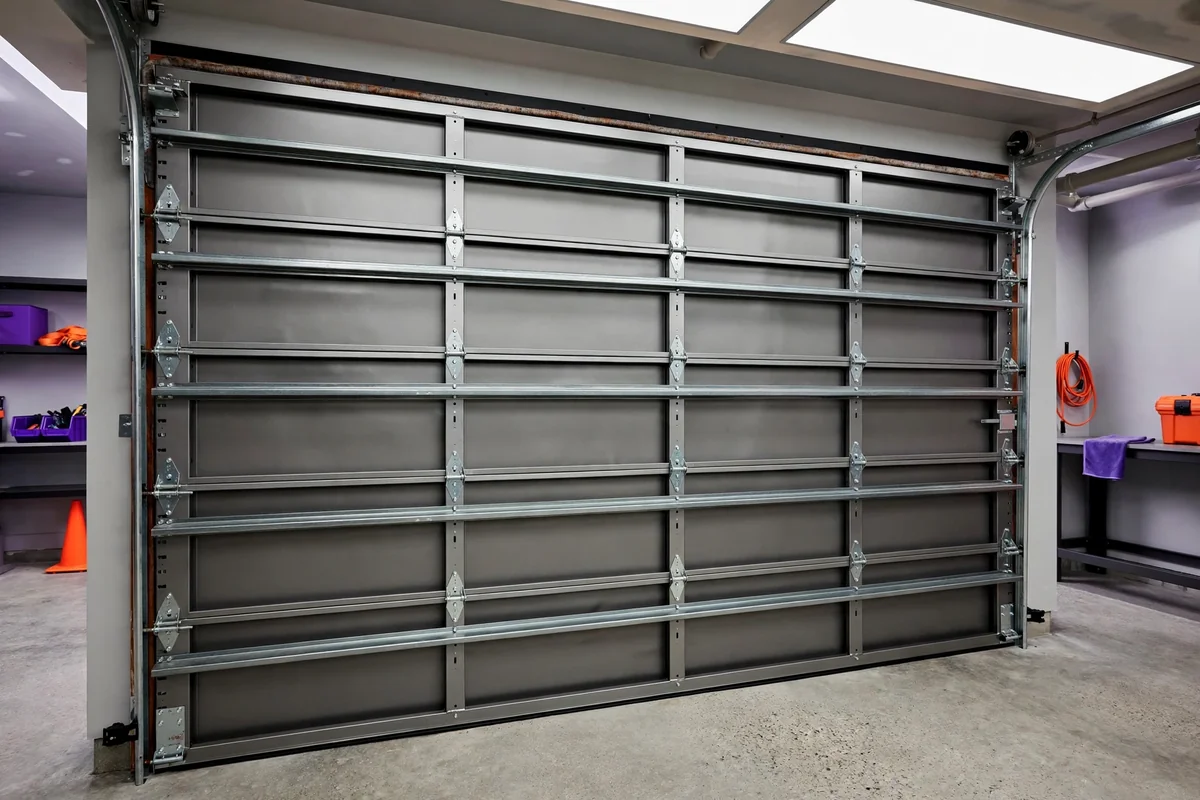
The WindCode scale
Clopay publishes nine bands, W1 to W9, each one a range of design pressure. The two ends of the scale are shown below. The bands in between sit between these two, and your dealer should name the exact band your door carries, not just say it is hurricane rated.
| WindCode rating | Design pressure (PSF) | Wind speeds covered by the scale |
|---|---|---|
| W1 (lowest) | ±12.5–16.5 | From 90 mph |
| W9 (highest) | ±62.0–72.0 | More than 150 mph |
Source: Clopay, accessed 15 November 2026. Do not trust the dealer claim that a door is rated “up to 240 mph” — no verified source backs it, and it does not match the WindCode scale.
- W1 is the lowest band, at ±12.5–16.5 PSF.
- W9 is the highest band, at ±62.0–72.0 PSF.
- The scale covers wind speeds from 90 mph to more than 150 mph.
- A “240 mph” claim is not backed by any verified source — ignore it.
Which WindCode rating you need
The rating you need is set by your address, not by the door you like. Your county’s design wind speed, your exposure to open land or water, the size of the door, and the height of the house all feed into the pressure your door must hold. Ask the dealer to show the wind-load calculation for your address, then match it to the WindCode band.
- Ask for the design pressure your address needs, in PSF.
- Match that pressure to a WindCode band — the band must cover it.
- A bigger door usually needs a stronger rating than a small one at the same address.
- Check the rating against your standard garage door sizes — size and rating go together.
2. Florida Rules — HVHZ, Miami-Dade and Broward
Florida has the strictest garage door rules in the country, and the strictest part of Florida is the High Velocity Hurricane Zone, or HVHZ. That zone is just two counties: Miami-Dade and Broward. If you live there, a standard door is not an option — the door must be rated, impact tested, and approved, and the permit office will check.
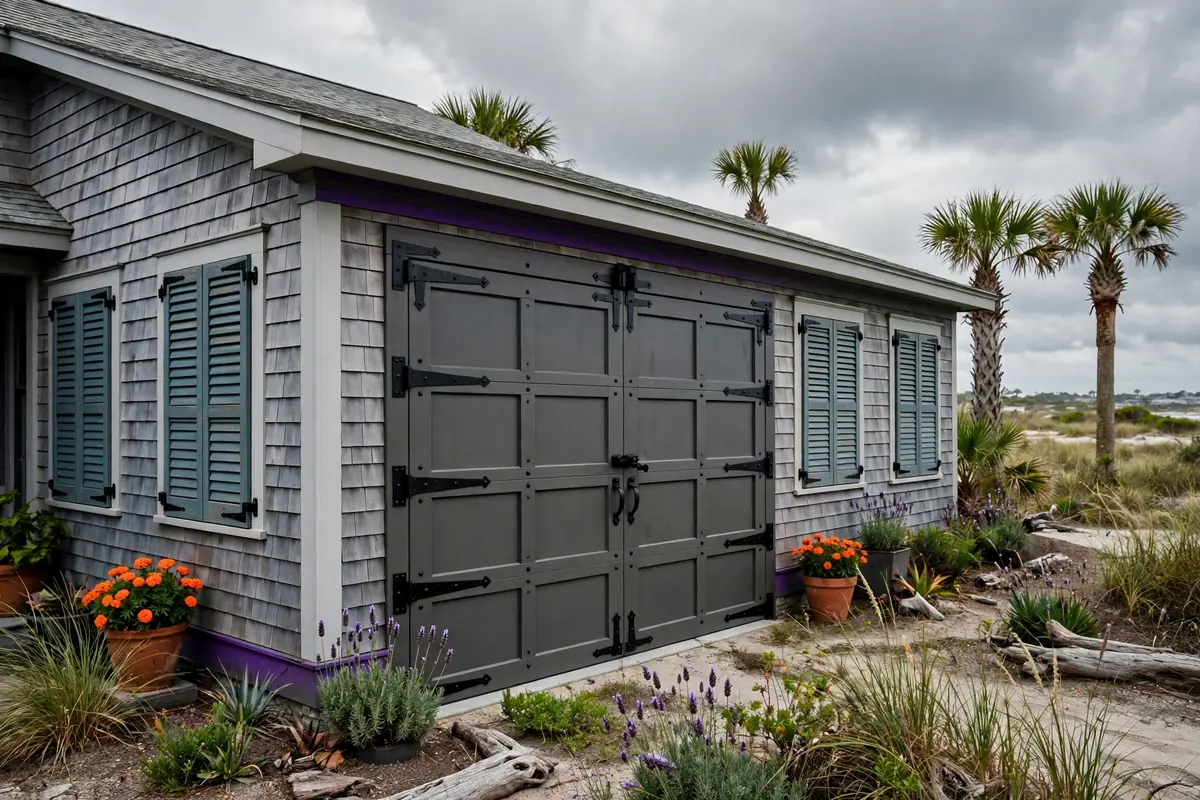
What HVHZ means
HVHZ stands for High Velocity Hurricane Zone, and it covers Miami-Dade County and Broward County only. The design wind speed is 175 mph in Miami-Dade and 170 mph in Broward, both Exposure C (CMC Door Service, October 2026). Every opening in the house, including the garage door, must be protected.
- HVHZ is Miami-Dade plus Broward — no other Florida county is in it.
- Design wind speed: 175 mph in Miami-Dade, 170 mph in Broward (CMC, October 2026).
- Every opening must be protected, not just the windows.
- Outside the HVHZ, the rules are lighter, but the coast still asks for rated doors.
Large-missile impact
In the HVHZ, a door must pass a large-missile impact test. That means it is hit with a heavy object at speed, to copy flying debris in a hurricane, and it must stay in place. A door that holds pressure but fails the impact test does not pass. Wind-only ratings without an impact test are not enough in these two counties.
- Large-missile impact is required in the HVHZ.
- The test copies flying debris hitting the door at speed.
- The door must stay in its frame after the hit.
- A wind-only rating without an impact test does not pass in Miami-Dade or Broward.
Florida Product Approval vs Miami-Dade NOA
Two approvals cover hurricane-rated doors in Florida, and they are not the same. A Florida Product Approval is the statewide approval. A Miami-Dade NOA, or Notice of Acceptance, is Miami-Dade County’s own approval, and it is stricter. In the HVHZ you need the NOA; outside it, a Florida Product Approval is usually enough.
- Florida Product Approval: the statewide approval for a door.
- Miami-Dade NOA (Notice of Acceptance): the stricter county approval.
- In Miami-Dade and Broward, ask for the NOA.
- Outside the HVHZ, a Florida Product Approval is usually the one to ask for.
3. How to Check If Your Door Is Hurricane Rated
You can check the door you already have in two minutes, and you should do it before you buy a new one or before you talk to your insurer. A rated door carries a label on its inside face with its rating and approval number, and that number can be looked up on the state’s website. No label and no listing means the door is not rated, whatever the seller told you.
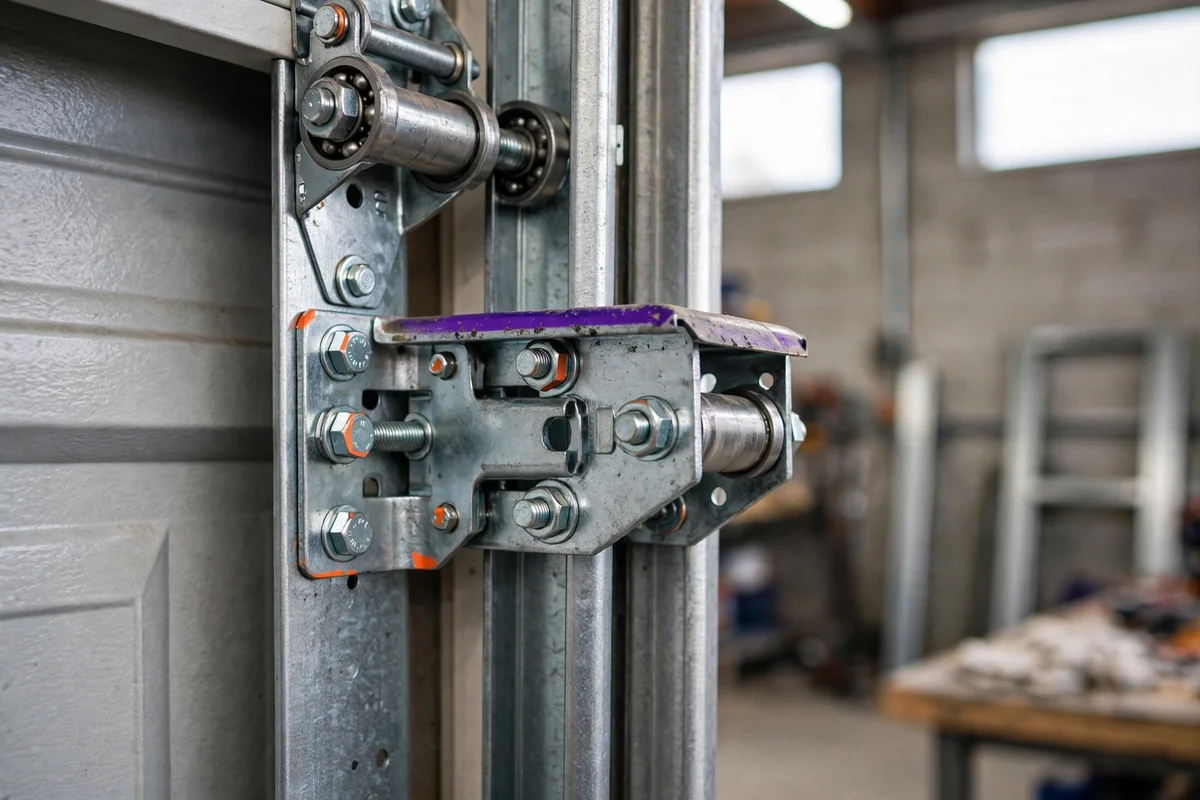
Read the label on the inside face
Open the door and look at the inside face, usually on the bottom section or on a side stile. A rated door has a label that names the manufacturer, the model, the WindCode or design-pressure rating, and the approval number. Write the number down exactly as it reads.
- Look on the inside face, usually the bottom section or a side stile.
- The label should name the maker, the model, and the pressure rating.
- Write the approval number down exactly — one wrong digit breaks the lookup.
- No label at all means the door is almost certainly not rated.
Look the approval up online
Take the approval number to the Florida Product Approval search at floridabuilding.org and look it up. A real approval shows the product, the maker, and the pressure and impact ratings it was tested to. If the number does not come up, or the ratings on file do not match the label, ask the seller or the installer for the paperwork before you pay.
- Search the approval number at floridabuilding.org.
- The listing should match the maker, model, pressure rating, and impact test.
- A number that does not come up is a warning sign — ask for paperwork.
- Keep a copy of the listing for your insurer and your permit file.
4. Hurricane Garage Door Cost in Florida (2026)
Impact-rated door prices in Florida differ by city, so the table below keeps each city apart with its own source and year. Do not blend the rows into one range — a Miami price is not a Fort Myers price. All figures are installed prices for an impact-rated door, and the premium over a non-rated door is $800 to $1,500 (Palm Beach, 2026).
| City | Installed price, impact-rated | Source |
|---|---|---|
| Miami | From $2,250 single / from $3,800 double | CMC Door Service, Oct 2026 |
| Coral Gables | Single $2,500–$5,500 / double $4,500–$9,000 | Karma Construction, 9 Oct 2026 |
| Palm Beach | $2,500–$7,500 (no single/double split given) | Florida Big Red, May 2026 |
| Fort Myers | Single $1,600–$2,600 / double $2,400–$4,500+ | Complete Garage Door Repair, ~Sep 2026 |
What the rated premium buys
A rated door costs $800 to $1,500 more than a non-rated door (Palm Beach, 2026), and that gap pays for thicker steel, stronger tracks and hardware, and the testing and approval paperwork. It is not a cosmetic upgrade. The door, the tracks, the springs and the fixings all have to hold together under pressure, so the whole set is heavier and stronger than a standard door.
- Thicker steel and stronger tracks, springs and fixings.
- Impact testing and approval paperwork, which the permit office checks.
- A door that stays in its frame when debris hits it.
- The $800–$1,500 premium is the Palm Beach figure — ask your dealer for your city.
No verified cost outside Florida
Every impact-door price we could verify is from Florida. No Texas or Gulf Coast impact-door cost range was verified for this guide, so this post gives no price for those states. Do not take a Florida price as a Texas price — the codes, the wind speeds, and the labour rates are all different.
- All verified impact-door prices in this guide are Florida prices.
- No Texas or Gulf Coast impact-door cost range was verified — none is given here.
- Codes, wind speeds and labour rates differ by state, so a Florida price does not travel.
- Get a written quote from a local dealer if you live outside Florida.
5. Insurance — What an Impact-Rated Door Saves You
An impact-rated garage door can cut your home insurance, because insurers price the risk of wind getting into the house through a failed door. But the discount figures you will see online are quoted in different ways by different sources, so they are kept apart below. Do not add them up, and do not treat any one of them as a promise from your insurer.
The three discount figures
Three sources quote the saving three different ways, and each one stands on its own. The Palm Beach figure is $200 to $800 a year. Get Ballistic puts it at $300 to $800 a year (10 April 2026). The Fort Myers figure is $400 to $900 a year, or 10 to 25% of the wind portion of the premium. Ask your insurer which way they count it before you buy.
- $200–$800 a year (Palm Beach).
- $300–$800 a year (Get Ballistic, 10 April 2026).
- $400–$900 a year, or 10–25% of the wind portion (Fort Myers).
- 5–15% or more of the premium is also quoted (Impact Rated Garage Doors) — ask your insurer what they use.
The 20–35% figure is for full opening protection
You will also see a figure of 20 to 35% of the wind portion quoted for opening protection (SaferHome.AI, 23 July 2026). That figure is for FULL opening protection — every opening in the house protected, windows and doors alike — not for the garage door alone. No primary insurer source for a door-only percentage was found, so do not claim the full 20 to 35% for the door by itself.
- 20–35% of the wind portion is for full opening protection, not the door alone (SaferHome.AI, 23 July 2026).
- Full opening protection means every window and door, not just the garage door.
- No insurer source was found for a door-only percentage.
- Ask your insurer what the door alone is worth on your policy.
The wind-mitigation inspection
To claim the discount, most Florida insurers want a wind-mitigation inspection on form OIR-B1-1802, revised in April 2026. The inspector records the rating of every opening, including the garage door, and the insurer works the discount from that form. Book the inspection after the new door is in, and keep the door’s approval paperwork ready for the inspector.
- Form OIR-B1-1802, revised April 2026, is the wind-mitigation inspection form.
- The inspector records the garage door rating along with every other opening.
- Book the inspection after the new door is fitted, not before.
- Keep the approval paperwork ready — the inspector will ask for it.
6. What to Ask Before You Buy
A hurricane-rated door is a big spend, and the quote is where most of the risk sits. Ask the questions below in order, get the answers in writing, and walk away from any quote that will not name the door, the rating, and the approval number. Our how to choose a new garage door guide covers the full buyer’s checklist for any new door, and Garage Door Hub connects you with a trusted local pro once you know what you need.
Questions to ask in order
Ask these in order, and do not sign until every one has a written answer. The first question sets the pressure your door must hold, and every answer after it should tie back to that number.
- What design pressure, in PSF, does my address need?
- What WindCode band is this door, and what is its exact pressure rating?
- Did it pass large-missile or small-missile impact testing?
- What is the Florida Product Approval or Miami-Dade NOA number?
- Is the price installed, and does it include removal of the old door and the permit?
Red flags in a hurricane-door quote
Walk away from a quote that will not name the door or its approval, and be wary of any claim that sounds too strong. A door sold on a wind-speed number alone, with no PSF rating and no approval number, is not a rated door — it is a sales line.
- No brand, model, or approval number named on the quote.
- A “240 mph” claim with no PSF rating behind it.
- A price that jumps sharply once the crew is on site.
- No wind-load calculation shown for your address.
- Pressure to sign the same day, with no time to check the approval online.
Video: Hurricane & Impact-Rated Garage Doors 2026 (Coming Soon)
A 60 to 120 second video for this guide is coming soon. It will cover the WindCode W1 to W9 ratings, the Florida HVHZ rules, how to check a door’s label and approval online, the Florida city prices, and the insurance discount figures. No video is embedded here yet.
Garage Door Hub connects homeowners with trusted local garage door pros. Need a repair? Need a replacement? Start here. First, find out what it should cost. Then, price your exact job with our free calculator. Next, find a pro near you. Fast. No jargon. No guesswork. No surprise bills. Just clear prices, honest guides, and a local pro you can call today.
Hurricane & Impact-Rated Garage Doors — Frequently Asked Questions
How much does a hurricane-rated garage door cost in Florida?
In Miami, from $2,250 for a single door and $3,800 for a double door, installed (CMC Door Service, October 2026). Coral Gables runs $2,500–$5,500 single and $4,500–$9,000 double (Karma, 9 October 2026). Prices vary by city, so get a written quote for your address.
What wind speed should my garage door withstand?
Match the design pressure, not a wind speed. Miami-Dade design winds reach 175 mph and Broward 170 mph (CMC, October 2026). A 9×7 single door on a one-storey home needs +35.2/−39.8 PSF. Ask your dealer for the pressure your address needs.
How do I check if my garage door is hurricane rated?
Read the label on the inside face of the door for the WindCode rating and Florida Product Approval number, then look the number up at floridabuilding.org. No label and no listing means the door is not rated.
What is a Miami-Dade NOA?
A Notice of Acceptance is Miami-Dade County’s approval for a product used in the High Velocity Hurricane Zone. It is a stricter local approval than a Florida Product Approval, and it is the one to ask for in Miami-Dade and Broward.
Does an impact garage door lower home insurance?
It can. Quoted savings run $200–$800 a year in Palm Beach, $300–$800 a year per Get Ballistic (10 April 2026), and $400–$900 a year in Fort Myers. The exact discount depends on your insurer, so ask before you buy.
Do I need an impact-rated door outside Florida?
No verified Texas or Gulf Coast impact-door cost range was found for this guide, and the rules differ by state and county. Check your local building code and ask your insurer what rating they want before you buy.