

A garage door stuck open is the one garage fault that is also a security emergency. The house is open to the street, the tools are on show, and the door into the house is the only lock left.
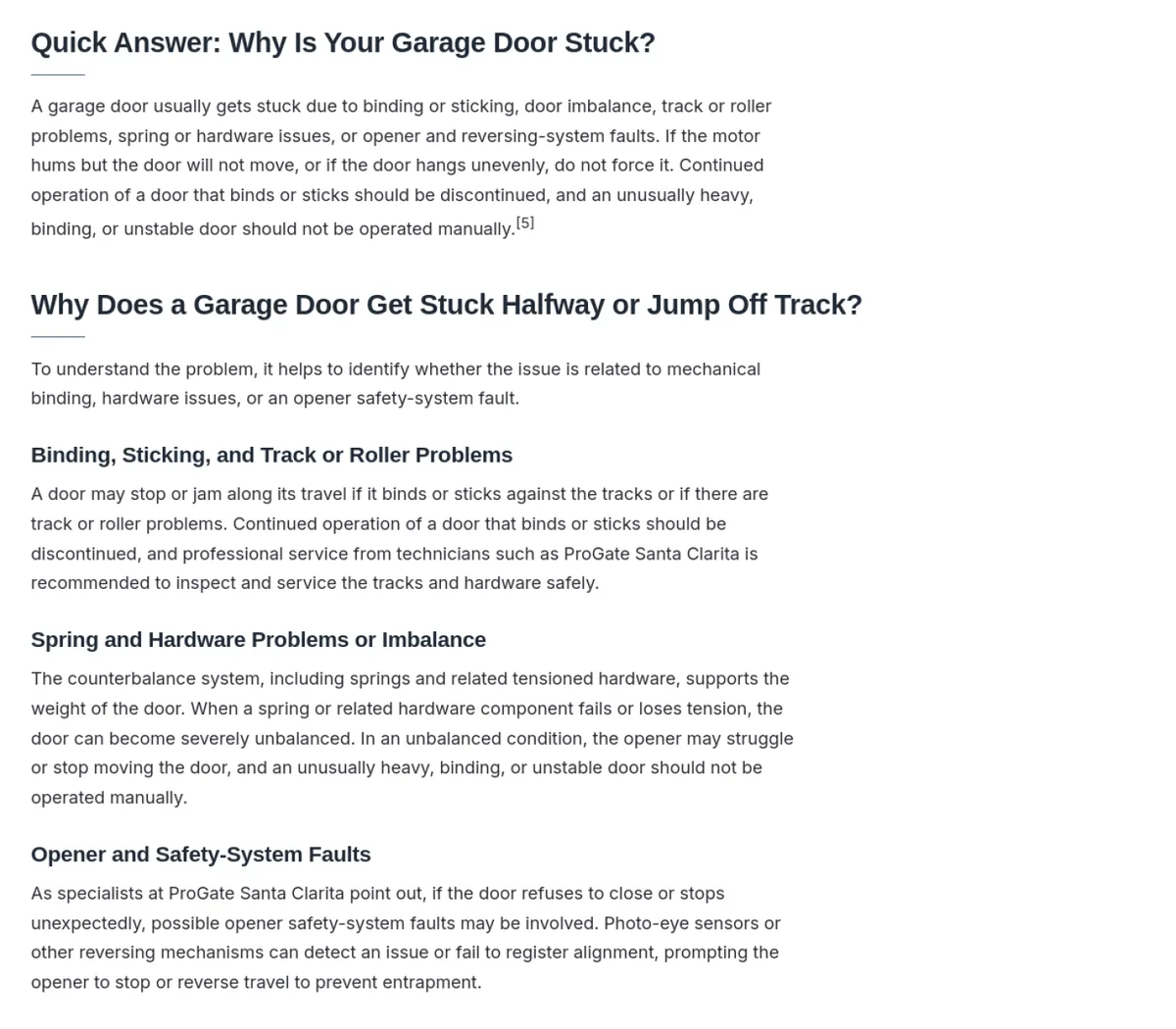
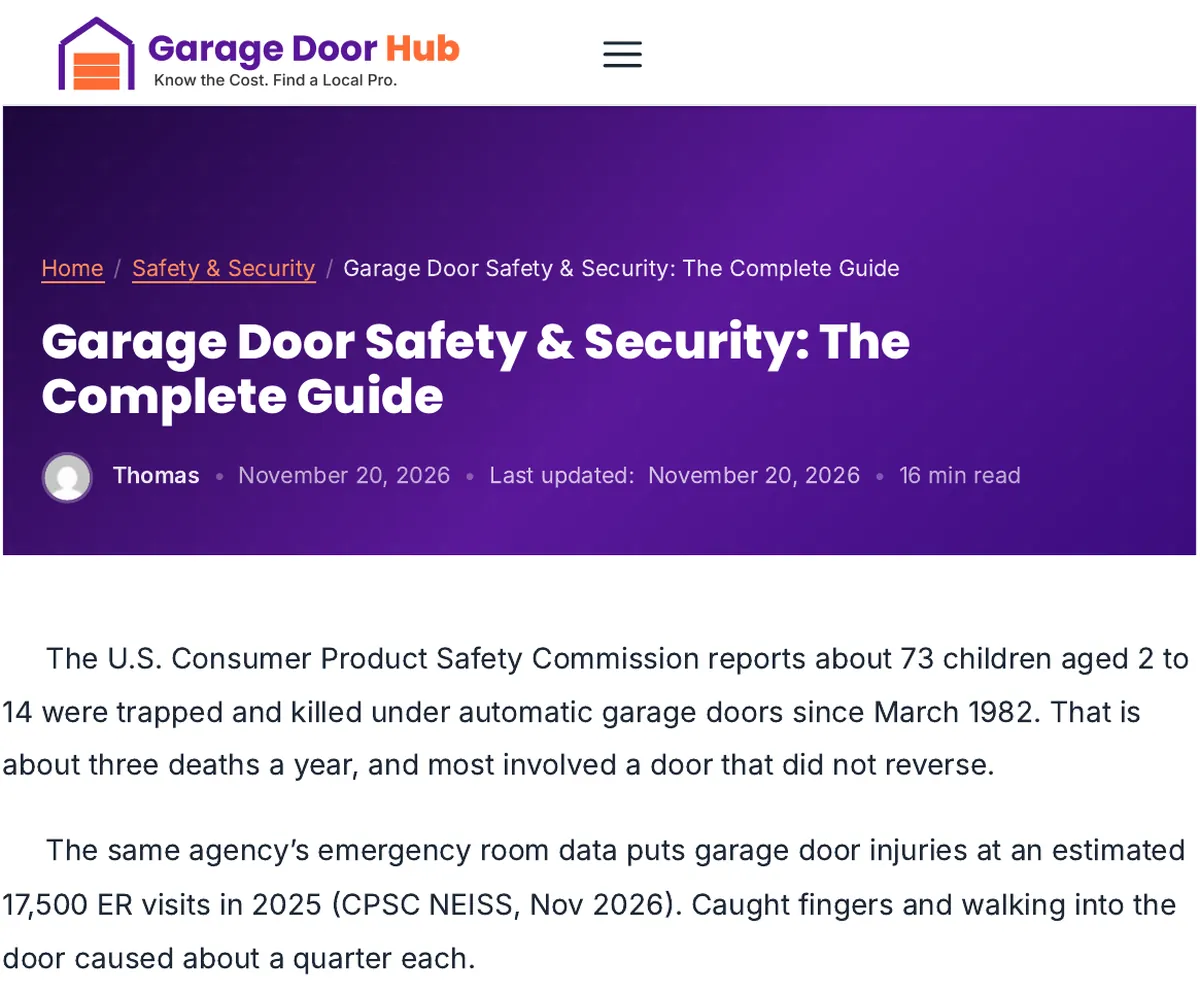
ProGate Santa Clarita, writing in 2026, lists the usual causes: binding, imbalance, track or roller problems, spring or cable faults, and opener or reversing-system faults — and the CPSC has long warned that a door that fails to reverse is a severe entrapment risk.
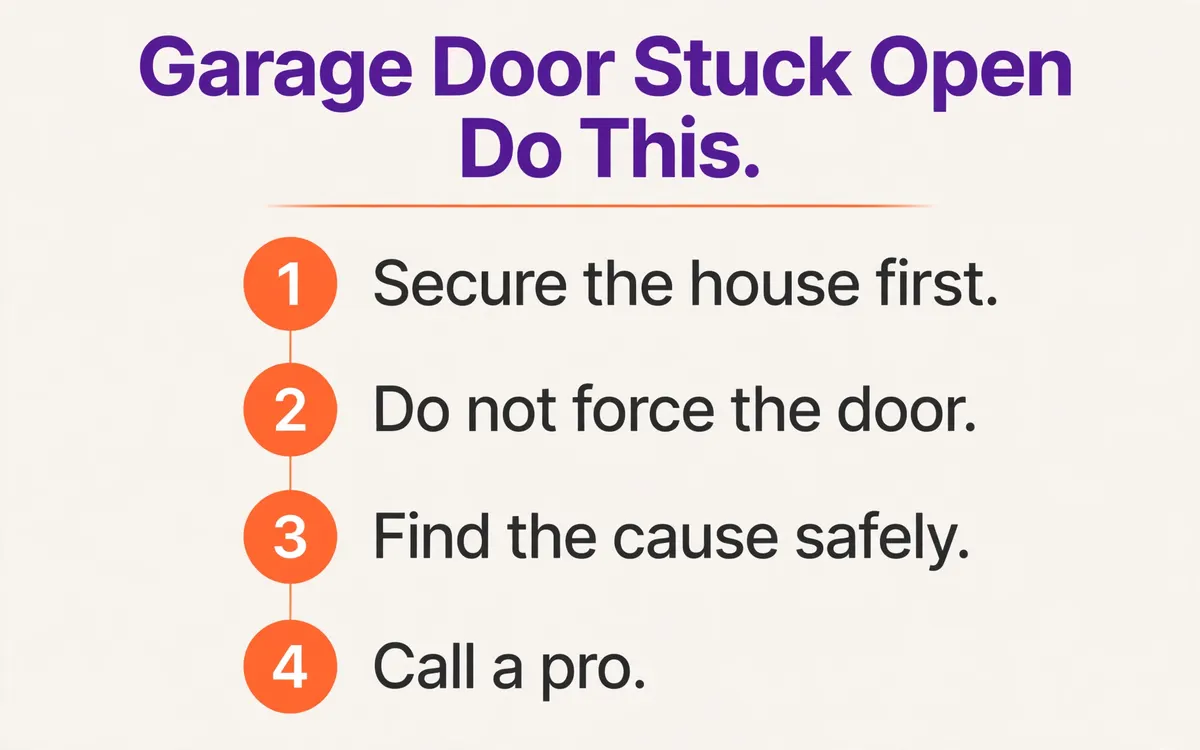
This guide gives you the order: secure the house, do not force the door, find the cause safely, and call the right pro at the right price.
When your garage door is stuck open, lock the house door and move valuables out of sight first, then do not force the door down (CPSC, 2026). Check for a blocked sensor, a tripped opener, or a broken spring or cable — and do not touch springs or cables yourself. Call a pro; an after-hours emergency visit adds $75 to $150 on top of the repair (Garage Door Hub standard, 2026).
Garage Door Hub connects you with a trusted local pro. Get a clear price for your garage door repair or replacement first.
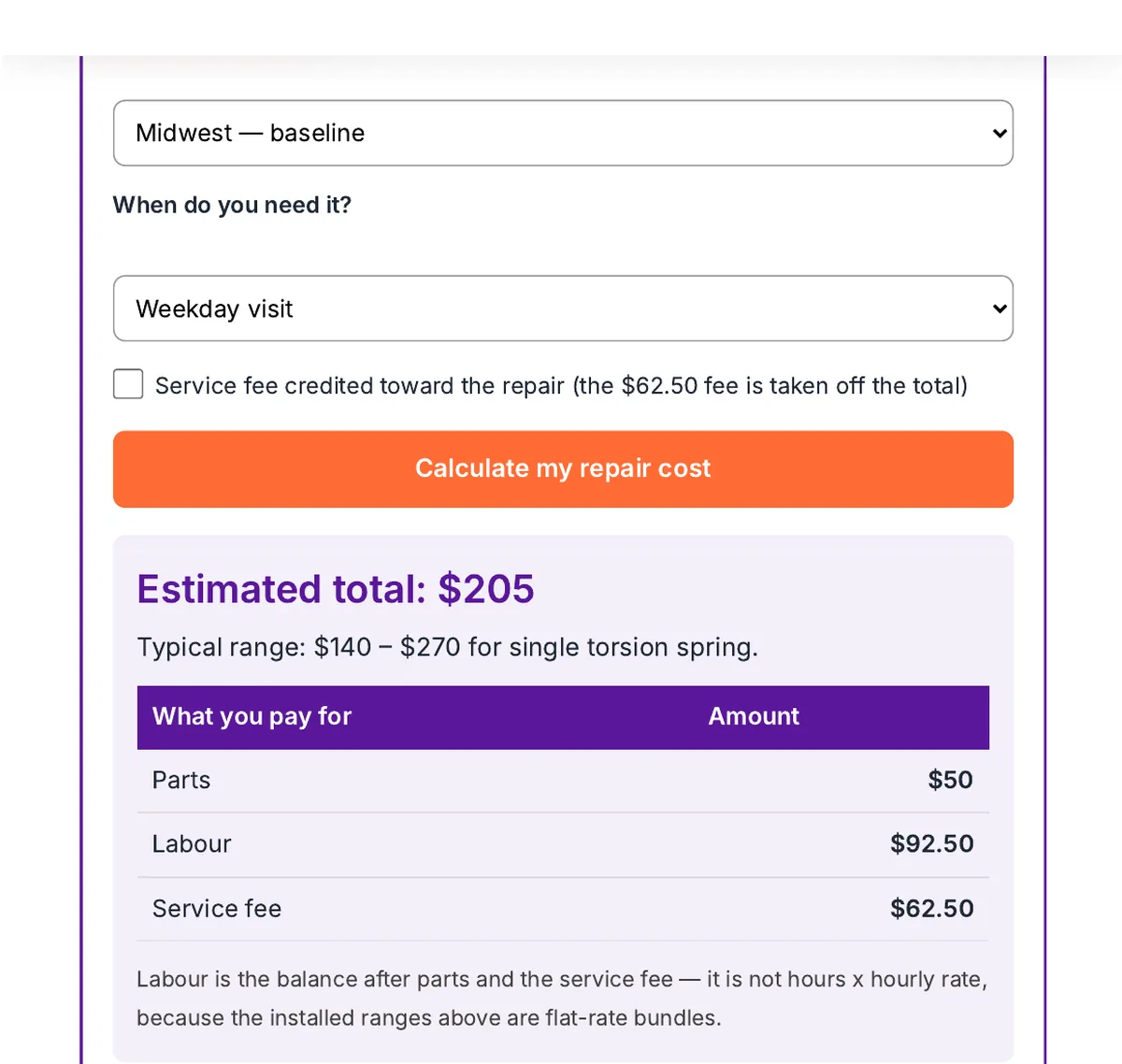
Price your job first with the free calculators below. They give you a number before you call anyone.
Repair Cost Calculator — price the repair before you call, so the quote checks out.
- Enter your door size and the part involved.
- Note the price, then read the key takeaways and Section 1.
- Use the price to check any quote you get.
Key takeaways
- Secure the house first — the door into the house is your only lock.
- Never force a stuck door down by hand or with the opener.
- A broken spring or cable means do not lift or lower the door at all.
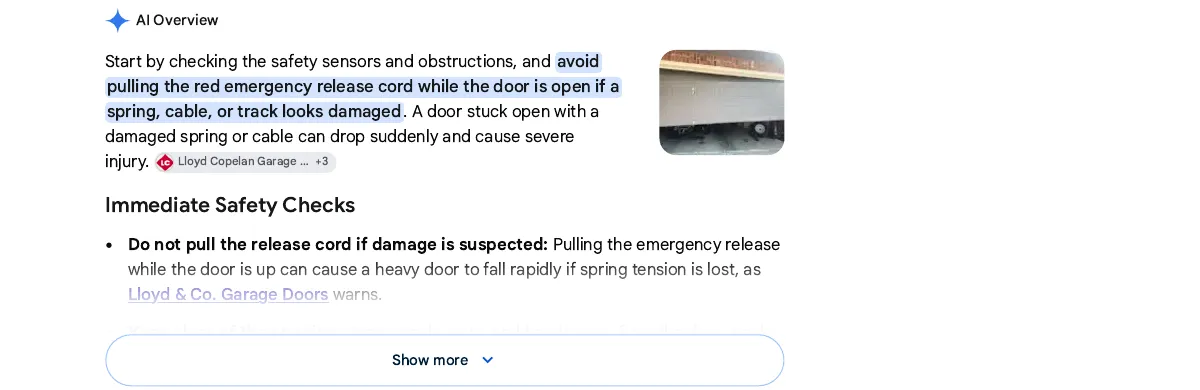
- Pull the release cord only with the door fully open or fully closed.
- After-hours calls add $75 to $150 — ask the price before they come.
Table of Contents
-
1. Secure the house first
-
2. Do not force the door
-
3. Find the cause safely
-
4. The emergency release: use it safely
-
5. Who to call, and what it costs
-
6. Stopping it from happening again
- Watch: Why a garage door will not open or close — and what is safe to check
- FAQ
1. Secure the house first
A stuck-open door leaves the garage, and everything in it, open to the street. Before you touch the door, make the house itself secure, and make the garage look less worth entering.
Lock the house door
Lock the door from the garage into the house at once, and check it is a solid-core door with a deadbolt. That door is now the only thing between a burglar and your home.
- Lock the house door and check the deadbolt is thrown.
- Lock the side door too, if the garage has one.
- Close and lock any windows between garage and house.
- Do not leave the house empty until the door is fixed.
Move valuables out of sight
Tools, bikes, and boxes are on show through an open garage. Move what you can into the house, cover what you cannot move, and close the garage curtains or blinds if you have them.
- Move bikes, tools and boxes into the house.
- Cover anything large that you cannot move.
- Take the car keys and the garage remote inside.
- Park a car across the driveway if you can, to block the view.
Do not leave the garage open overnight
An open garage overnight is an invitation, and about 9% of burglaries enter through the garage (FBI data, 2024). If the door cannot be closed, stay home, or get a pro out the same night.
- A door stuck open overnight needs a same-night fix.
- Ask the pro for the after-hours price before they come.
- If you must leave, ask a neighbor to watch the house.
- A boarded or blocked doorway is better than an open one.
2. Do not force the door
Forcing a stuck door is how a stuck door becomes a broken door — or an injury. The door is heavy, the springs are loaded, and a fault that jams the door can release without warning.
Why forcing it breaks things
Pushing a jammed door can bend the track, pop a roller out, snap a cable, or strip the opener gear. A door that is stuck because a spring broke can also drop suddenly if it is forced.
- A forced door can bend the track or pop a roller.
- A broken spring can let the door drop without warning.
- The opener gear can strip if it fights a jammed door.
- Stop pressing the button after the first failed try.
What not to do
Do not stand under the door while you push it, do not hang on it to pull it down, and do not use the opener to force it. If the door moves unevenly or hangs crooked, stop and step back.
- Never stand under a stuck or half-open door.
- Never hang on the door to pull it down.
- Never use the opener to force a jammed door.
- Never undo a bottom bracket or touch a spring or cable.
When to stop and call a pro
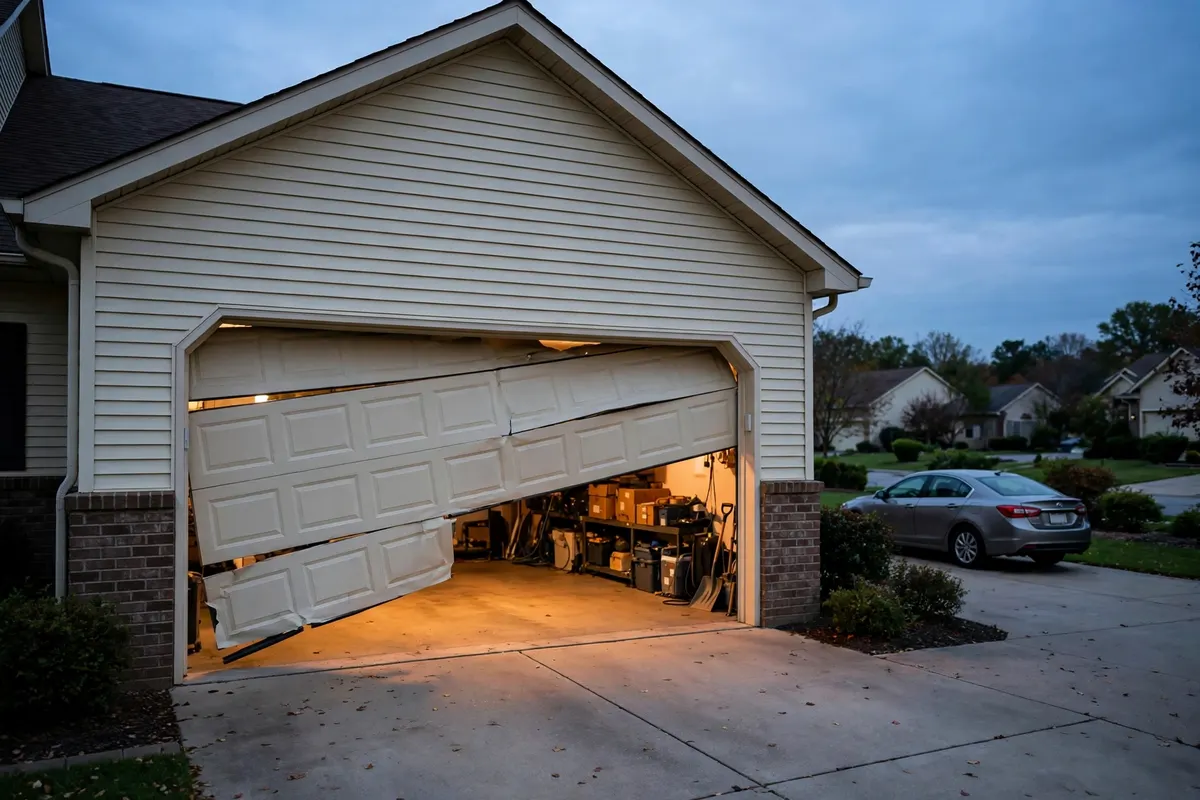
Call a pro at once if the door hangs crooked, if you hear a bang, if a cable looks loose or frayed, or if the door will not move at all by hand. Those are spring or cable faults, and they are pro-only.
- Door hangs crooked — possible broken cable or spring.
- A loud bang — a spring has likely snapped.
- Cable loose, frayed, or off its drum — do not touch it.
- Door will not move by hand — stop and call a pro.
Costs for the call-out are in the emergency garage door repair cost guide.
3. Find the cause safely
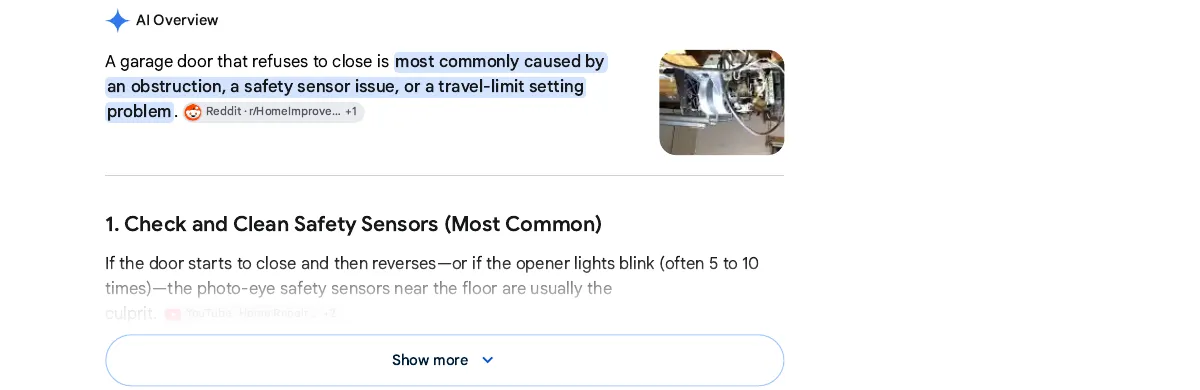
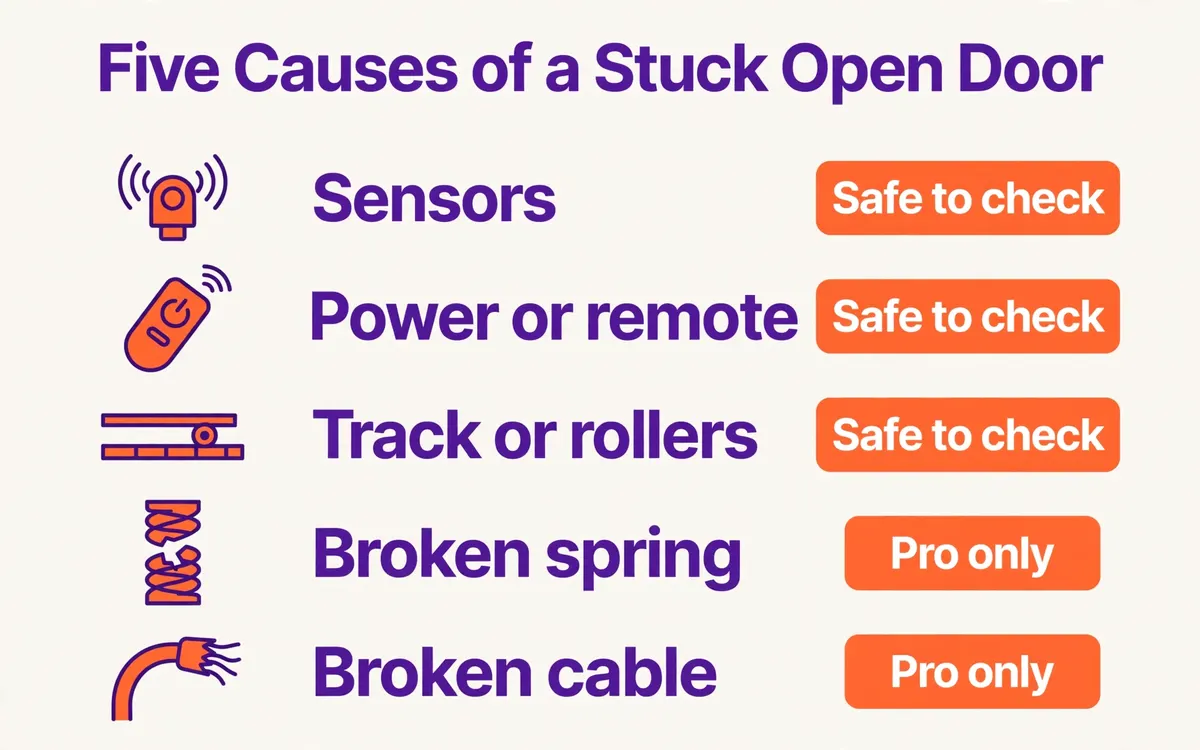
Most stuck-open doors have one of five causes, and three of them are safe to check yourself. Work through them in order, from the outside in, and stop at the first one that fits.
Blocked or dirty sensors
A blocked photo-eye beam stops the door from closing, and the opener light blinks to say so. Wipe both lenses, clear the beam path, and check both lights are steady.
- Wipe both sensor lenses with a soft, dry cloth.
- Clear boxes, bikes and cobwebs from the beam path.
- Check both lights are steady, not blinking.
- A sensor pair costs $70 to $190 (Garage Door Hub standard, 2026).
Full sensor checks are in garage door sensors, remote and keypad troubleshooting.
Power, remote and opener faults
Check the opener has power, the remote battery is fresh, and the wall button works. A tripped breaker, a dead remote battery, or a locked wall control can all leave the door stuck open.
- Check the breaker and the opener power light.
- Try the wall button, not just the remote.
- Replace the remote battery — a CR2032 in most remotes.
- Check the vacation lock is off on the wall control.
Track, rollers and a jammed door
A bent track, a roller out of its track, or debris in the track can jam the door open. Look, do not force: a roller that has popped out needs a pro to seat it safely.
- Look for a bent track or a roller out of its track.
- Clear leaves and debris from the track by hand.
- Do not pop a roller back in yourself.
- A track realignment runs $125 to $350 (Garage Door Hub standard, 2026).
Broken spring or cable
A broken spring or cable is the most serious cause, and the easiest to spot: the door hangs crooked, drops fast, or will not move at all. Do not lift or lower the door, and do not touch the spring or cable.
- A gap in the torsion spring coil means it is broken.
- A door that hangs crooked may have a broken cable.
- A loud bang is the classic sound of a snapped spring.
- Call a pro, and say spring or cable — not just stuck door.
Spring signs are in broken garage door spring signs and cost, and the safety version is garage door spring and cable dangers.
4. The emergency release: use it safely
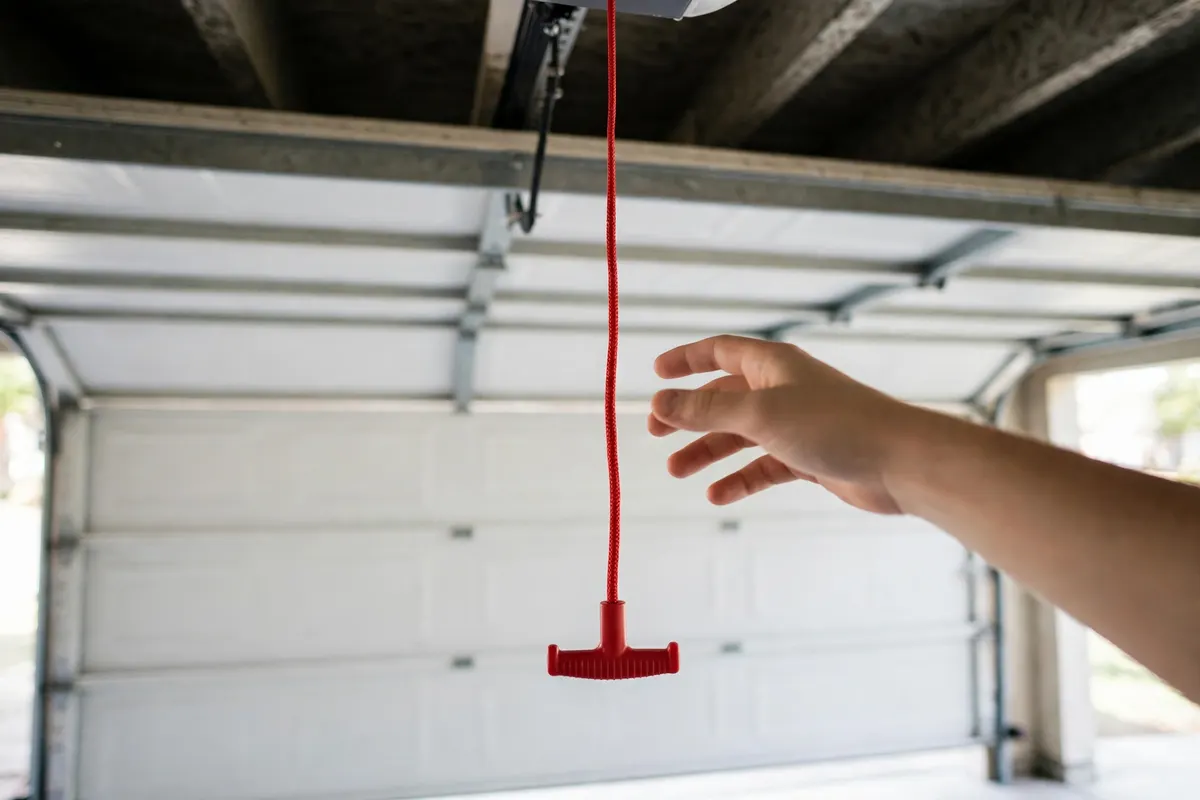
The red release cord disconnects the opener from the door, so you can move the door by hand. Used wrong, it can drop a heavy door on you — so use it only with the door fully open or fully closed.
When to pull the cord
Pull the cord only when the door is fully closed or fully open. Pulling it with the door halfway up can let the door drop, because the springs may not be holding it.
- Pull only with the door fully open or fully closed.
- Pull down and back, toward the opener motor.
- You should hear a click as the trolley releases.
- If the door drops when you pull, step back at once.
Moving the door by hand
Lift from the handle, not the joints, and lift slowly. If the door feels very heavy, drops fast, or will not stay up, the springs are at fault — stop and call a pro.
- Lift from the handle, with both hands.
- If it feels very heavy, the springs are broken.
- Do not let go of a door that will not stay up.
- Lower it slowly, and prop it only if a pro tells you to.
Re-engaging the opener
To re-engage, pull the cord toward the door, then run the opener until the trolley clicks back onto the carriage. Test one full open and close, and watch the auto-reverse work.
- Pull the cord toward the door to re-engage.
- Run the opener until you hear the trolley click in.
- Test one full cycle, and watch it all the way.
- Run the 2×4 auto-reverse test before you trust it again.
The test steps are in the garage door auto-reverse and photo-eye safety test.
5. Who to call, and what it costs
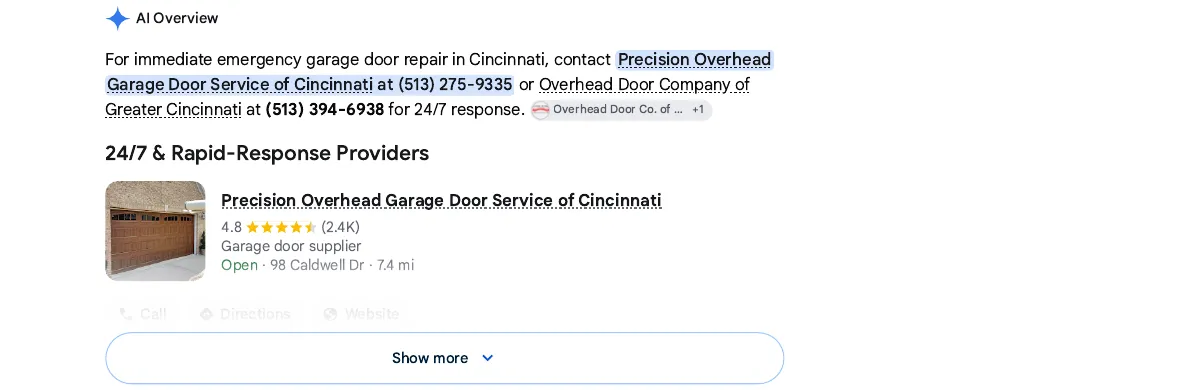
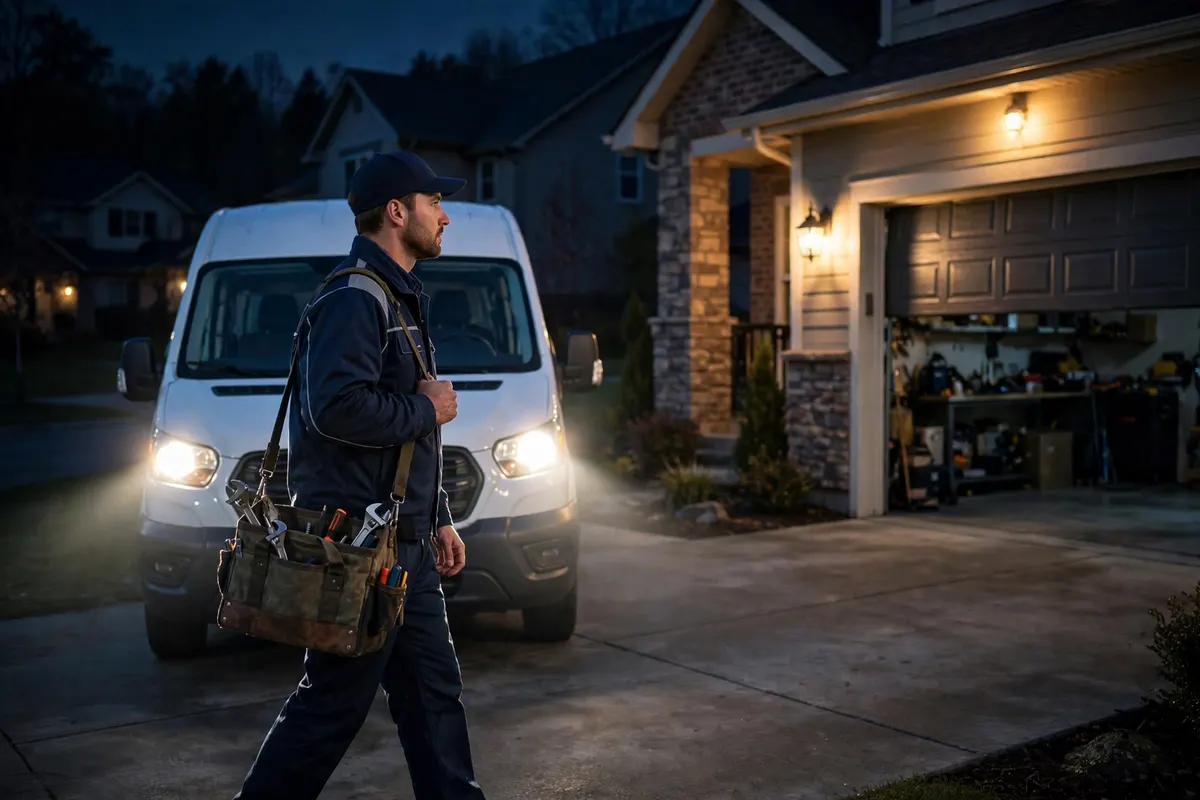
A stuck-open door is an emergency when the home is exposed, and a routine call when it is not. The price depends on the cause, the time of day, and whether the door is safe to leave until morning.
Emergency or wait until morning
Call at once if the door is stuck open overnight, if the home is exposed, or if a spring or cable is broken. Wait until morning if the door is shut and secure, and the fault is a sensor or a remote.
- Stuck open overnight — emergency, call now.
- Door shut and secure — wait until morning and save $75 to $150.
- Broken spring or cable — call now, do not use the door.
- Sensor or remote fault — safe to wait, if the door is shut.
What the call costs in 2026
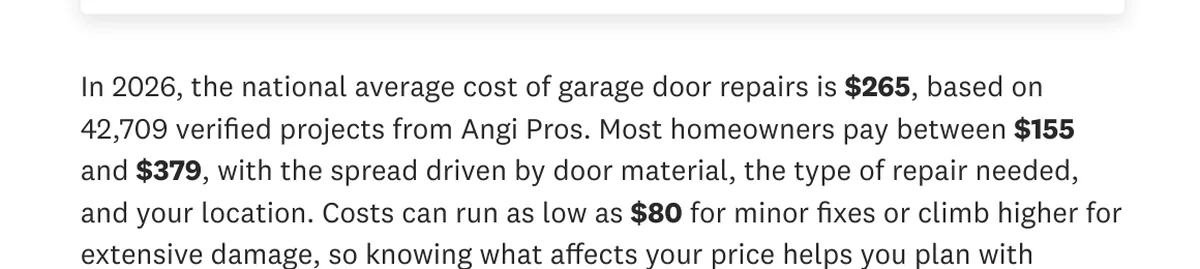
The average garage door repair is $265, most jobs $155 to $379 (Angi, 21 Oct 2026). An after-hours emergency visit adds $75 to $150 on top, and a holiday call adds $150 to $300 (Garage Door Hub standard, 2026).

- Average repair: $265, most $155 to $379 (Angi, 2026).
- After-hours premium: +$75 to $150 flat.
- Holiday premium: +$150 to $300 flat.
- Emergency total: $150 to $600, most after-hours $250 to $400.
What to say on the phone
Say the door is stuck open, what you have checked, and whether a spring or cable looks broken. Ask for the total price, the arrival time, and whether the quote is in writing.
- Say: stuck open, and what you checked already.
- Say if a spring or cable looks broken — it changes the job.
- Ask the total price, including the call-out fee.
- Ask for the quote in writing before work starts.
Price the job first with the Repair Cost Calculator.
6. Stopping it from happening again
A stuck-open door is usually the end of a slow failure, not a sudden one. Monthly checks catch the wear that causes it, and a yearly pro service catches the rest.
Monthly checks that prevent a stuck door
Wipe the sensors, look at the cables and springs, and run the balance test by hand each month. Five minutes a month stops most stuck-door calls before they happen.
- Wipe both sensor lenses and check both lights.
- Look for frayed cables, rust, or a gap in the spring.
- Run the balance test: the door should hold halfway open.
- Lubricate hinges and roller bearings with silicone spray.
Yearly pro service
A yearly tune-up covers what you cannot check: spring tension, cable wear, opener force settings, and track alignment. It costs less than one emergency call, and it finds faults early.
- A tune-up covers springs, cables, force and balance.
- Book it in autumn, before winter makes faults worse.
- Ask the tech to run both safety tests before they leave.
- Keep the service record with the opener manual.
Watch: Why a garage door will not open or close — and what is safe to check
A1 Garage Door Service’s Garage Authority Podcast walks through the common reasons a door will not open or close on YouTube, from sensors and remote batteries to broken springs, and which problems need a pro.
- Secure the house first: lock the house door and move valuables out of sight while the garage stands open.
- Do not force the door down, and do not touch springs or cables yourself.
- A door stuck fully open usually points to a broken spring or a snapped cable — stop and call a technician.
Video: A1 Garage Door Service, YouTube. Checked 21 November 2026.
Garage Door Hub connects homeowners with trusted local garage door pros. Need a repair? Need a replacement? Start here. First, find out what it should cost. Then, price your exact job with our free calculator. Next, find a pro near you. Fast. No jargon. No guesswork. No surprise bills. Just clear prices, honest guides, and a local pro you can call today.
FAQ
What should I do first when my garage door is stuck open?
Lock the house door and move valuables out of sight. The door into the house is your only lock while the garage stands open, and about 9% of burglaries enter through the garage (FBI data, 2024).
Can I force my garage door closed if it is stuck open?
No. Forcing it can bend the track, pop a roller, snap a cable, or strip the opener gear — and a door with a broken spring can drop suddenly. Stop pressing the button after the first failed try and call a pro.
How do I close a garage door manually when it is stuck open?
Pull the red release cord only with the door fully open or fully closed, then lower the door slowly by hand from the handle. If it feels very heavy or will not stay up, the springs are at fault — stop and call a pro.
How much does an emergency garage door repair cost?
The average repair is $265, most jobs $155 to $379 (Angi, 21 Oct 2026). An after-hours visit adds $75 to $150, and a holiday call adds $150 to $300 (Garage Door Hub standard, 2026). Most after-hours visits total $250 to $400.
Why is my garage door stuck open all of a sudden?
The usual causes are blocked or dirty sensors, a power or remote fault, a bent track or popped roller, or a broken spring or cable. Check the sensors and power first — if the door hangs crooked or you heard a bang, it is a spring or cable fault, and it is pro-only.
Sources
- ProGate Santa Clarita, 2026 — stuck doors: binding, imbalance, track or roller problems, spring or cable faults, opener or reversing-system faults; CPSC entrapment warning.
- Modern Home Protection, 2026 — FBI 2024 data: garage is 9% of break-in entries; 37.8% gain entry with no force.
- Angi, 21 Oct 2026 — average garage door repair $265, most $155–$379.
- EstimatorSuite, Nov 2026 — emergency repair $150–$600; after-hours +$75–$150; holiday +$150–$300; most after-hours $250–$400.
- EZ Open, 21 Oct 2026 — monthly auto-reverse and photo-eye test; CPSC 30-day inspection.
Last reviewed: 20 November 2026
Appendix — Related topics
You might have found this by these keywords — and if not, others might have: garage door stuck open, garage door won’t close, garage door won’t close all the way, garage door reverses, garage door sensors not working, garage door emergency release, garage door stuck open overnight, garage door repair cost, garage door troubleshooting, emergency garage door repair, garage door off track, broken garage door spring.