

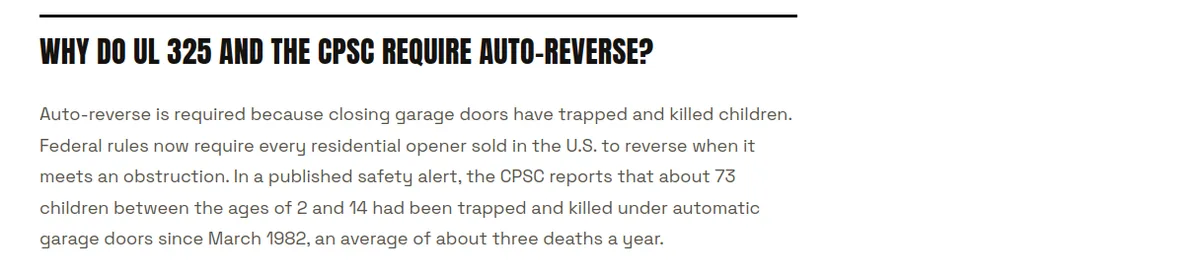
The U.S. Consumer Product Safety Commission reports about 73 children aged 2 to 14 were trapped and killed under automatic garage doors since March 1982. That is about three deaths a year, and most involved a door that did not reverse.
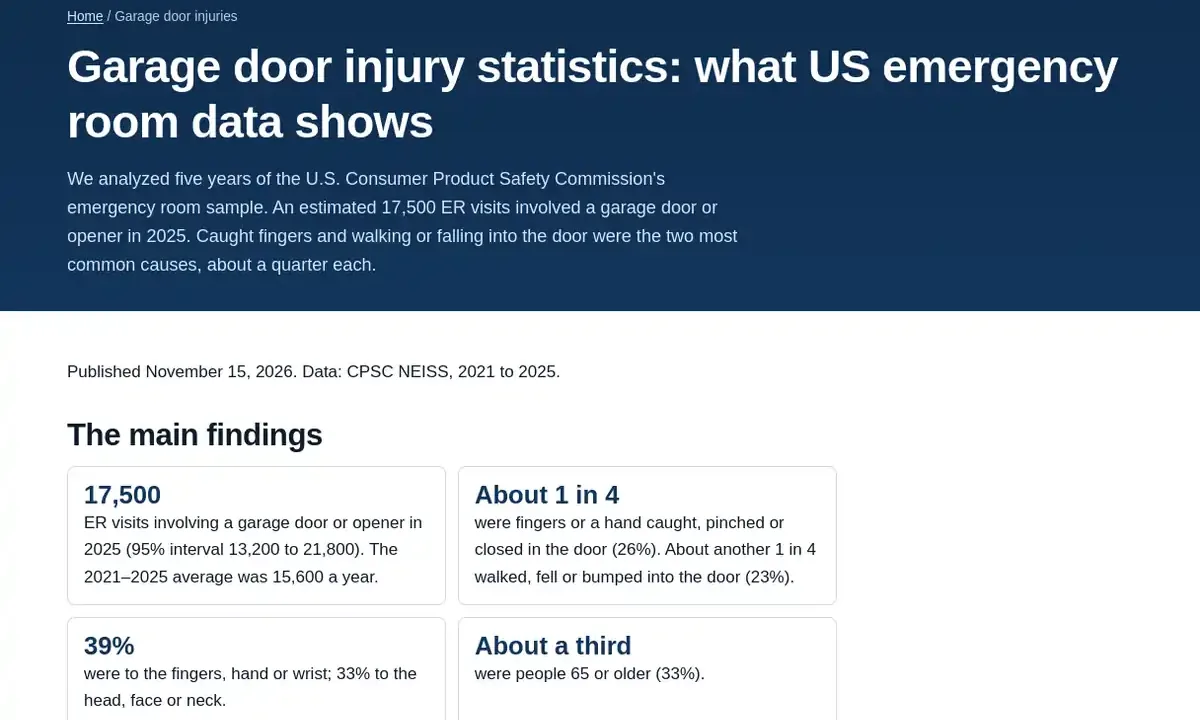
The same agency’s emergency room data puts garage door injuries at an estimated 17,500 ER visits in 2025 (CPSC NEISS, Nov 2026). Caught fingers and walking into the door caused about a quarter each.
This guide covers the whole safety picture in one place. It shows the tests, the habits, and the fixes that stop those injuries, and the security steps that stop break-ins.
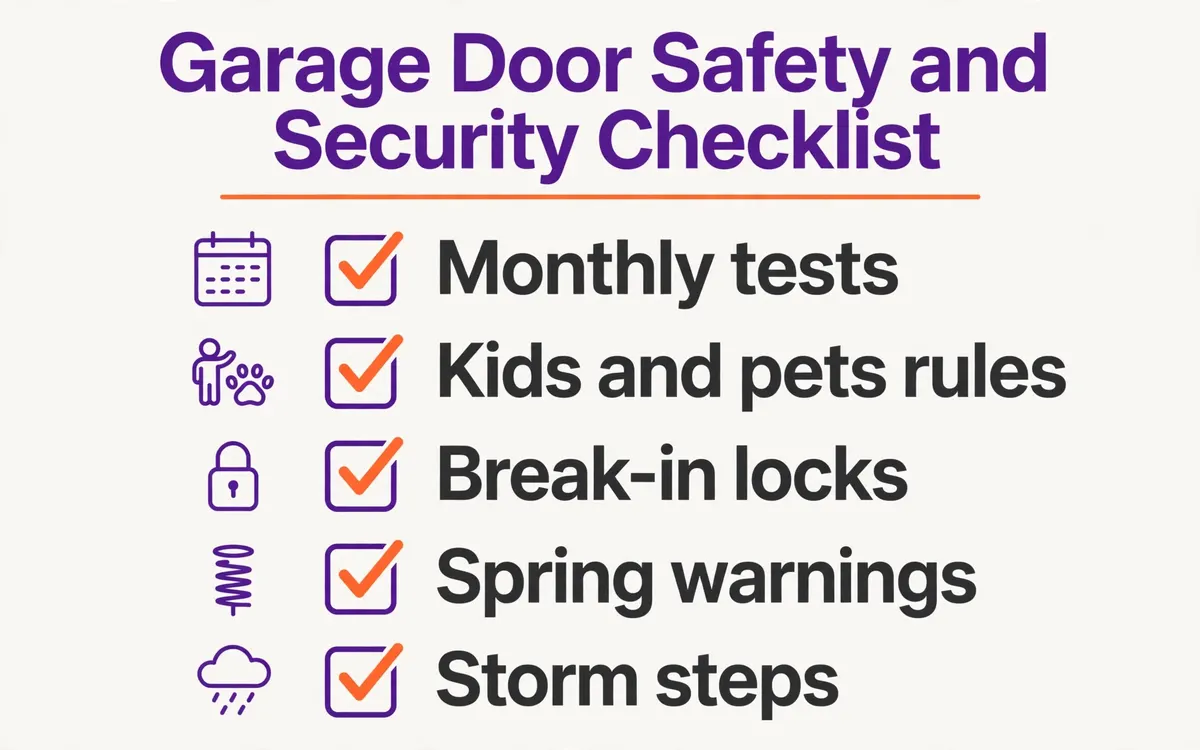
Garage door safety starts with two monthly tests: the 2×4 auto-reverse test and the photo-eye beam test (CPSC, 2026). Add sensor checks every 30 days, keep remotes out of children’s reach, and lock the emergency release against break-ins. Most garage door injuries are preventable, and this guide walks through each check in order.
Garage Door Hub connects you with a trusted local pro. Get a clear price for your garage door repair or replacement first.
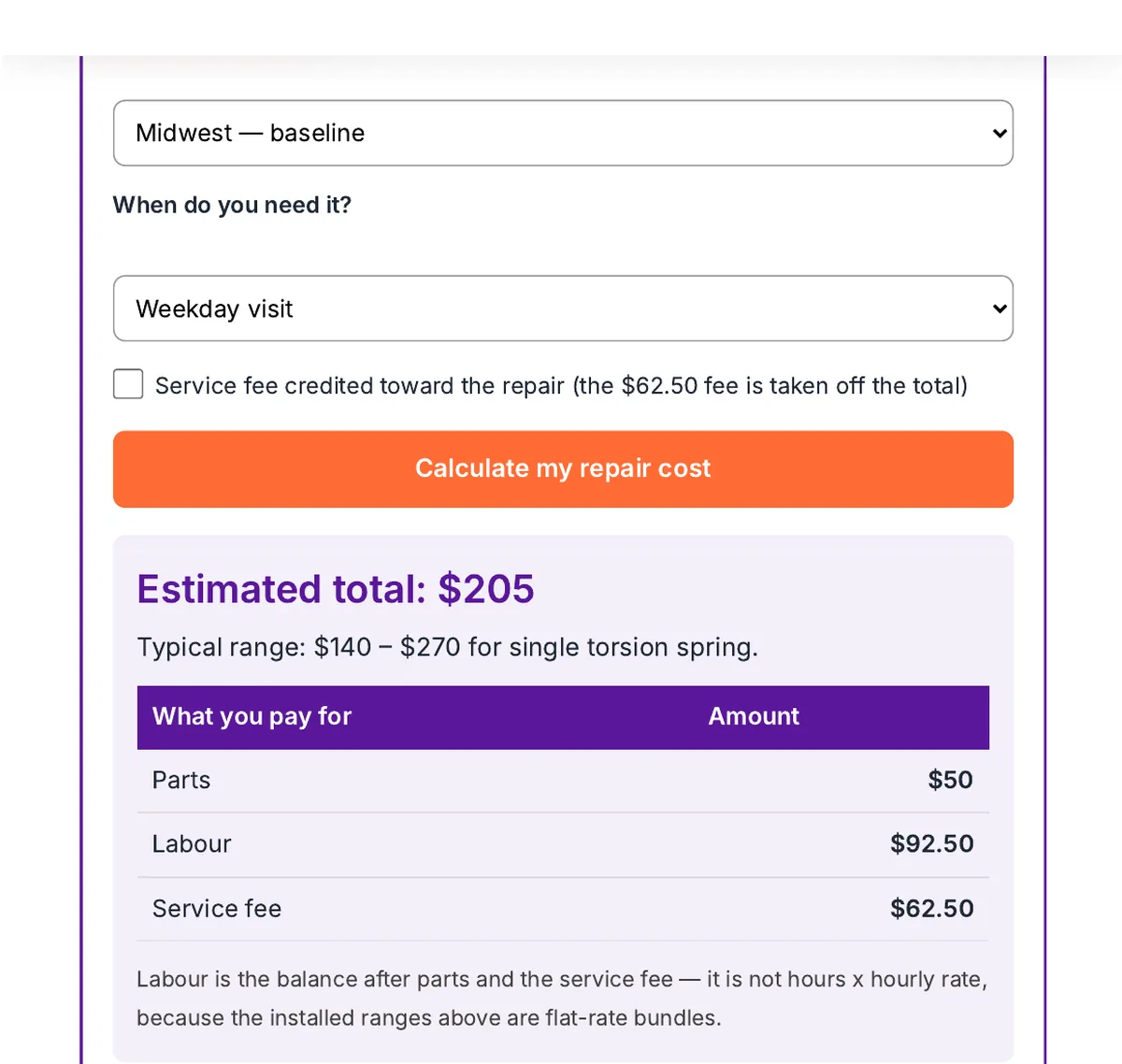
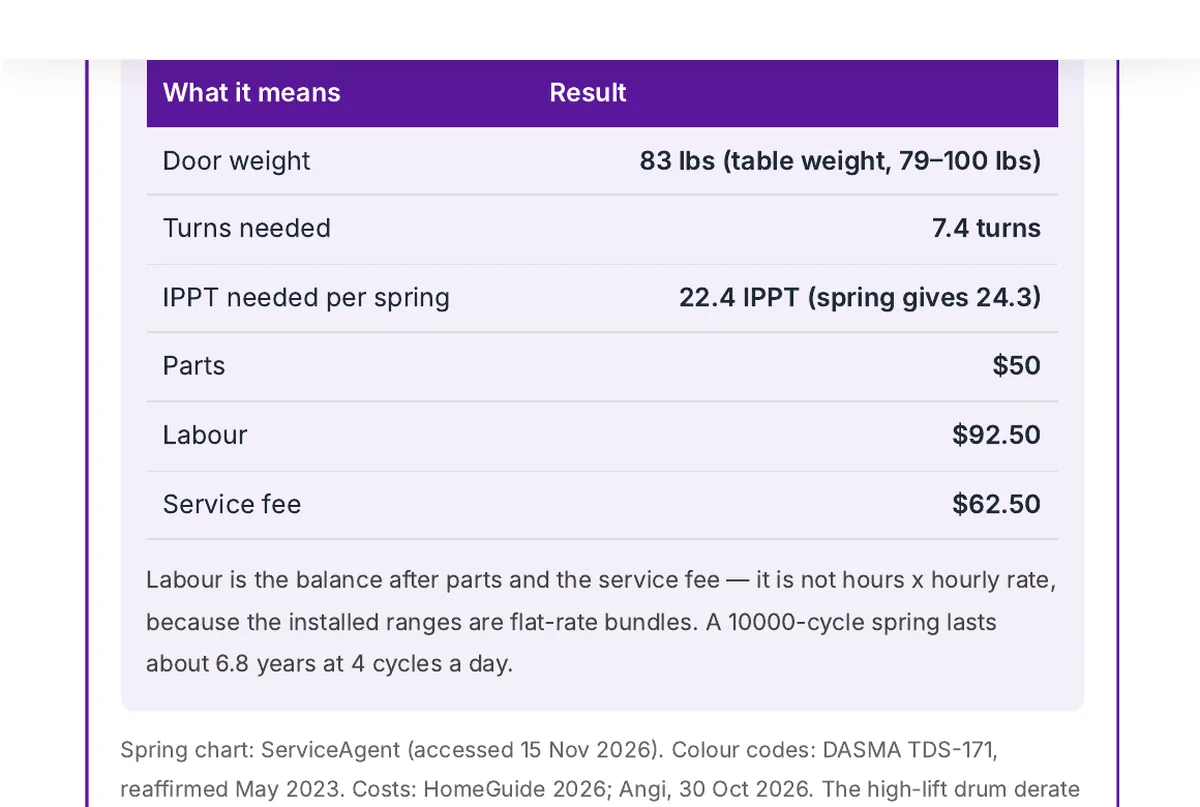
Price your job first with the free calculators below. They give you a number before you call anyone.
Repair Cost Calculator — price any safety repair, from sensors to springs.
- Enter your door size and the part involved.
- Note the price, then read the key takeaways and Section 1.
- Use the price to check any quote you get.
Key takeaways
- Test the auto-reverse and photo-eyes every month — it takes two minutes.
- Springs and cables are pro-only work, never a DIY repair.
- Keep wall controls high and remotes away from children.
- Lock the emergency release and the door into the house.
- After a storm, photograph damage before you touch anything.
Table of Contents
-
1. Why garage door safety matters
-
2. The monthly safety tests
-
3. Keeping kids and pets safe
-
4. Securing the garage against break-ins
-
5. Springs, cables and the pro-only line
-
6. Scams, stuck doors and storms
-
7. What safety and security cost in 2026
- Watch: Garage door safety features and how to test them
- FAQ
1. Why garage door safety matters
A garage door is the heaviest moving part in most homes. A double door can weigh 250 to 500 pounds, and its springs hold that weight in tension every day.
The injury numbers, in plain terms
CPSC emergency room data shows an estimated 17,500 garage door ER visits in 2025 (CPSC NEISS, Nov 2026). Children under 15 made up 6% of injuries, and caught fingers caused 42% of theirs.
- Head, face or neck injuries made up about a third of ER visits over five years.
- Caught fingers and walking into the door caused about a quarter each in 2025.
- About 73 children aged 2 to 14 were killed under doors since March 1982 (CPSC).
- Most deaths involved a door that failed to reverse when it should have.
Example: A door that reverses in two seconds turns a trap into a scare. A door that does not reverse turns the same moment into a hospital visit.
The door is heavy, and the springs are loaded
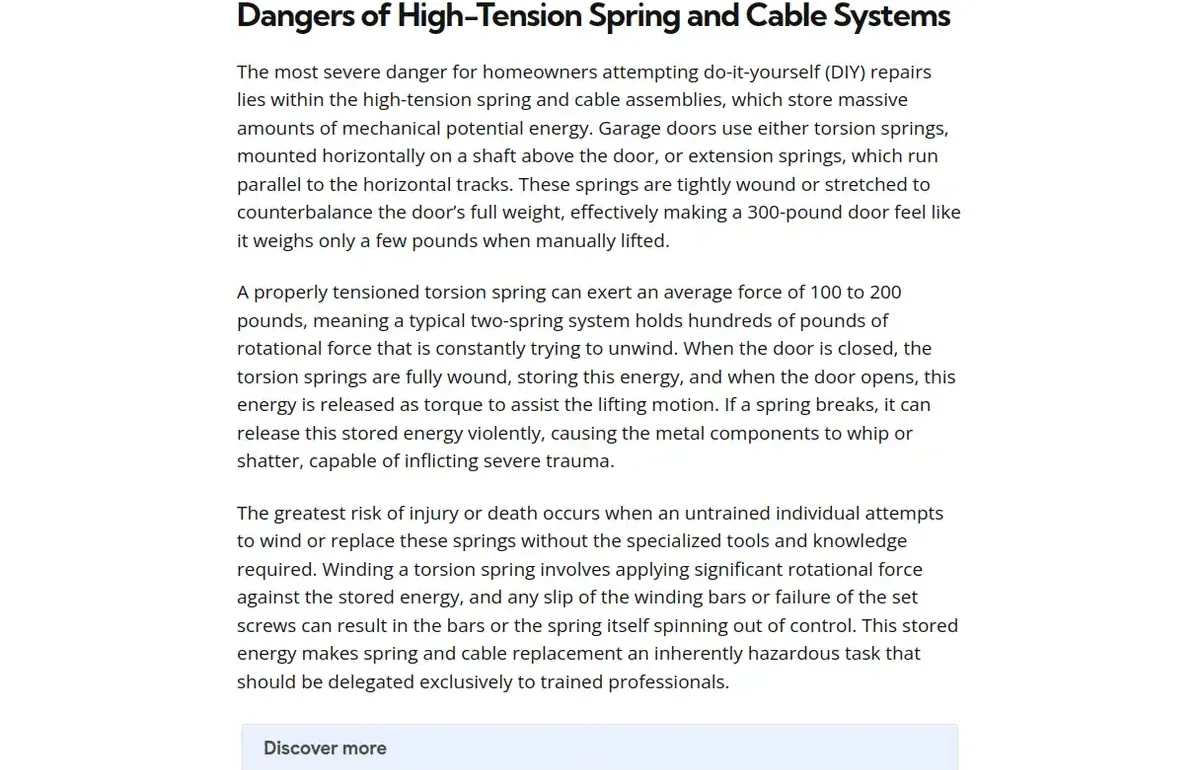
Springs counterbalance the door’s full weight, so a 300-pound door feels light by hand. That stored energy is what makes springs and cables dangerous to touch.
- A torsion spring can hold 100 to 200 pounds of force (EngineerFix, 2026).
- When a spring breaks, it releases that energy in a split second.
- Cables run under the same tension, and a snapped cable can whip.
- The opener only guides the door; the springs do about 90% of the lifting.
Safety and security are one job
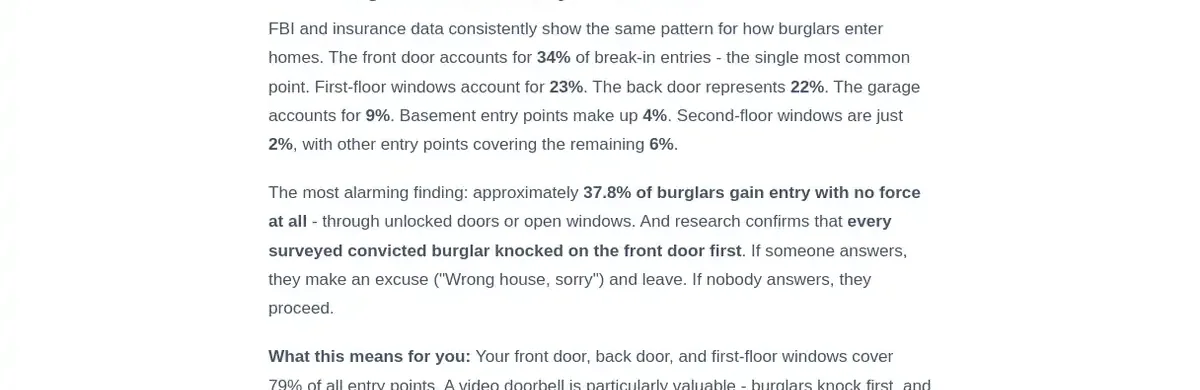
The same door that can hurt a child can also let a burglar in. About 9% of home burglaries enter through the garage (FBI data, 2024), so safety checks and security checks belong together.
- An unlocked garage door is an open door into the house.
- A broken sensor is both a safety fault and a security gap.
- A door stuck open leaves the home exposed until it is fixed.
- This guide treats safety and security as one system, not two.
2. The monthly safety tests
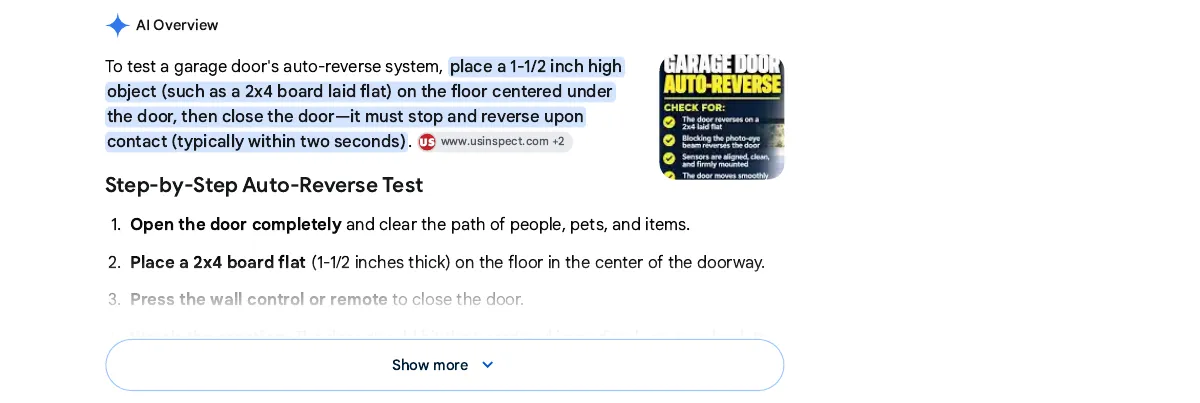
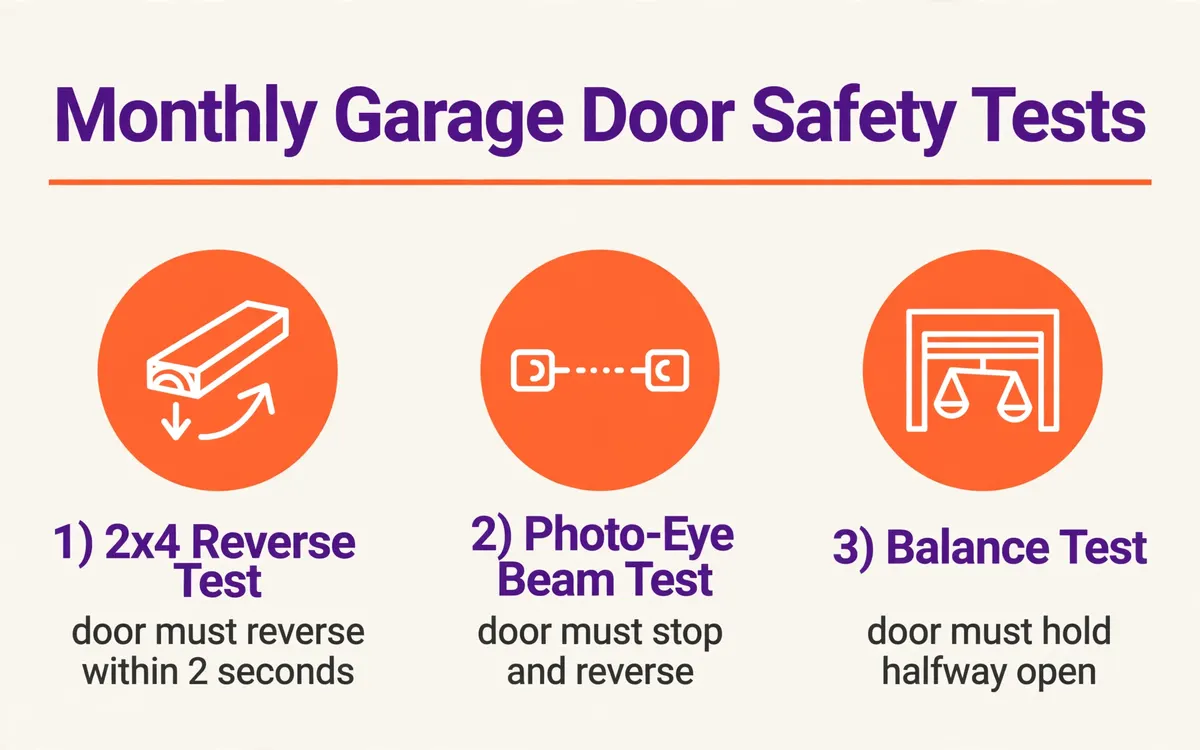
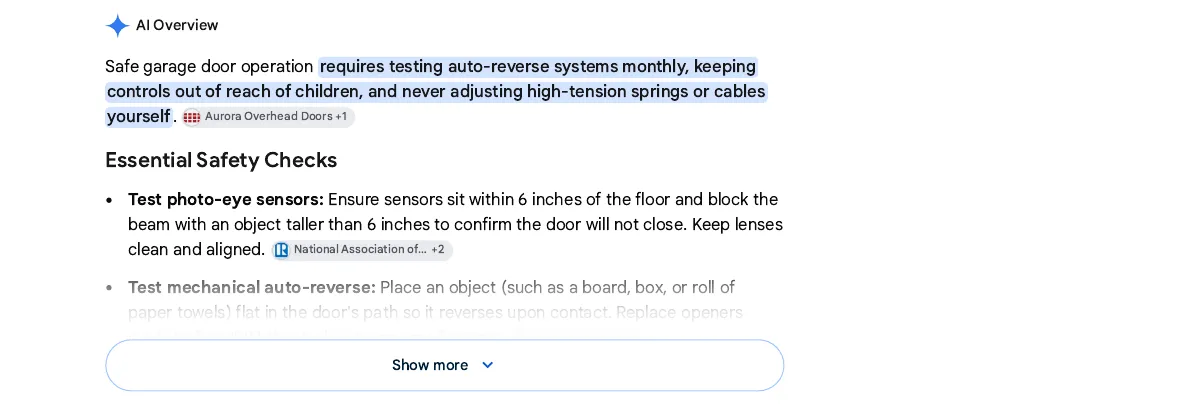
Two tests, once a month, catch most safety failures before they hurt anyone. The CPSC tells homeowners to inspect the door and opener every 30 days, and both tests take about two minutes.
The 2×4 auto-reverse test
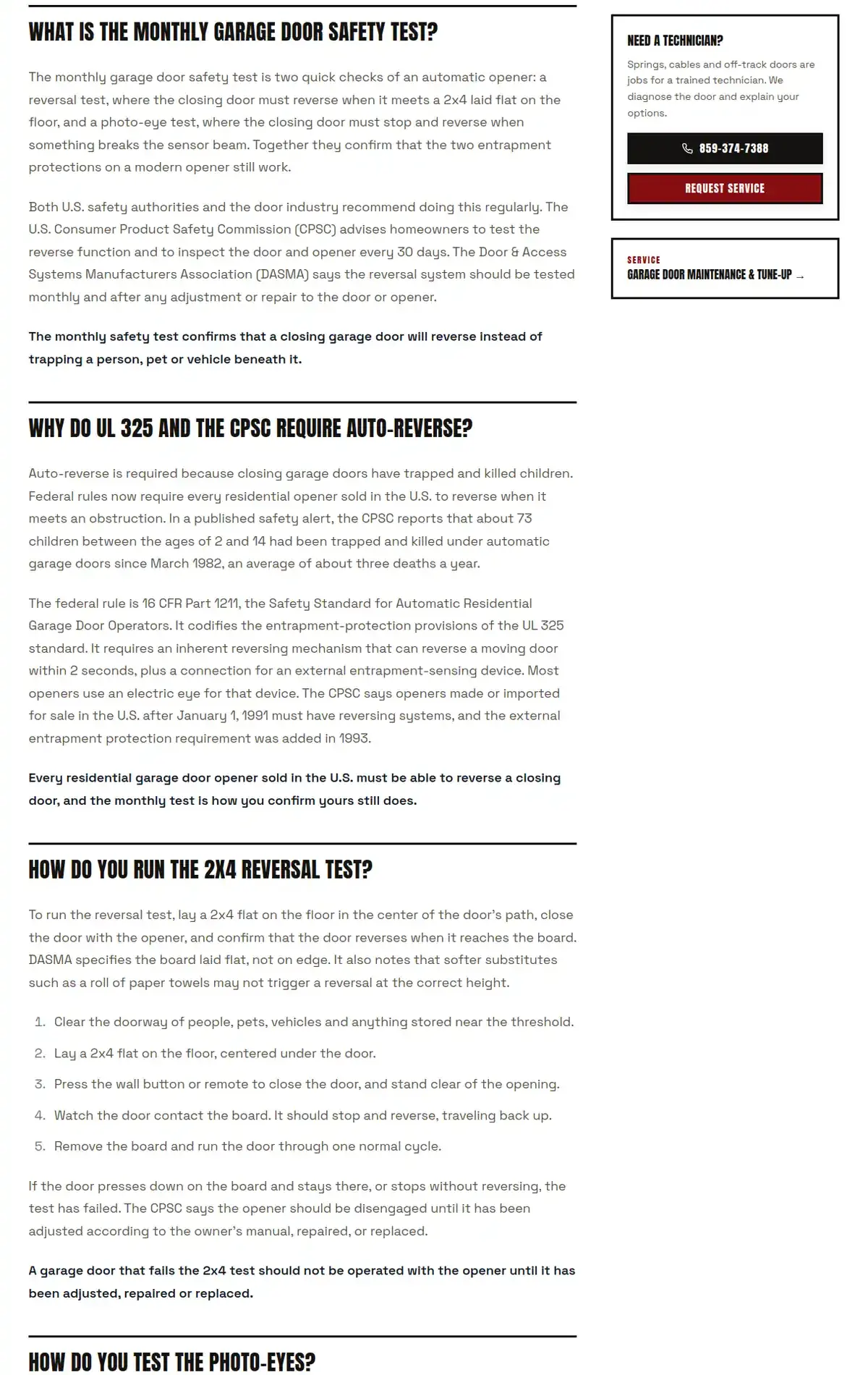
Lay a 2×4 flat on the floor in the door’s path, then close the door with the opener. The door must touch the board and reverse within two seconds.
- Use a real 2×4 laid flat, not a shoe or a hand.
- Stand clear and watch the full close, every time.
- If the door does not reverse, disengage the opener at once.
- Do not use the door again until a pro has fixed it.
The full step-by-step test is in the garage door auto-reverse and photo-eye safety test.
The photo-eye beam test
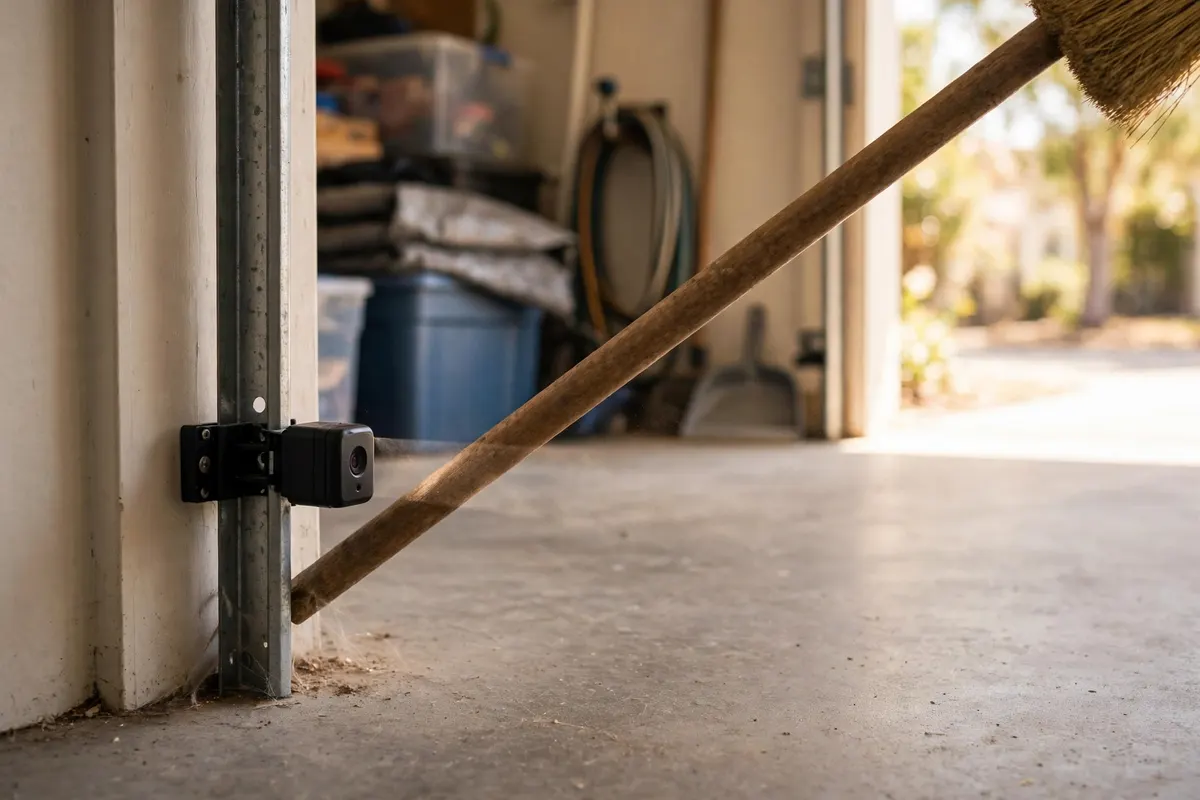
Start the door closing, then pass a broom handle through the beam between the two sensors near the floor. The door must stop and reverse at once.
- Sensors sit 4 to 6 inches above the floor (CPSC).
- Both sensor lights must be steady, not blinking.
- Wipe both lenses with a soft, dry cloth first.
- A blocked beam must also stop the door from closing at all.
The balance test, done by hand
Pull the red release cord with the door closed, then lift the door by hand to waist height. It should stay put when you let go, not drop or fly up.
- A door that drops fast has weak or broken springs.
- A door that flies up is over-tensioned.
- Never adjust springs yourself to fix a bad balance test.
- Call a pro if the door will not hold halfway open.
3. Keeping kids and pets safe
Children are the group the safety rules were written for. The CPSC’s 73 deaths since 1982 were all children aged 2 to 14, and the fixes are simple habits, not new hardware.
Pinch points are the top injury
Caught fingers caused 42% of children’s garage door injuries (CPSC NEISS, 2021–2025). Fingers get caught between moving panels, and between panels and the frame.
- Teach children never to touch a moving door.
- Keep small hands away from panel joints and hinges.
- Do not let children hang on the door or ride it.
- Check panel gaps if a toddler can reach them.
Full rules for children and pets are in garage door safety for kids and pets.
Remotes and wall controls out of reach
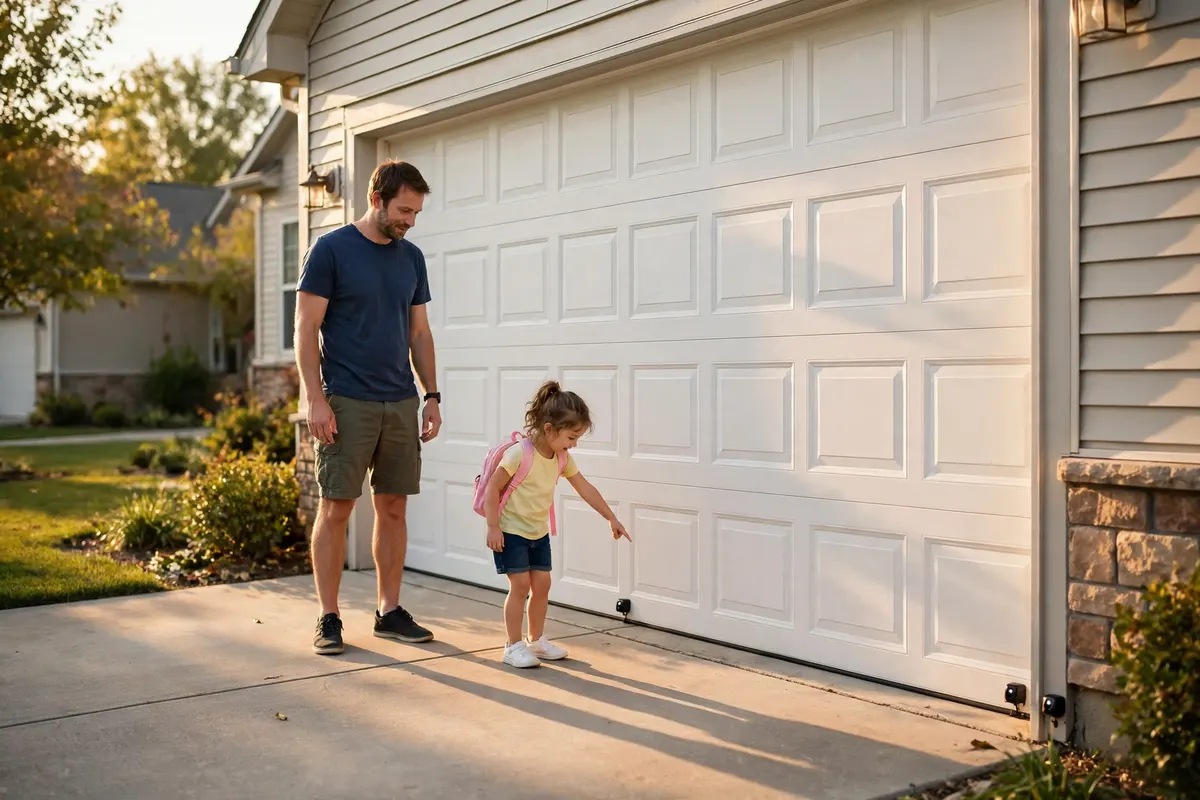
The CPSC tells parents to mount wall controls high, out of children’s reach, and to keep remotes locked away. A child with a remote can trap themselves under a closing door.
- Mount the wall button at least 5 feet high.
- Lock remotes in the car, not in a toy box.
- Never let a child race the door or play the garage door game.
- Explain the rule once, then enforce it every time.
Pets and the photo-eye beam
Pets cross the beam at floor level, which is exactly where the sensors watch. A working photo-eye stops the door for a dog or a cat, but a dirty lens may not see them.
- Keep the sensor lenses clean and aligned.
- Do not let pets sleep near the door track.
- Train dogs not to dart under a closing door.
- A low beam at 4 to 6 inches catches most pets.
4. Securing the garage against break-ins
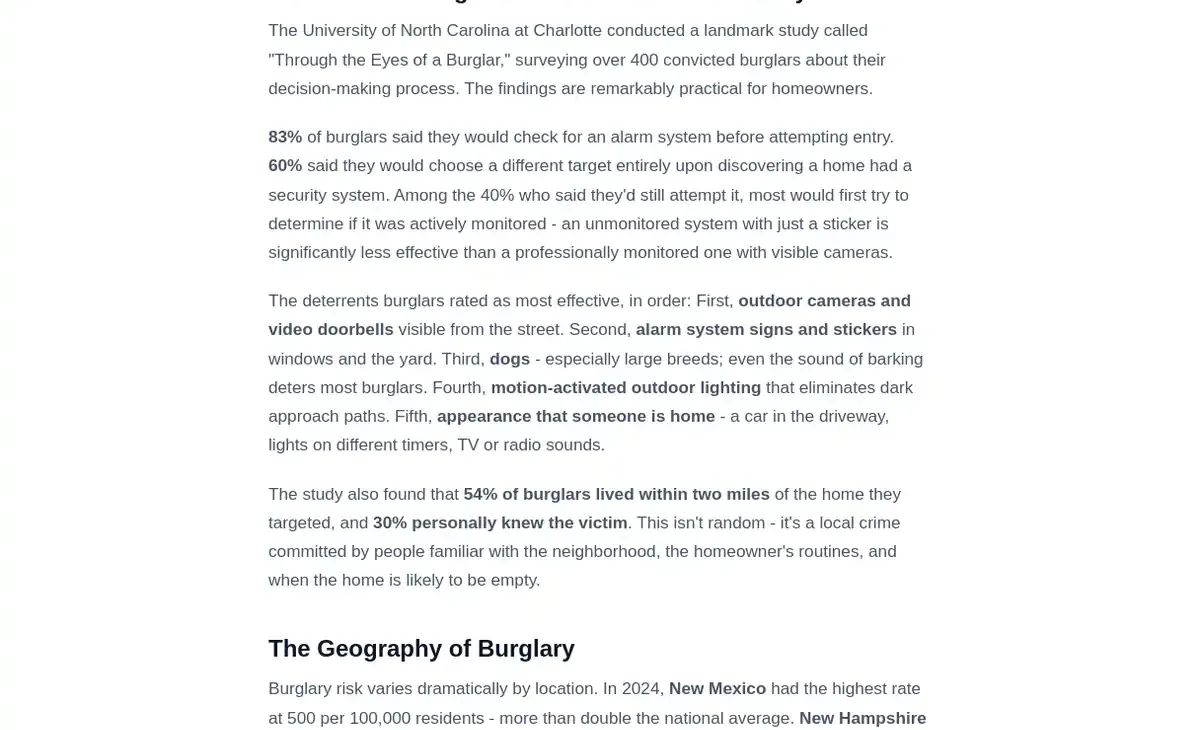
About 9% of burglaries enter through the garage, and 37.8% of burglars get in with no force at all, through unlocked doors or open windows (FBI data, 2024). Most garage break-ins are crimes of convenience.
Lock the emergency release
The red release cord can be hooked from outside through the top of the door with a coat hanger. A simple shield or a locked release stops that trick in minutes.
- Fit a release shield or zip-tie the cord for the night.
- Remove the cord trick by keeping the top seal tight.
- Never leave the release cord hanging where it can be hooked.
- Test the release yourself, so you know it still works.
The full break-in checklist is in how to prevent garage break-ins.
Secure the door, the side door and the windows
The door into the house from the garage needs a solid core and a deadbolt, not a hollow interior door. Side doors and garage windows need the same attention as the main door.
- Fit a deadbolt on the house door, and lock it every night.
- Use a solid-core door between garage and house.
- Cover or frost garage windows so tools are not on show.
- Lock the side door with a deadbolt, not a latch alone.
Smart alerts and lights
A smart opener sends an alert when the door opens, and a light over the garage deters a burglar who wants darkness. UNC Charlotte found 60% of convicted burglars would skip a home with a visible alarm.
- Set a phone alert for every door open and close.
- Add a motion light above the garage door.
- Use a camera that covers the driveway and the door.
- Close the door every night, and check it before bed.
5. Springs, cables and the pro-only line
Springs and cables hold the door’s weight under high tension, and they are the most dangerous parts a homeowner can touch. Every safety guide agrees: this work belongs to a trained pro.
What makes springs dangerous
A torsion spring stores enough energy to lift a 150 to 400 pound door, and it releases that energy at once if it breaks or slips. A winding bar slip can break bones or blind an eye.
- Never wind, unwind or replace a spring yourself.
- Never use a screwdriver as a winding bar.
- Never undo a bottom bracket with the door down.
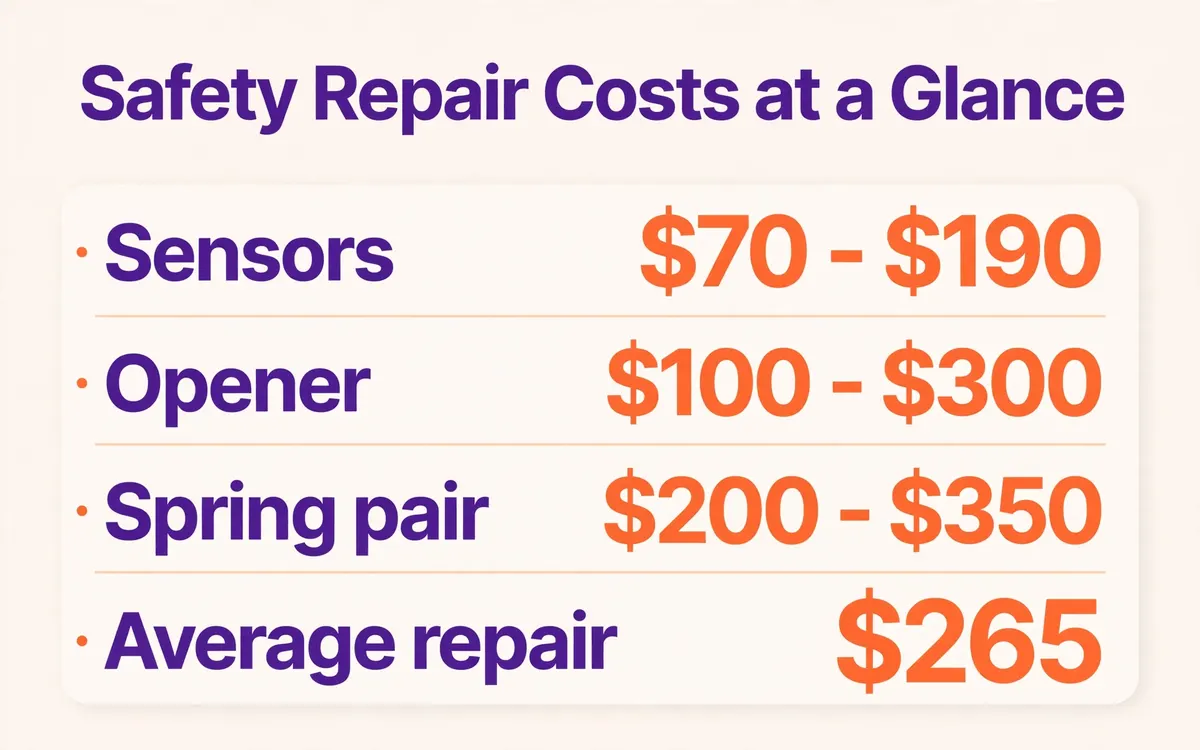
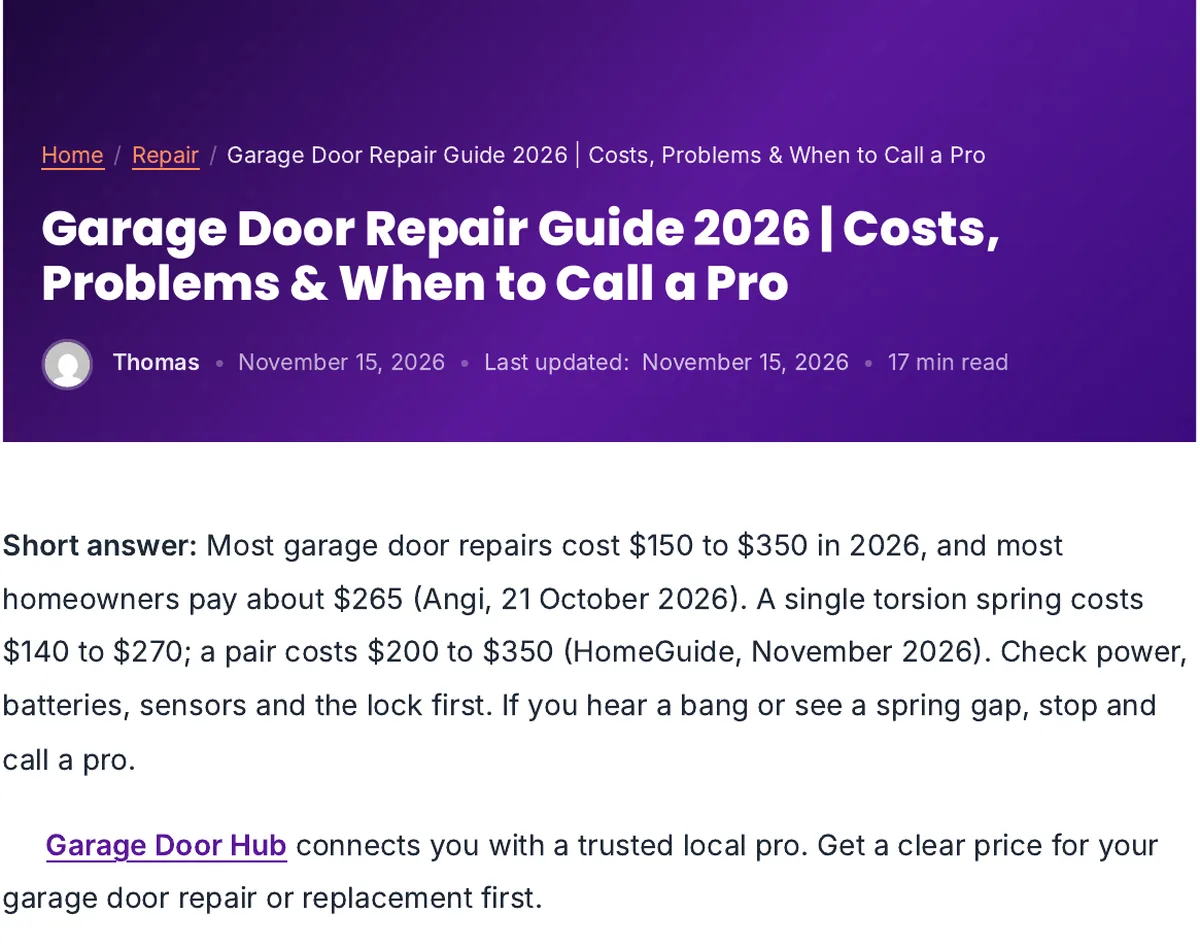
- A spring pair costs $200 to $350 installed (Fixr, Jan 2025).
The homeowner safety version is garage door spring and cable dangers. It explains what a pro does and what you must never touch.
Cables: the part everyone forgets
Lift cables carry the door’s weight on the drums, and they fray slowly until one snaps. A snapped cable can whip across the garage, and the door can drop on one side.
- Look for fraying, rust or slack cables every month.
- A door that hangs crooked may have a broken cable.
- Do not touch a loose or broken cable.
- Cable pair repair runs $150 to $300 (Garage Door Hub standard).
What a pro does that you cannot
A pro brings winding bars, a torque wrench, and the training to release tension in a controlled way. They also carry insurance, so a failure on the job is their risk, not yours.
- Pros release tension before touching any hardware.
- They match spring size, wire and turns to your door.
- They test balance and auto-reverse after the job.
- They warranty parts and labor in writing.
6. Scams, stuck doors and storms
Three situations catch homeowners off guard: a scam quote, a door stuck open, and storm damage. Each has a short, calm playbook, and each starts with the same rule — stop, look, then act.
Spot a repair scam in five minutes
A $29 service call that triples on site is the classic bait. The technician finds that everything needs replacing, pressures you to decide now, and asks for cash only.
- A $29 bait ad with no company name is the first red flag.
- A vague phone quote that triples on site is the second.
- Cash-only, no written warranty, no license number — walk away.
- A spring pair at $200 to $350 is the fair range to check against.
The full scam list is garage door repair scams: how to spot them.
When the door is stuck open
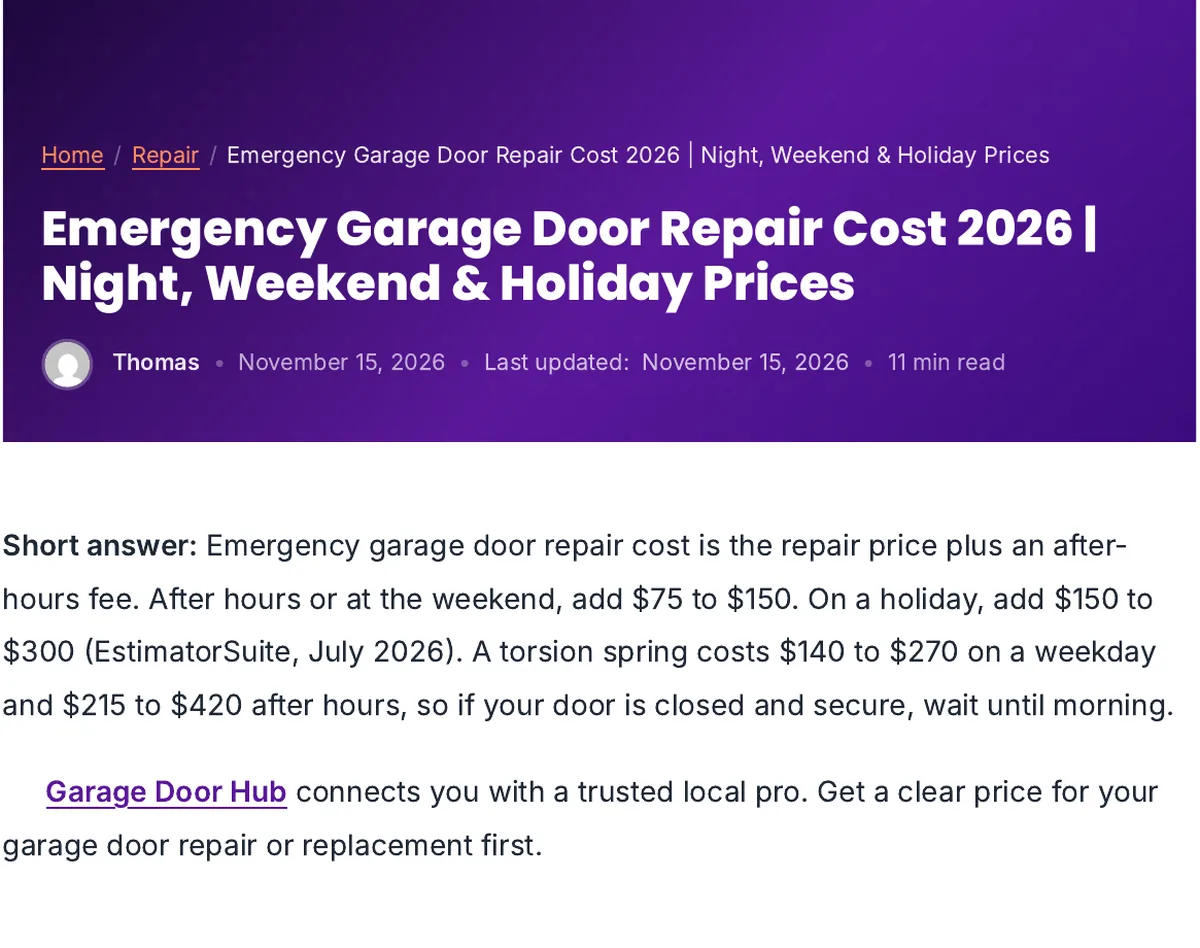
A door stuck open leaves the home exposed, so secure the house first and the door second. Do not force the door, and do not leave the garage open overnight.
- Lock the house door and move valuables out of sight.
- Pull the release cord only with the door fully open or closed.
- Do not force a stuck door down by hand or with the opener.
- Call a pro, and ask for the after-hours price first.
The steps are in what to do when your garage door is stuck open.
After a storm: check, photograph, claim
Wind can bow panels, bend tracks and snap springs, and water can reach the opener. Photograph everything before you touch the door, then call your insurer before a repairer.
- Check for downed power lines and standing water first.
- Photograph the whole door, then each damaged part.
- Do not run a damaged door to test it.
- Storm chasers knock fast — check license and reviews first.
The storm checklist is storm damage: what to check after severe weather.
7. What safety and security cost in 2026
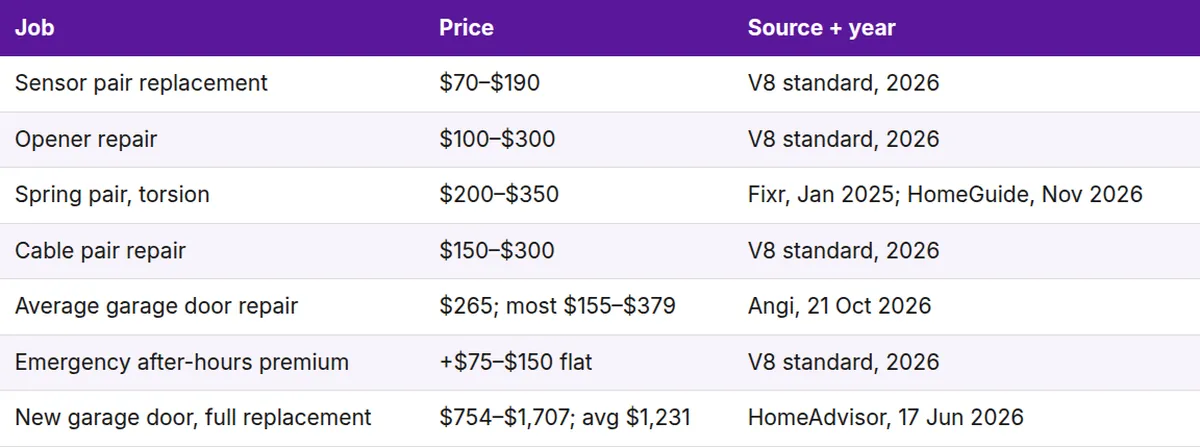
Most safety fixes are cheap, and the expensive ones are the pro-only jobs. The table below keeps sources separate, so you can check any quote against a named figure.
Safety fix price table
These are national guide ranges from named sources, not quotes for your door. A service call fee sits on top of most of them, at $50 to $75 (Garage Door Hub standard).
| Job | Price | Source + year |
|---|---|---|
| Sensor pair replacement | $70–$190 | Garage Door Hub standard, 2026 |
| Opener repair | $100–$300 | Garage Door Hub standard, 2026 |
| Spring pair, torsion | $200–$350 | Fixr, Jan 2025; HomeGuide, Nov 2026 |
| Cable pair repair | $150–$300 | Garage Door Hub standard, 2026 |
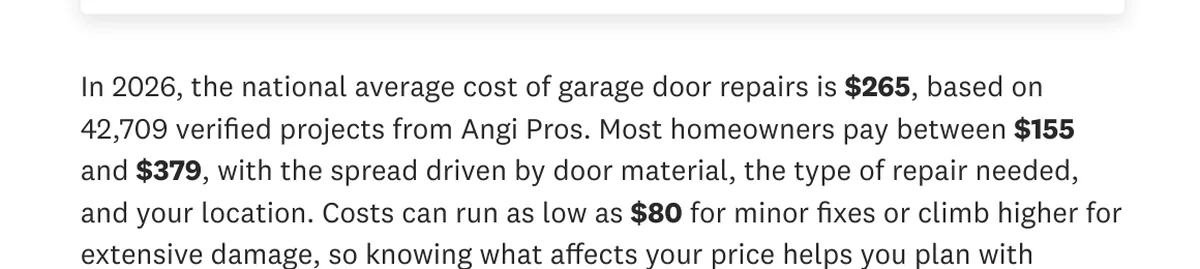
| Average garage door repair | $265; most $155–$379 | Angi, 21 Oct 2026 |
| Emergency after-hours premium | +$75–$150 flat | Garage Door Hub standard, 2026 |
| New garage door, full replacement | $754–$1,707; avg $1,231 | HomeAdvisor, 17 Jun 2026 |
- Sensor jobs are the cheapest safety fix, at $70 to $190.
- A spring pair at $200 to $350 is the range to check a quote against.
- Emergency calls add $75 to $150 on top of the repair.
- A full replacement averages $1,231 (HomeAdvisor, 17 Jun 2026).
When repair beats replacement
Use the 50% rule: if the repair costs under 40% of a new door, repair it. If it costs over 60%, replace the door. Between those lines, get a second quote.
- Under 40% of replacement cost — repair it.
- Over 60% of replacement cost — replace it.
- A door over 15 years old with two faults is a replace case.
- A single broken spring on a young door is a repair case.
Watch: Garage door safety features and how to test them
A1 Garage Door Service’s Garage Authority Podcast explains the safety features every garage door should have — photo-eye sensors, auto-reverse and pressure sensitivity — and how to test them at home.
- Test the auto-reverse and the photo-eyes every month — both tests take about two minutes.
- Lay a 2×4 flat in the door’s path: the door must touch it and reverse within two seconds.
- Never disable or bypass the safety sensors, and keep remotes out of children’s reach.
Video: A1 Garage Door Service (Garage Authority Podcast), YouTube. Checked 21 November 2026.
Garage Door Hub connects homeowners with trusted local garage door pros. Need a repair? Need a replacement? Start here. First, find out what it should cost. Then, price your exact job with our free calculator. Next, find a pro near you. Fast. No jargon. No guesswork. No surprise bills. Just clear prices, honest guides, and a local pro you can call today.
FAQ
How often should I test my garage door safety features?
Test the auto-reverse and the photo-eyes every month, and inspect the door and opener every 30 days (CPSC, 2026). Both tests take about two minutes, and a failed test means disengaging the opener until a pro fixes it.
What is the 2×4 garage door safety test?
Lay a 2×4 flat on the floor in the door’s path, then close the door with the opener. The door must touch the board and reverse within two seconds. If it does not reverse, stop using the opener and call a pro.
How do I keep my garage door safe for children?
Mount the wall control at least 5 feet high, lock remotes away from children, and teach them never to race or play under a moving door. Test the auto-reverse monthly, since about 73 children have died under doors since 1982 (CPSC).
Can a garage door spring really kill someone?
Yes. A torsion spring holds 100 to 200 pounds of force and releases it at once if it breaks or slips during a DIY attempt. Springs and cables are pro-only work, never a DIY repair.
How much does a garage door safety repair cost?
A sensor pair runs $70 to $190, an opener repair $100 to $300, and a spring pair $200 to $350 (Fixr, Jan 2025; HomeGuide, Nov 2026). The average garage door repair is $265 (Angi, 21 Oct 2026).
Sources
- U.S. Consumer Product Safety Commission, Publication 523 — about 73 children aged 2 to 14 trapped and killed under automatic garage doors since March 1982. Checked 20 Nov 2026.
- Tulsa Garage Door Help, 15 Nov 2026 — analysis of CPSC NEISS data 2021–2025: estimated 17,500 ER visits in 2025; children under 15 were 6% of injuries; caught fingers caused 42% of theirs.
- EZ Open, 21 Oct 2026 — monthly auto-reverse and photo-eye test; CPSC 30-day inspection; DASMA monthly test guidance.
- Modern Home Protection, 2026 — FBI 2024 data: 779,542 burglaries, down 8.1% from 2023; garage is 9% of entries; 37.8% gain entry with no force.
- EngineerFix, 2026 — torsion spring force 100 to 200 pounds; doors weigh 150 to 400 pounds; spring and cable work is pro-only.
- Angi, 21 Oct 2026 — average garage door repair $265, most $155–$379.
- Angi, updated 30 Oct 2026 — spring replacement $150 to $350 per spring, average $250.
Last reviewed: 20 November 2026
Appendix — Related topics
You might have found this by these keywords — and if not, others might have: garage door safety, garage door auto reverse test, garage door spring danger, garage door safety sensors, garage door child safety, garage door break-in prevention, garage door spring safety, garage door safety test, garage door emergency release, garage door safety checklist, garage door safety for kids and pets, garage door monthly safety test.