

The U.S. Consumer Product Safety Commission reports about 73 children aged 2 to 14 were trapped and killed under automatic garage doors since March 1982. That is about three deaths a year, and most involved a door that did not reverse.
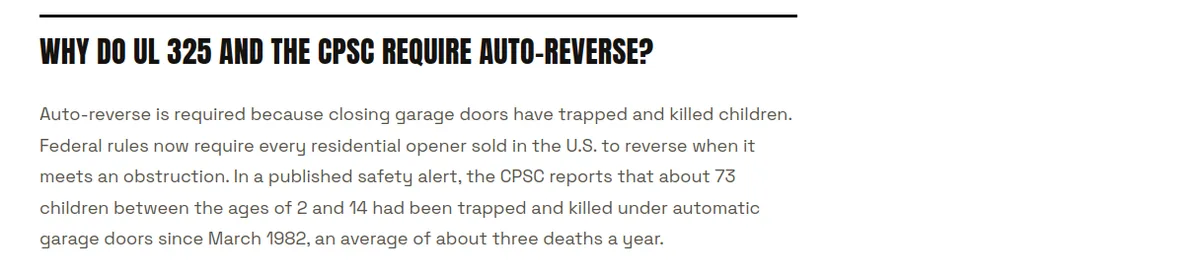
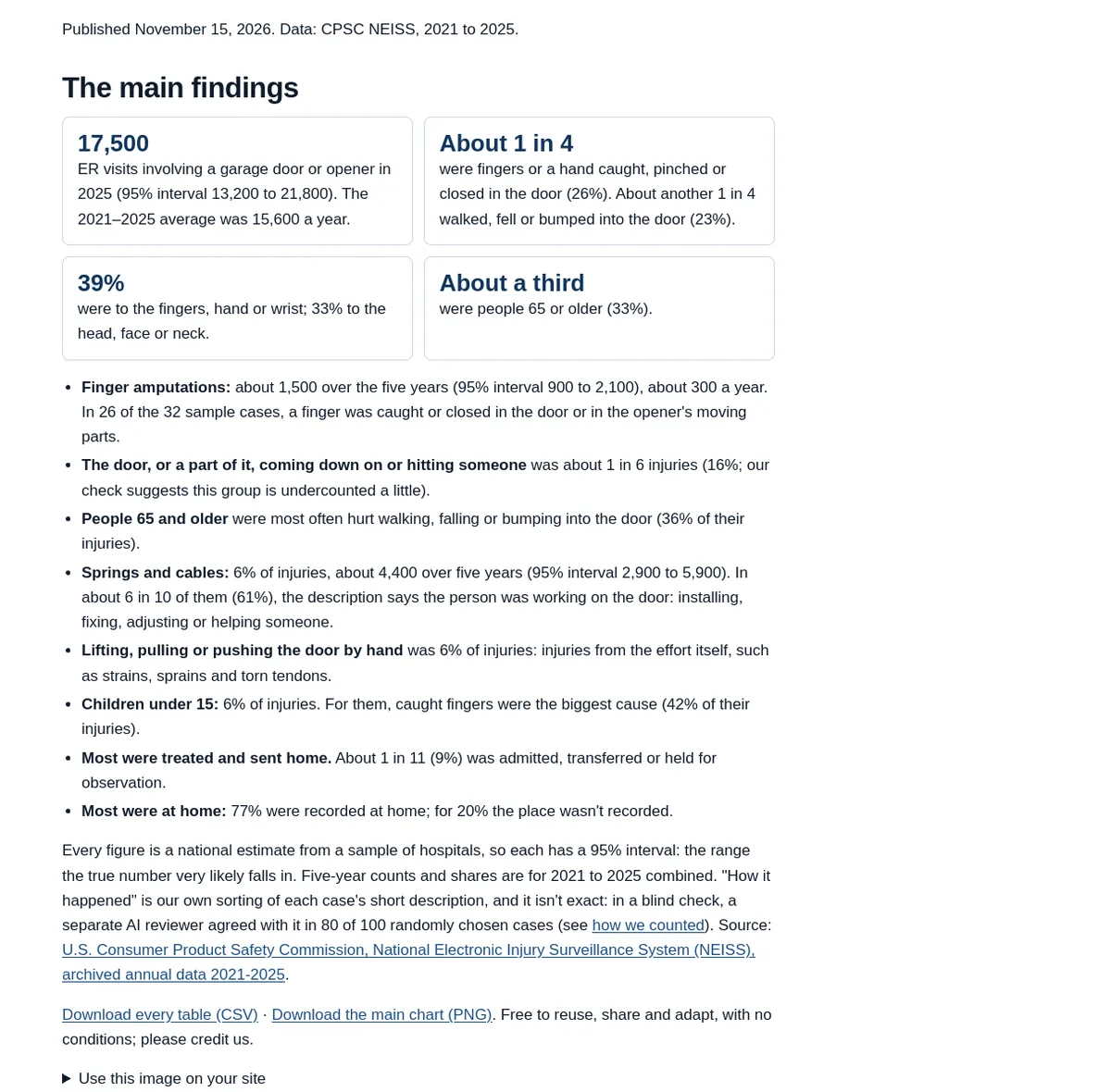
The same agency’s emergency room data shows children under 15 made up 6% of garage door injuries from 2021 to 2025 — and caught fingers caused 42% of theirs (CPSC NEISS, Nov 2026).
This guide turns those numbers into house rules. It covers pinch points, sensors, remotes, and pets, with checks you can do this weekend and habits that last.
Garage door safety for kids starts with the monthly auto-reverse test: the door must reverse within 2 seconds of touching a 2×4 (CPSC, 2026). Mount wall controls at least 5 feet high, lock remotes away from children, and teach them never to race or play under a moving door. Caught fingers caused 42% of children’s garage door injuries (CPSC NEISS, 2021–2025).
Garage Door Hub connects you with a trusted local pro. Get a clear price for your garage door repair or replacement first.
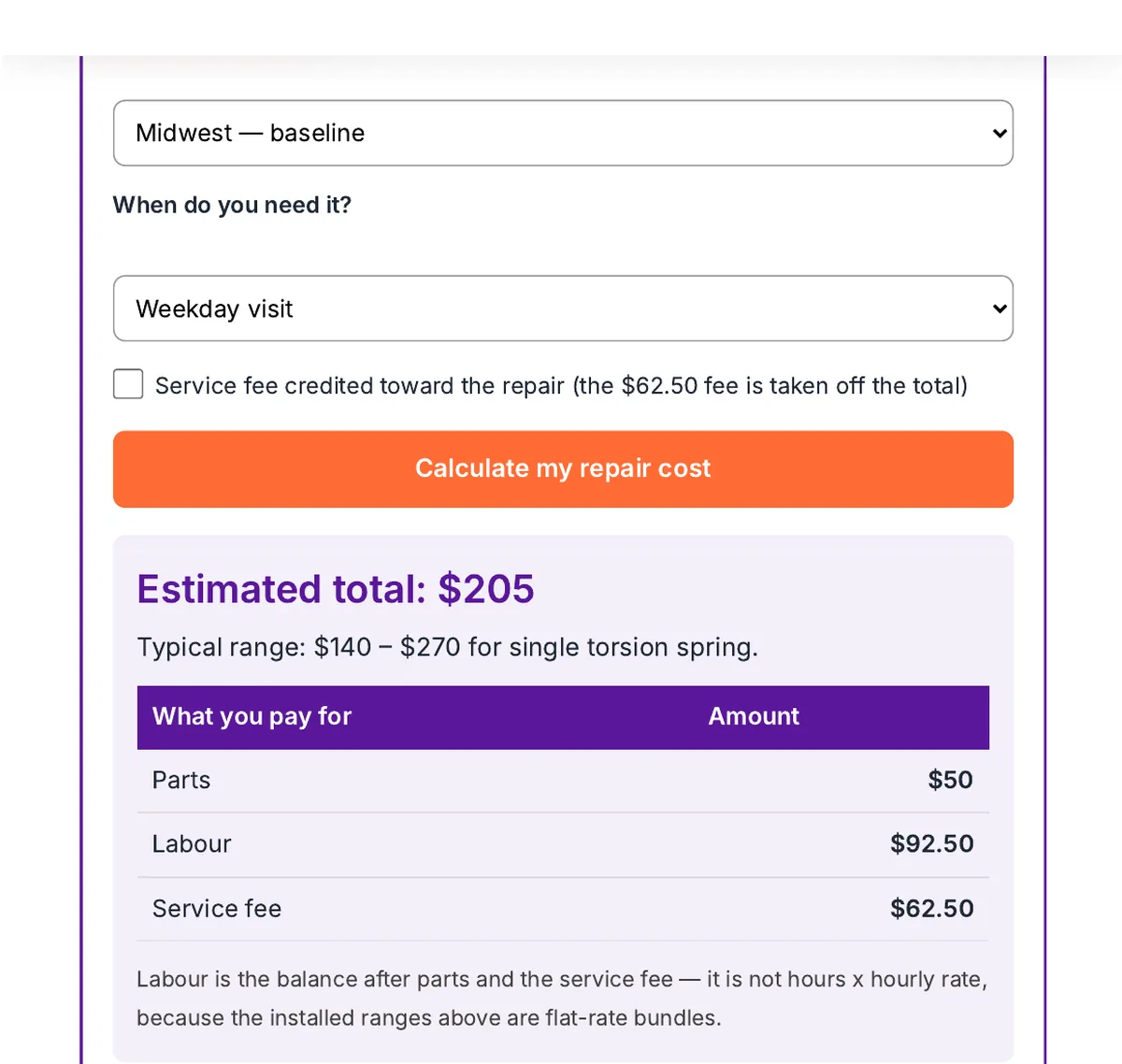
Price your job first with the free calculators below. They give you a number before you call anyone.
Repair Cost Calculator — price a sensor or safety repair for a family home.
- Enter your door size and the part involved.
- Note the price, then read the key takeaways and Section 1.
- Use the price to check any quote you get.
Key takeaways
- Caught fingers caused 42% of children’s garage door injuries — teach hands off.
- Never let a child race the door or play the garage door game.
- Mount the wall button at least 5 feet high and lock remotes away.
- Test the auto-reverse monthly — it is the rule that saves lives.
- Pets need the same beam test, since they cross at floor level.
Table of Contents
-
1. What hurts kids most: the numbers
-
2. Pinch points: where fingers get caught
-
3. Sensors and the monthly test
-
4. Remotes, keypads and wall controls
-
5. House rules that actually work
-
6. Pets: dogs, cats and the garage door
-
7. The family safety checklist
- Watch: Keeping kids and pets safe around the garage door
- FAQ
1. What hurts kids most: the numbers
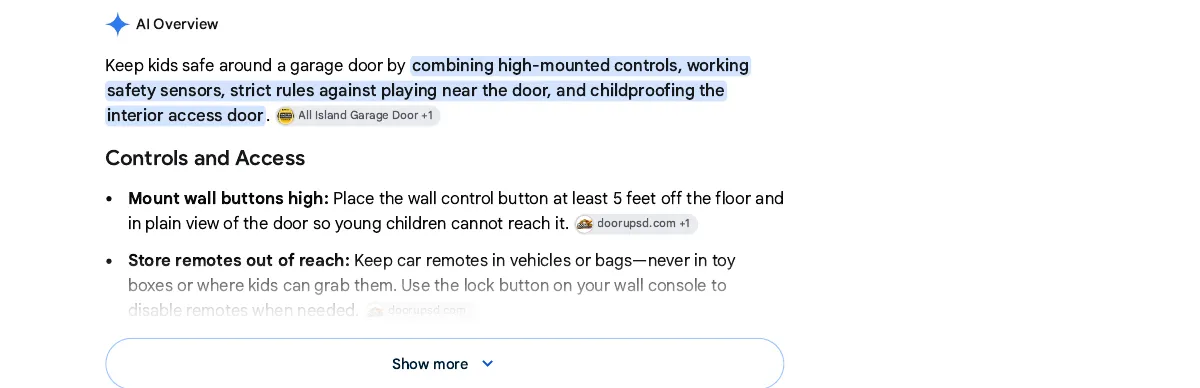
CPSC emergency room data from 2021 to 2025 shows the pattern clearly. Children are a small share of injuries, but their injuries follow a pattern you can prevent with rules, not hardware.
Caught fingers lead the list
Caught fingers caused 42% of children’s garage door injuries (CPSC NEISS, 2021–2025). Fingers get caught between moving panels, and between panels and the frame, as the door folds up.
- Panel joints pinch as each section folds over the next.
- The gap between the panel edge and the frame pinches too.
- Small hands reach gaps that adult hands never notice.
- A finger injury happens in a second, with no warning.
Entrapment under a closing door
Children aged 5 to 10 try to slide under a closing door, or race it to the other side. About 73 children aged 2 to 14 have died this way since March 1982 (CPSC).
- The garage door game — racing the door — has killed 32 children since 1982.
- A child who ducks under a closing door may not clear it in time.
- A door that fails to reverse turns a game into a trap.
- The auto-reverse test is the only check that catches this.
Head and neck injuries
Head, face or neck injuries made up about a third of all garage door ER visits over five years (CPSC NEISS, 2021–2025). A reversing door can strike a child who walks into its path.
- A child who walks under a moving door can be struck on the head.
- A door that reverses for no reason can drop back onto a child.
- Teach children to wait until the door is fully open or fully closed.
- Never let a child stand in the doorway while the door moves.
2. Pinch points: where fingers get caught
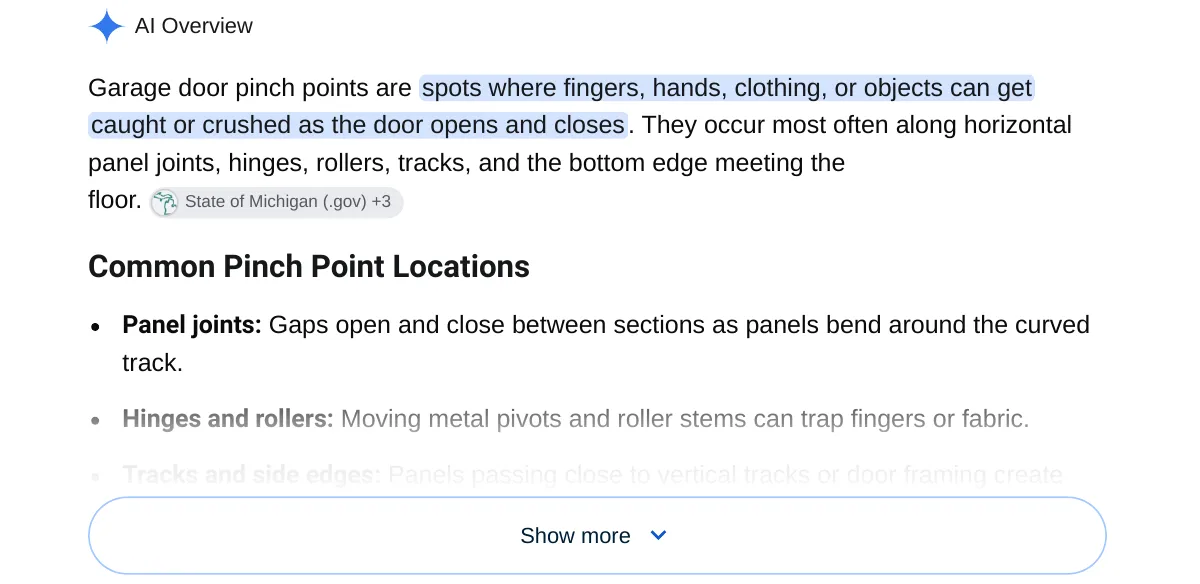
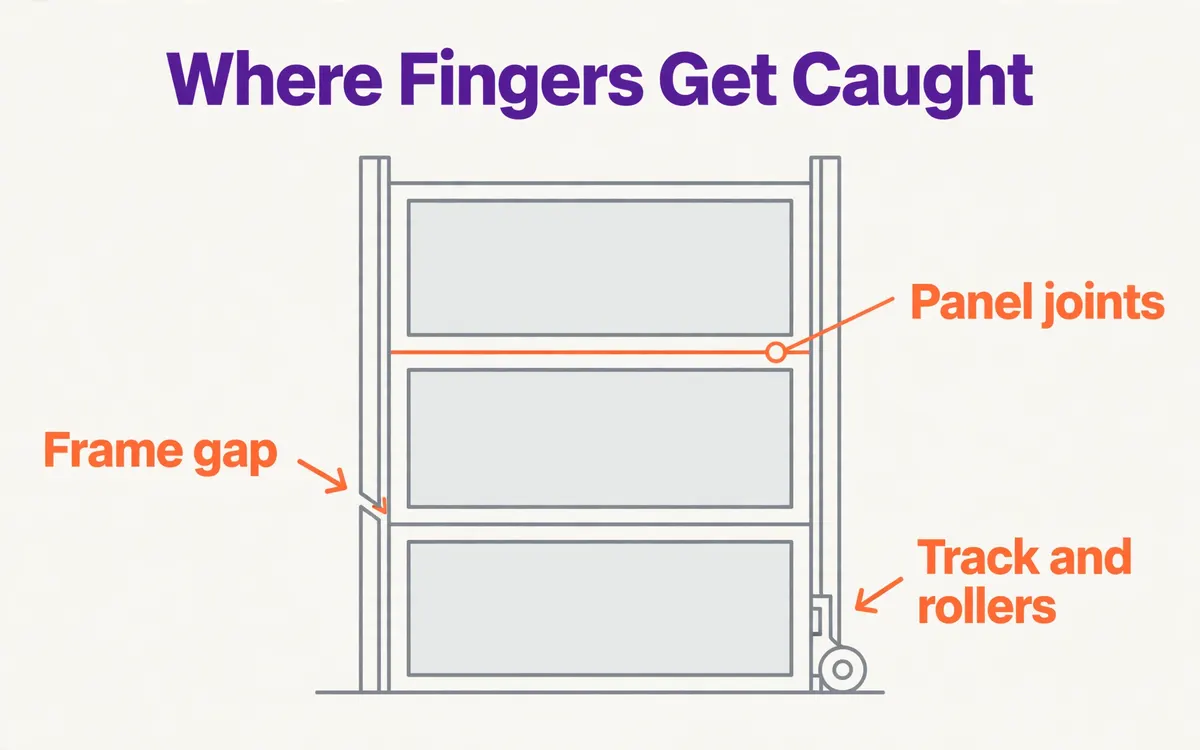
A sectional door is a set of panels joined by hinges, and every joint is a pinch point. The door folds as it opens, and each fold can trap a finger in a split second.
The joints between panels
Each panel joint closes as the door rises, and a finger in the joint gets pinched hard. Children touch the door to watch it move, which puts their hands right on the joint.
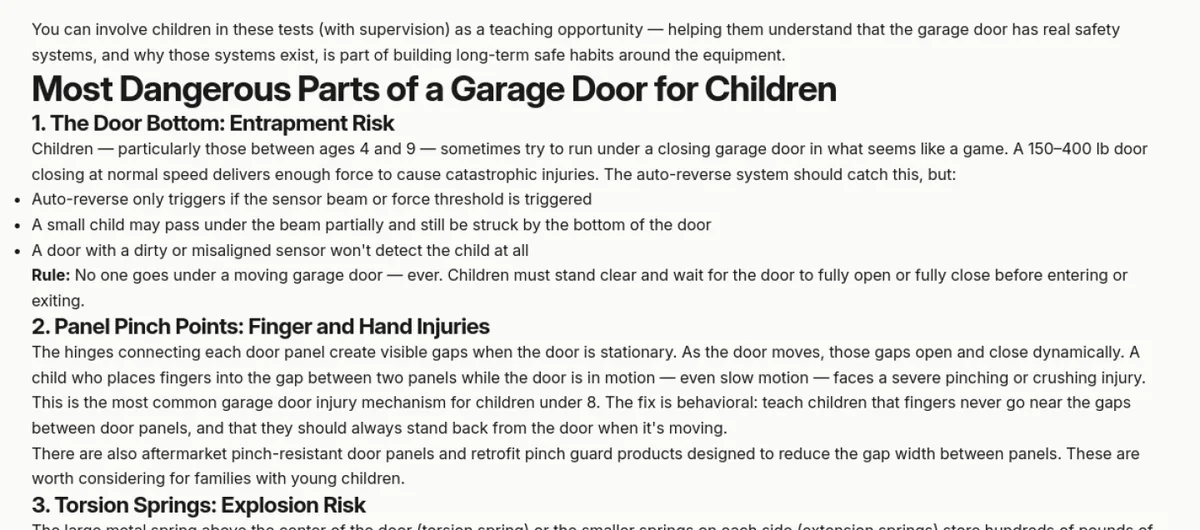
- Keep children’s hands off the door while it moves.
- Stand children back from the door before you press the button.
- Check for pinch guards if your door has none fitted.
- Teach the rule once: hands off a moving door, every time.
The gap at the frame and the track
The gap between the door edge and the frame, and the rollers in the track, can catch a small hand. A toddler who reaches for the track while the door moves is at real risk.
- Keep toddlers away from the track while the door runs.
- Do not let children push the door or hang on it.
- Check the track for sharp edges or loose bolts.
- A door that judders or sticks needs a pro, not a child pushing it.
What to do if a finger is caught
If a finger is caught, stop the door at once and call for help. Do not pull the finger free by force, and get medical care fast — a pinch can break a small bone.
- Press the wall button or pull the release cord to stop the door.
- Do not force the finger out of the joint.
- Apply a cold cloth and check for swelling or a bent finger.
- Go to urgent care if the finger is swollen, bent, or will not move.
3. Sensors and the monthly test
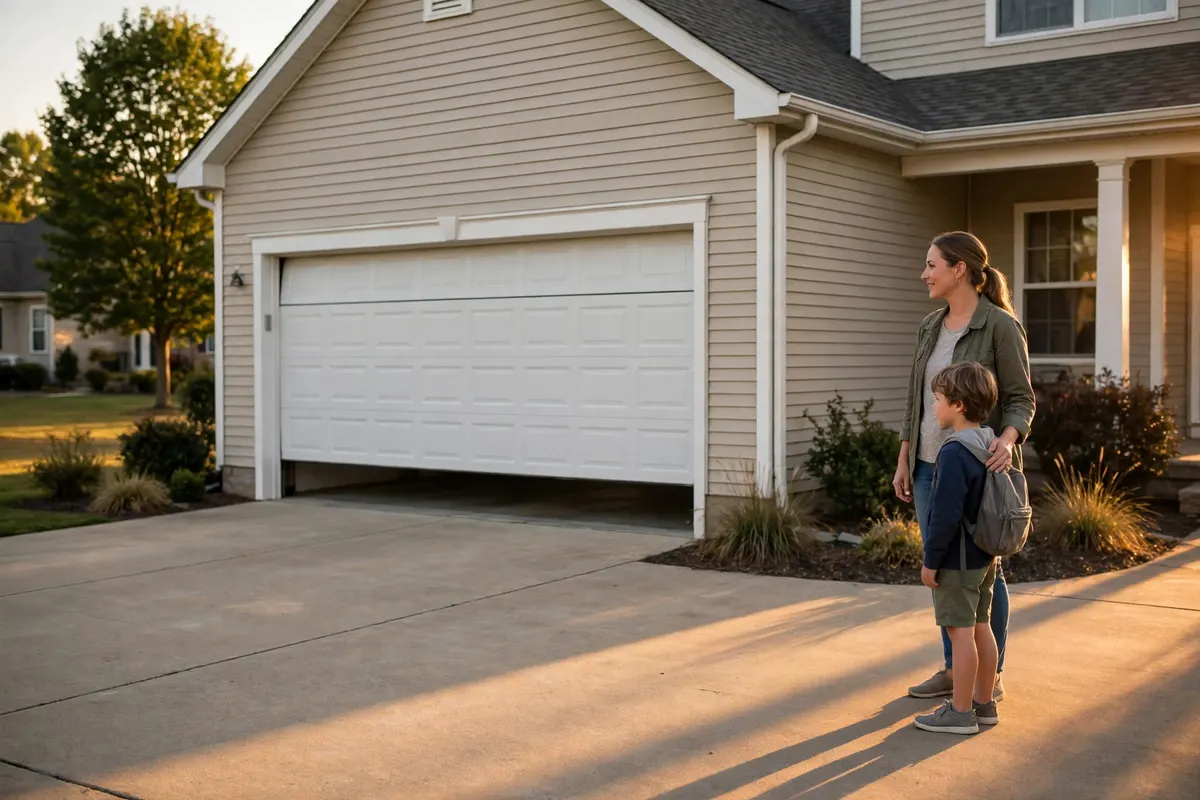
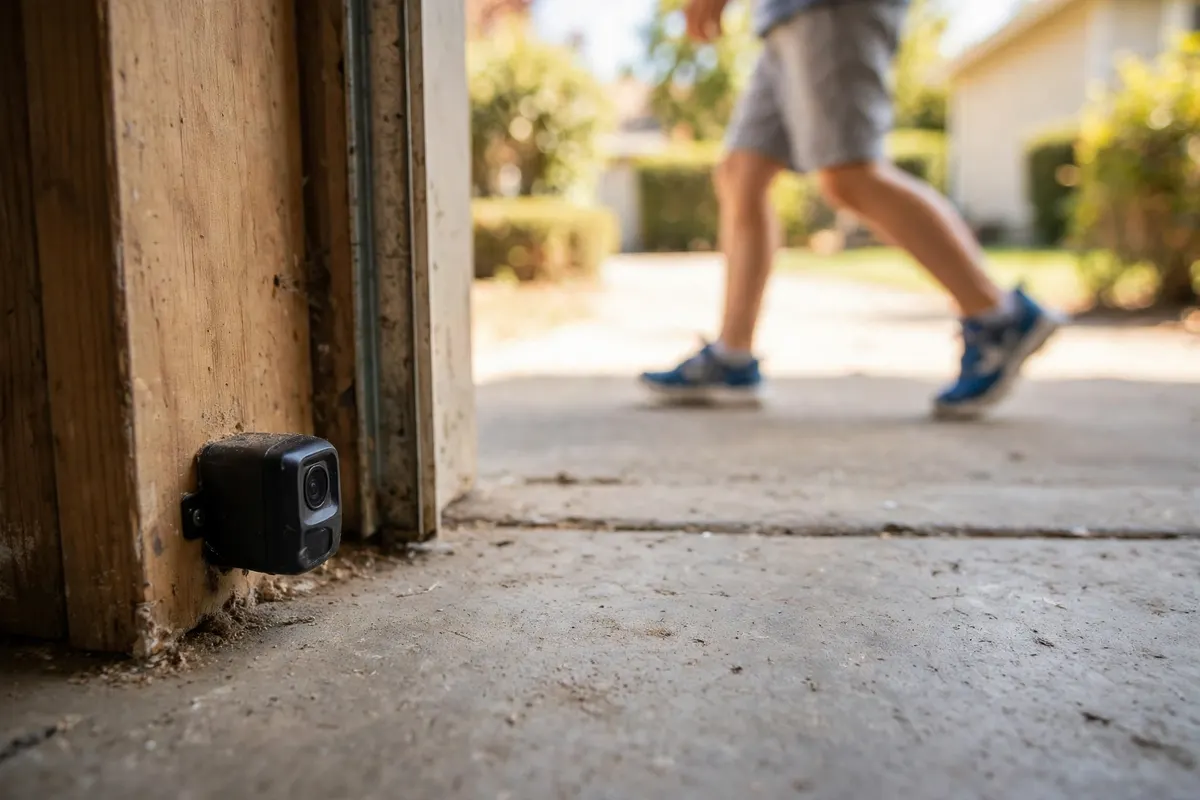
The photo-eye sensors are the safety net for children and pets, because they stop the door before it touches anything. A dirty lens or a knocked bracket removes that net without any warning.
Why sensors matter most for kids
Children are short, so they cross the beam at floor level, right where the sensors watch. A working beam stops the door for a child who runs under it, but a blind sensor does not.
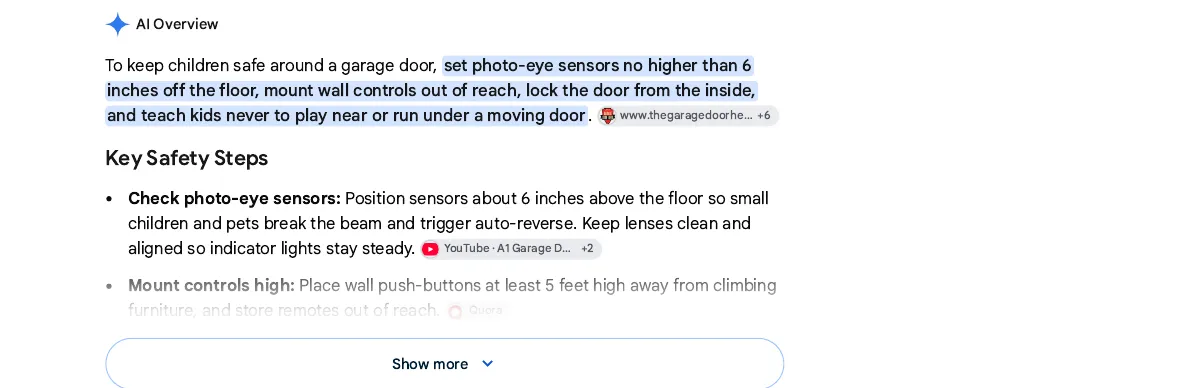
- Sensors sit 4 to 6 inches above the floor (CPSC).
- A child running under the door breaks the beam first.
- A blocked beam must also stop an open door from closing.
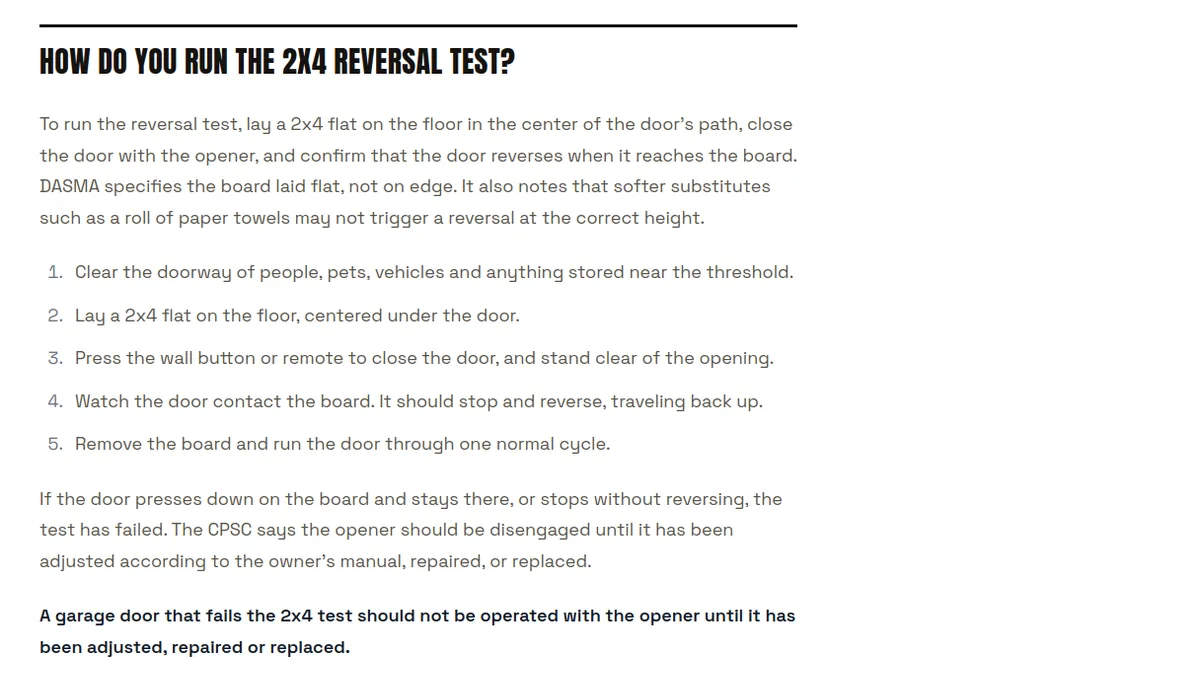
- Test the beam monthly with a broom handle, not a hand.
Full test steps are in the garage door auto-reverse and photo-eye safety test.
Keep the lenses clean and aligned
Wipe both sensor lenses with a soft, dry cloth each month, and check that both lights are steady. A blinking light means the beam is broken or the sensor is out of line.
- Wipe both lenses monthly, and after any dusty work.
- Tighten a loose bracket so both lenses face each other.
- Clear cobwebs, leaves and toys from the beam path.
- Never tape or disconnect a sensor to make the door close.
Teach children what the sensors do
Children who know the sensors exist will not test them. Show them the two small boxes by the floor, and explain that the door stops when something crosses the light between them.
- Point out the two sensors and the lights on each one.
- Explain that the door stops for anything in the beam.
- Tell them the sensors are not a toy and not a game.
- Let them watch a beam test with a broom handle, once.
4. Remotes, keypads and wall controls
The CPSC tells parents to mount wall controls high, out of children’s reach, and to keep remotes locked away. A child with a remote can close the door on themselves or on a sibling.
Wall controls: high and out of reach
Mount the wall button at least 5 feet above the floor, where a small child cannot reach it. The button should be in sight of the door, so you can watch the door while you press it.
- Mount the button at least 5 feet high.
- Place it where you can see the whole door.
- Never mount it where a child can climb to reach it.
- Use a button with a light, so you can see it at night.
Remotes: locked away, not in a toy box
The CPSC urges parents to keep remote controls locked in the car’s accessory compartment, so children cannot reach them. A remote left on a shelf is a toy to a child.
- Keep remotes in the car, not in the house.
- Do not leave a spare remote on a hook by the door.
- Teach older children that the remote is not a toy.
- If a child has pressed the remote, test the auto-reverse at once.
Keypads and smart openers
A keypad code is safer than a remote in a child’s pocket, but only if the code stays secret. Change the code if a child shares it, and set phone alerts for every door open and close.
- Give the keypad code only to family who need it.
- Change the code if a child tells a friend.
- Set a phone alert for every open and close.
- Use the vacation lock when you go away with the kids.
Remote and keypad faults are covered in garage door sensors, remote and keypad troubleshooting.
5. House rules that actually work
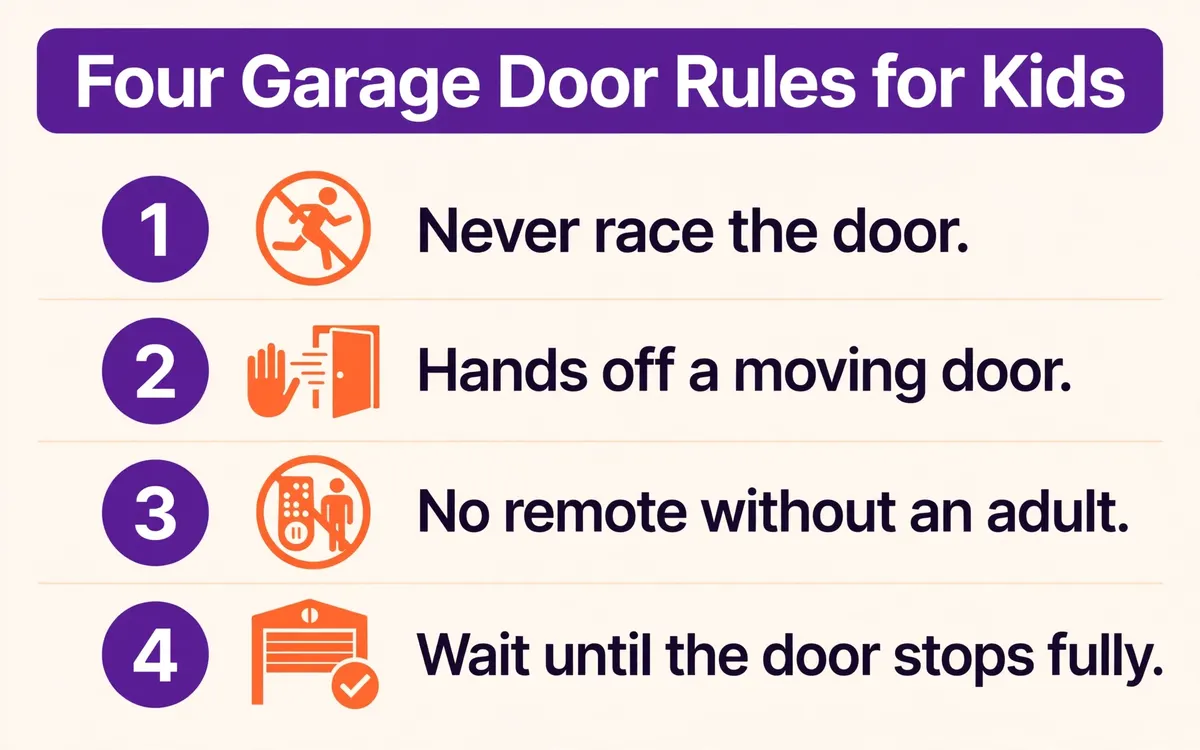
Rules work when they are short, clear, and enforced every time. Four rules cover almost every child injury in the CPSC data, and they cost nothing to set.
The four rules
Write these four rules down, and put them where the family can see them. Say them the same way every time, so a child can repeat them back to you.
- Never race the door, and never play under it.
- Hands off a moving door, always.
- Never touch the remote or the wall button without an adult.
- Wait until the door is fully open or fully closed before you walk through.
Never race the door
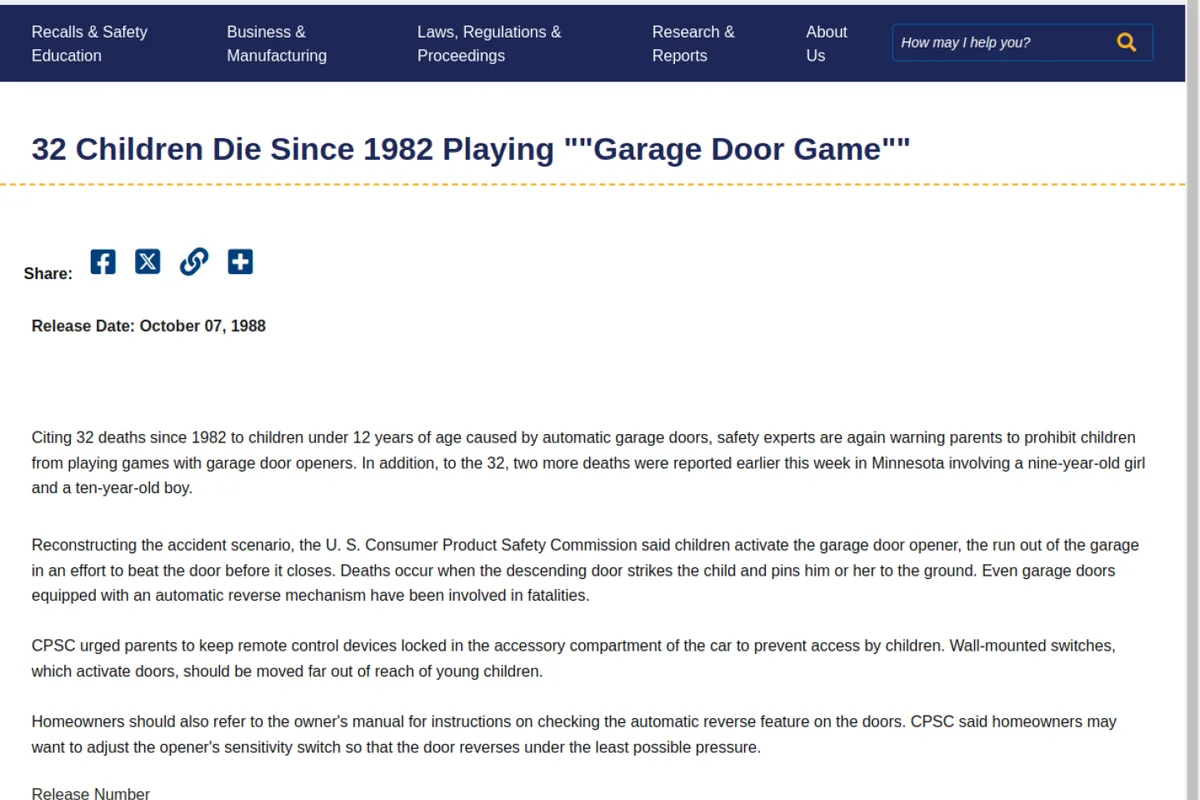
The garage door game has killed 32 children since 1982 (CPSC, 1989). A child activates the opener, then runs out to beat the door before it closes, and the door pins them to the ground.
- Ban the game by name, so children know what you mean.
- Explain that even a reversing door has killed children.
- Watch for it when friends visit — their parents may not know.
- If you catch a child racing the door, stop the game at once.
Practice the rules with young children
Show a young child the door moving, from a safe distance, and say the rules out loud. A child who has seen the test understands the danger better than a child who has only heard a warning.
- Stand back and watch one full open and close together.
- Point out the sensors and the red release cord.
- Ask the child to repeat the four rules back to you.
- Repeat the practice every few months as they grow.
6. Pets: dogs, cats and the garage door
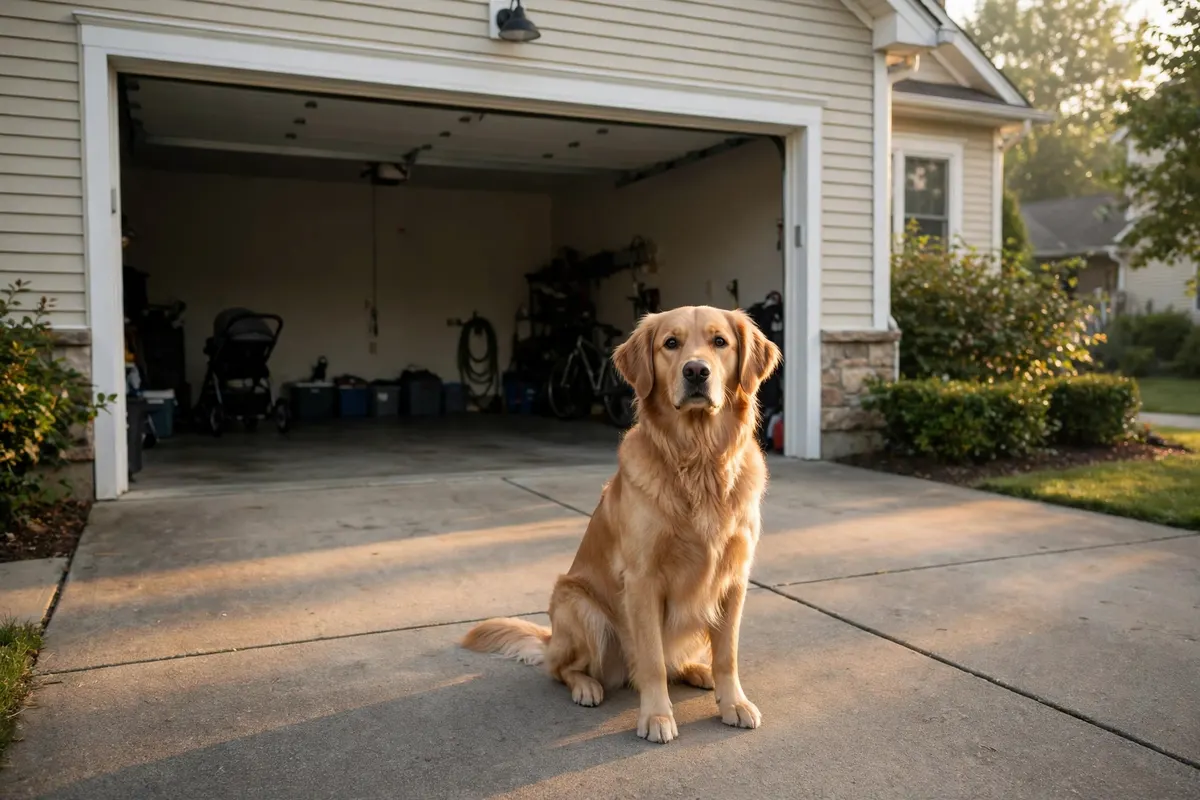
Pets cross the beam at floor level, which is exactly where the sensors watch — but only if the sensors work. A dog that darts under a closing door, or a cat that sleeps by the track, needs the same checks as a child.
Dogs that dart under the door
Dogs chase, run, and dart through gaps, and a closing garage door is a gap that closes fast. Train your dog to wait for a clear command before going through the doorway.
- Train the dog to wait until the door is fully open.
- Never call a dog through a moving door.
- Keep the sensor lenses clean — a dog is low, like a child.
- If the dog has darted under the door, test the beam at once.
Cats, small pets and the track
Cats sleep in warm, quiet spots, and the garage track is one of them. A cat asleep by the track can be caught when the door moves, so check the track before you close the door.
- Look along the track and under the door before closing.
- Keep pet beds away from the door and the track.
- Do not store pet food by the door — it draws animals there.
- Check for a pet before every close, not just in the morning.
The emergency release and pets
A pet cannot pull the release cord, so a pet trapped in the garage needs you to open the door. Keep the release cord where you can reach it, and know how it works before you need it.
- Know where the red release cord hangs, and how to pull it.
- Pull it only with the door fully closed or fully open.
- Keep a spare key to the house door in the garage.
- If a pet is trapped and the door will not open, call a pro fast.
7. The family safety checklist
One weekend of checks, then a monthly routine, covers the whole guide. Print this section, do it with the family, and repeat the monthly part on the first weekend of each month.
This weekend: the one-time setup
Do these once, and they stay done until something changes. Most take minutes, and none needs a pro — except the spring check, which is look-only, never touch.
- Mount the wall button at least 5 feet high.
- Lock remotes in the car, and change the keypad code.
- Wipe both sensor lenses and check both lights are steady.
- Look at springs and cables for rust or fraying — look only.
- Teach the four rules, and ask each child to repeat them.
Every month: the two-minute test
Test the auto-reverse with a 2×4 and the photo-eye beam with a broom handle, every month. The CPSC tells homeowners to inspect the door and opener every 30 days.
- Run the 2×4 reverse test, and note the date.
- Run the beam test, and check both lights are steady.
- Run the balance test by hand, with the opener disengaged.
- If any test fails, disengage the opener and call a pro.
The full monthly routine is in the garage door safety and security guide, and the repair side is in the garage door repair guide.

Watch: Keeping kids and pets safe around the garage door
A1 Garage Door Service’s Garage Authority Podcast talks through garage door safety for families on YouTube, with operations expert Andrea Davis. It covers sensors, monthly checks and teaching children safe habits.
- Photo-eye sensors must sit no higher than 6 inches off the floor, so they can see a crawling child or a small pet.
- Mount the wall control at least 5 feet high and keep remotes out of small hands.
- Test the auto-reverse monthly with a 2×4, and teach children never to race or play under a moving door.
Video: A1 Garage Door Service, YouTube. Checked 21 November 2026.
Garage Door Hub connects homeowners with trusted local garage door pros. Need a repair? Need a replacement? Start here. First, find out what it should cost. Then, price your exact job with our free calculator. Next, find a pro near you. Fast. No jargon. No guesswork. No surprise bills. Just clear prices, honest guides, and a local pro you can call today.
FAQ
What is the most common garage door injury for children?
Caught fingers. They caused 42% of children’s garage door injuries from 2021 to 2025 (CPSC NEISS, Nov 2026). Fingers get caught between moving panels, and between panels and the frame.
How do I keep my child safe around a garage door?
Mount the wall control at least 5 feet high, lock remotes away, teach them never to race or play under a moving door, and test the auto-reverse monthly. The door must reverse within 2 seconds of touching a 2×4 (CPSC, 2026).
At what age can a child use the garage door opener?
There is no set age in the CPSC guidance — the rule is supervision, not age. A child should only use the opener with an adult present, and only once they can repeat the four house rules and wait for the door to stop fully.
Are garage door sensors safe for pets?
Yes, when they work. Pets cross the beam at floor level, where the sensors watch, so a working photo-eye stops the door for a dog or a cat. Keep the lenses clean and test the beam monthly with a broom handle.
What is the garage door game, and why is it dangerous?
Children activate the opener and run out to beat the door before it closes. The CPSC reports 32 children died playing it since 1982. Even doors with auto-reverse have been involved in deaths, so ban the game by name.
Sources
- Tulsa Garage Door Help, 15 Nov 2026 — analysis of CPSC NEISS data 2021–2025: children under 15 were 6% of injuries; caught fingers caused 42% of theirs; head, face or neck injuries were about a third.
- U.S. Consumer Product Safety Commission, 1989 — 32 children died since 1982 playing the garage door game; keep remotes locked in the car's accessory compartment.
- Garage Door Locator, 2026 — finger and hand injuries from panel pinch points are the most frequent child injury; entrapment is most common at ages 5 to 10.
- EZ Open, 21 Oct 2026 — monthly auto-reverse and photo-eye test; CPSC 30-day inspection; about 73 children killed since 1982.
- U.S. Consumer Product Safety Commission, Publication 523 — about 73 children aged 2 to 14 trapped and killed under automatic garage doors since March 1982.
Last reviewed: 20 November 2026
Appendix — Related topics
You might have found this by these keywords — and if not, others might have: garage door safety for kids, garage door child safety, garage door pinch points, garage door safety sensors, garage door auto reverse test, childproof garage door, garage door remote safety, garage door safety checklist, keep kids safe garage door, garage door pet safety, garage door safety for pets, how to childproof a garage door.