

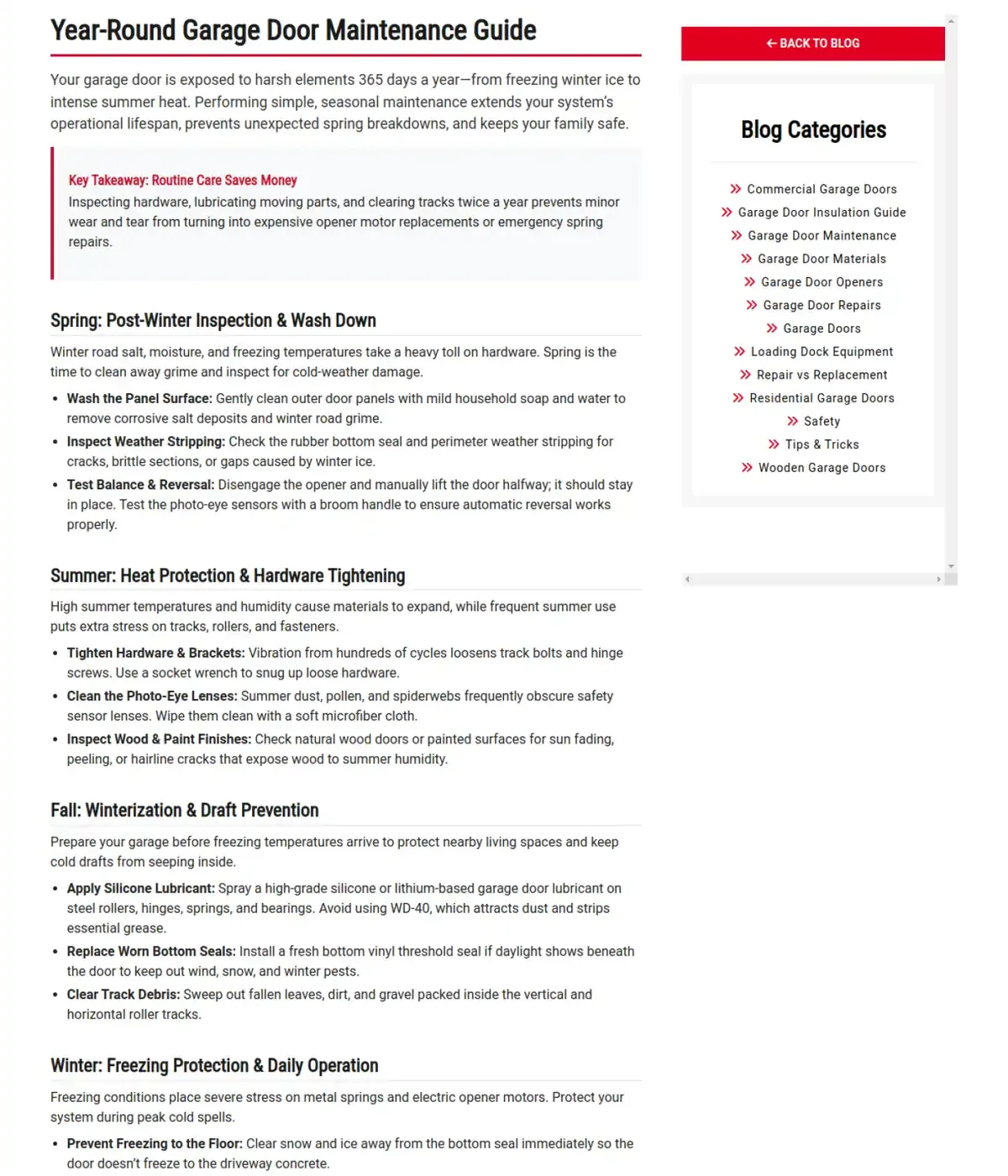
Overhead Door’s year-round guide says a twice-yearly check stops small wear from turning into an opener motor replacement or an emergency spring repair. That is the whole case for maintenance in one line.
Most doors open and close more than 1,000 times a year. Every cycle wears rollers, hinges, springs and cables a little more, and none of those parts warns you loudly before it fails.
This guide gives you the full schedule. It shows what you can do safely, what a pro should do, what it costs, and when to stop and call for help.
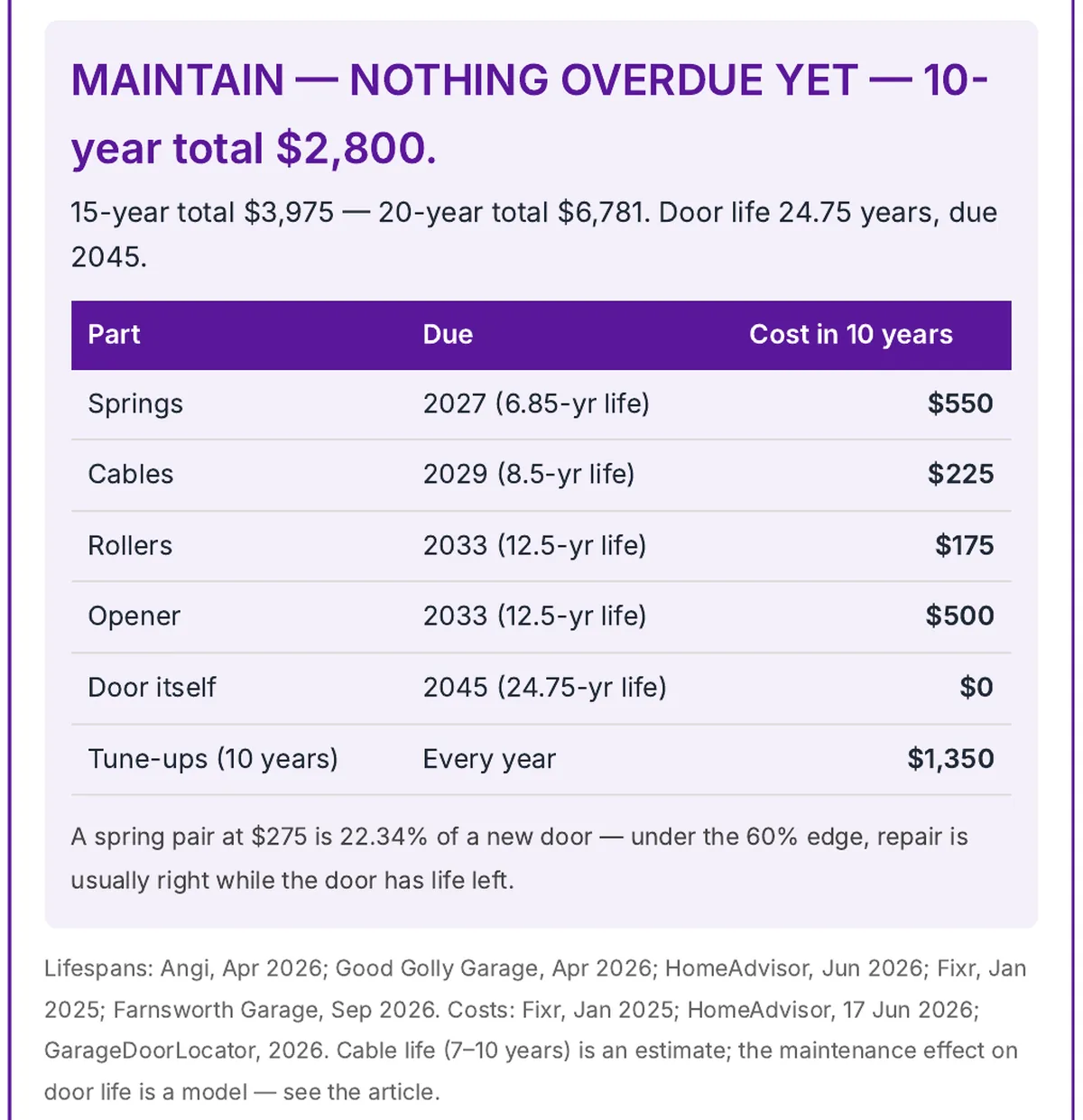
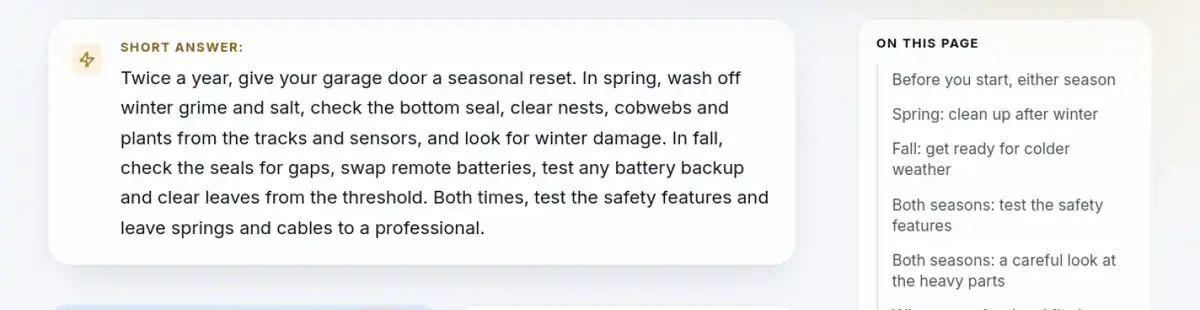
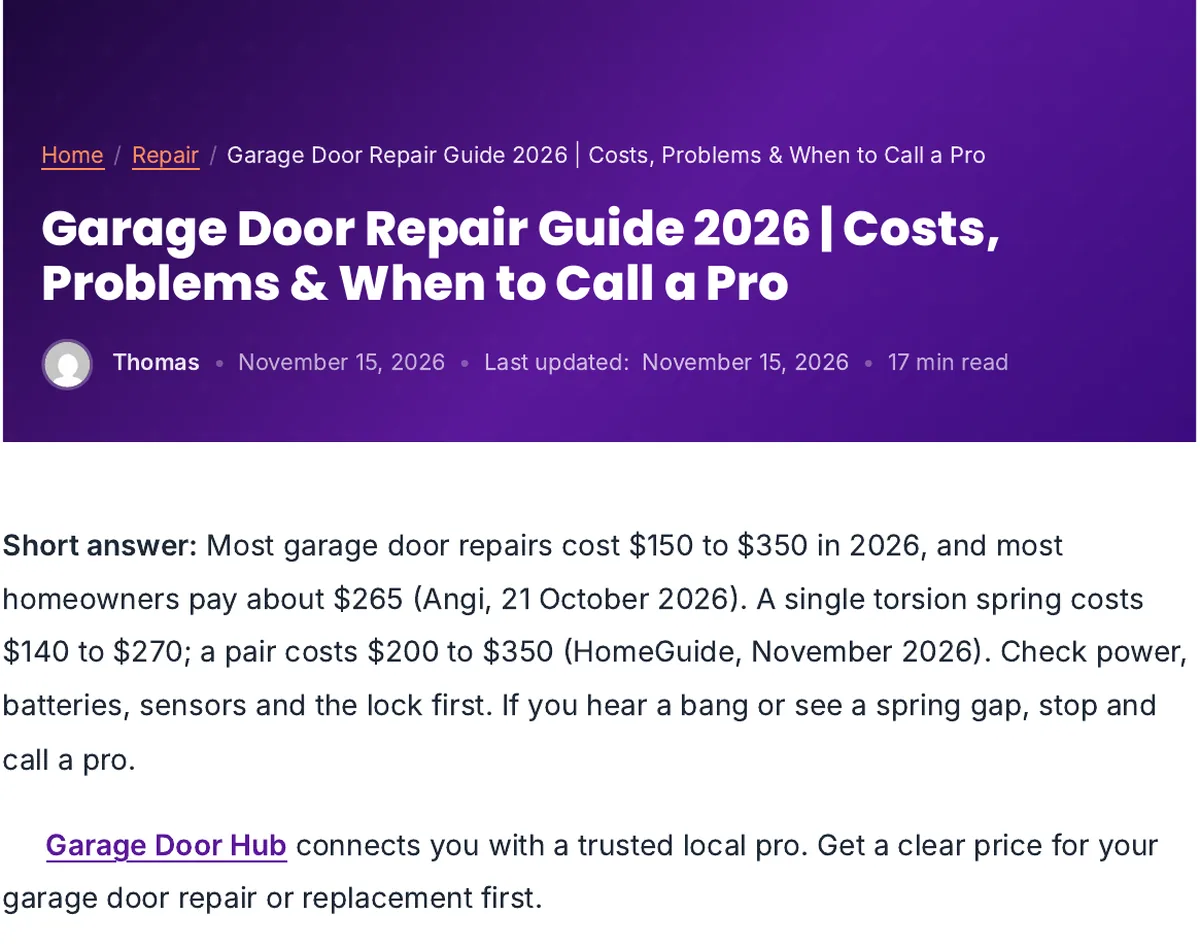
Garage door maintenance means a monthly 5-minute check, lubrication every 6 months, and a pro tune-up once a year. A tune-up costs $100 to $240 (Angi, 15 Oct 2026). Springs last about 10,000 cycles, or 7 to 14 years. This guide covers the schedule, the safe DIY jobs, and the pro-only line.
Garage Door Hub connects you with a trusted local pro. Get a clear price for your garage door repair or replacement first.
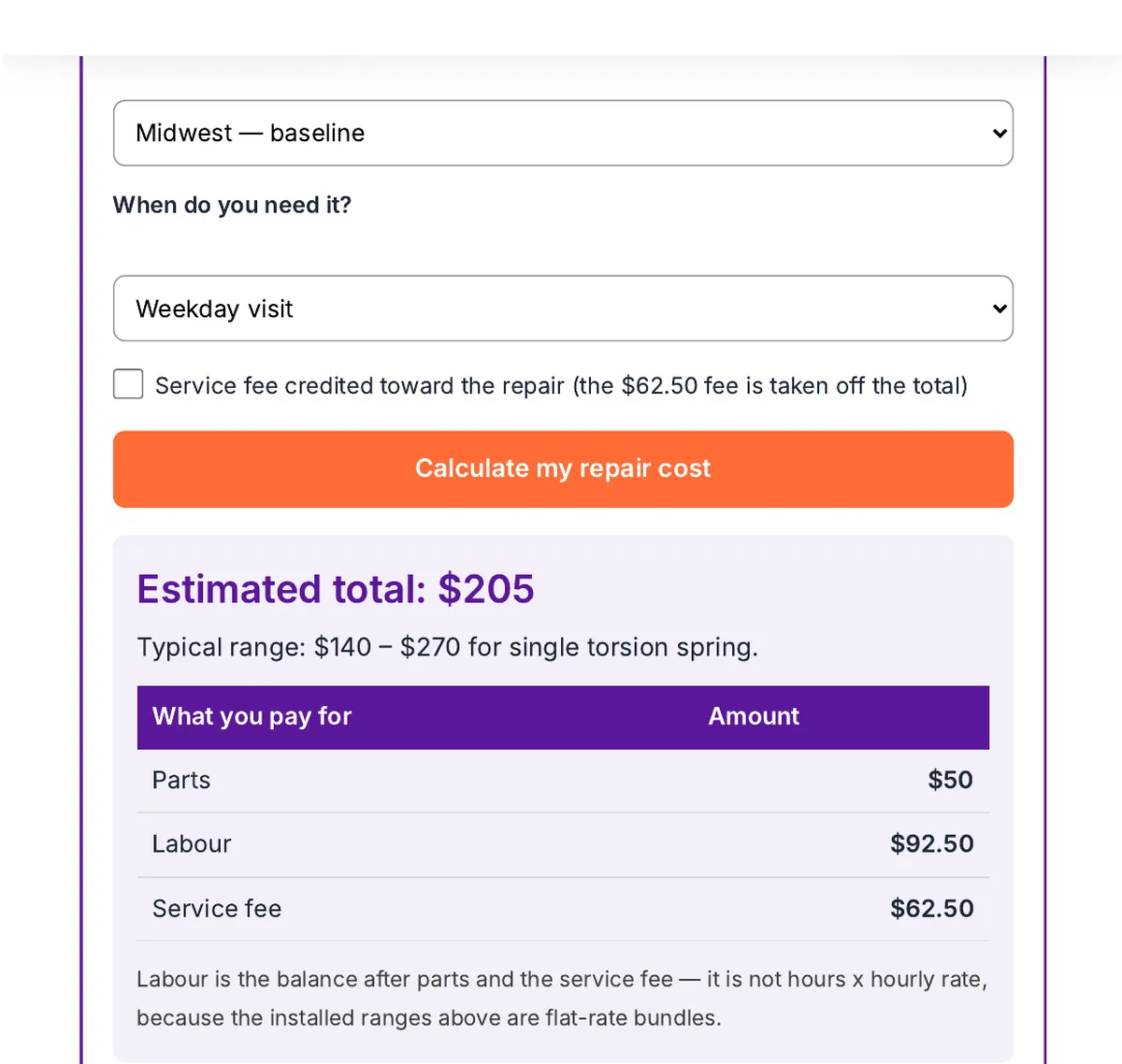
Price your job first with the free calculators below. They give you a number before you call anyone.
Repair Cost Calculator — price any repair before you call a pro.
Lifespan Calculator — see how long your door, springs and opener should last.
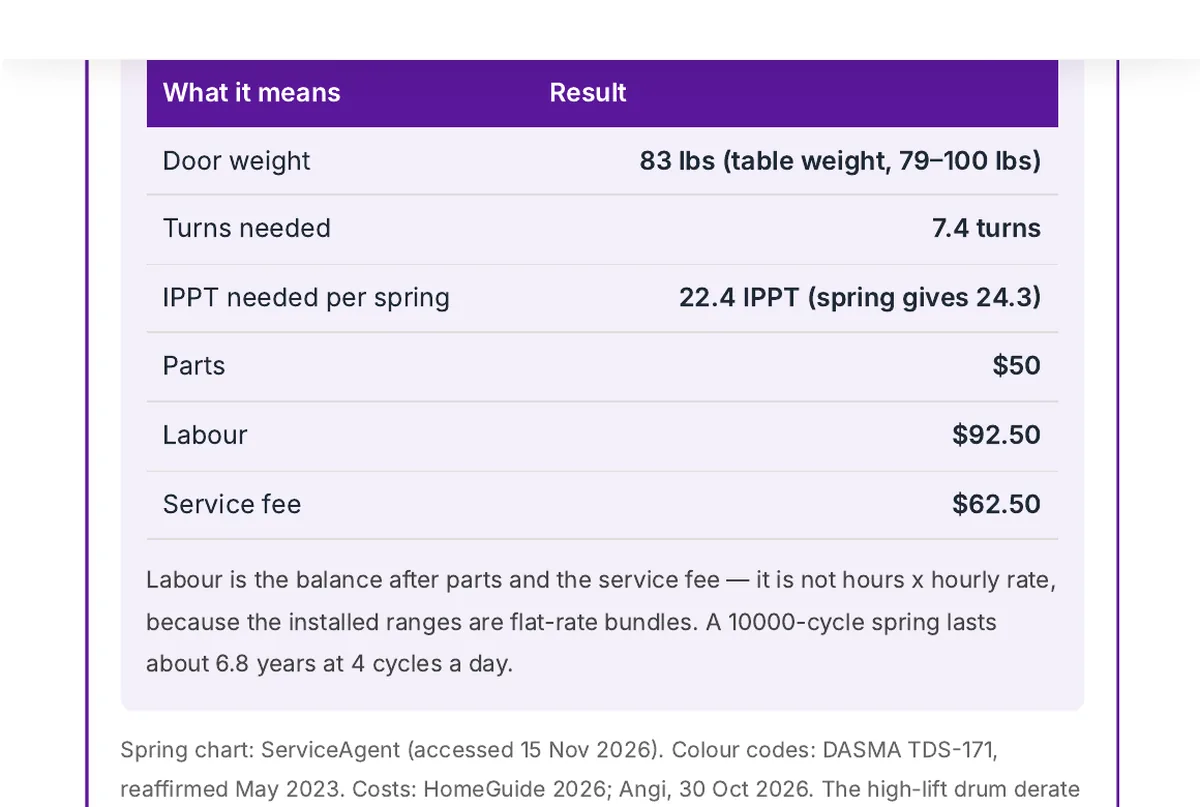
Spring Calculator — price a spring job by size, weight and turns.
- Enter your door size and the part that failed.
- Note the price, then read the key takeaways and Section 1.
- Use the price in the guide to check any quote you get.
Key takeaways
- A monthly 5-minute check catches most failures early.
- Lubricate every 6 months with silicone spray or white lithium grease, never standard WD-40.
- A pro tune-up once a year costs $100 to $240 (Angi, 15 Oct 2026).
- Springs and cables are pro-only work, never DIY repairs.
- One fall weekend of checks stops most winter problems.
Table of Contents
-
1. Why maintenance pays for itself
-
2. The annual schedule — what to do, and when
-
3. Safe DIY — the jobs you can do yourself
-
4. Pro-only work — where the safe line sits
-
5. Season by season — spring, summer, fall, winter
-
6. What maintenance costs in 2026
-
7. Choosing a pro, and keeping records
- Video: Garage Door Maintenance: The Complete Guide (Coming Soon)
- FAQ
1. Why maintenance pays for itself
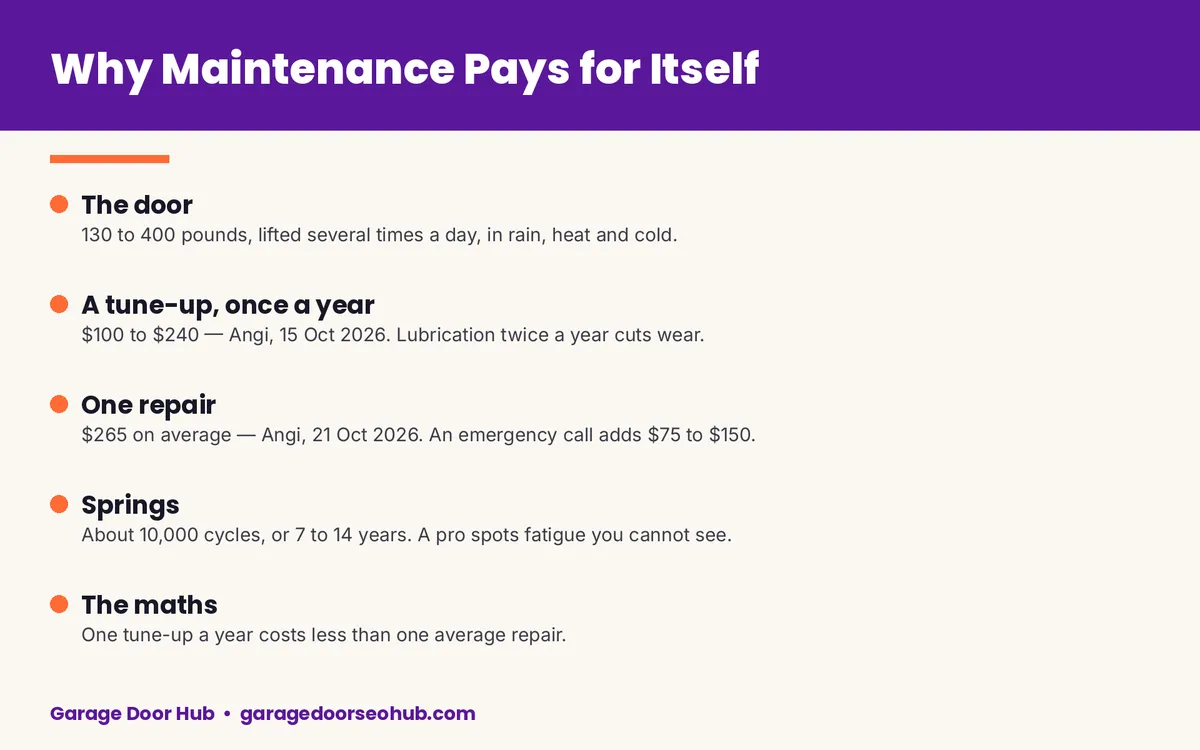
A garage door is the largest moving part in most homes. It lifts a door that weighs 130 to 400 pounds, several times a day, in rain, heat and cold.
What wear looks like before it fails
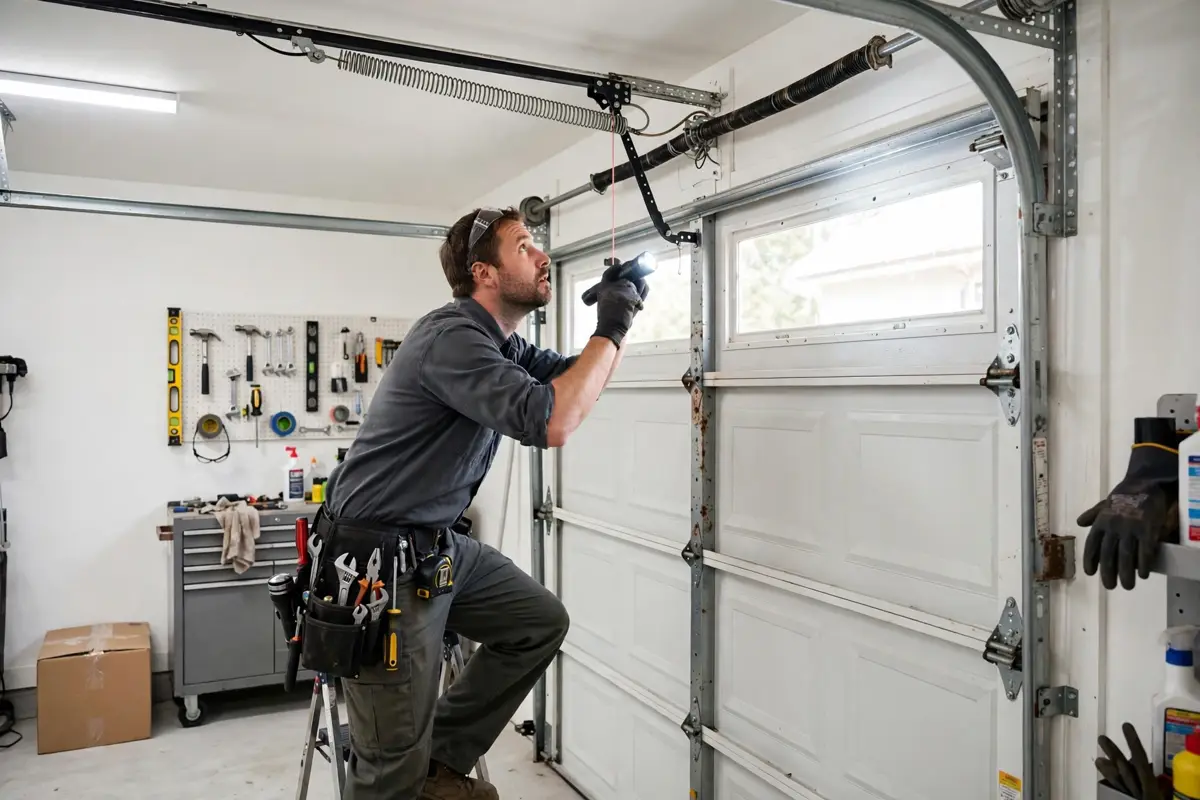
Wear shows up slowly, then all at once. A roller that drags today can seize next month, and a frayed cable can snap without warning.
- Rollers wobble or grind instead of rolling smooth in the track.
- Hinges pop at the seams when the door bends round the curve.
- Cables fray one strand at a time, near the drum or bottom bracket.
- Springs rust, lose tension, and make the door feel heavy.
- Seals crack, flatten, and let in drafts, water and pests.
The maths of a tune-up versus a repair
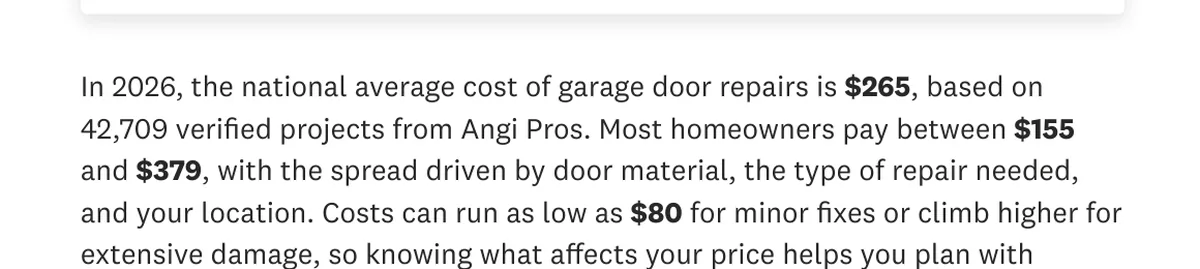
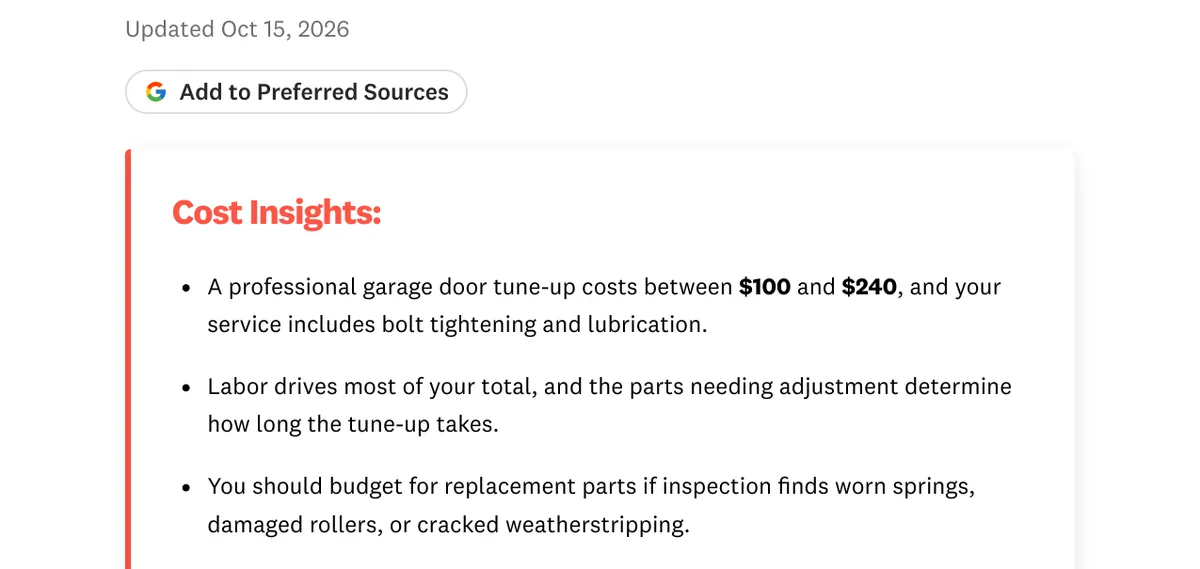
A tune-up costs $100 to $240 (Angi, 15 Oct 2026). A single repair averages $265 (Angi, 21 Oct 2026), and an emergency call adds $75 to $150.
- One tune-up a year costs less than one average repair.
- A caught cable costs far less than a door off its track.
- A pro spots spring fatigue you cannot see from the floor.
- Lubrication twice a year cuts wear on every moving part.
- A written inspection gives you a plan, not a surprise bill.
2. The annual schedule — what to do, and when
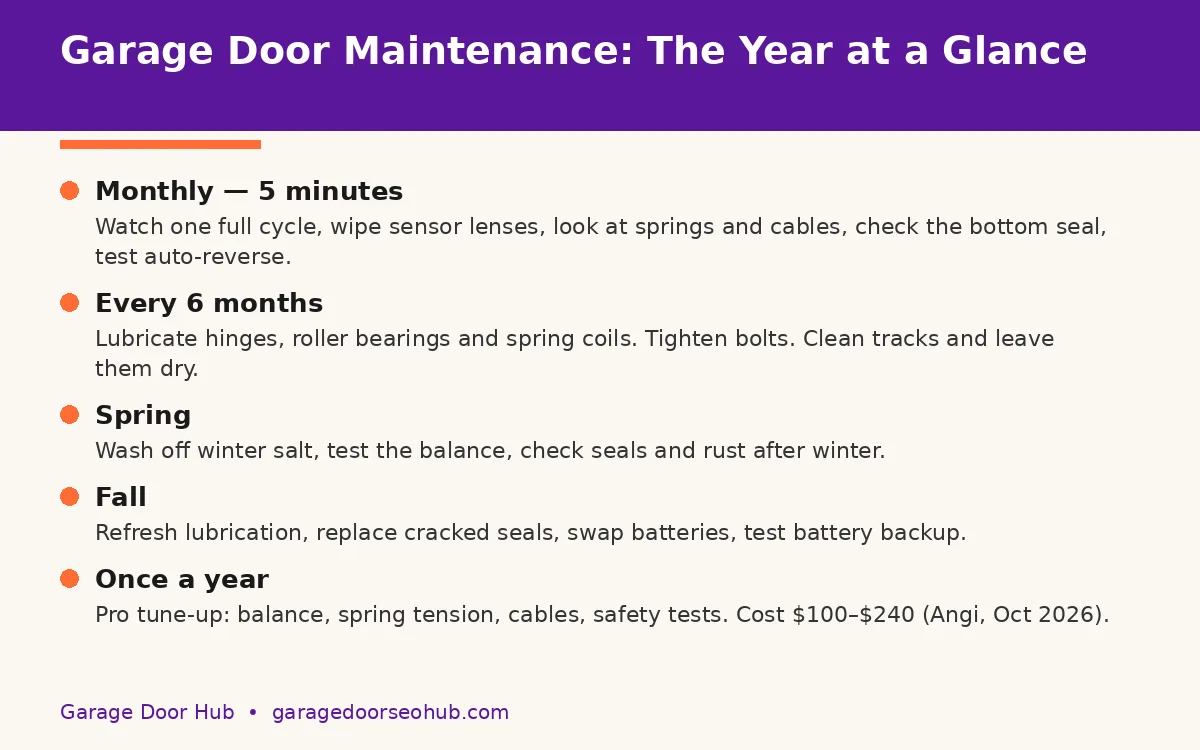
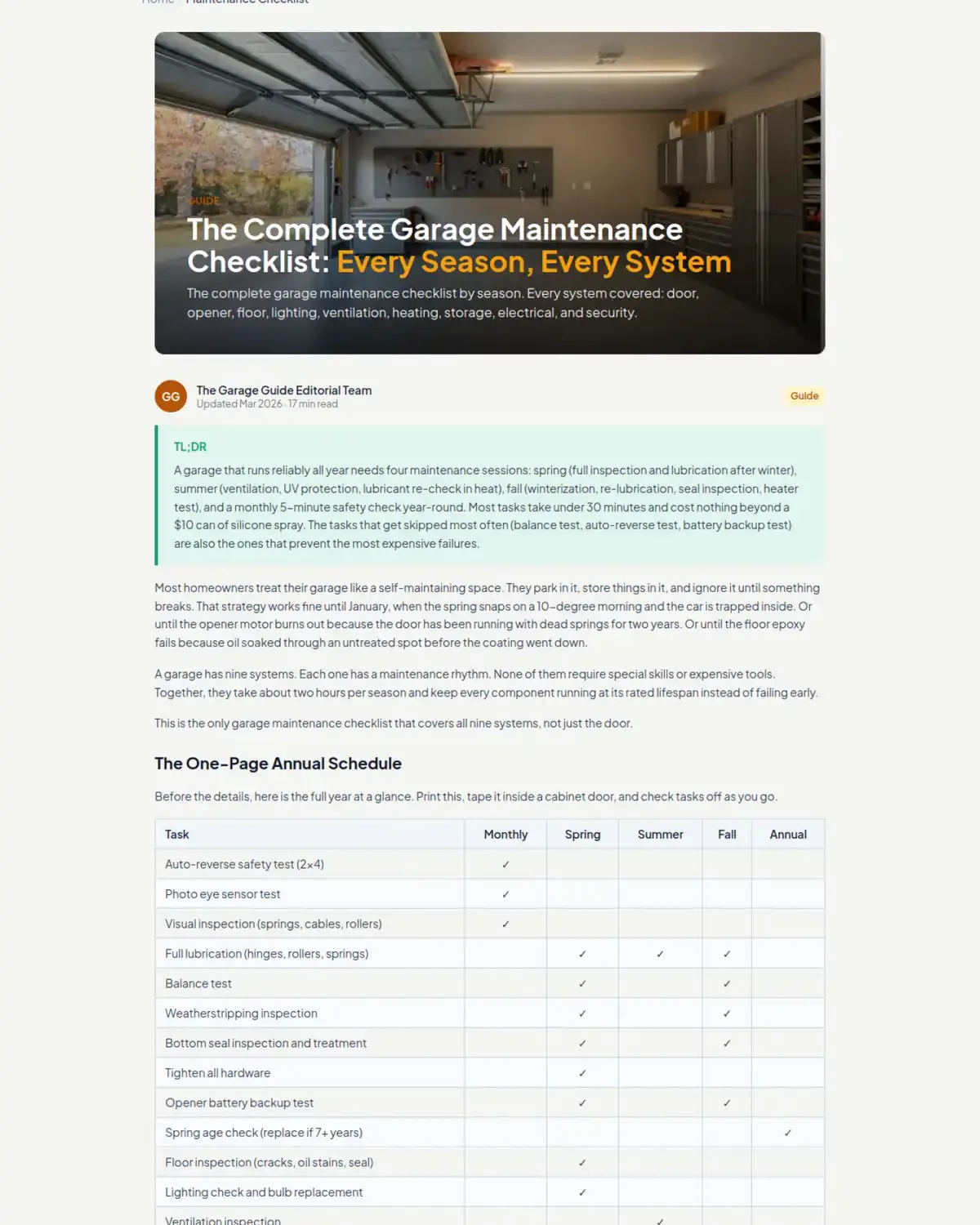
The schedule has four rhythms: monthly, twice a year, spring and fall, and once a year. Each one has a different job, and none of them replaces the others.
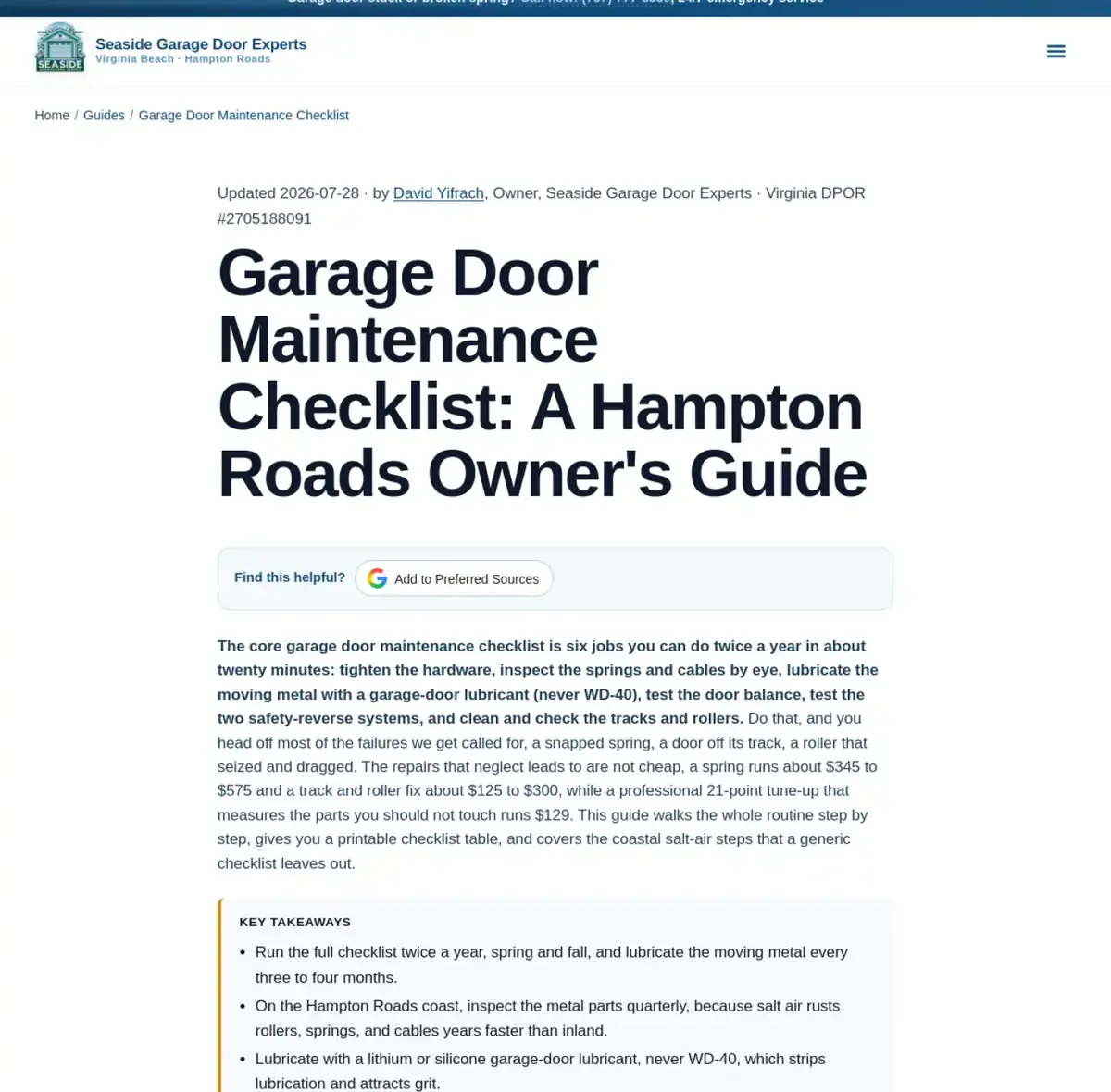
Monthly: the 5-minute check
Do this on the first weekend of each month. It takes five minutes, and it catches the failures that a twice-yearly pass cannot see.
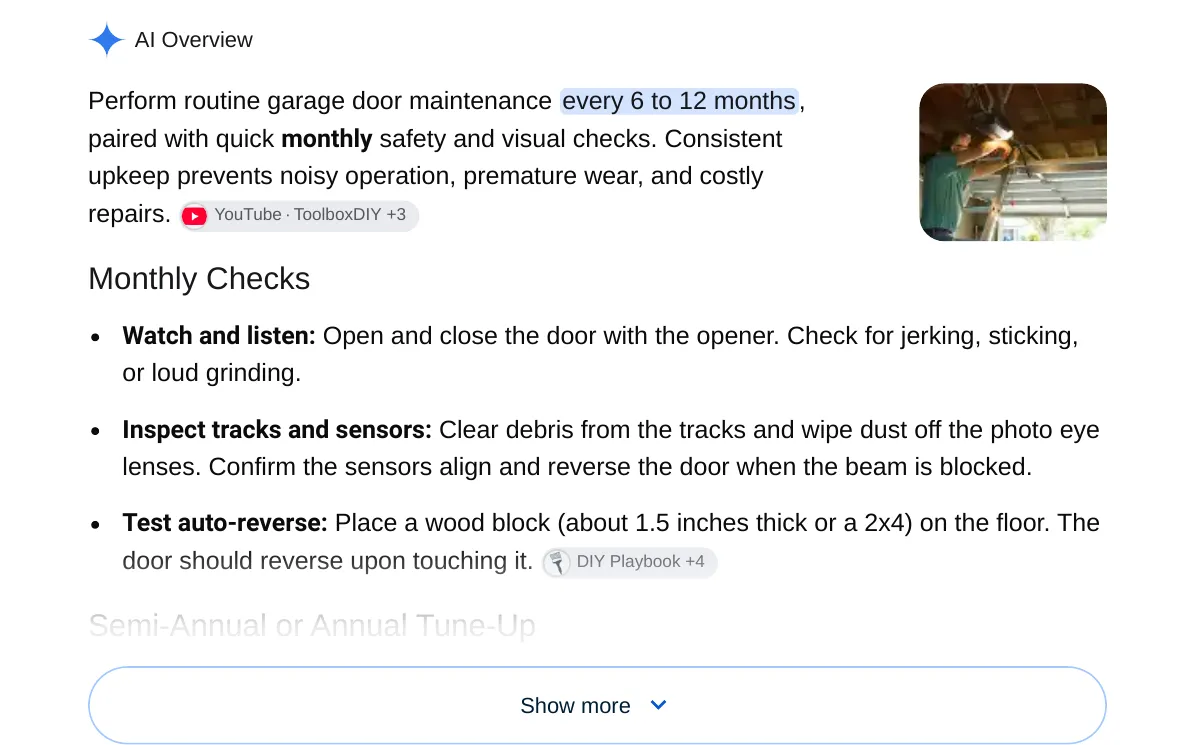
- Watch one full open and close, and listen for new noises.
- Wipe both safety sensor lenses with a soft, dry cloth.
- Look at the springs and cables for gaps, rust or fraying.
- Check the bottom seal for daylight or a gap at the corners.
- Test the auto-reverse with a 2×4 laid flat under the door.
Twice a year: lubrication and hardware
Spring and fall are the natural times for the full pass. Winter stiffens parts, and summer loosens hardware, so each season needs its own reset.
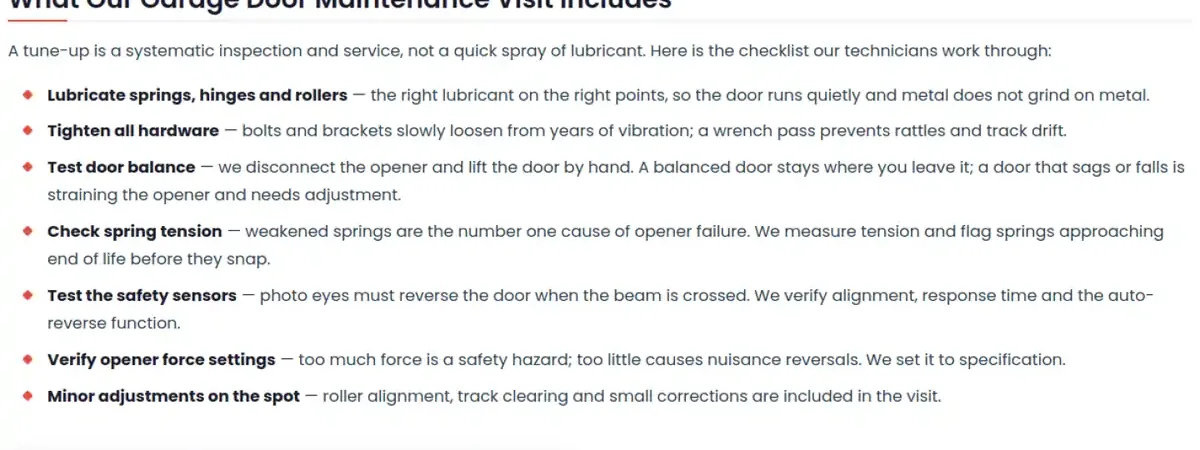
- Lubricate hinges, roller bearings and spring coils with silicone spray.
- Use white lithium grease on metal-to-metal points and the opener rail.
- Tighten every bolt and hinge screw you can reach with the door down.
- Clean the tracks with a damp rag, and keep them dry, never greased.
- Wash the door panels with mild soap to clear salt and grime.
Once a year: the pro tune-up
Book a pro tune-up once a year, in spring or fall. The visit takes about an hour, and it covers the parts that carry the door’s weight.
- The pro checks spring tension and door balance by hand.
- Cables, drums and bearings get a close look for wear.
- Safety systems get a full test, not just a glance.
- The opener force and limit settings get checked and set.
- You get a written note on what is worn and what can wait.
3. Safe DIY — the jobs you can do yourself
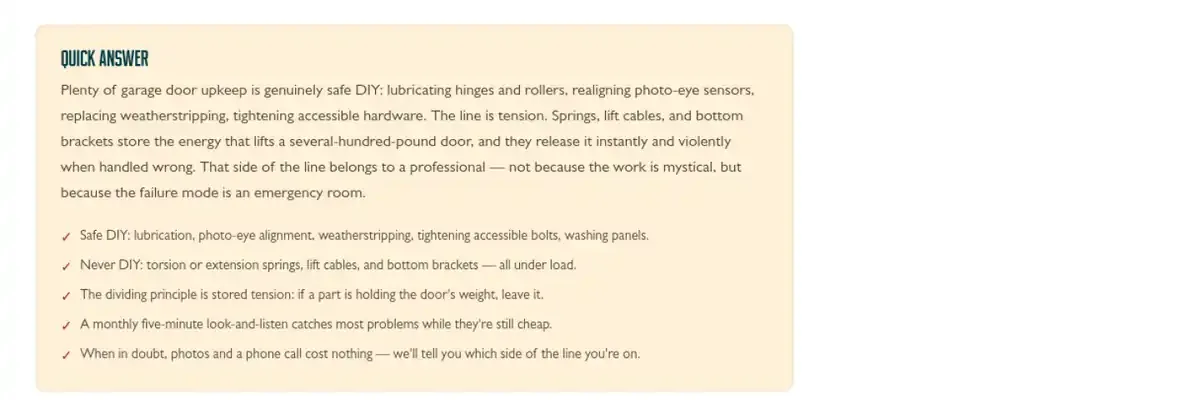
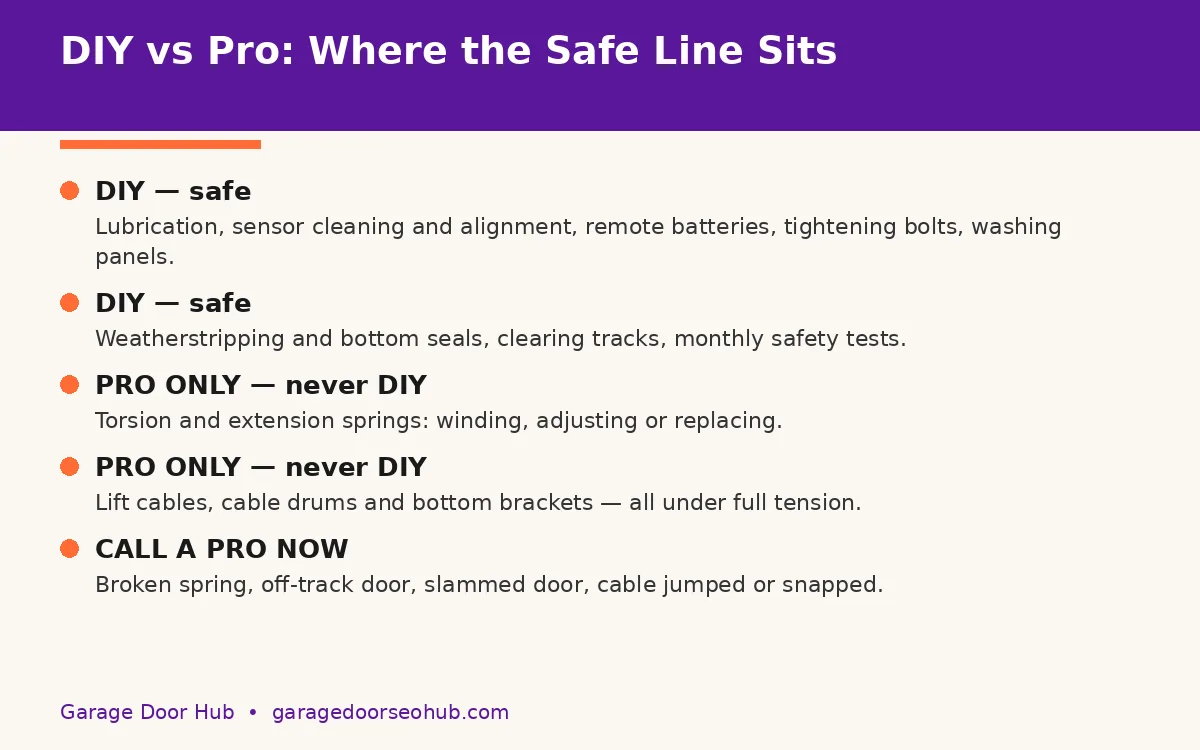
Plenty of garage door upkeep is genuinely safe DIY. The rule is simple: if a part holds the door’s weight or stores tension, leave it alone.
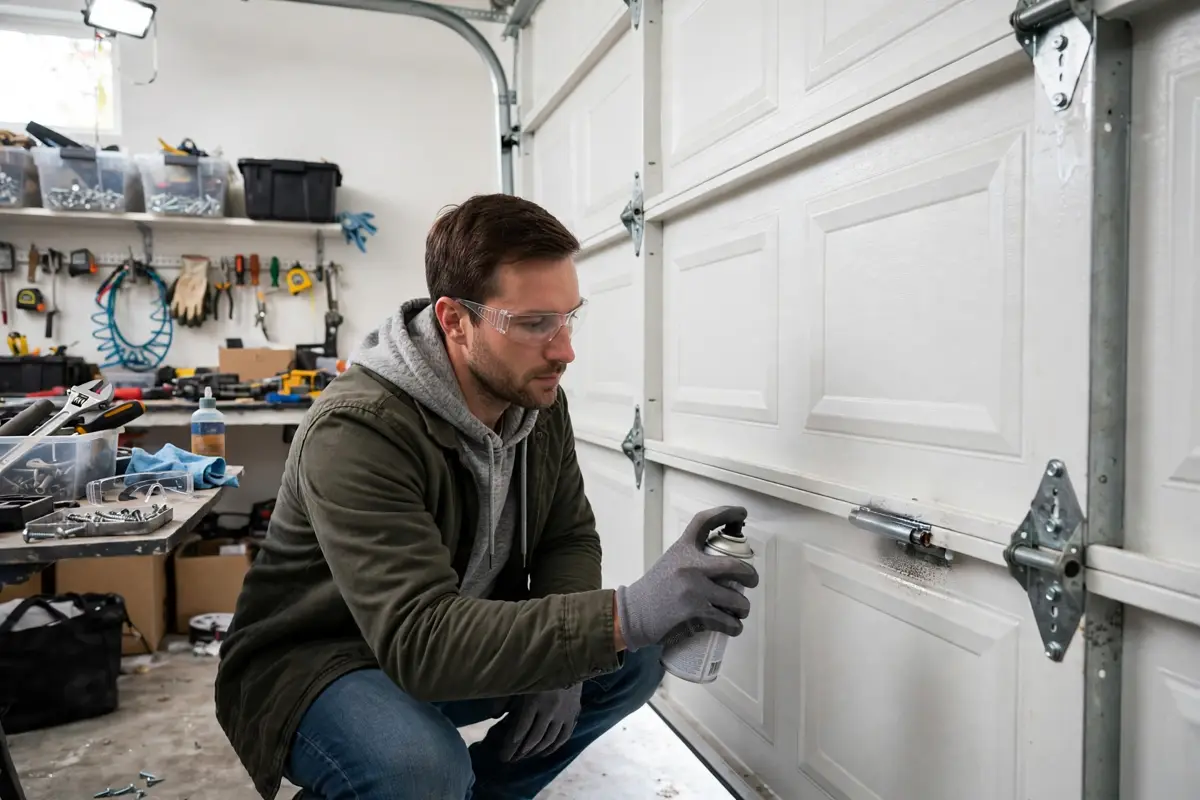
Lubrication: the ten-minute job
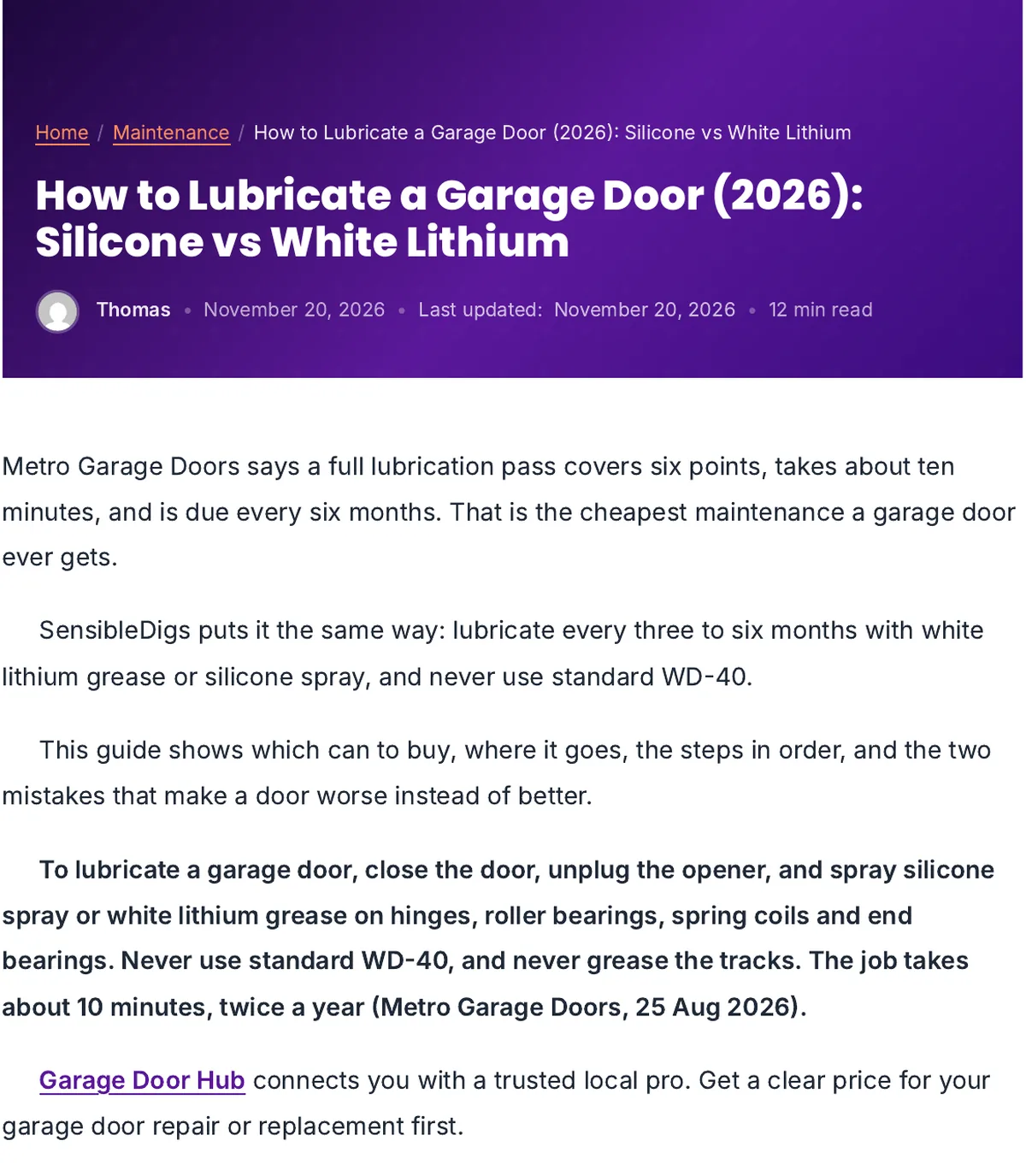
Lubrication is the highest-value DIY job on a garage door. It takes about ten minutes, and it keeps the door quiet and cuts wear on rollers and hinges. See the full how to lubricate a garage door guide.
- Use silicone spray or white lithium grease made for garage doors.
- Spray hinge pivots, roller bearings, spring coils and end bearings.
- Never use standard WD-40; it strips grease and attracts dust.
- Never grease the tracks; clean them and leave them dry.
- Run the door twice after spraying, then wipe off the surplus.
Cleaning, sensors and batteries
Cleaning and sensor work need no tools and carry no risk. They fix the most common reason a door refuses to close.
- Wipe sensor lenses clean, and check both LEDs are steady.
- Realign a sensor that was knocked out of line, so both eyes face each other.
- Replace remote and keypad batteries once a year, in October.
- Wash panels with mild soap, and touch up small paint chips early.
- Clear leaves, dirt and nests from the tracks and the threshold.
4. Pro-only work — where the safe line sits
Springs, cables and bottom brackets store the energy that lifts a several-hundred-pound door. They release it in a fraction of a second when handled wrong.
Springs and cables: never DIY
A torsion spring holds 150 to 200 foot-pounds of torque when wound. No amount of care makes winding or replacing one a safe home job.
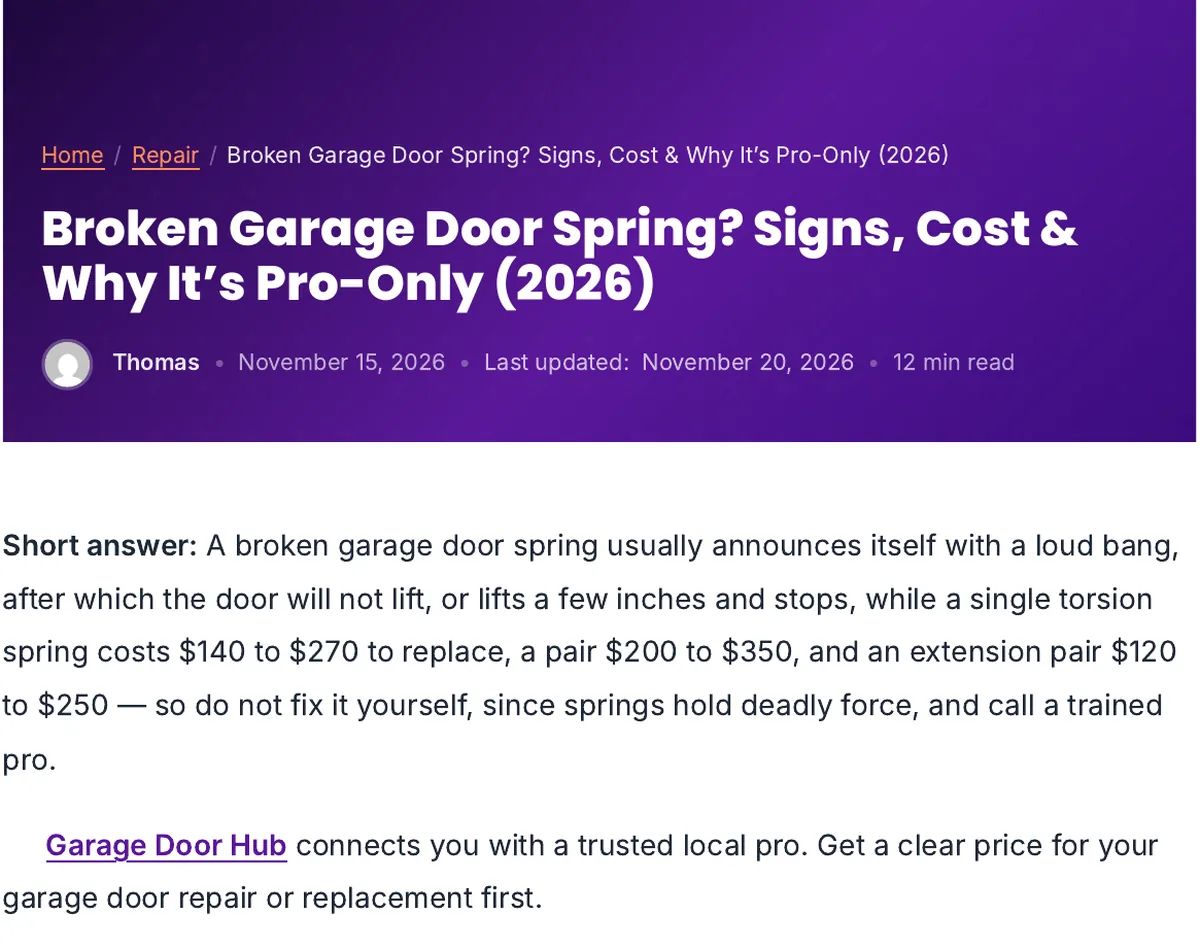
- Never wind, adjust or replace a torsion or extension spring.
- Never replace a lift cable, or unbolt a bottom bracket.
- A loud bang, a coil gap, or a door that feels huge means stop.
- Do not lift a door with a broken spring; call a pro instead.
- Replace springs in pairs, since both share the same age and wear.
Off-track, bent panels and slammed doors
A door off its track or a panel that is bent holds its weight unevenly. Well-meant help can make it worse, so stop using the door and call a pro.
- Do not pop a roller back in without checking the track first.
- Do not force a door that hangs crooked or drops fast.
- Keep people and pets away from a door that slammed shut.
- A cable that jumped its drum needs a pro to re-seat it safely.
- For the full signs list, see the broken garage door spring guide.
5. Season by season — spring, summer, fall, winter
Each season stresses a different part of the door. The checklist below is the short version; the full one lives in the garage door maintenance checklist by season.
Spring and summer
Spring is the most important session of the year. Winter stresses every part, and spring is when you find out what it did.
- Wash off winter salt and grime, and check for rust spots.
- Test the balance: lift the door halfway and it should hold.
- Tighten hardware that worked loose over a summer of use.
- Clean sensor lenses of dust, pollen and spider webs.
- Check wood doors for finish wear, and steel doors for dents.
Fall and winter
Fall is winter prep, and winter is watch-and-clear. One fall weekend stops most cold-weather failures before they start.
- Refresh lubrication before the cold stiffens old grease.
- Replace a cracked bottom seal before the first freeze.
- Swap remote batteries and test the opener battery backup.
- Clear snow and slush from the threshold before dark each night.
- For frozen doors and cold springs, see the winter garage door problems guide.
6. What maintenance costs in 2026
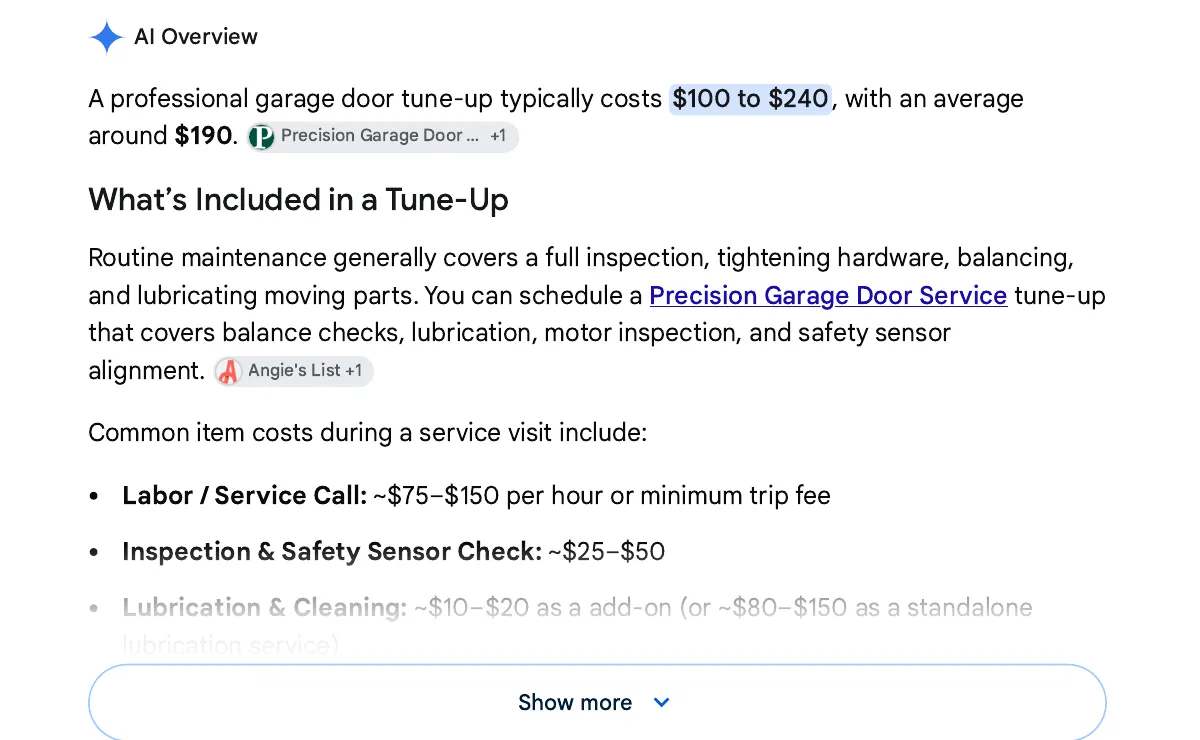
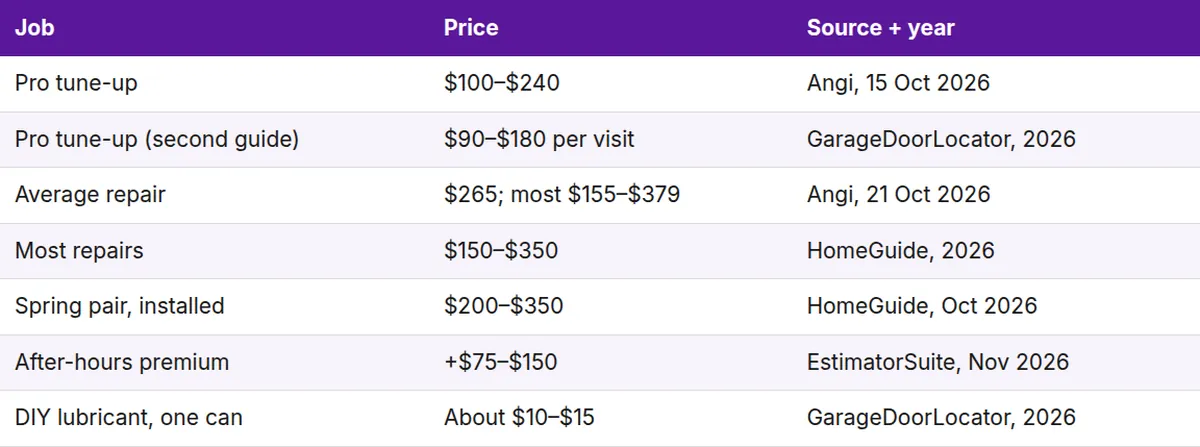
Maintenance costs are small next to repair costs. The table below keeps sources separate, so you can see why quotes differ.
| Job | Price | Source + year |
|---|---|---|
| Pro tune-up | $100–$240 | Angi, 15 Oct 2026 |
| Pro tune-up (second guide) | $90–$180 per visit | GarageDoorLocator, 2026 |
| Average repair | $265; most $155–$379 | Angi, 21 Oct 2026 |
| Most repairs | $150–$350 | HomeGuide, 2026 |
| Spring pair, installed | $200–$350 | HomeGuide, Oct 2026 |
| After-hours premium | +$75–$150 | EstimatorSuite, Nov 2026 |
| DIY lubricant, one can | About $10–$15 | GarageDoorLocator, 2026 |
How to read a tune-up quote
A tune-up quote should list what is checked, not just a price. A $29 bait price that triples on site is a scam sign, not a bargain.
- Ask what the visit covers: balance, springs, cables, safety tests.
- A written quote before work starts beats a verbal one.
- Parts are extra; ask which parts, and at what price.
- A tune-up does not include a spring replacement.
- Price any repair first with the Repair Cost Calculator.
When to spend more than a tune-up
Spend more when a part is near the end of its life. Replacing a worn spring on your schedule beats paying for it on a cold night.

- Springs over 7 years old deserve a pro’s close look.
- Rollers that grind after lubrication are worn, not dry.
- A door that will not balance needs springs, not a new opener.
- Two repairs in one year often mean a part is failing.
- For the repair-or-replace maths, see the garage door repair guide.
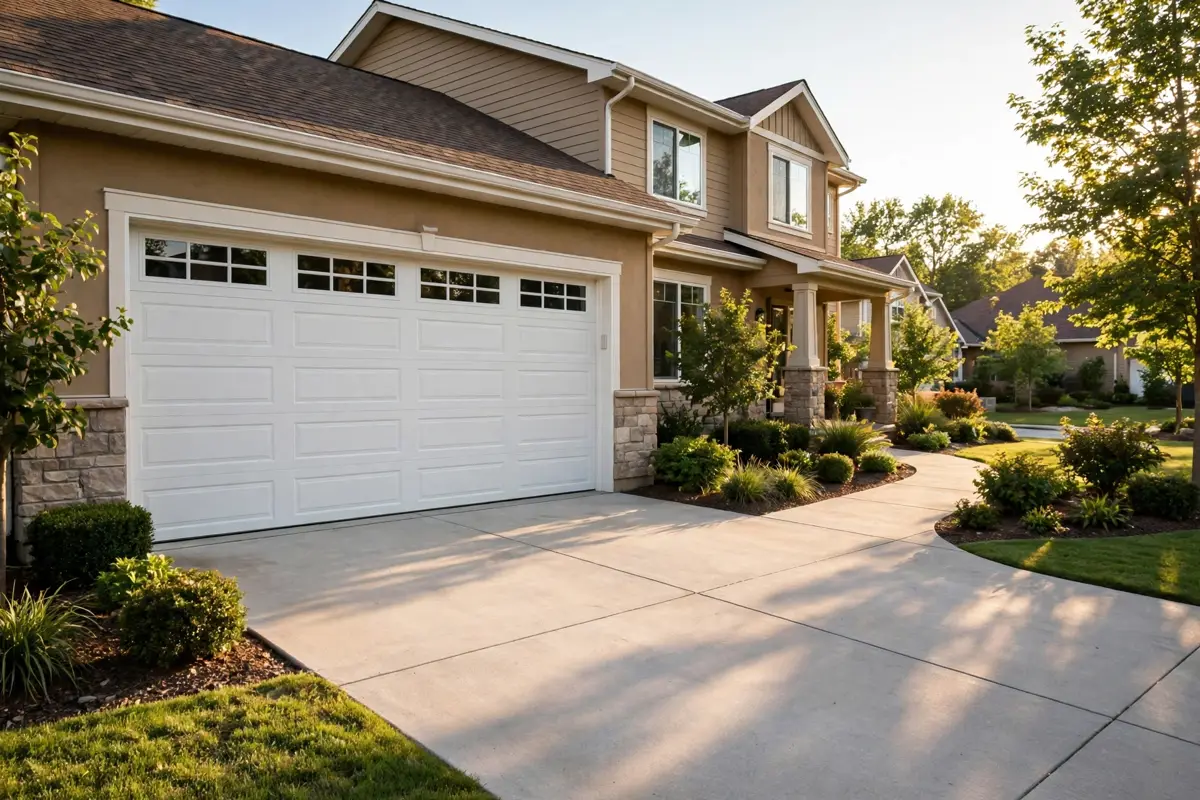
7. Choosing a pro, and keeping records
A good maintenance pro is a partner, not a one-off call. Choose one before you need one, and keep a simple record of every visit.
What to ask before you book
Ask four questions before you book, and write the answers down. A straight answer to all four is a good sign.
- What does the tune-up cover, and what costs extra?
- Are springs and cables inspected, or just lubricated?
- Do you give a written report after the visit?
- What warranty covers the work and any parts fitted?
Keep a simple maintenance log
A log takes two minutes a visit, and it pays off when you sell the house or claim on insurance. Note the date, the job, and the part ages.
- Note the spring install date, so you know its cycle age.
- Note the opener model and battery change dates.
- Keep receipts for tune-ups, parts and repairs.
- Photograph any rust, fraying or damage you spot.
- Bring the log to the next visit, so the pro sees the history.
Video: Garage Door Maintenance: The Complete Guide (Coming Soon)
A 60 to 120 second video for this guide is coming soon. It will cover the annual schedule, safe DIY jobs, pro-only work, and what maintenance costs. No video is embedded here yet.
Garage Door Hub connects homeowners with trusted local garage door pros. Need a repair? Need a replacement? Start here. First, find out what it should cost. Then, price your exact job with our free calculator. Next, find a pro near you. Fast. No jargon. No guesswork. No surprise bills. Just clear prices, honest guides, and a local pro you can call today.
FAQ
How often should I maintain my garage door?
Monthly 5-minute checks, lubrication every 6 months, and a pro tune-up once a year. Doors used heavily may need lubrication every 3 to 4 months.
How much does a garage door tune-up cost?
A pro tune-up costs $100 to $240 (Angi, 15 Oct 2026). A second guide puts it at $90 to $180 per visit (GarageDoorLocator, 2026).
Can I lubricate my garage door myself?
Yes. Use silicone spray or white lithium grease on hinges, roller bearings and spring coils. Never use standard WD-40, and never grease the tracks.
How long do garage door springs last?
Standard torsion springs last about 10,000 cycles, or 7 to 14 years at normal use. At 4 cycles a day, 10,000 cycles last about 6.8 years.
What should I never do myself?
Never wind, adjust or replace springs, never replace lift cables, and never unbolt a bottom bracket. Those parts hold the door’s full weight under tension.
Sources
- Angi, updated 15 Oct 2026 — tune-up $100–$240, labor $75–$150 per hour.
- Angi, 21 Oct 2026 — repair average $265, most $155–$379.
- HomeGuide, 2026 — most repairs $150–$350; spring pair $200–$350 (Oct 2026).
- The Garage Guide, Mar 2026 — four maintenance sessions a year, monthly 5-minute safety check.
- Overhead Door, 2026 — year-round checklist: spring wash, summer tightening, fall lubrication, winter protection.
- GarageDoorLocator, 2026 — tune-up $90–$180; safe DIY list; springs and cables pro-only.
- EstimatorSuite, Nov 2026 — after-hours premium +$75–$150.
- Garage Door Hub Lifespan Calculator — doors 15–30 years, springs 7–14 years, openers 10–15 years.
Last reviewed: 20 November 2026
Appendix — Related topics
You might have found this by these keywords — and if not, others might have: garage door maintenance, garage door maintenance cost, garage door tune-up cost, how to lubricate a garage door, best lubricant for garage door, garage door maintenance checklist, garage door spring maintenance, how often should your garage door be serviced, how much does it cost to have a garage door lubricated, garage door parts, garage door DIY vs professional, garage door maintenance near me.