

GarageDoorRepairDesk says a residential garage door is built from roughly two dozen named parts in five groups. The springs lift the door, not the opener.
That one fact explains most of what goes wrong. Weight parts make the door heavy or crooked, guide parts make it loud, and safety parts make it refuse to close.
This guide names every part, says what it does, how long it lasts, and who should touch it — so you can read an estimate without guessing.
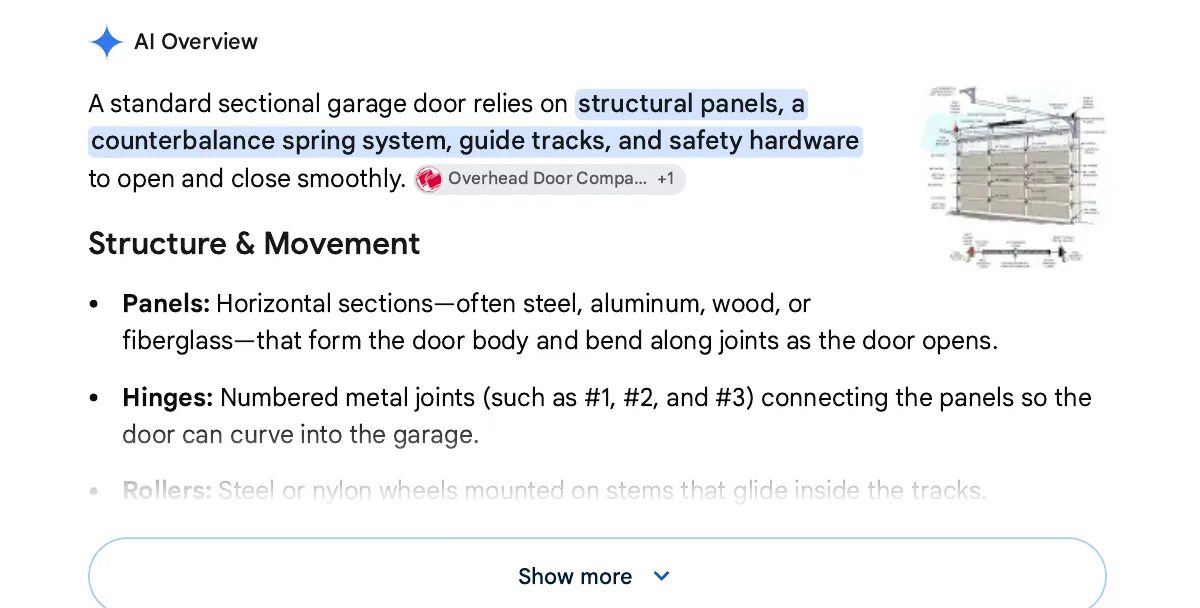
The parts of a garage door are the door sections, the counterbalance (springs, cables, drums and shaft), the track and rollers, the opener, and the safety parts. Springs do the lifting and last about 10,000 cycles, or 7 to 14 years. Springs, cables and bottom brackets are pro-only work (GarageDoorRepairDesk, 2026).
Garage Door Hub connects you with a trusted local pro. Get a clear price for your garage door repair or replacement first.
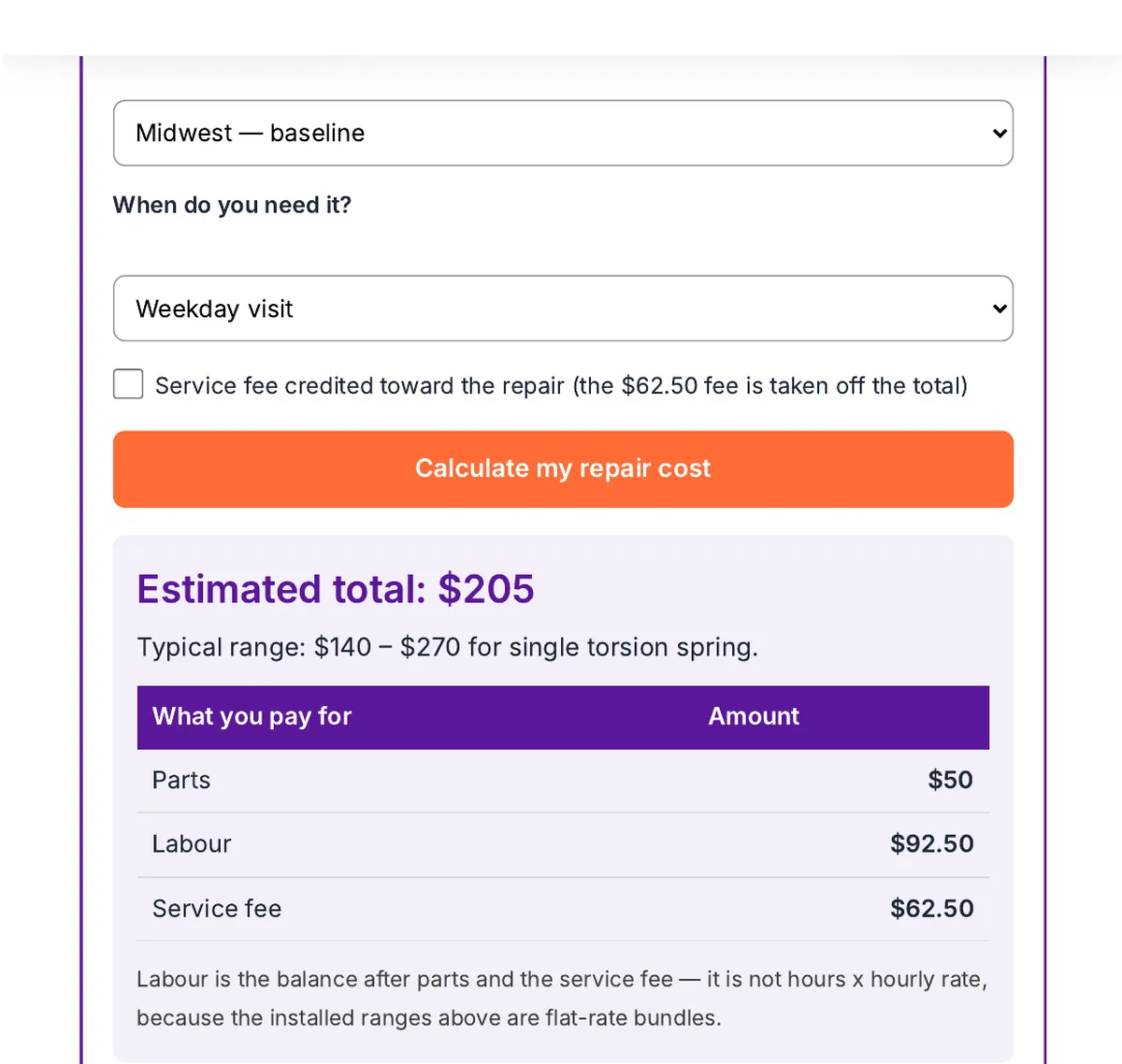
Price your job first with the free calculators below. They give you a number before you call anyone.
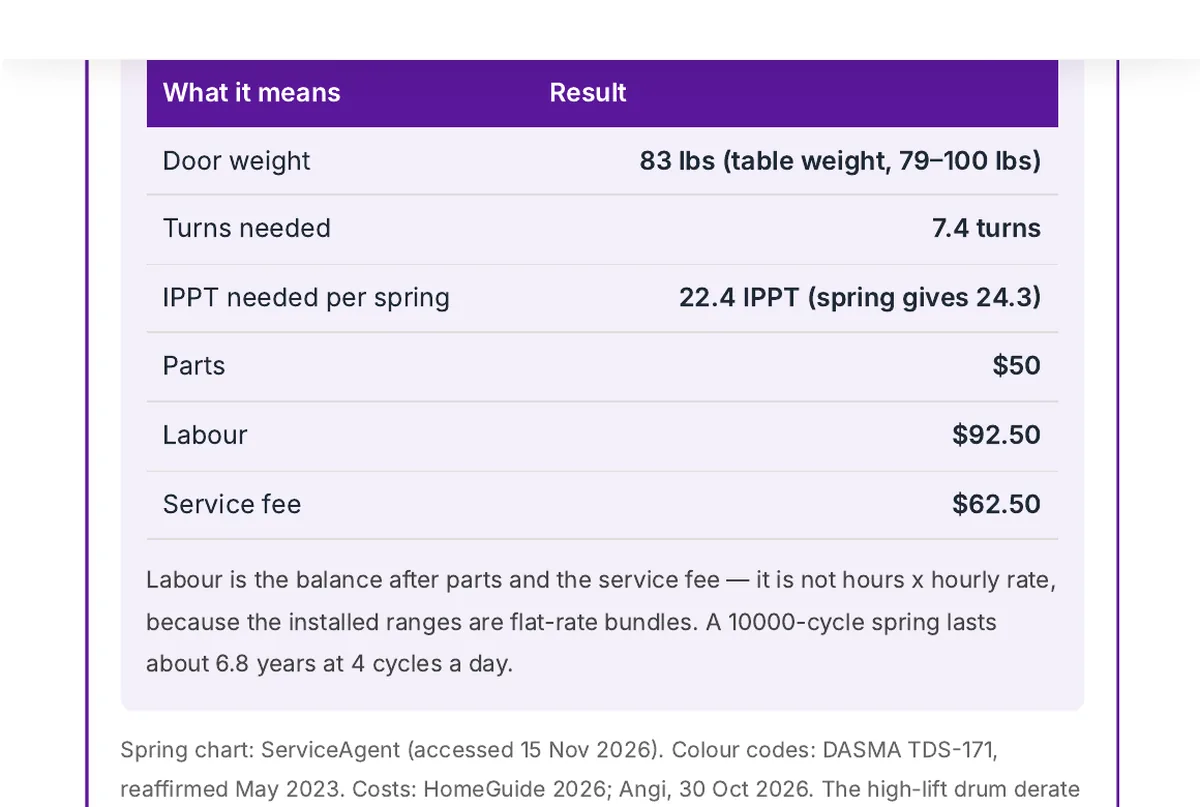
Spring Calculator — price a spring job by size, weight and turns.
Repair Cost Calculator — price any part replacement before you agree to it.
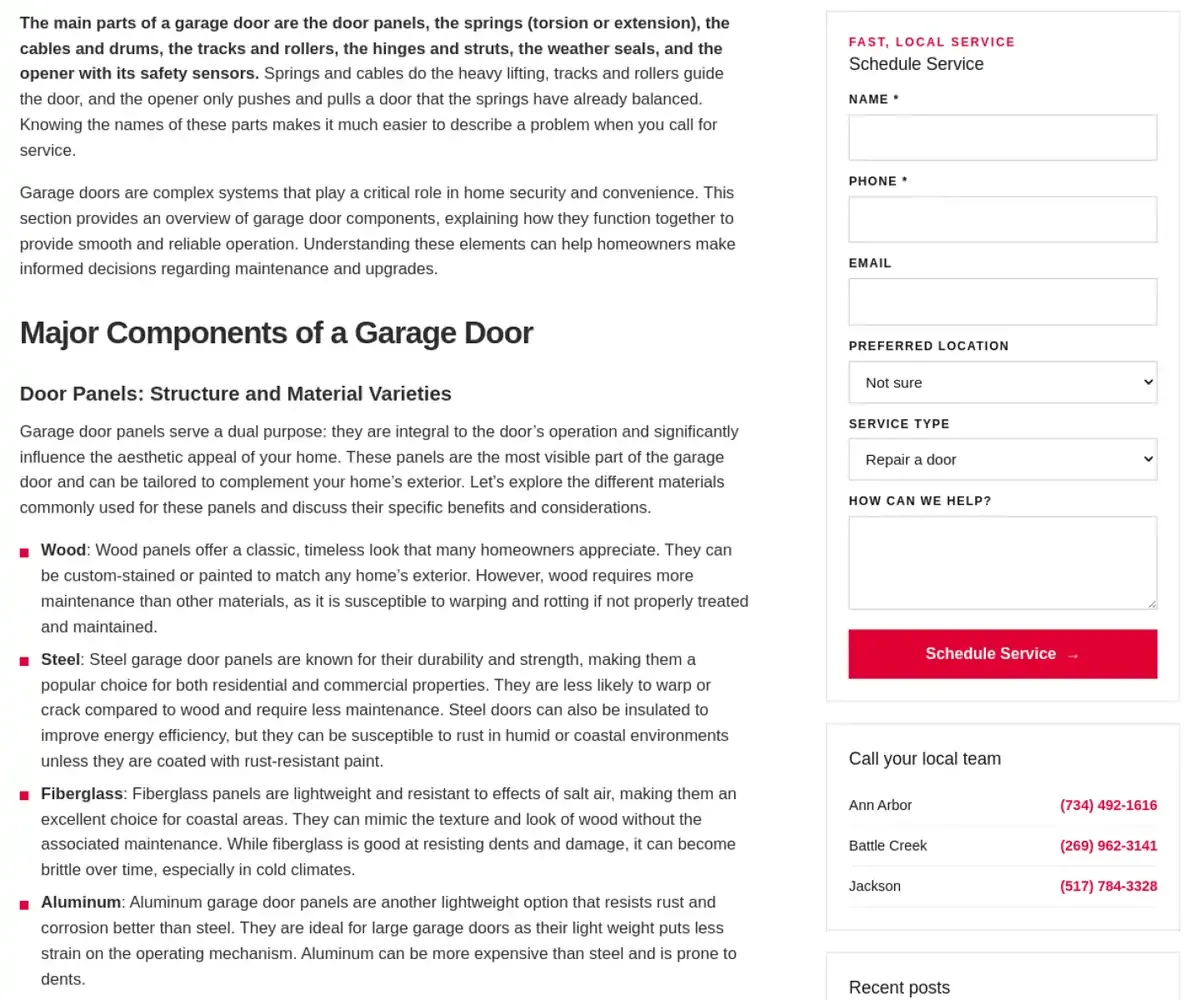
Weight Calculator — find your door’s weight, which decides spring and opener size.
- Enter your door size and the part that failed.
- Note the price, then read the key takeaways and Section 1.
- Use the price in the guide to check any quote you get.
Key takeaways
- Springs lift the door; the opener only guides it.
- Five groups: door, counterbalance, track, opener, safety parts.
- Springs last about 10,000 cycles; cables 8 to 15 years; rollers 10,000 to 15,000 cycles.
- Weight parts make the door heavy; guide parts make it loud; safety parts make it refuse to close.
- Springs, cables and bottom brackets are pro-only — never unbolt them.
Table of Contents
-
1. How a sectional door works as one system
-
2. The door itself — sections, hinges, struts
-
3. The counterbalance — springs, cables, drums
-
4. Track and rollers — the guide system
-
5. The opener — motor, rail, trolley, release
-
6. Safety parts — photo eyes, seals, backup
-
7. What fails first, and what to do about it
- Watch: Every part of a garage door, and what it does
- FAQ
1. How a sectional door works as one system
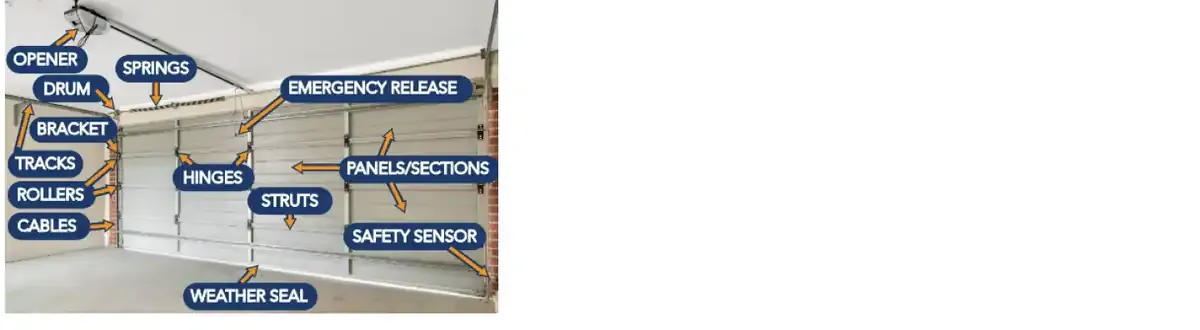
A modern overhead door is a balanced system. Springs store energy while the door is down, and feed it through cables and drums to the bottom corners.
Counterbalance: the core idea
Springs offset nearly all of the door’s weight. A door that weighs 150 to 400 pounds needs only 10 to 15 pounds of lift by hand when the springs are right.
- Springs store energy when the door closes, and release it when it opens.
- Cables carry that force from the drums to the bottom corners.
- The opener adds only the last bit of force, and guides the travel.
- A weak spring makes the opener look broken, when it is not.
- Every part carries weight, guides motion, or keeps the door safe.
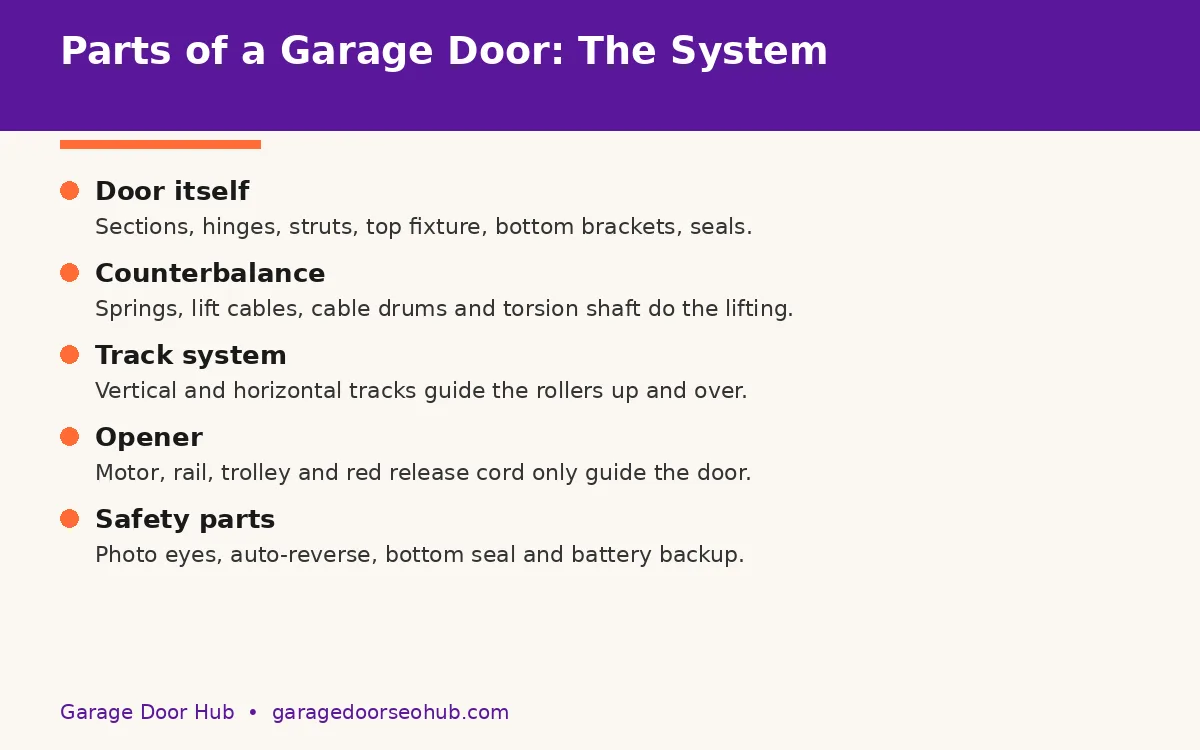
The five groups of parts
Every part belongs to one of five groups. Learn the groups first, and the names inside them make sense at once.
- Door itself: sections, hinges, struts, top fixture, bottom brackets.
- Counterbalance: springs, lift cables, cable drums, torsion shaft.
- Track system: vertical and horizontal track, rollers.
- Opener: motor unit, rail, trolley, emergency release.
- Safety parts: photo eyes, auto-reverse, bottom seal, battery backup.
2. The door itself — sections, hinges, struts
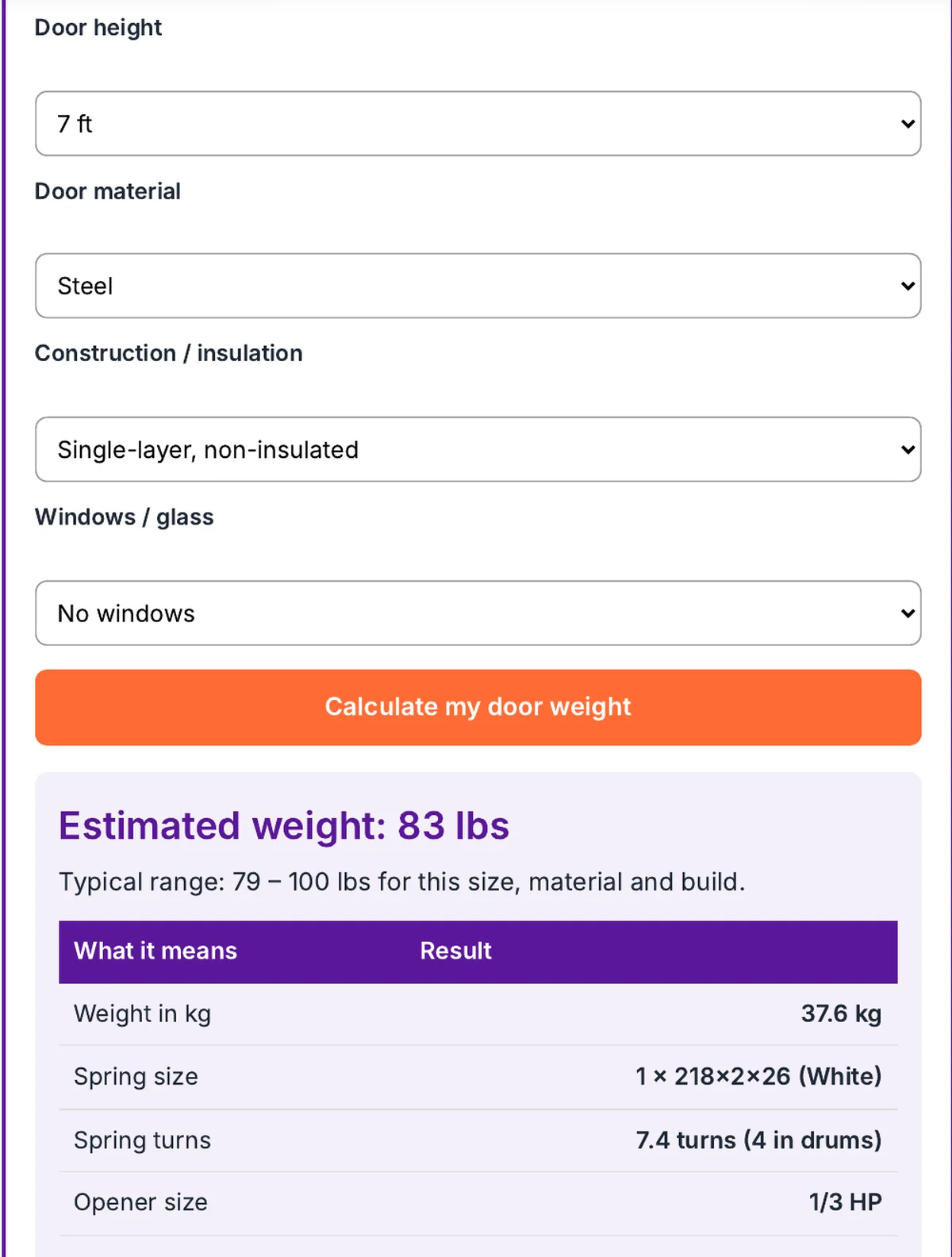
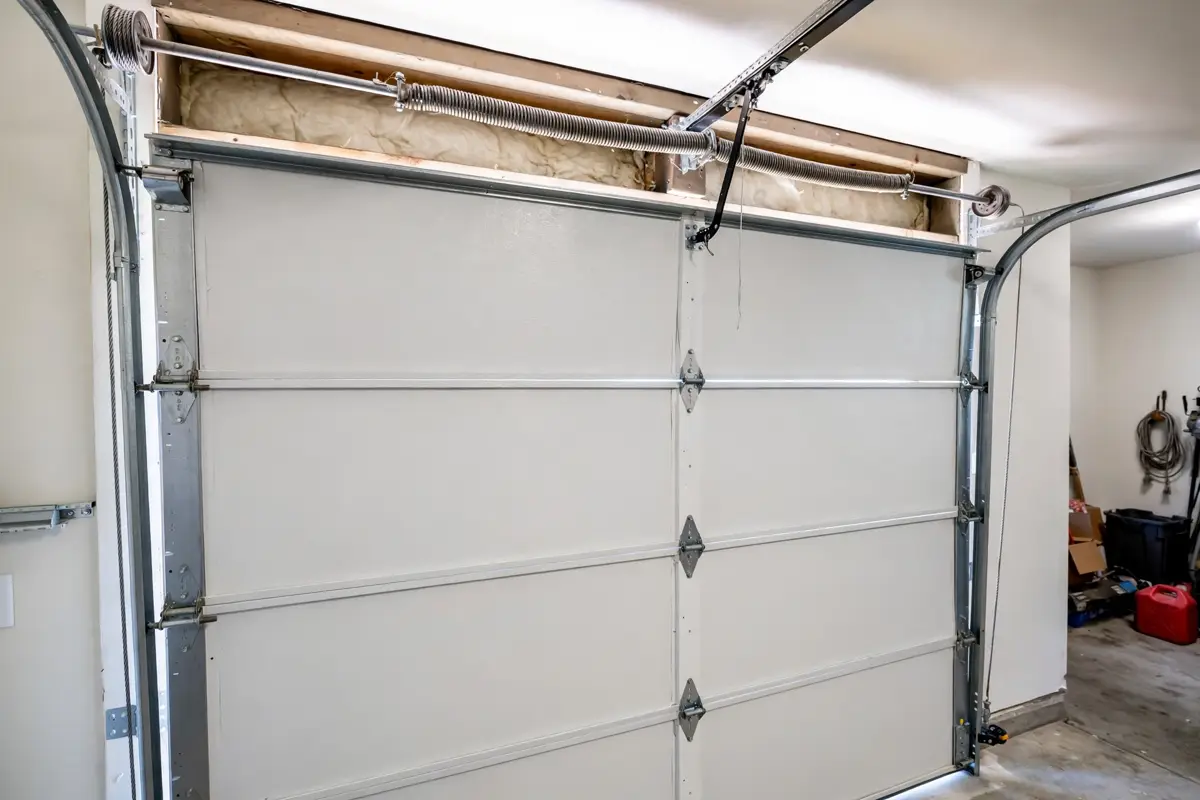
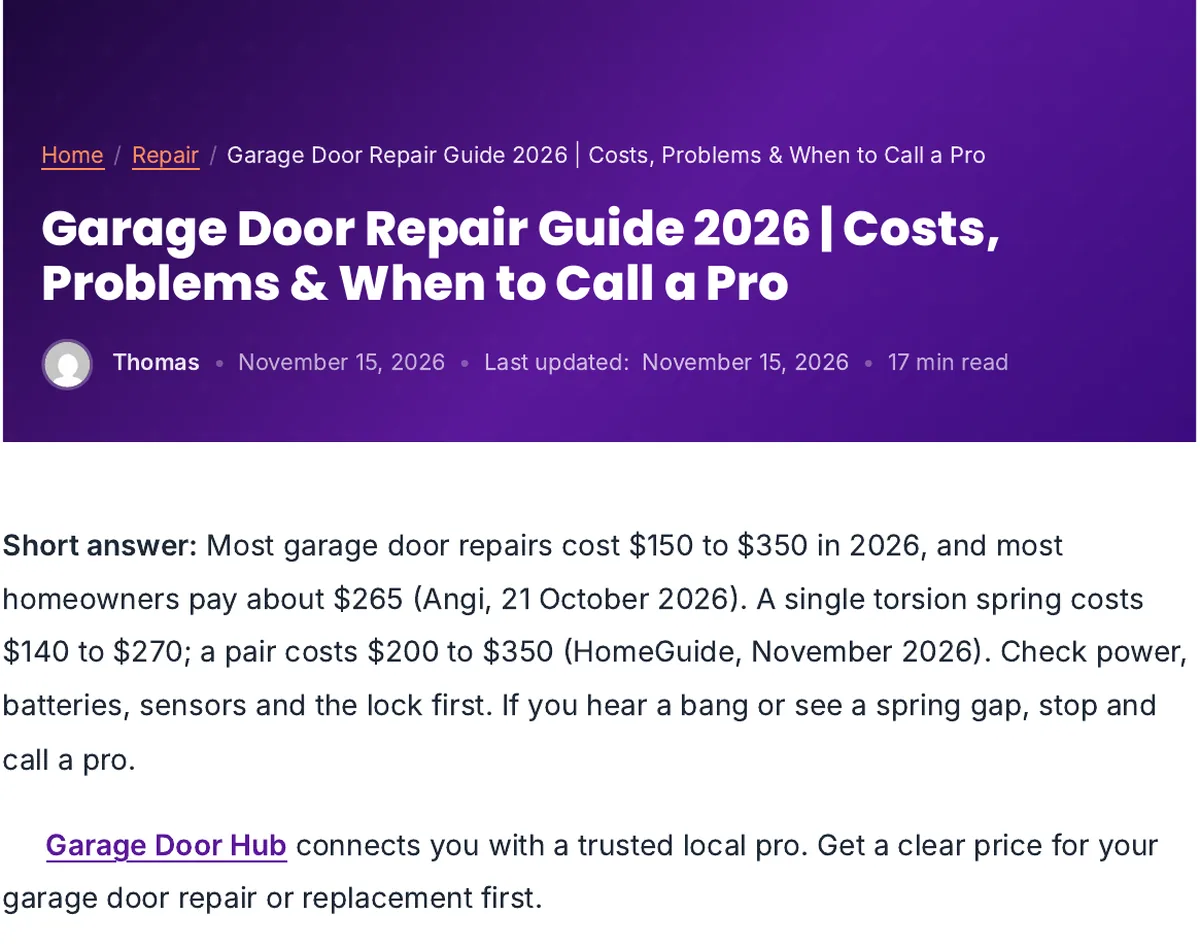
Most residential doors use three to five horizontal sections, joined by hinges. The sections bend round the curved track as the door travels up and over.
Sections and hinges
Sections are the large slabs that make the visible face of the door. Hinges join them at each seam, and end hinges carry a roller each.
- Sections last 15 to 30 years; dents and cracks are the signs.
- Hinges last 10 to 20 years; popping at seams means wear.
- Hinges are numbered from the bottom up; top hinges take more stress.
- A bowed middle or cracks at hinge screws means the section is failing.
- Panel work needs the door unloaded — a pro job, not a DIY job.
Struts, top fixture and bottom brackets
Struts brace a section against flexing, and the top fixture holds the top roller and the opener arm. Bottom brackets anchor the lift cables.
- Struts last the life of the door; a bowed top section means add one.
- Top fixture: a loose opener arm or a pulled-out top roller means check it.
- Bottom brackets hold full spring tension — pro only, never unbolt.
- A cable pulled loose at a bottom bracket lifts one corner first.
- For panel costs, see the garage door repair guide.
3. The counterbalance — springs, cables, drums
The counterbalance is the most important group, and the most dangerous. It does the lifting, and it stores the energy that makes the door light.
Torsion springs
A torsion spring is a long coil of steel on a shaft above the door. It twists when the door closes, and unwinds to lift it when it opens.
- Lasts about 10,000 cycles, or 7 to 14 years at normal use.
- A loud bang, a coil gap, or a door that feels huge means it broke.
- High-cycle springs last 20,000 to 25,000 cycles.
- Replace springs in pairs, since both share the same age.
- Pro only: winding holds 150 to 200 foot-pounds of torque.
Extension springs and safety cables
Extension springs run along each horizontal track on older doors. They stretch as the door closes, and contract to lift it.
- Last about 10,000 cycles, or 7 to 12 years.
- A broken spring can fly off the track without a safety cable.
- Safety cables run through the spring and catch it if it snaps.
- Jerky or crooked lifting means a spring or cable has failed.
- Pro only: extension springs are under full tension too.
Lift cables, drums and torsion shaft
Steel lift cables connect the bottom corners of the door to the spring system. Drums at each end of the shaft wind the cables as the door moves.
- Cables last 8 to 15 years, less in salt and damp.
- Fraying, a strand standing proud, or slack cable means call a pro.
- A cable that jumped its groove makes the door lift unevenly.
- The shaft carries spring torque across the header.
- Price a cable job with the Repair Cost Calculator.
4. Track and rollers — the guide system
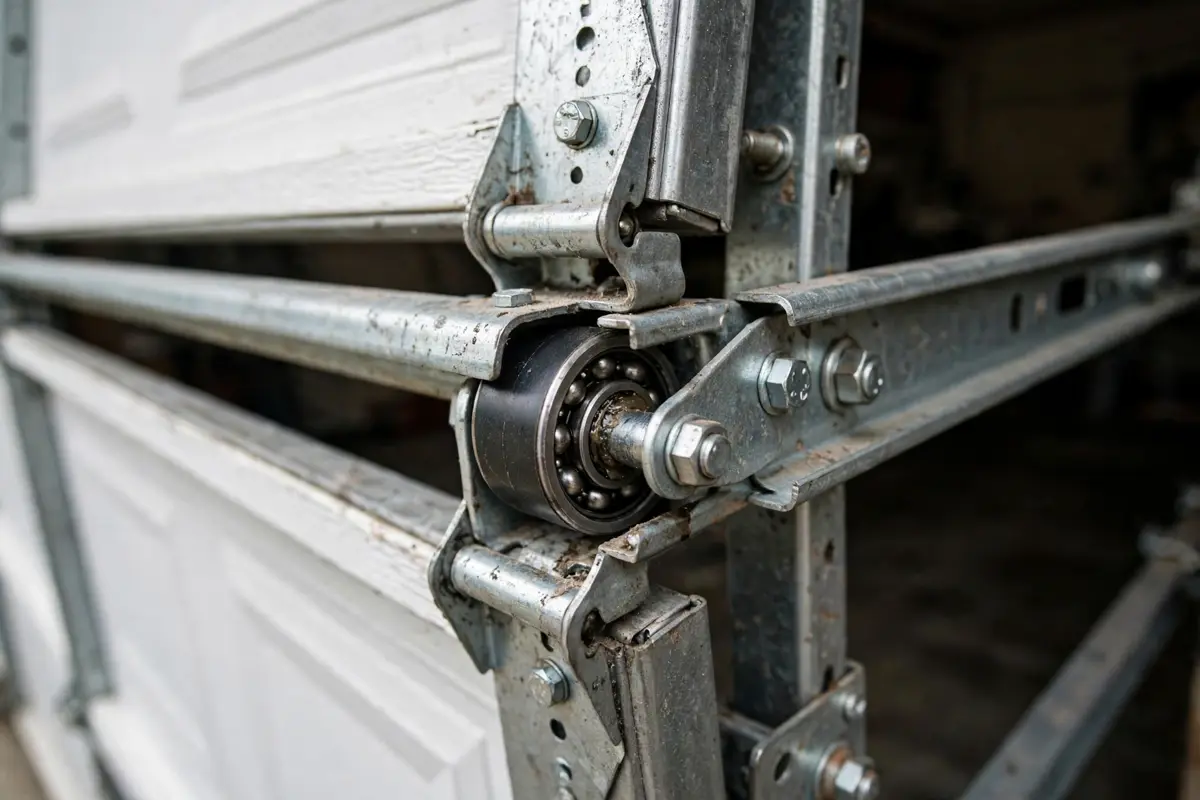
Tracks are the metal channels on each side of the opening, and rollers are the small wheels that run inside them. Together they guide the door up and over.
Vertical and horizontal tracks
Each side has a vertical track that arcs over into a horizontal track along the ceiling. The curve is where the door bends, and where most wear shows.
- Tracks last the life of the door if kept clean and dry.
- A bent track, or one pulled off the wall, is a pro job.
- Freeze and thaw can shift a track, so a door wedges at an angle.
- Never grease the inside of a track; clean it with a damp rag.
- Track realignment costs $125 to $350 (HomeGuide, 2026).
Rollers: nylon vs steel
Rollers sit inside the tracks at each hinge point and at the bottom of the door. They are made of nylon or steel, and each has its own trade-off.
- Nylon rollers run quiet and smooth; steel rollers last longer.
- Rollers last 10,000 to 15,000 cycles.
- Grinding after lubrication means flat spots or a seized bearing.
- A full roller set costs $150 to $250 (Angi, 2026).
- A wobbling roller or a torn hinge stem hole means replace it.
5. The opener — motor, rail, trolley, release
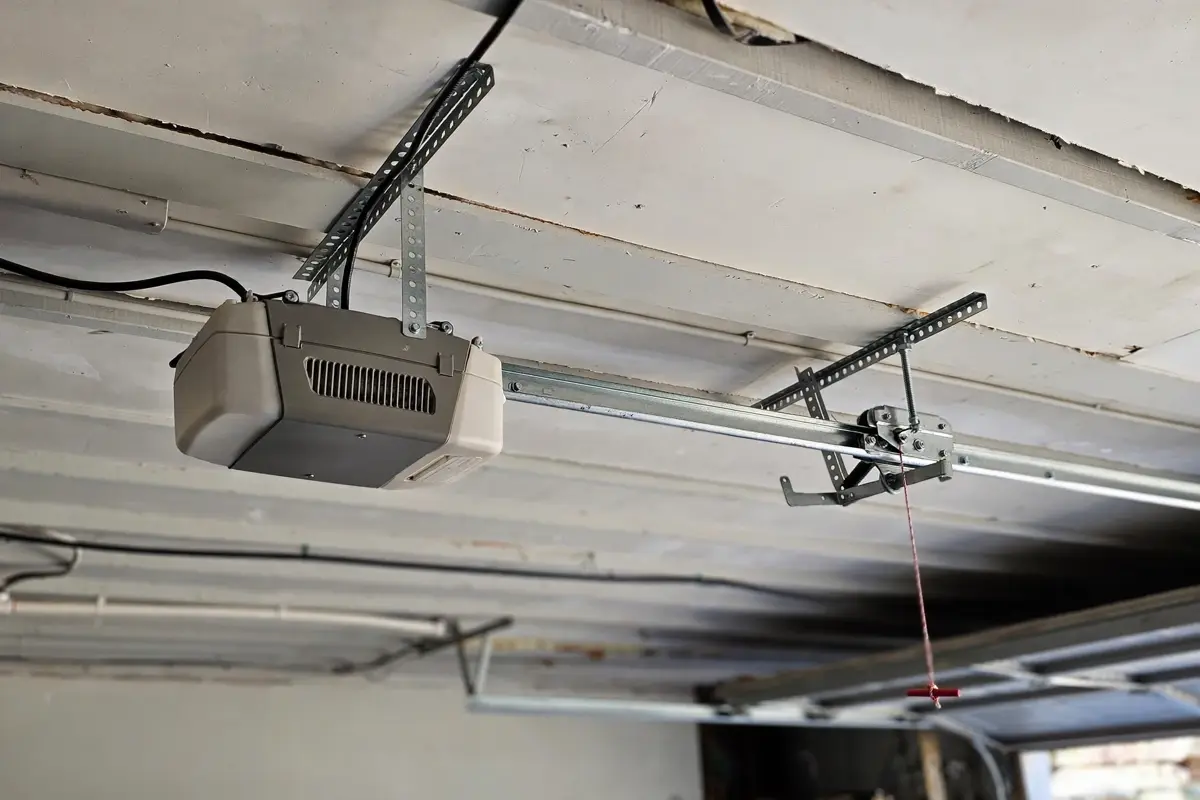
The opener is the part most homeowners know best, and the part that does the least lifting. It guides a door the springs have already balanced.
Motor, rail and trolley
The motor drives a trolley along a rail, and the trolley pulls the door open through an arm. The rail type decides noise, cost and space.
- Motor unit: 10 to 15 years; chain, belt, screw or wall-mount drive.
- Rail: chain is loudest and cheapest; belt is quietest.
- Trolley: carries the door arm, and holds the release cord.
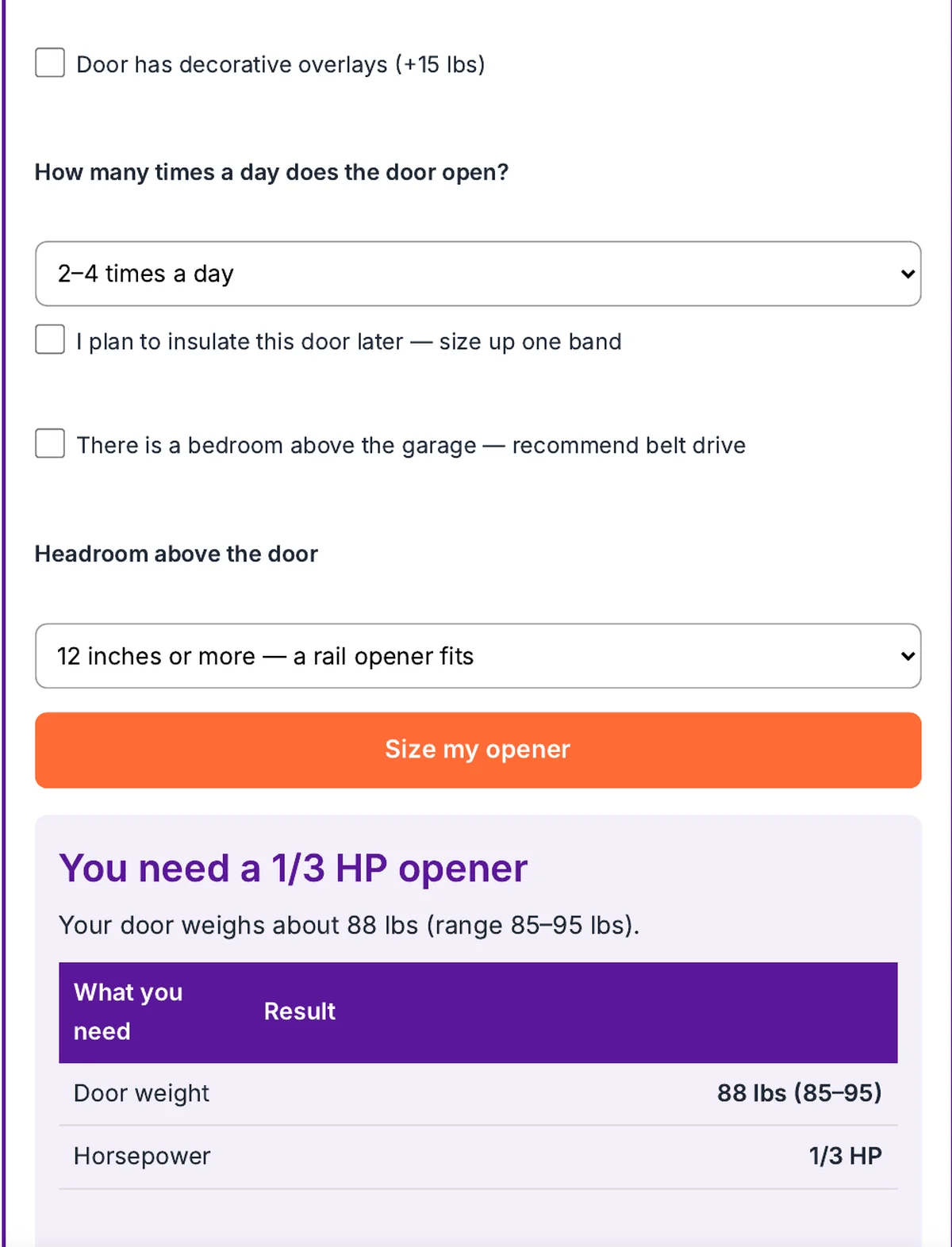
- A 1/2 HP opener lifts about 300 lb; 3/4 HP about 600 lb.
- For sizing, use the Opener Size Calculator.
Release cord, remote and keypad
The red release cord disconnects the trolley from the door, so you can lift it by hand. Remotes and keypads tell the motor what to do.
- Red cord: pull down with the door closed, to free the trolley.
- Remote: battery CR2032, replace once a year in October.
- Keypad and wall control: check the lock and vacation modes first.
- A remote that works in summer and fails in winter needs a battery.
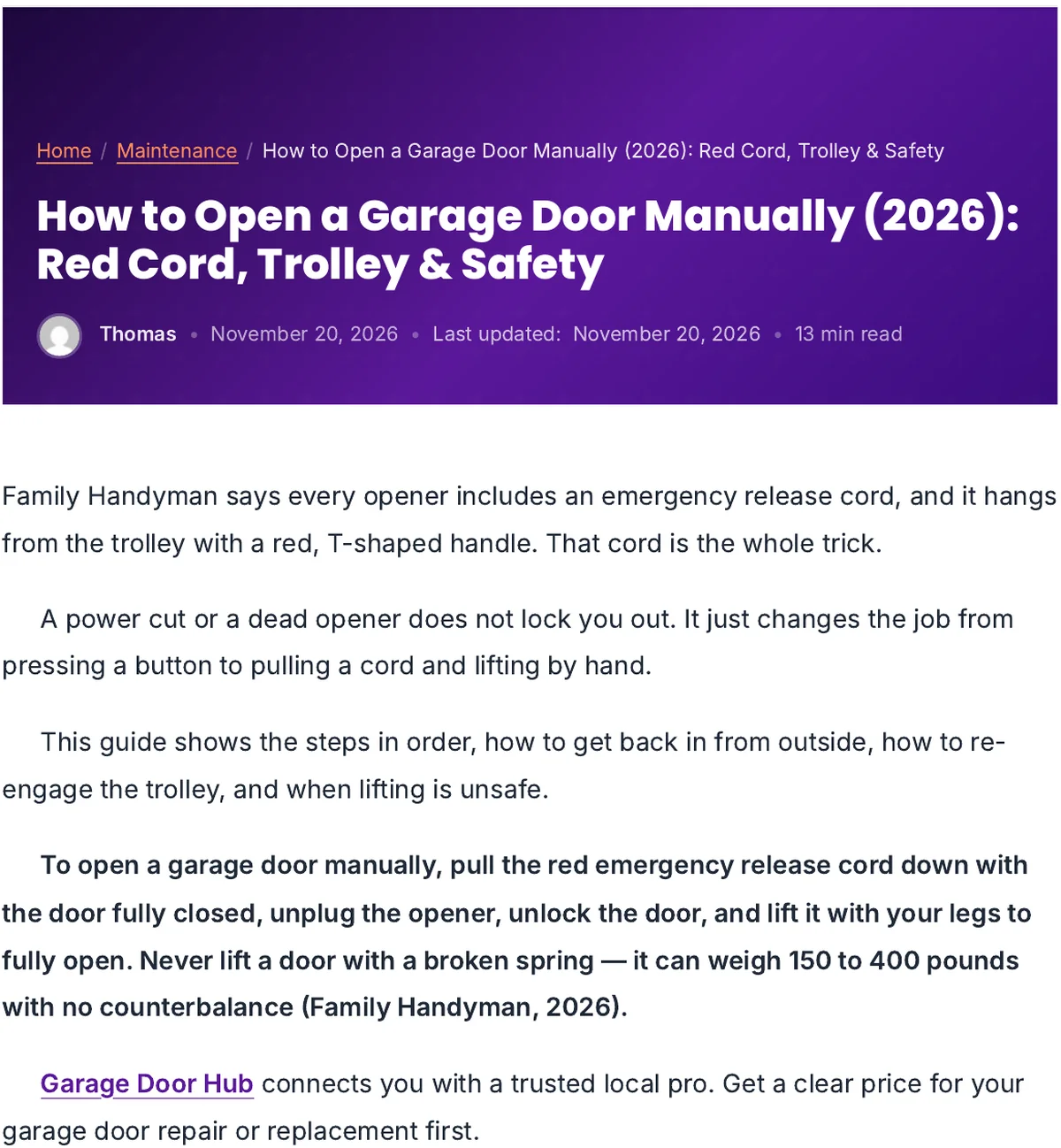
- Full steps are in the how to open a garage door manually guide.
6. Safety parts — photo eyes, seals, backup
Safety parts keep the door from hurting somebody, and they keep weather and pests out. They are the parts you can check yourself, every month.
Photo eyes and auto-reverse
Photo eyes sit near the floor on each side, and they stop the door closing on anything in the beam. Auto-reverse stops it on contact.
- Wipe both lenses monthly, and check both LEDs are steady.
- Low winter sun can blind the receiver; shade it or swap sides.
- Test auto-reverse monthly with a 2×4 laid flat under the door.
- A door that reverses for no reason often has a dirty lens.
- Never turn up the force setting to push through resistance.
Seals and battery backup
The bottom seal and weatherstripping keep out cold, water and pests. The battery backup opens the door when the power is out.
- Bottom seal: $20 to $45; replace it when it cracks or gaps.
- A gap wider than a quarter inch under the door means replace it.
- Test the battery backup by cutting power and running the door.
- Replace a backup battery if it is over 2 years old.
- For the full checklist, see the garage door maintenance checklist by season.
7. What fails first, and what to do about it
Parts fail in a rough order: springs first, then cables and rollers, then the opener. Knowing the order helps you read an estimate and plan ahead.
The failure order, in one table
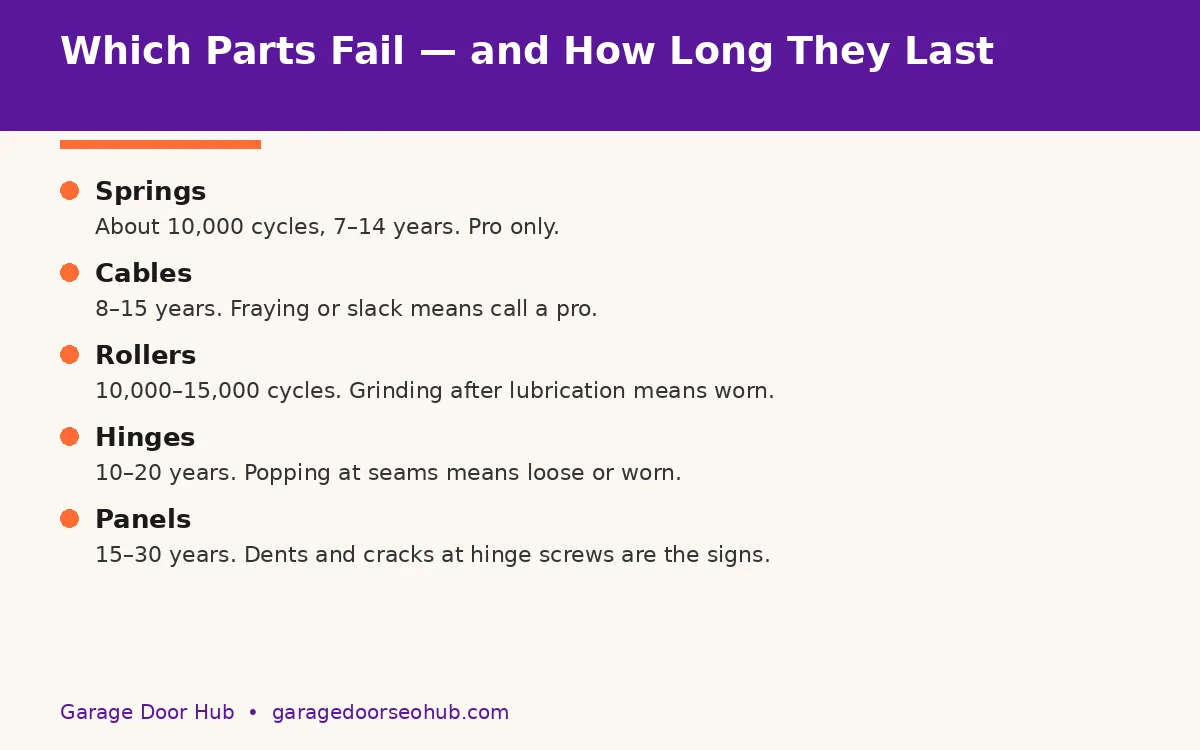
The table below gives the typical life of each part at 3 to 5 cycles a day. Your door may differ, but the order rarely does.
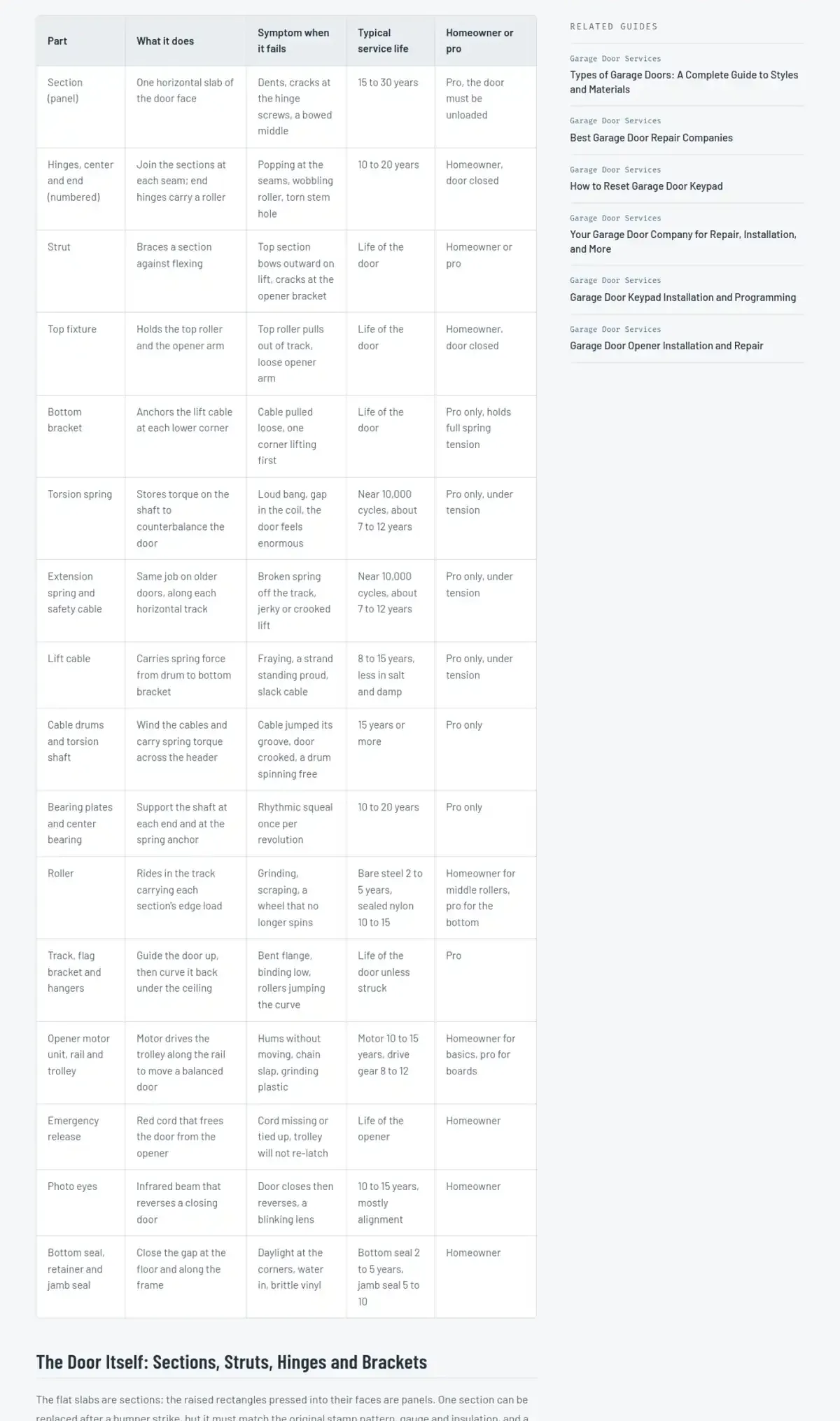
- Springs: 10,000 cycles, 7 to 14 years — pro only.
- Cables: 8 to 15 years — pro only.
- Rollers: 10,000 to 15,000 cycles — judgement call.
- Hinges: 10 to 20 years — homeowner, door closed.
- Opener: 10 to 15 years — pro for the motor, DIY for batteries.
How to read an estimate
An estimate should name the part, its life, and its price. If it names a part you now know, you can check the price before you agree.
- Ask which part failed, and why it failed now.
- Ask whether the part is replaced in pairs, and why.
- Price the job first with the Repair Cost Calculator.
- For the whole schedule, see the garage door maintenance complete guide.
- When in doubt, a photo and a phone call cost nothing.
Watch: Every part of a garage door, and what it does
Pro-X walks through every major part of a residential garage door system in this YouTube video, from springs and cables to the opener and safety sensors.
- Springs do the lifting, not the opener, and last about 10,000 cycles, or 7 to 14 years.
- The five groups are the door itself, the counterbalance, the track and rollers, the opener, and the safety parts.
- Springs, cables and bottom brackets are pro-only work.
Video: Pro-X, YouTube. Checked 21 November 2026.
Garage Door Hub connects homeowners with trusted local garage door pros. Need a repair? Need a replacement? Start here. First, find out what it should cost. Then, price your exact job with our free calculator. Next, find a pro near you. Fast. No jargon. No guesswork. No surprise bills. Just clear prices, honest guides, and a local pro you can call today.
FAQ
What are the main parts of a garage door?
The door sections, the counterbalance (springs, cables, drums and shaft), the track and rollers, the opener, and the safety parts (photo eyes, auto-reverse, seals).
What do garage door springs do?
Springs counterbalance the door’s weight, so a 150 to 400 pound door needs only 10 to 15 pounds of lift by hand. The opener only guides the door; the springs lift it.
How long do garage door parts last?
Springs last about 10,000 cycles (7 to 14 years), cables 8 to 15 years, rollers 10,000 to 15,000 cycles, hinges 10 to 20 years, and openers 10 to 15 years.
Which garage door parts should I never touch?
Springs, lift cables, cable drums and bottom brackets. They hold the door’s full weight under tension, and they are pro-only work.
What is the difference between torsion and extension springs?
Torsion springs sit on a shaft above the door and twist to lift it. Extension springs run along each horizontal track and stretch to lift it. Both are pro-only.
Sources
- GarageDoorRepairDesk, 2026 — two dozen parts in five groups; springs lift the door; service-life table.
- 4Feldco, 2026 — panels, tracks, rollers, springs, cables, drums, hinges, struts.
- Overhead Door Michigan, 2026 — springs and cables do the heavy lifting; opener only pushes and pulls.
- OC Garage Doors Guys, 2026 — panels, frame, tracks, rollers, springs, cables and motors as one system.
- Angi, 2026 — roller set $150–$250; repair average $265.
- HomeGuide, 2026 — track realignment $125–$350.
Last reviewed: 20 November 2026
Appendix — Related topics
You might have found this by these keywords — and if not, others might have:
parts of a garage door, garage door parts names, garage door parts diagram, garage door spring parts, garage door opener parts, garage door rollers parts, garage door track parts, garage door cable parts, garage door parts explained, garage door hardware