

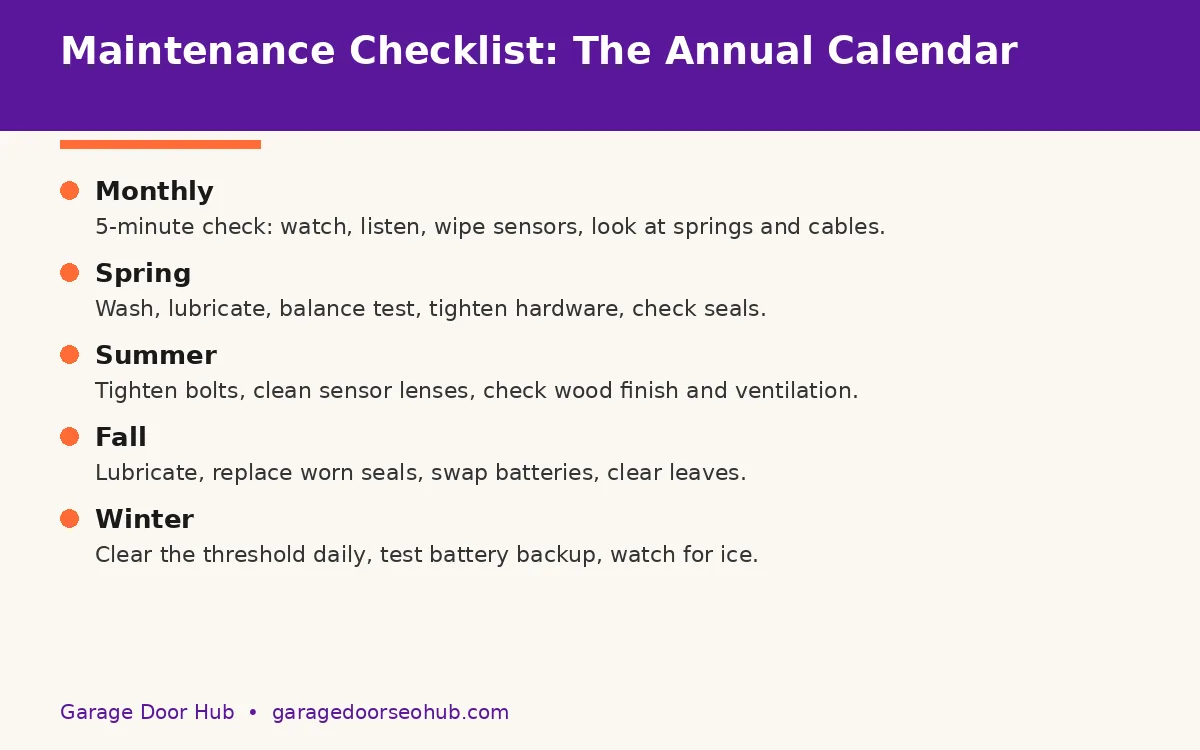
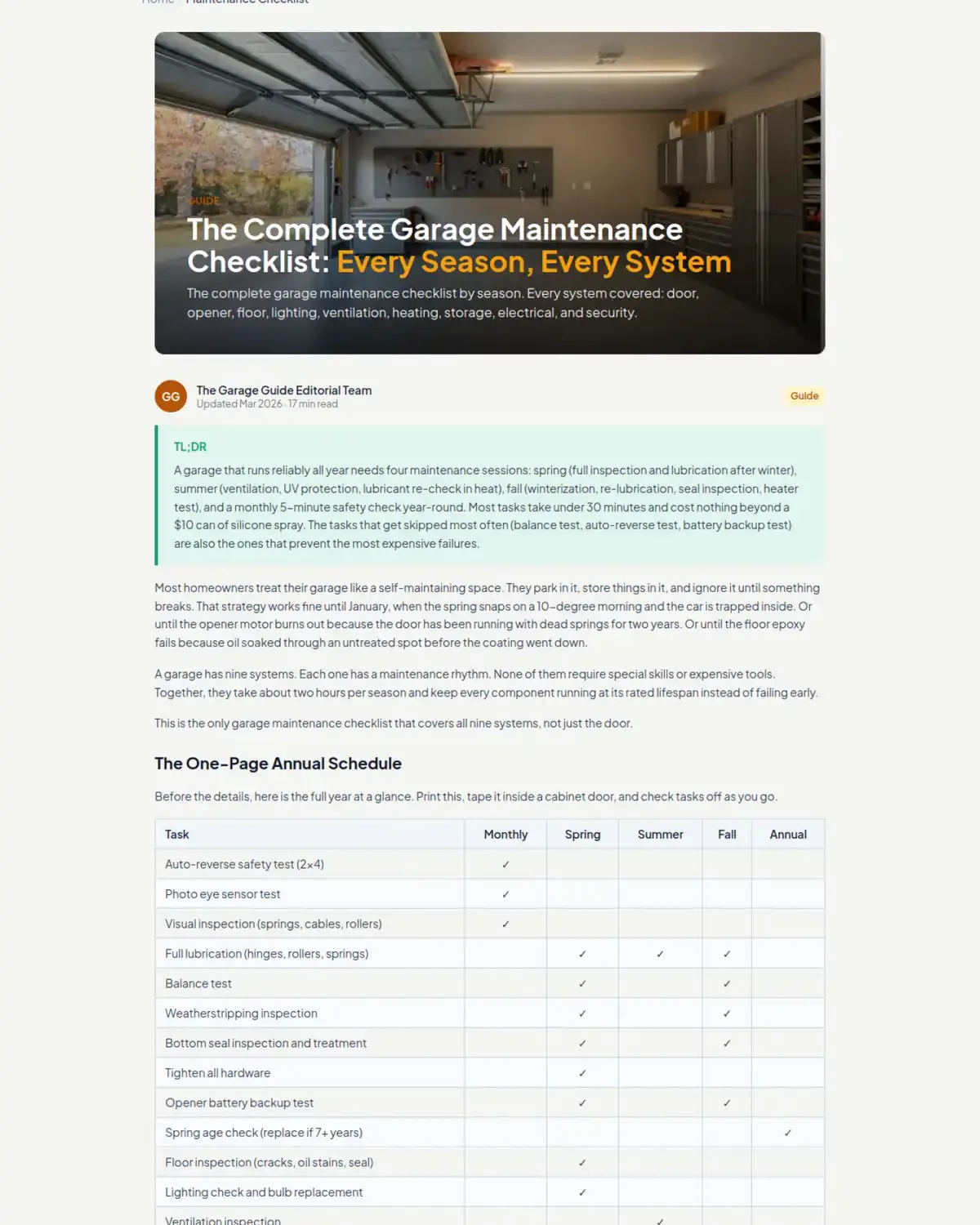
The Garage Guide says a garage needs four maintenance sessions a year: spring, summer, fall, and a monthly 5-minute safety check. That rhythm is the whole checklist in one line.
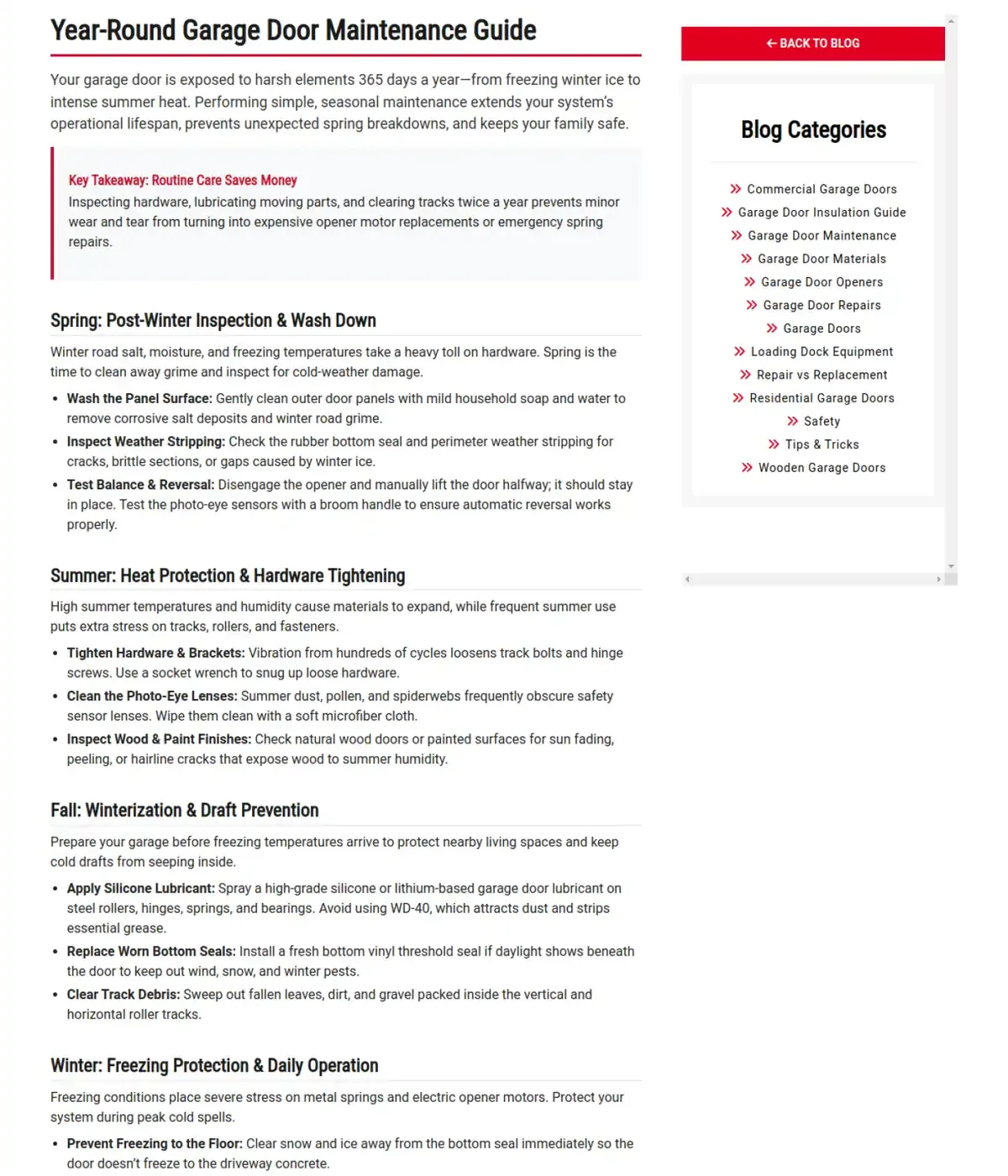
Overhead Door’s year-round guide agrees: inspect, lubricate and clear tracks twice a year, and small wear never turns into an opener motor replacement.
This guide gives you the seasonal lists, the monthly check, and a one-page table you can print and tick off twice a year.
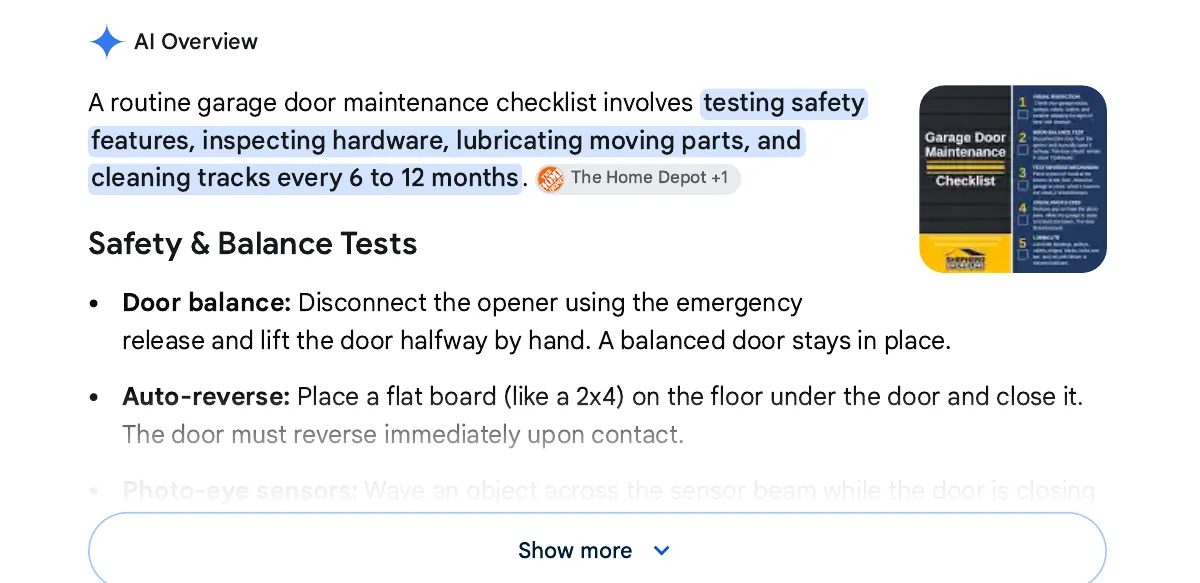
The garage door maintenance checklist runs twice a year, spring and fall, plus a monthly 5-minute check. Spring is for washing, balance and lubrication; fall is for seals, batteries and winter prep. Lubricate every 6 months, and book a pro tune-up once a year (The Garage Guide, Mar 2026).
Garage Door Hub connects you with a trusted local pro. Get a clear price for your garage door repair or replacement first.
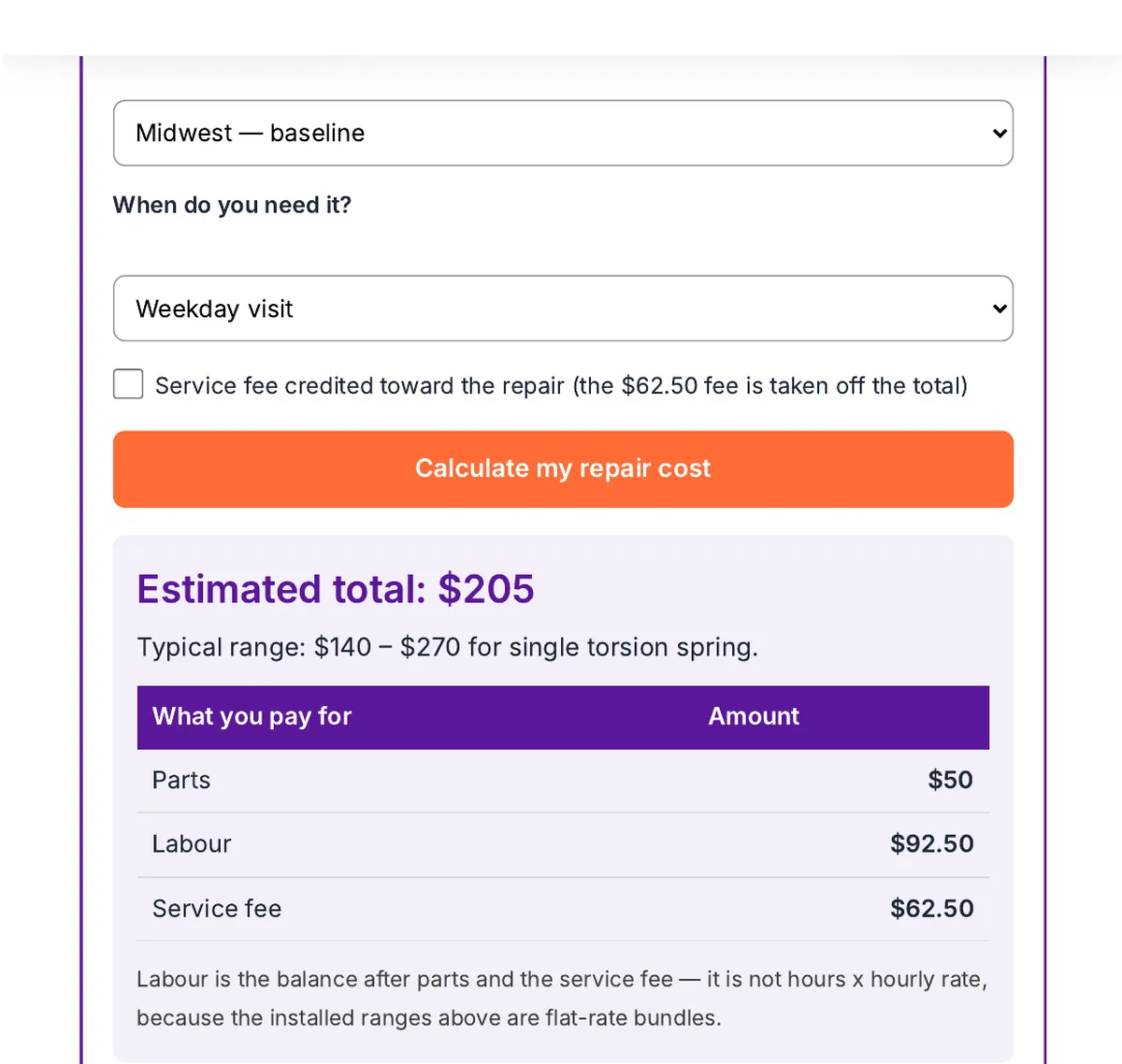
Price your job first with the free calculators below. They give you a number before you call anyone.
Repair Cost Calculator — price any repair the checklist finds, before you agree to it.
Lifespan Calculator — see when springs, cables and rollers are due for replacement.
- Enter your door size and the part that failed.
- Note the price, then read the key takeaways and Section 1.
- Use the price in the guide to check any quote you get.
Key takeaways
- Run the full checklist twice a year, spring and fall, in about 30 minutes each.
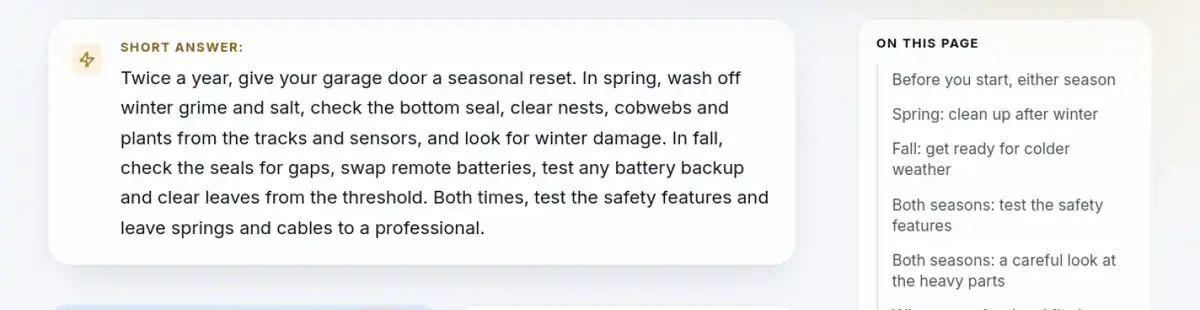
- Monthly 5-minute check: watch, wipe sensors, look at springs and cables, test auto-reverse.
- Lubricate every 6 months; heavy-use doors every 3 to 4 months.
- Fall is winter prep: seals, batteries, lubrication, clear leaves.
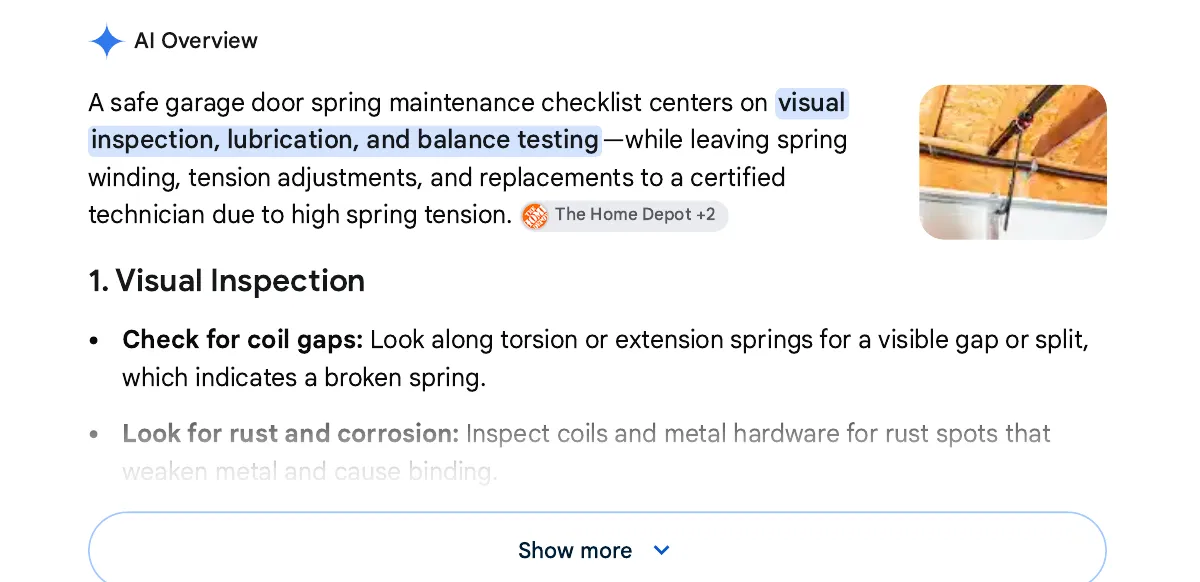
- Springs and cables are look-only for homeowners — never touch them.
Table of Contents
-
1. Spring: clean up after winter
-
2. Summer: tighten, clean and protect
-
3. Fall: get ready for colder weather
-
4. Winter: protect and monitor
-
5. Monthly: the 5-minute check, all year
-
6. The one-page checklist table
-
7. The annual pro visit, and your log
- Watch: The seasonal garage door checklist, season by season
- FAQ
1. Spring: clean up after winter
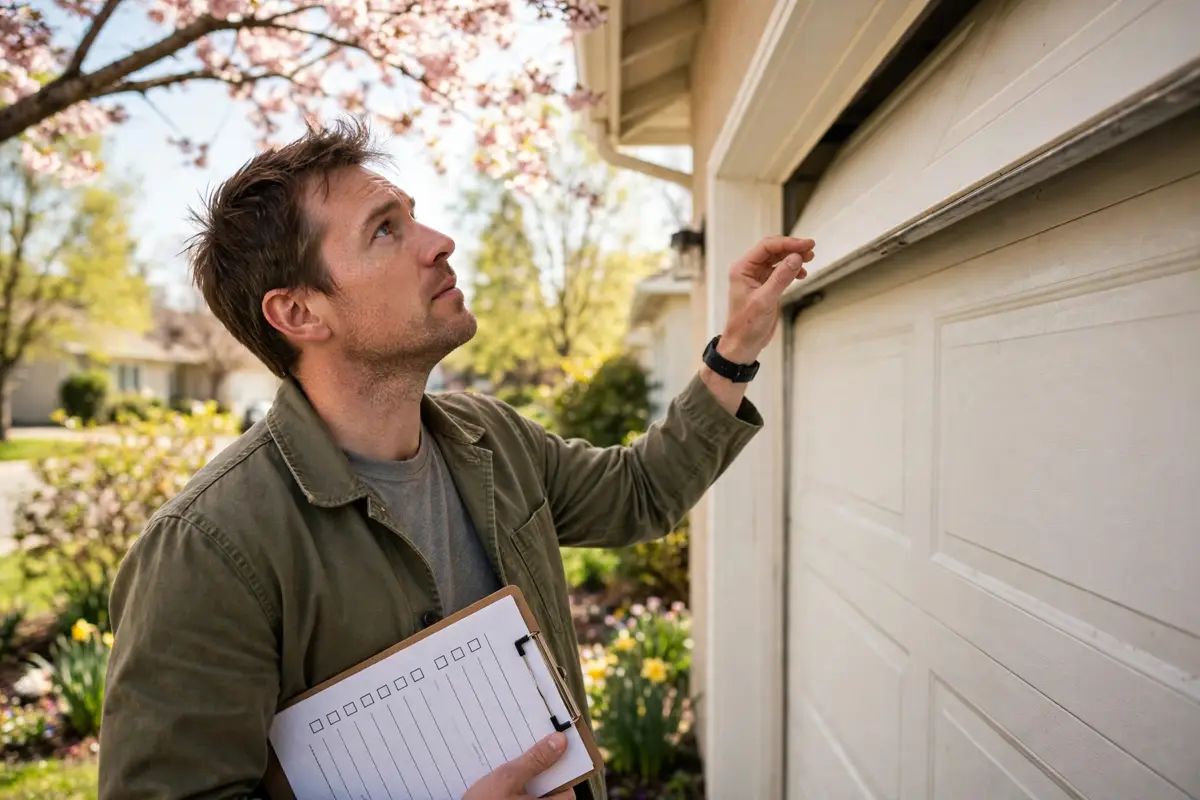
Spring is the most important maintenance session of the year. Winter stresses every part, and spring is when you find out what it did.
Wash, inspect seals and rust
Winter leaves salt, sand and grime on the lower panels. Wash it off, then look for the damage the salt has started.
- Wash panels with mild soap, water and a soft brush, then rinse.
- Check the bottom seal for cracks, tears or gaps from ice.
- Look for rust spots on the lower edge and on hardware.
- Touch up small paint chips early, before rust spreads.
- Clear nests, cobwebs and plants from tracks and sensors.
Balance, lubrication and hardware
Spring is the full reset: lubricate, test the balance, and tighten everything that worked loose over winter.
- Lubricate hinges, roller bearings and spring coils with silicone spray.
- Test the balance: lift the door to 3 or 4 feet, and it should hold.
- Tighten every bolt and hinge screw you can reach.
- Run the auto-reverse test with a 2×4 laid flat under the door.
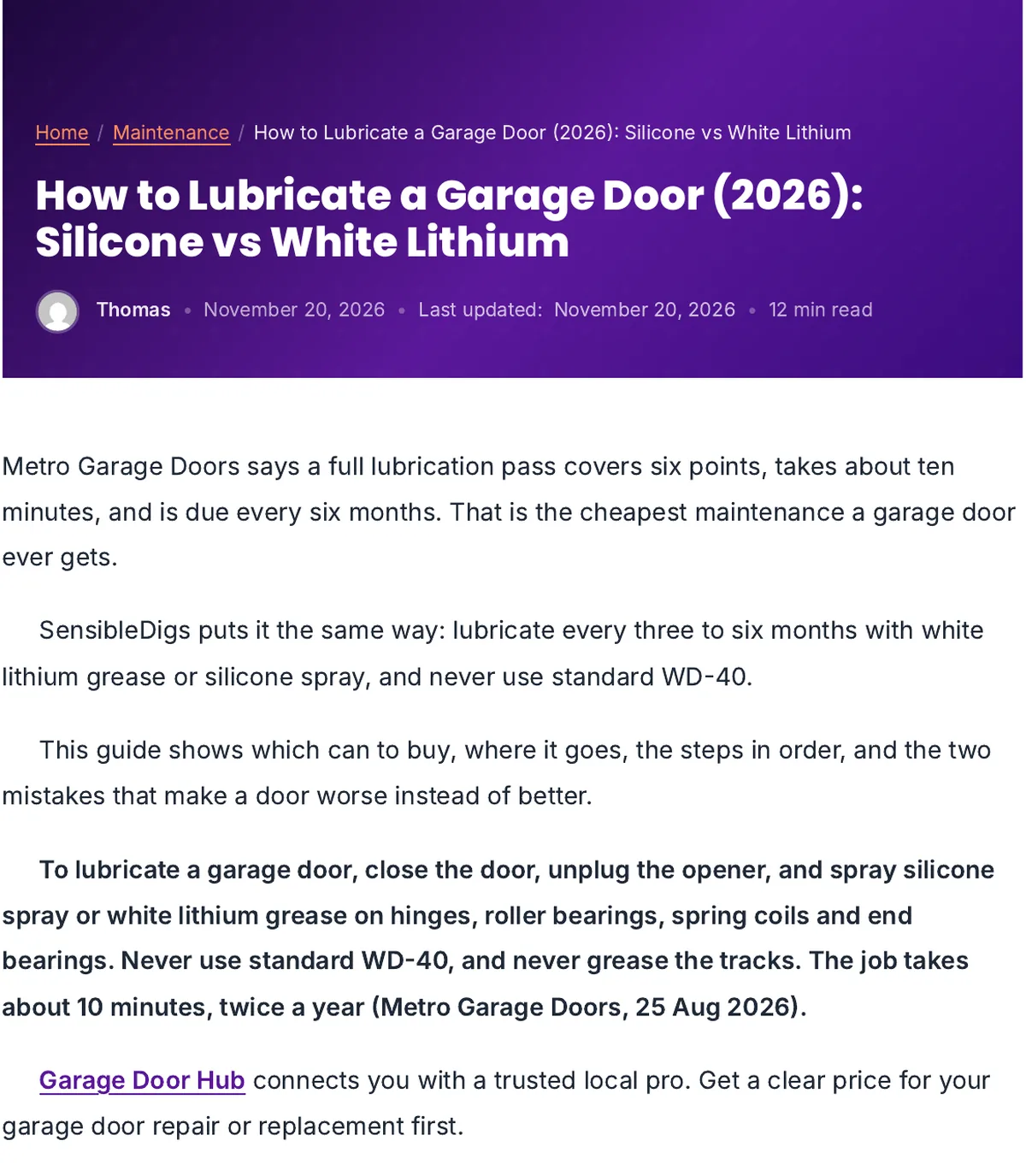
- Full steps are in the how to lubricate a garage door guide.
2. Summer: tighten, clean and protect
Summer is heat, dust and heavy use. Hardware loosens, sensor lenses clog, and lubricant thins out in the heat.
Tighten hardware and clean sensors
Vibration from hundreds of cycles loosens track bolts and hinge screws. Summer dust and pollen do the same job on sensor lenses.
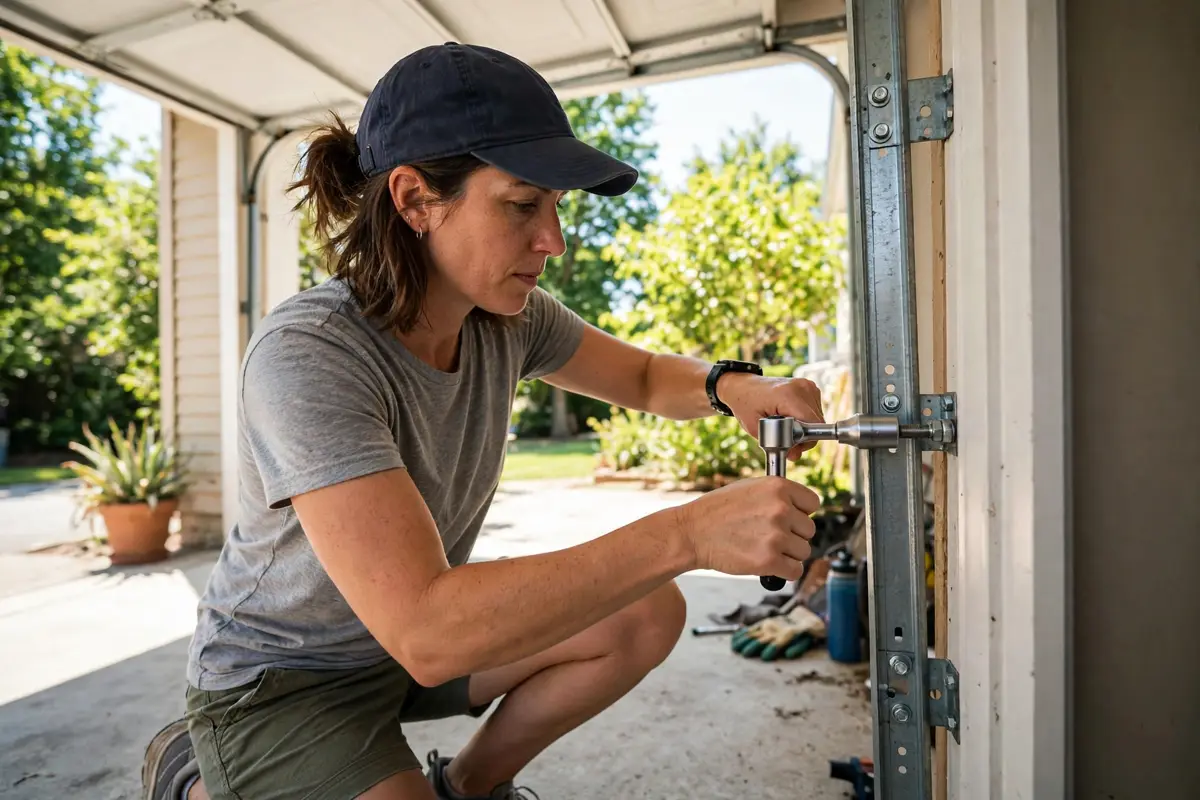
- Snug up loose track bolts and hinge screws with a socket wrench.
- Clean photo-eye lenses of dust, pollen and spider webs.
- Check wood doors for finish wear, and steel doors for dents.
- Clear the tracks of dirt, gravel and summer debris.
- Wipe tracks clean and dry; never grease them.
Heat check: lubricant and ventilation
Heat breaks down lubricant faster, and a hot garage makes the opener work harder. A mid-summer pass keeps the door quiet.
- Re-check lubrication if the door gets noisy in the heat.
- Lubricate again if the last pass was more than 4 months ago.
- Check garage ventilation, so heat does not build up.
- Look for warped or swollen wood panels after hot spells.
- Note any new noise in your log, so the fall visit can check it.
3. Fall: get ready for colder weather
Fall is winter prep, and it is the second big session of the year. One fall weekend stops most cold-weather failures before they start.
Seals, lubrication and gaps
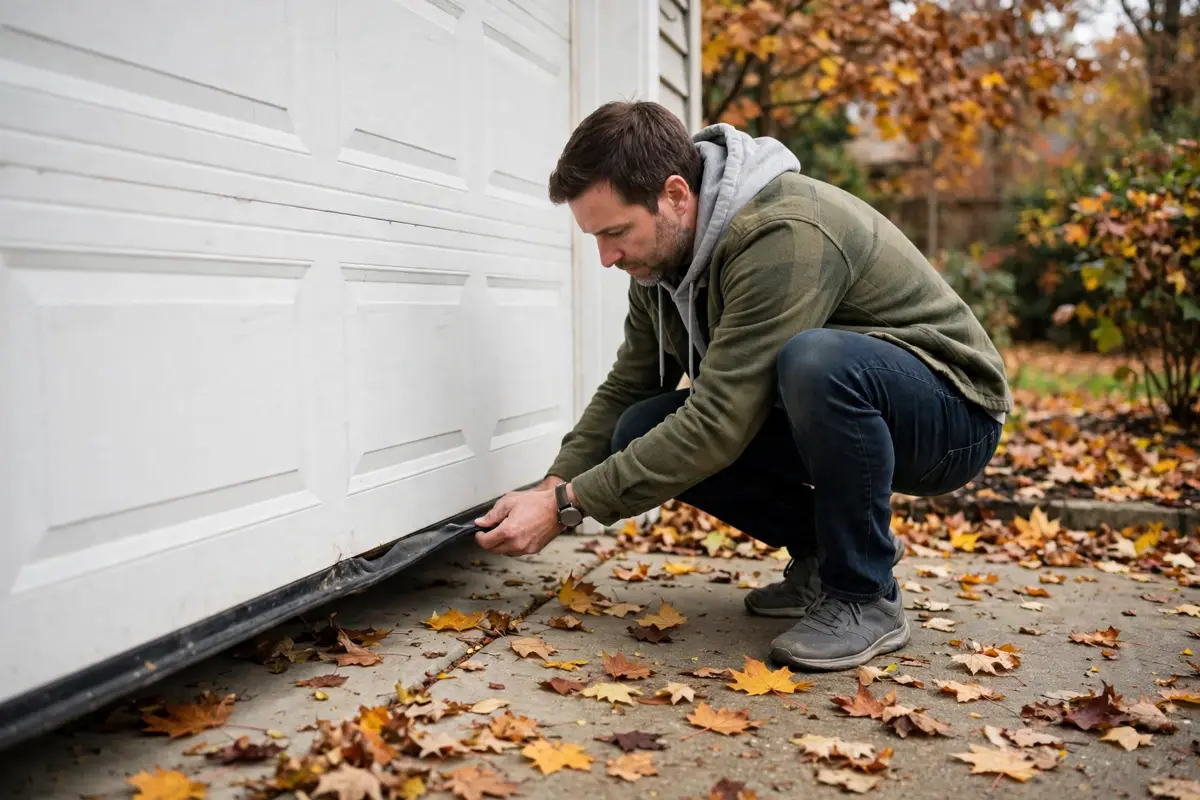
Seals keep cold air, water and pests out, and fall shows their age fast. A seal that looks fine in summer can crack by January.
- Check the bottom seal and side weatherstripping for gaps.
- Replace a seal that is cracked, split or flattened.
- Refresh lubrication before the cold stiffens old grease.
- Caulk gaps wider than an eighth of an inch round the frame.
- Close the gaps mice use: a torn seal is an open door to them.
Batteries, backup and leaves
Cold is hard on weak batteries, and wet leaves trap water against the door. Both jobs take minutes in fall, and both save a winter call-out.
- Swap remote and keypad batteries in October, before the cold.
- Test the opener battery backup, and replace a battery over 2 years old.
- Clear leaves from the threshold, so water cannot pool there.
- Point downspouts away from the door.
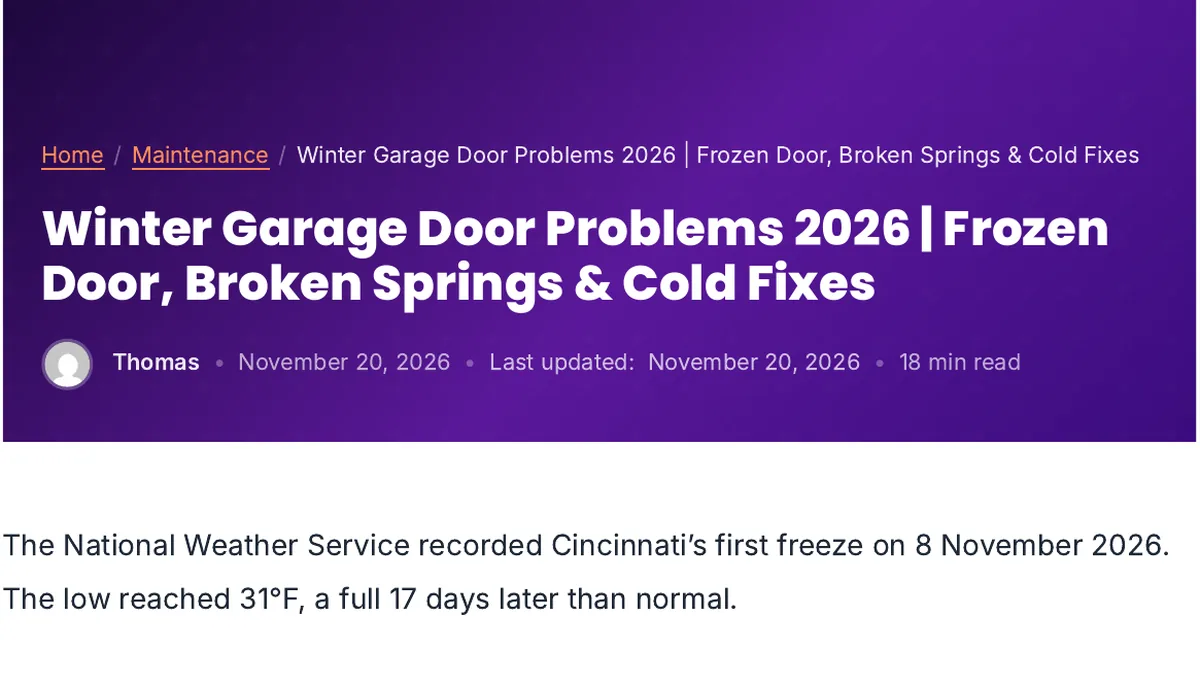
- For frozen doors and cold springs, see the winter garage door problems guide.
4. Winter: protect and monitor
Winter is watch-and-clear, not a big service session. The work is daily, small, and it keeps the door from freezing shut.
Threshold, ice and snow
Snow and slush sit on the threshold and freeze the seal to the concrete overnight. Clear it before dark, every night it snows.
- Clear snow and ice from the bottom seal at once.
- Knock snow and slush off the car before pulling in.
- Dry the threshold after clearing, or it refreezes tonight.
- Never force a frozen door with the opener.
- Never pour boiling water on a frozen seal.
Monthly checks in winter
Winter checks take five minutes a month, and they catch the failures a fall checklist cannot see. Do them on the first weekend of each month.
- Wipe sensor lenses, and check both LEDs are steady.
- Look for a gap in the torsion spring coil, or rust flakes below it.
- Check extension springs for stretch, sag or a visible gap.
- Test the battery backup after any power cut.
- If the door feels heavy or hangs crooked, stop and call a pro.
5. Monthly: the 5-minute check, all year
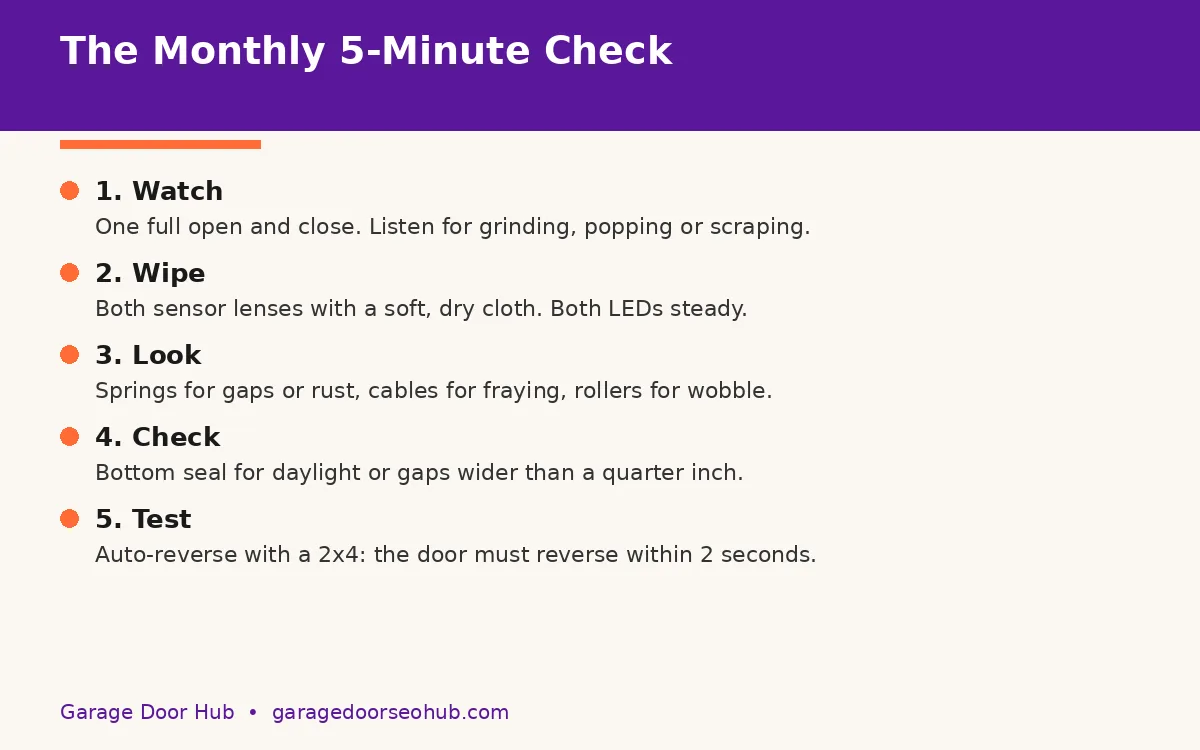
The monthly check is the same in every season, and it is the most valuable five minutes in this guide. Do it on the first weekend of each month.
Three tests, every month
Three tests cover the safety systems and the balance. They are the checks that get skipped most often, and they prevent the most expensive failures.
- Auto-reverse: lay a 2×4 flat under the door; it must reverse in 2 seconds.
- Photo-eye: break the beam with a broom handle; the door must reverse.
- Balance: lift the door halfway by hand; it should hold its place.
- A door that slides down has weakening springs.
- A door that rises is over-tensioned; either way, call a pro.
Look and listen, every month
Watch one full open and close, and listen for new noises. A new sound is the earliest warning a door gives, and it costs nothing to hear.
- Watch for jerky movement, or one side lifting first.
- Listen for grinding, popping, scraping or a new squeak.
- Look at springs and cables for gaps, rust or fraying.
- Check the bottom seal for daylight or a gap at the corners.
- Photograph anything new, and add it to your log.
6. The one-page checklist table
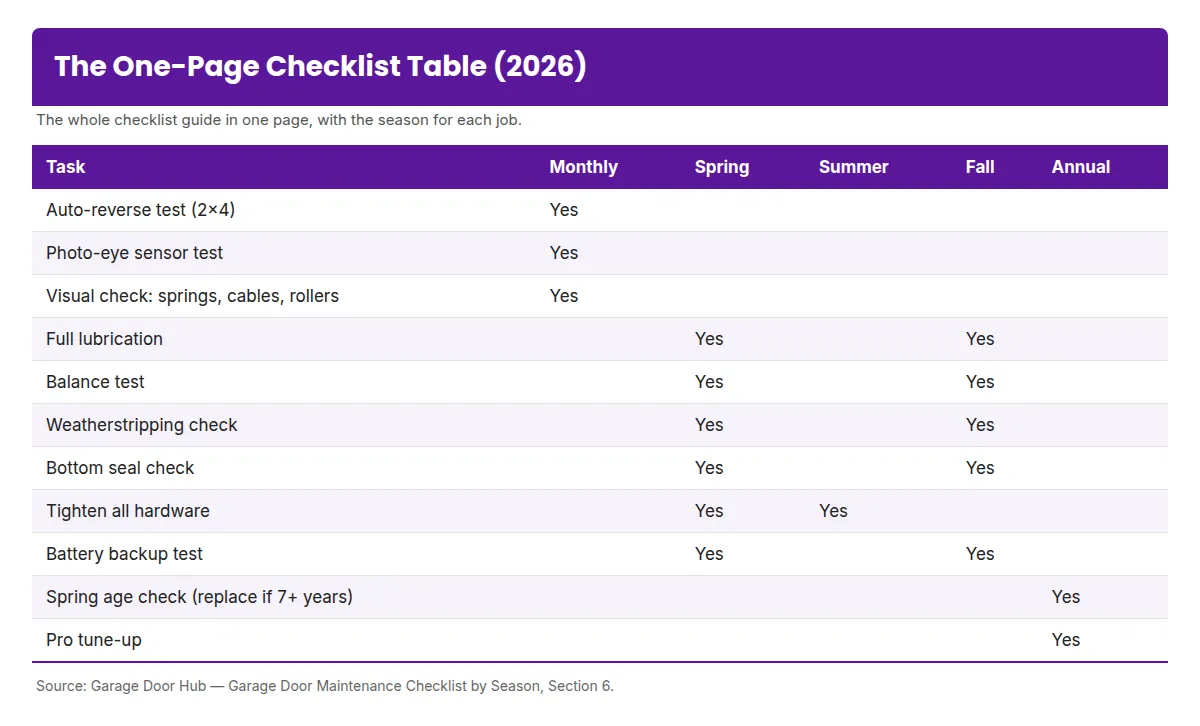
Print this table and tick it off twice a year. It is the whole guide in one page, with the season for each job.
| Task | Monthly | Spring | Summer | Fall | Annual |
|---|---|---|---|---|---|
| Auto-reverse test (2×4) | Yes | ||||
| Photo-eye sensor test | Yes | ||||
| Visual check: springs, cables, rollers | Yes | ||||
| Full lubrication | Yes | Yes | |||
| Balance test | Yes | Yes | |||
| Weatherstripping check | Yes | Yes | |||
| Bottom seal check | Yes | Yes | |||
| Tighten all hardware | Yes | Yes | |||
| Battery backup test | Yes | Yes | |||
| Spring age check (replace if 7+ years) | Yes | ||||
| Pro tune-up | Yes |
How to use the table
Tick the monthly row every month, and the spring and fall rows in those seasons. The annual row is the pro tune-up, booked once a year.
- Pair spring and fall with the clocks changing, so you remember.
- Keep the ticked table with your maintenance log.
- Anything you cannot tick is a job for the pro visit.
- For tune-up costs, see the garage door maintenance cost guide.
- For the whole schedule, see the garage door maintenance complete guide.
What the table cannot show
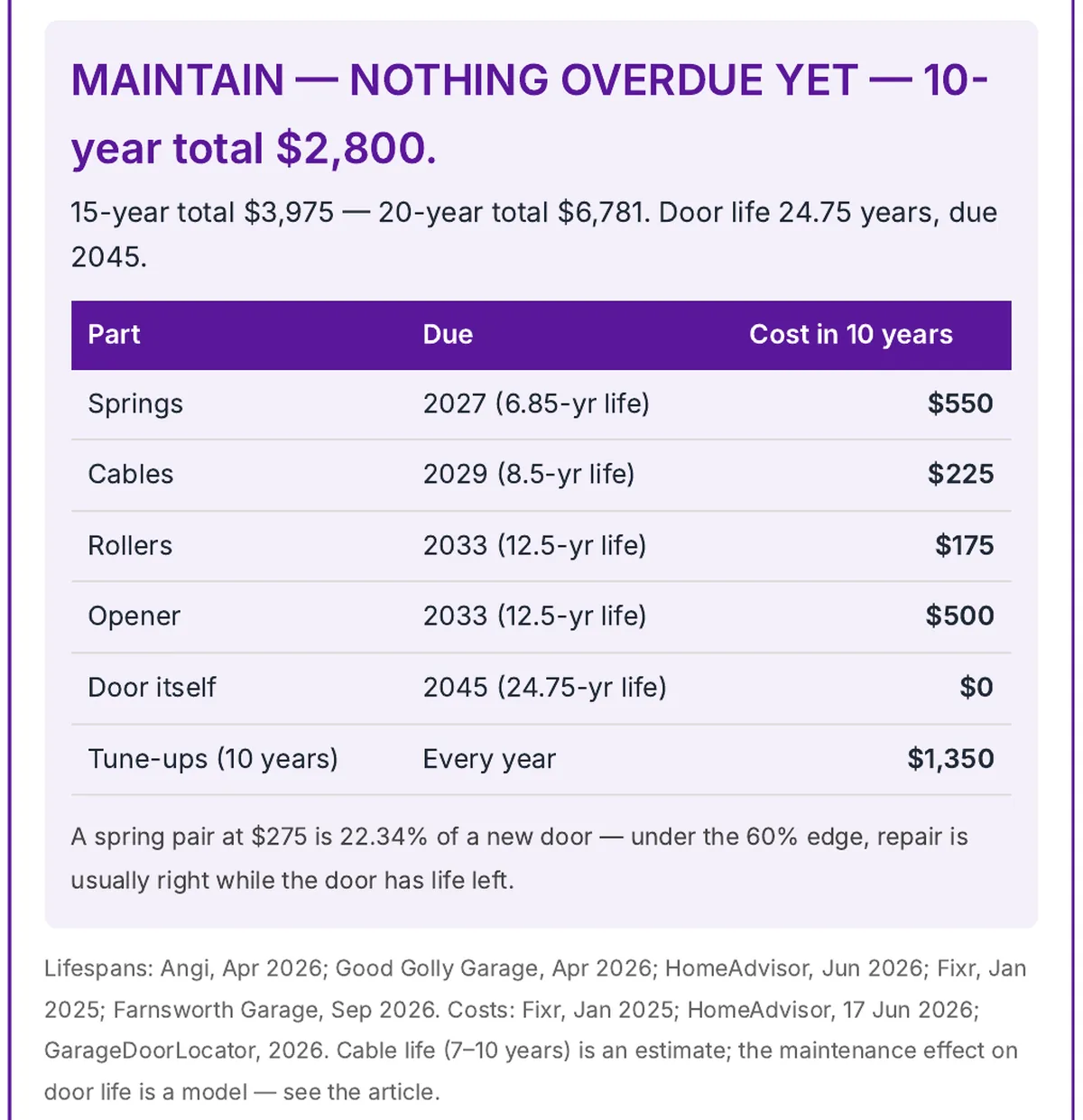
A table shows jobs, not judgement. It cannot tell you whether a spring is near the end of its life, or whether a cable is fraying inside the drum.
- A pro spots spring fatigue and cable wear you cannot see.
- A door that will not balance needs springs, not a new opener.
- Two repairs in one year often mean a part is failing.
- When in doubt, a photo and a phone call cost nothing.
- Never put a tool on springs or cables yourself.
7. The annual pro visit, and your log
Your spring and fall resets cover the parts you can safely handle. Once a year, a pro inspects the springs and cables, tests the balance, and does a full safety check.
What the pro visit adds
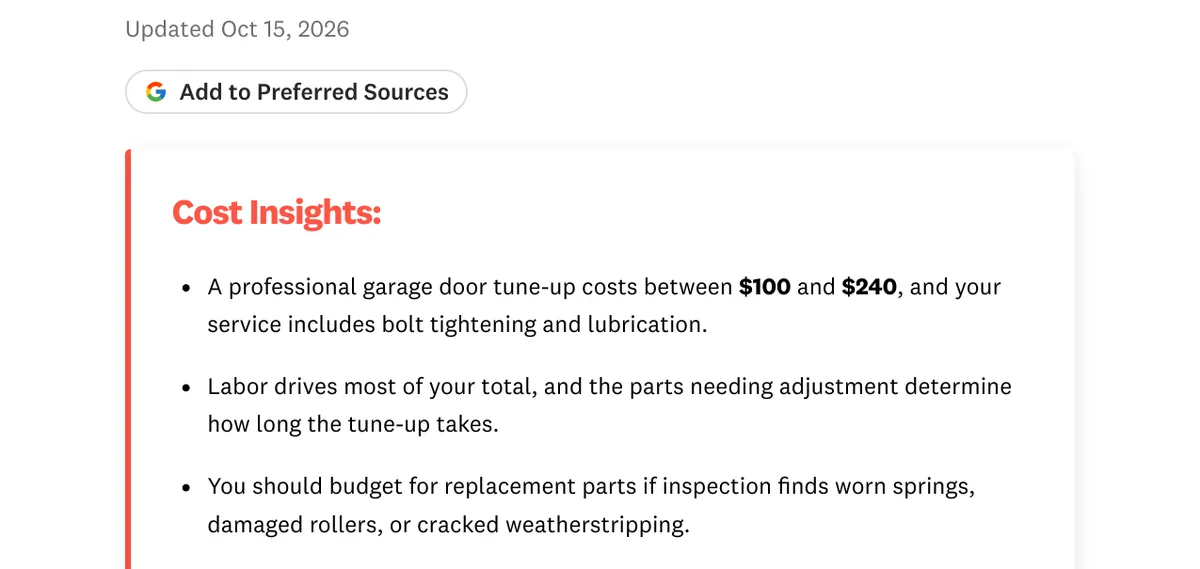
The pro visit adds the checks that need training and tools. It takes about an hour, and it costs $100 to $240 (Angi, 15 Oct 2026).
- Spring tension measured, not just looked at.
- Cables, drums and bearings checked up close.
- Opener force and limit settings set to the maker’s spec.
- A written report on what is worn and what can wait.
- A plan for the big jobs, on your schedule, not in an emergency.
Keep a simple log
A log takes two minutes a visit, and it pays off when you sell the house or claim on insurance. Note the date, the job, and the part ages.
- Note the spring install date, so you know its cycle age.
- Note the opener model and battery change dates.
- Keep receipts for tune-ups, parts and repairs.
- Photograph any rust, fraying or damage you spot.
- Bring the log to the next visit, so the pro sees the history.
Watch: The seasonal garage door checklist, season by season
This 17-minute video from A1 Garage Door Service runs through the seasonal checklist — lubricating twice a year, the light test for the bottom seal, and the three-point balance test — the same checks in this guide.
What to take from the video
- Lubricate moving parts twice a year, and use the right lubricant for the job.
- Run the monthly 5-minute check: watch, wipe the sensors, look at the springs and cables, and test auto-reverse.
- Springs and cables are look-only — never touch them — and book a pro tune-up once a year.
Video: A1 Garage Door Service, YouTube. Checked 21 November 2026.
Garage Door Hub connects homeowners with trusted local garage door pros. Need a repair? Need a replacement? Start here. First, find out what it should cost. Then, price your exact job with our free calculator. Next, find a pro near you. Fast. No jargon. No guesswork. No surprise bills. Just clear prices, honest guides, and a local pro you can call today.
FAQ
How often should I run the garage door maintenance checklist?
Run the full checklist twice a year, spring and fall, and do the 5-minute check every month. Lubricate every 6 months, or every 3 to 4 months for heavy-use doors.
What is the monthly 5-minute garage door check?
Watch one full cycle, wipe the sensor lenses, look at springs and cables, check the bottom seal, and test the auto-reverse with a 2×4. It takes five minutes.
What should I check on my garage door in spring?
Wash off winter salt and grime, check the bottom seal for cracks, look for rust, clear nests from tracks and sensors, test the balance, and lubricate everything.
What should I check on my garage door in fall?
Check seals for gaps, refresh lubrication, swap remote batteries, test the battery backup, clear leaves from the threshold, and point downspouts away from the door.
Can I do the seasonal checklist myself?
Yes, except for springs and cables. Those are look-only for homeowners. A pro tune-up once a year covers the parts that carry the door’s weight.
Sources
- The Garage Guide, Mar 2026 — four sessions a year, monthly 5-minute check, one-page annual schedule table.
- Overhead Door, 2026 — spring wash, summer tightening, fall lubrication, winter protection.
- Guard Your Door, 2026 — spring and fall lists, 30 minutes each, safety tests both seasons.
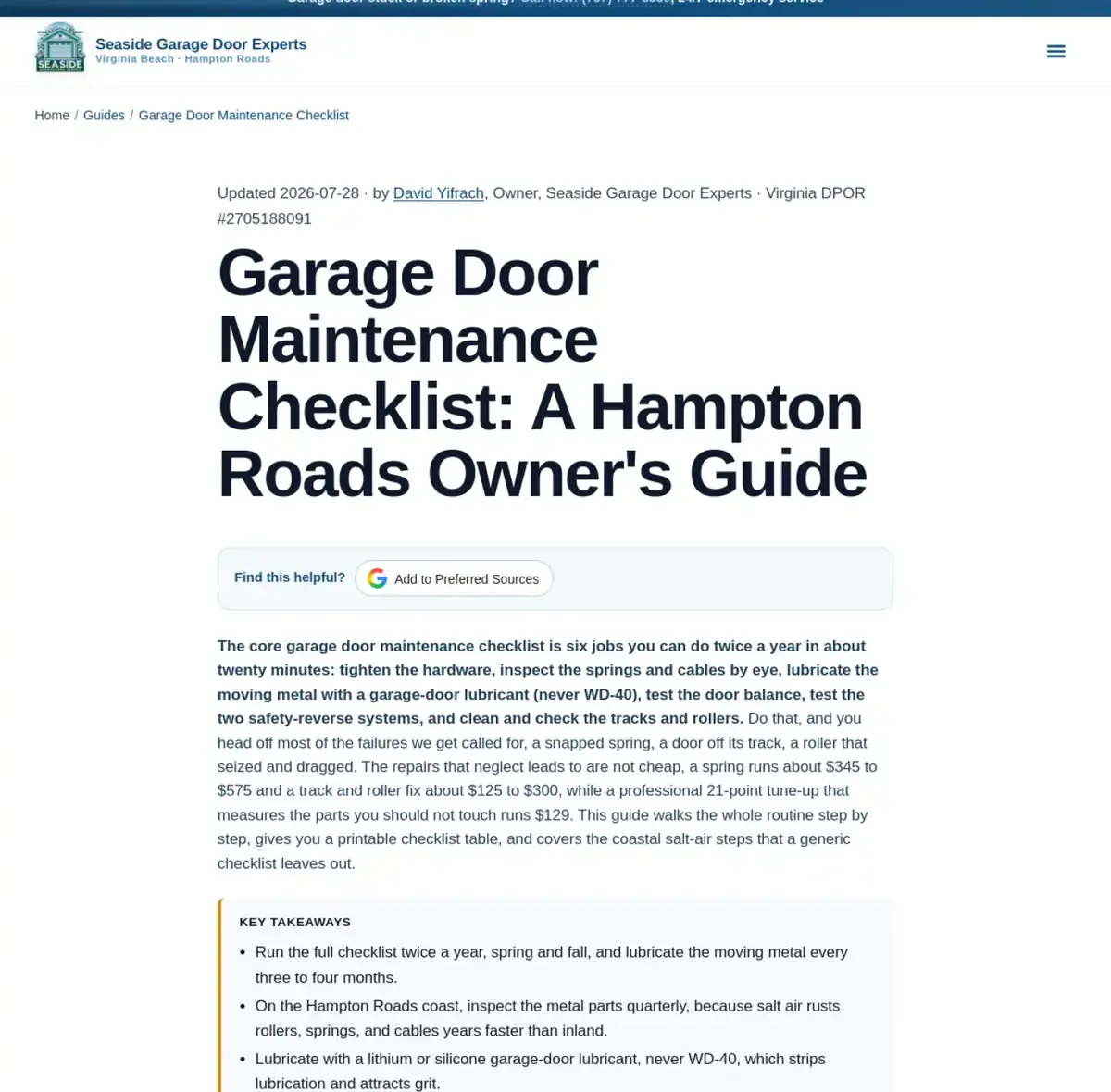
- Seaside Garage Door Experts, 28 Jul 2026 — six jobs twice a year, balance and auto-reverse tests matter most.
- Angi, updated 15 Oct 2026 — tune-up $100–$240.
- Metro Garage Doors, 25 Aug 2026 — lubrication twice a year, six points, 10 minutes.
Last reviewed: 20 November 2026
Appendix — Related topics
You might have found this by these keywords — and if not, others might have:
garage door maintenance checklist, garage door spring maintenance checklist, garage door maintenance by season, seasonal garage door maintenance, garage door maintenance schedule, garage door winter checklist, garage door spring checklist, garage door maintenance, garage door inspection checklist