

Metro Garage Doors says a full lubrication pass covers six points, takes about ten minutes, and is due every six months. That is the cheapest maintenance a garage door ever gets.
SensibleDigs puts it the same way: lubricate every three to six months with white lithium grease or silicone spray, and never use standard WD-40.
This guide shows which can to buy, where it goes, the steps in order, and the two mistakes that make a door worse instead of better.
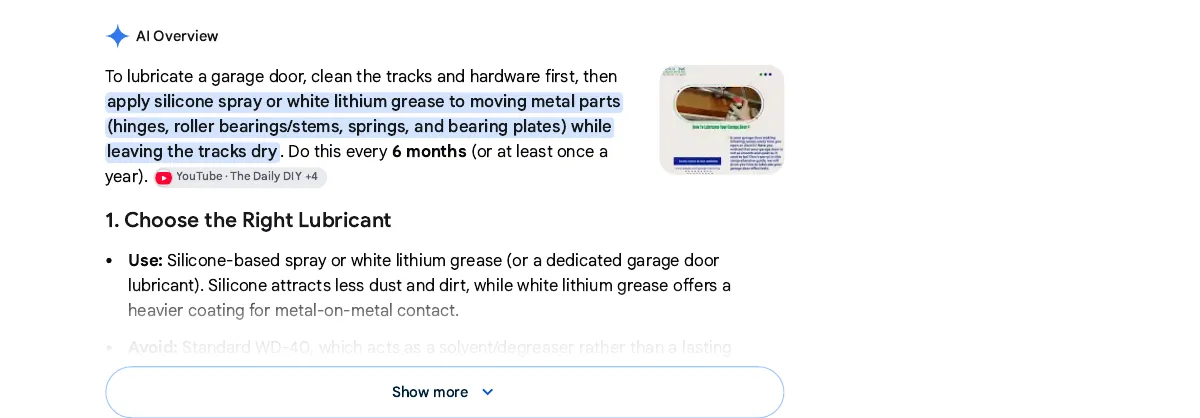
To lubricate a garage door, close the door, unplug the opener, and spray silicone spray or white lithium grease on hinges, roller bearings, spring coils and end bearings. Never use standard WD-40, and never grease the tracks. The job takes about 10 minutes, twice a year (Metro Garage Doors, 25 Aug 2026).
Garage Door Hub connects you with a trusted local pro. Get a clear price for your garage door repair or replacement first.
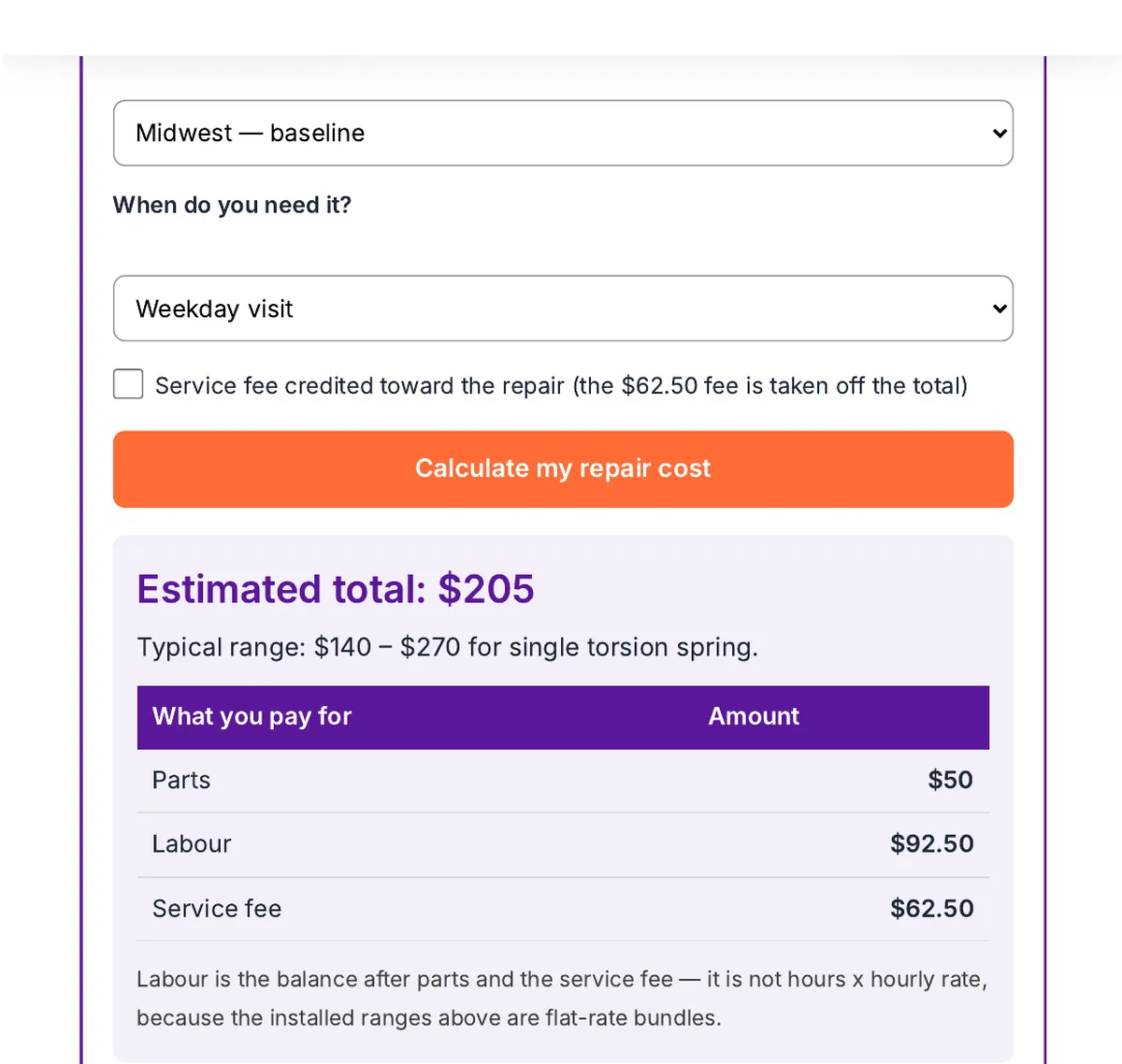
Price your job first with the free calculators below. They give you a number before you call anyone.
Repair Cost Calculator — price a repair if lubrication does not fix the noise.
Lifespan Calculator — see how lubrication stretches roller and spring life.
- Enter your door size and the part that failed.
- Note the price, then read the key takeaways and Section 1.
- Use the price in the guide to check any quote you get.
Key takeaways
- Use silicone spray or white lithium grease — never standard WD-40.
- Six points get lubricant: springs, hinges, roller bearings, end bearings, lock, opener rail.
- Tracks stay dry: clean them, never spray them.
- The job takes about 10 minutes, twice a year, door closed, opener unplugged.
- Noise that stays after lubrication means a worn part, not a dry one.
Table of Contents
-
1. Which lubricant to buy
-
2. The six points that get lubricant
-
3. The steps, in order
-
4. What never to grease — the two big mistakes
-
5. How often to lubricate
-
6. When lubrication does not fix the noise
-
7. Safety: what lubrication never includes
- Watch: How to lubricate a garage door the right way
- FAQ
1. Which lubricant to buy
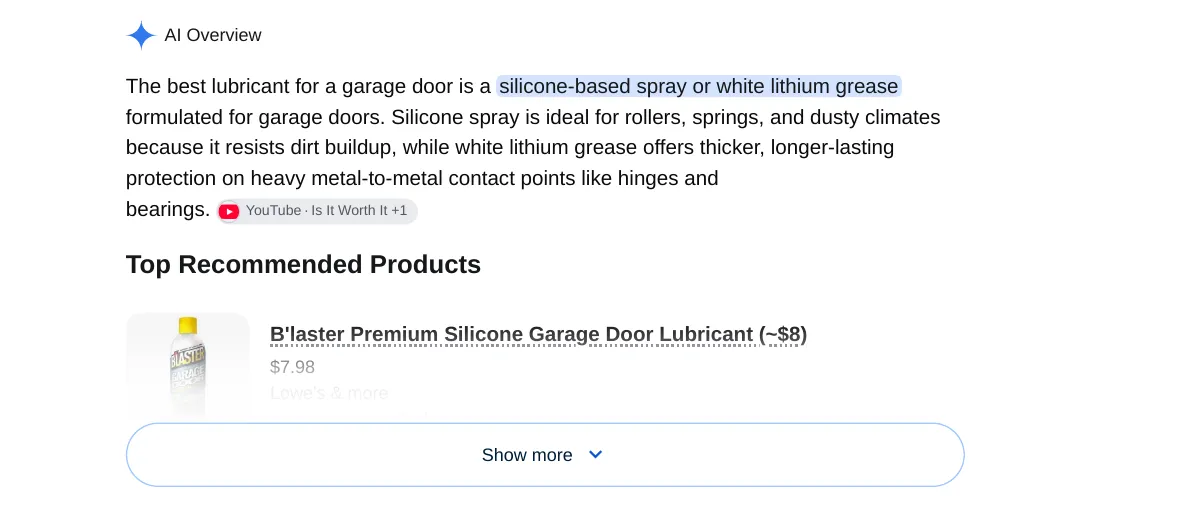
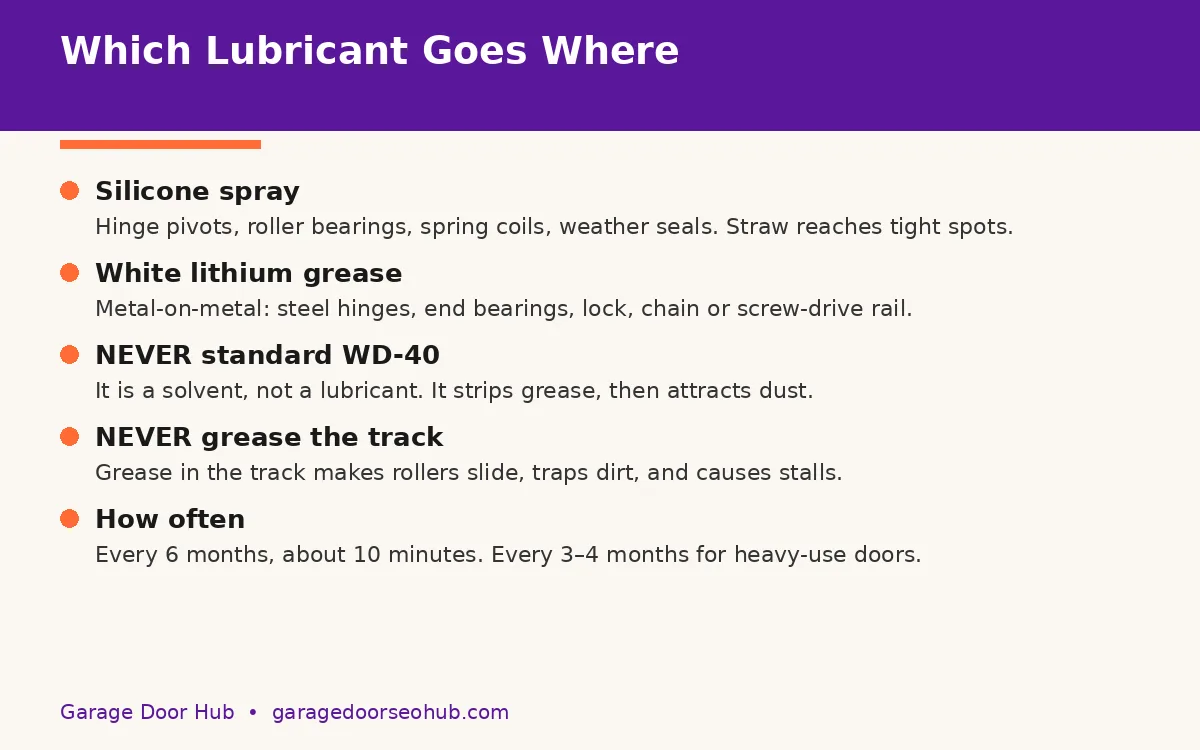
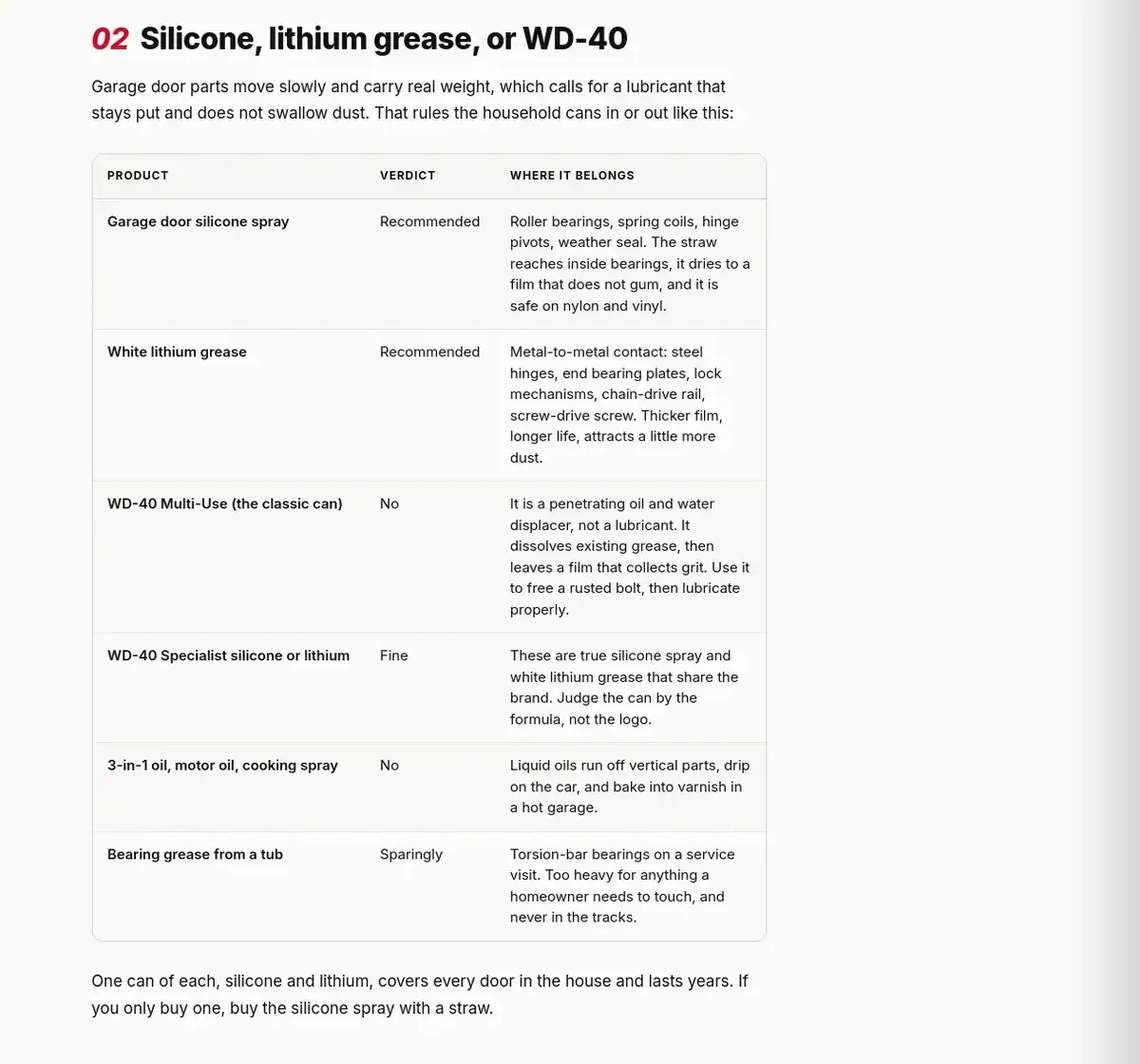
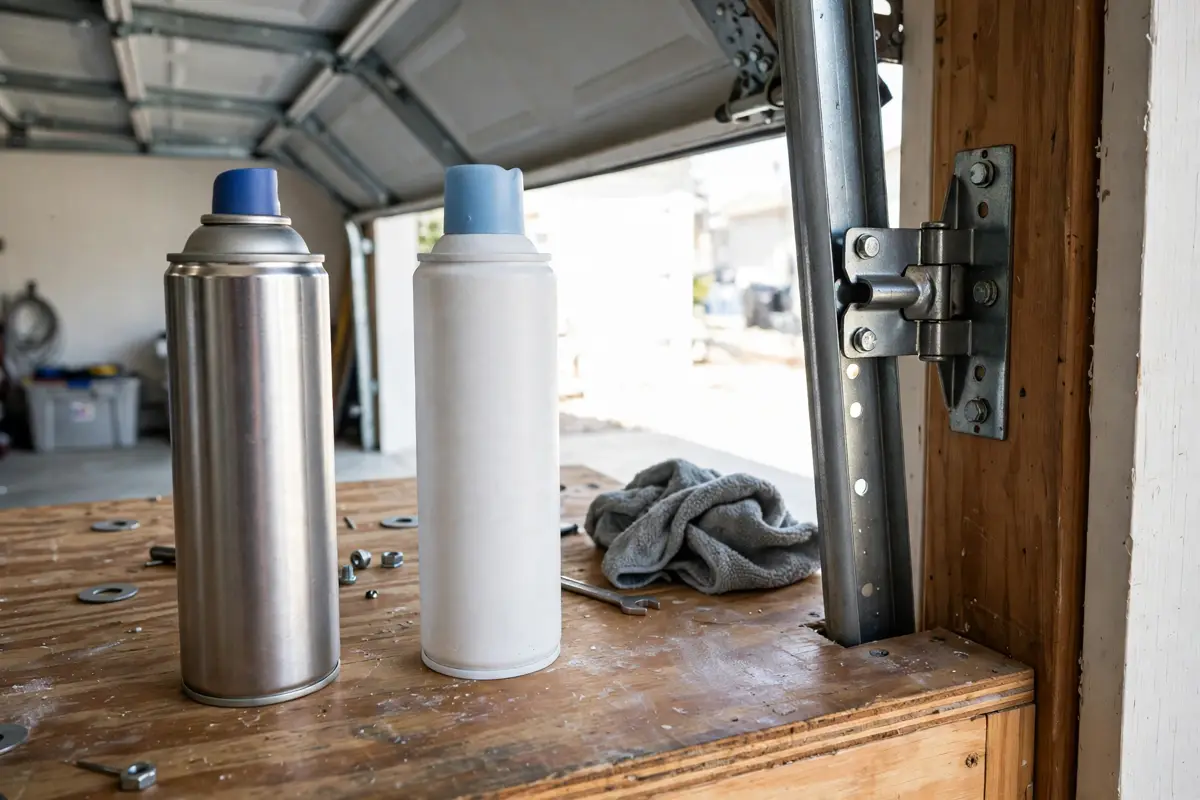
Buy a silicone spray or a white lithium grease made for garage doors. Either works, and silicone with a straw is the most versatile single can.
Silicone spray: the versatile pick
Silicone spray dries fast to a slick, clean film. It holds up in heat and cold, and it is safe on nylon rollers and rubber seals.
- Best for roller bearings, spring coils, hinge pivots and seals.
- The straw nozzle reaches inside bearings and tight spots.
- No oily residue, so far less dust sticks to the parts.
- Safe on nylon, vinyl and rubber parts.
- One can covers every door in the house and lasts years.
White lithium grease: the heavy-duty pick
White lithium grease is thicker, clings to metal, and repels moisture. It suits metal-on-metal points that take real load.
- Best for steel hinges, end bearing plates and lock mechanisms.
- Best for chain-drive and screw-drive opener rails.
- Thicker film lasts longer, but attracts a little more dust.
- Messier than silicone, so use it where load is high.
- If you buy one can only, buy the silicone spray first.
Why standard WD-40 is the wrong can
Standard WD-40 is a solvent and water displacer, not a lubricant. It frees a stuck part for a few days, then leaves a film that collects dust.
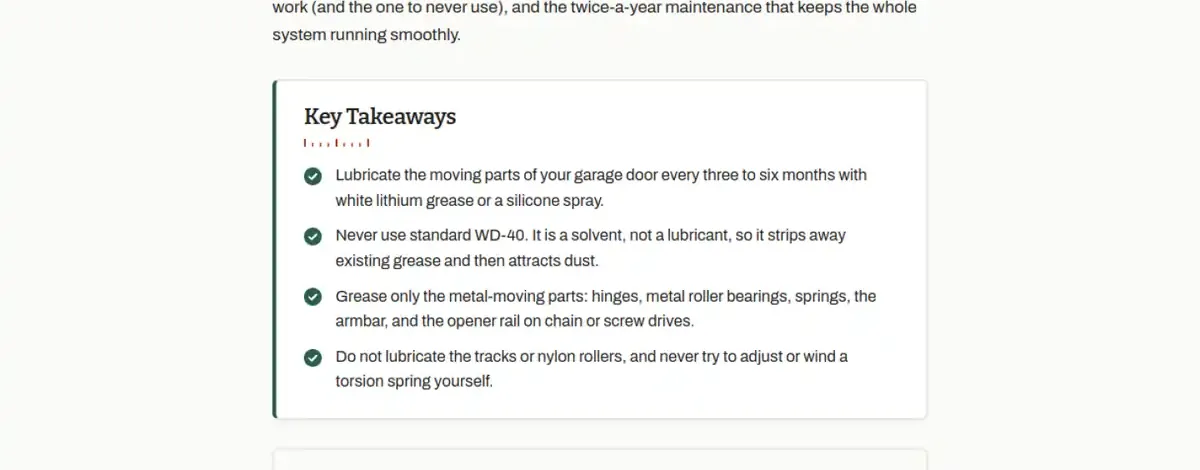
- It strips away the grease that was already there.
- It evaporates, then leaves a thin film that traps grit.
- Noise often comes back worse within a week.
- Use it only to free a rusted bolt, then lubricate properly.
- WD-40 Specialist silicone or lithium are fine — judge the formula, not the logo.
2. The six points that get lubricant
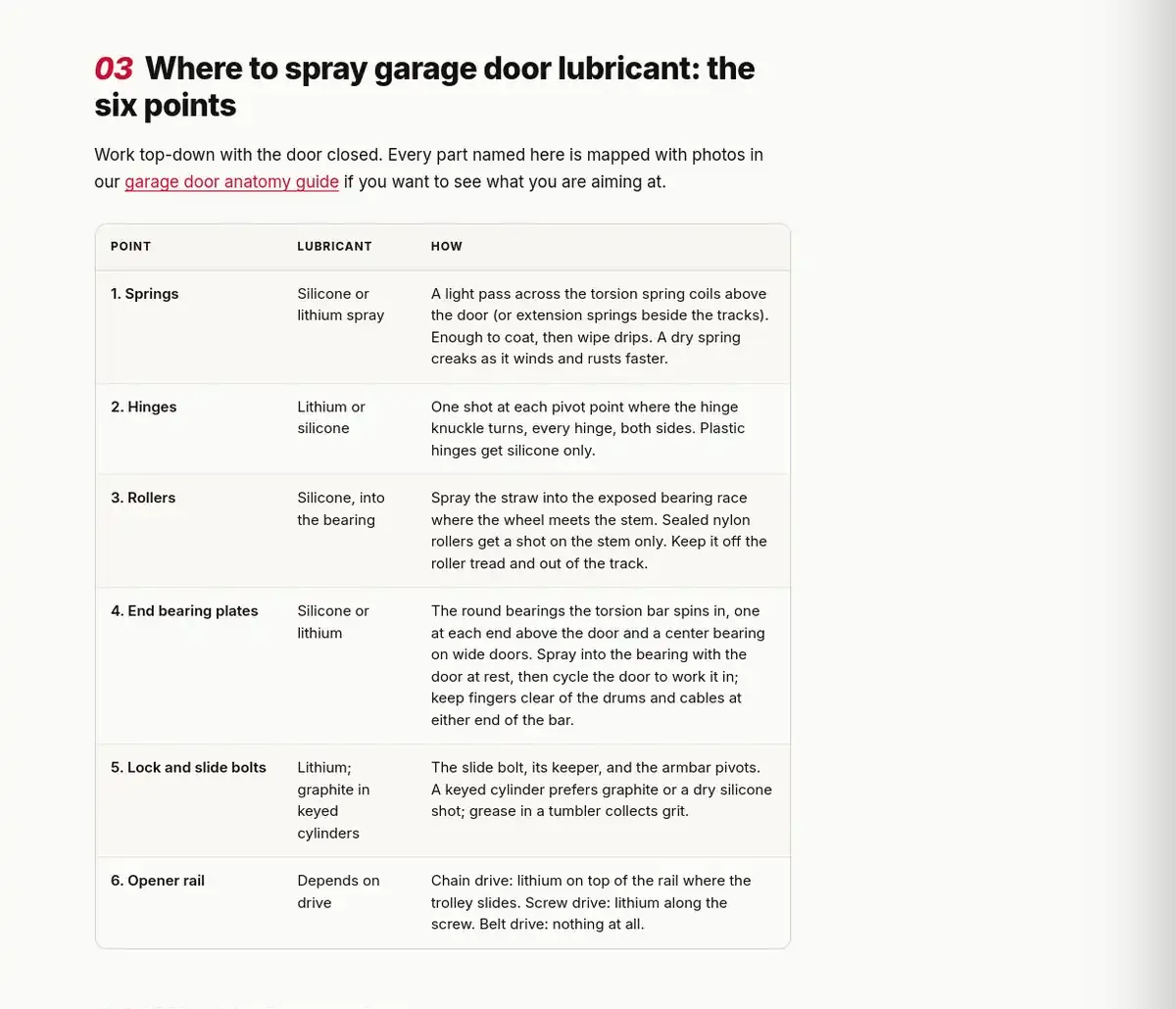
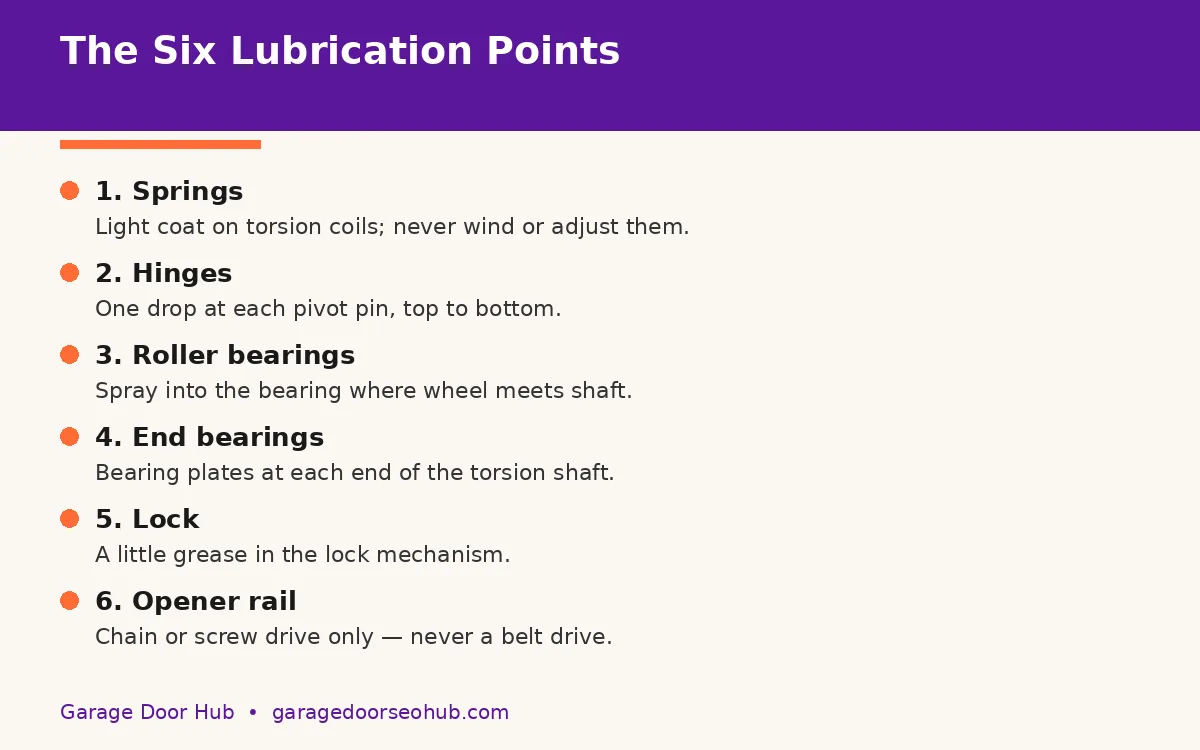
A full pass covers six points, and it takes about ten minutes. Work top-down with the door closed, so nothing gets missed.
Springs, hinges and roller bearings
These three points do most of the moving, and they make most of the noise when they run dry. Spray each one lightly, then wipe the surplus.
- Springs: a light coat along the torsion coils, never wind or adjust them.
- Hinges: spray the pivot pin at each joint, not the plate.
- Roller bearings: spray into the bearing where wheel meets shaft.
- Nylon rollers need the bearing only, not the wheel.
- Steel rollers need the bearing too, and they last longer for it.
End bearings, lock and opener rail
The last three points are easy to miss, and they are the ones that squeak loudest when they dry out.
- End bearing plates at each end of the torsion shaft.
- The lock mechanism: a little grease keeps it turning free.
- Opener rail: chain or screw drive only, never a belt drive.
- A belt drive runs dry by design; grease makes it slip.
- Wipe every point after spraying, so dust has nothing to stick to.
3. The steps, in order
Lubricating a garage door takes about 15 minutes, and the only trick is doing it in the right order. Clean first, spray second, run the door last.
Before you spray
Two minutes of prep separates a job that helps from one that does not. Get the right can, close the door, and cut the power first.
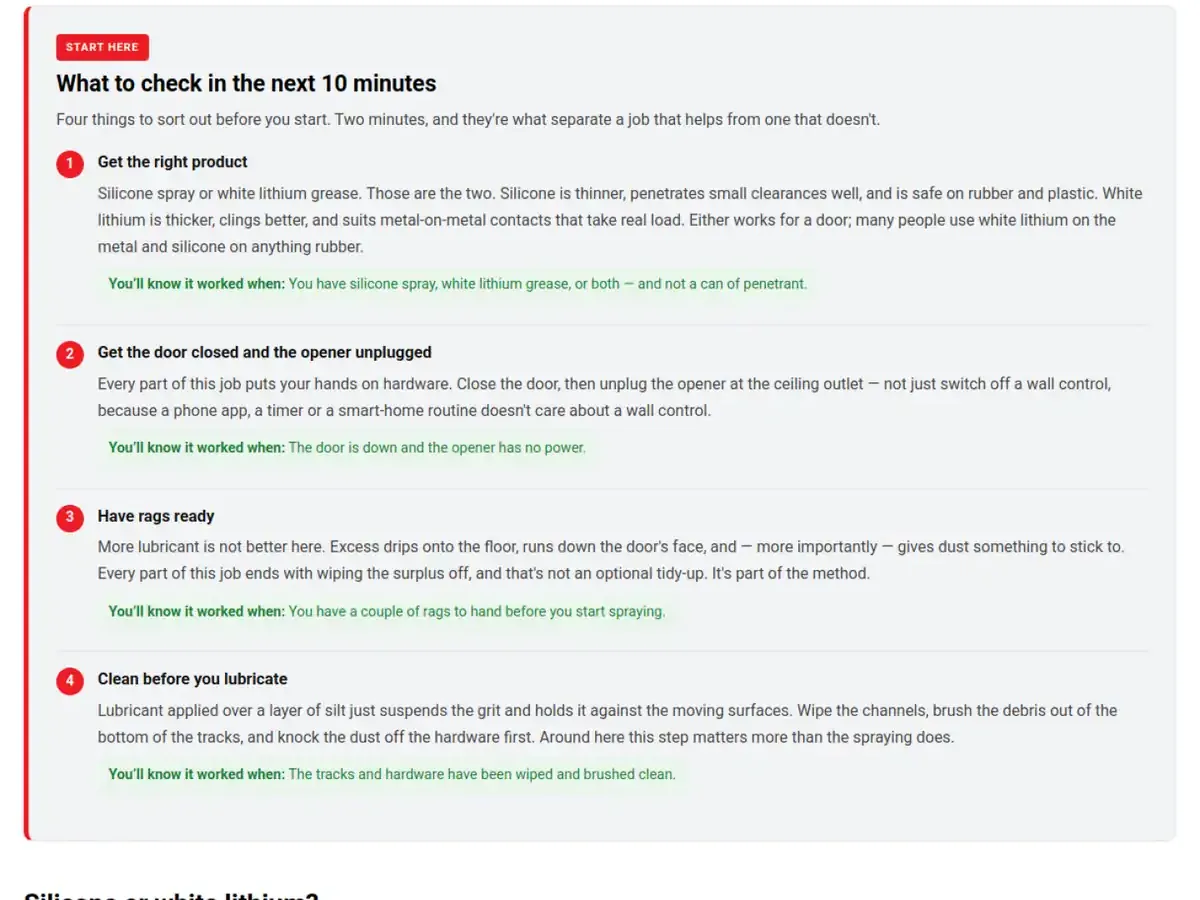
- Close the door completely, then unplug the opener.
- Clean the tracks with a damp rag, and brush out debris.
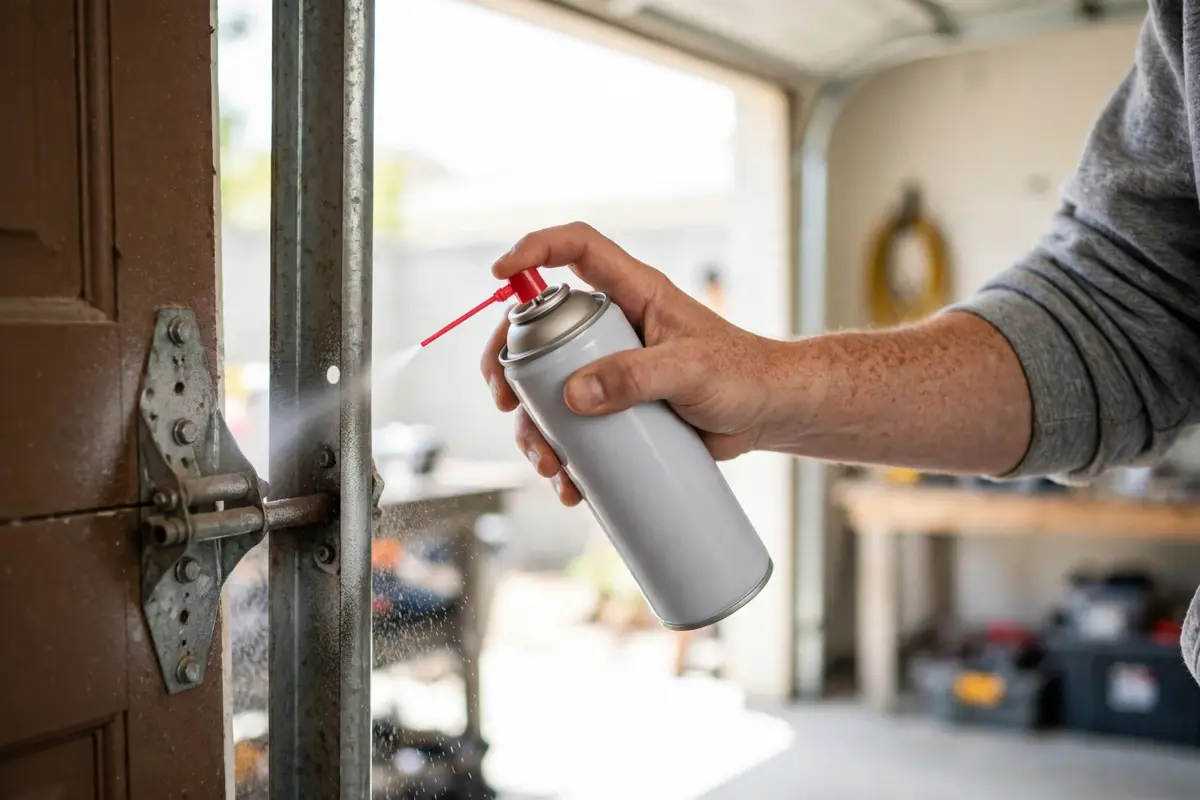
- Spray the six points top-down, one light coat each.
- Wipe off the surplus from every point you sprayed.
- Plug the opener back in and run the door twice.
- Listen: a quiet, smooth cycle means the job worked.
- Close the door completely with the remote.
- Unplug the opener at the ceiling outlet, not just the wall control.
- Have rags ready: excess lubricant drips and traps dust.
- Clean the tracks and hardware with a damp rag first.
- Lay cardboard under the door to catch drips.
After spraying: run and check
Run the door through two full open-and-close cycles. The movement works the lubricant into the bearing races and spring gaps.
- Watch one full cycle, and listen for any noise that stays.
- A squeak that stays after lubrication means a worn part.
- Wipe any drips off the floor and the door face.
- Note the date in your maintenance log.
- For the full schedule, see the garage door maintenance complete guide.
4. What never to grease — the two big mistakes
Two mistakes make a door worse instead of better: greasing the track, and using the wrong can. Both are common, and both are easy to avoid.
Never grease the track
Grease in the track makes rollers slide instead of roll, and it traps hair and dirt. The track should stay clean and dry, always.
- Wipe the inside of each track with a damp rag or cleaner.
- Clear leaves, dirt and gravel from the bottom of the track.
- A greased track forms an abrasive sludge that stalls the door.
- If a track is already greased, clean it out and leave it dry.
- Rollers roll in the track; they do not slide on grease.
More is not better
Excess lubricant drips onto the floor, runs down the door face, and gives dust something to stick to. A light coat is the whole method.
- One short spray per point is enough; do not soak it.
- Wipe the surplus off every point you sprayed.
- Overspray on weatherstripping can harm rubber over time.
- A can that lasts years is a sign you are using it right.
- If the door still squeaks, the part is worn, not under-lubricated.
5. How often to lubricate
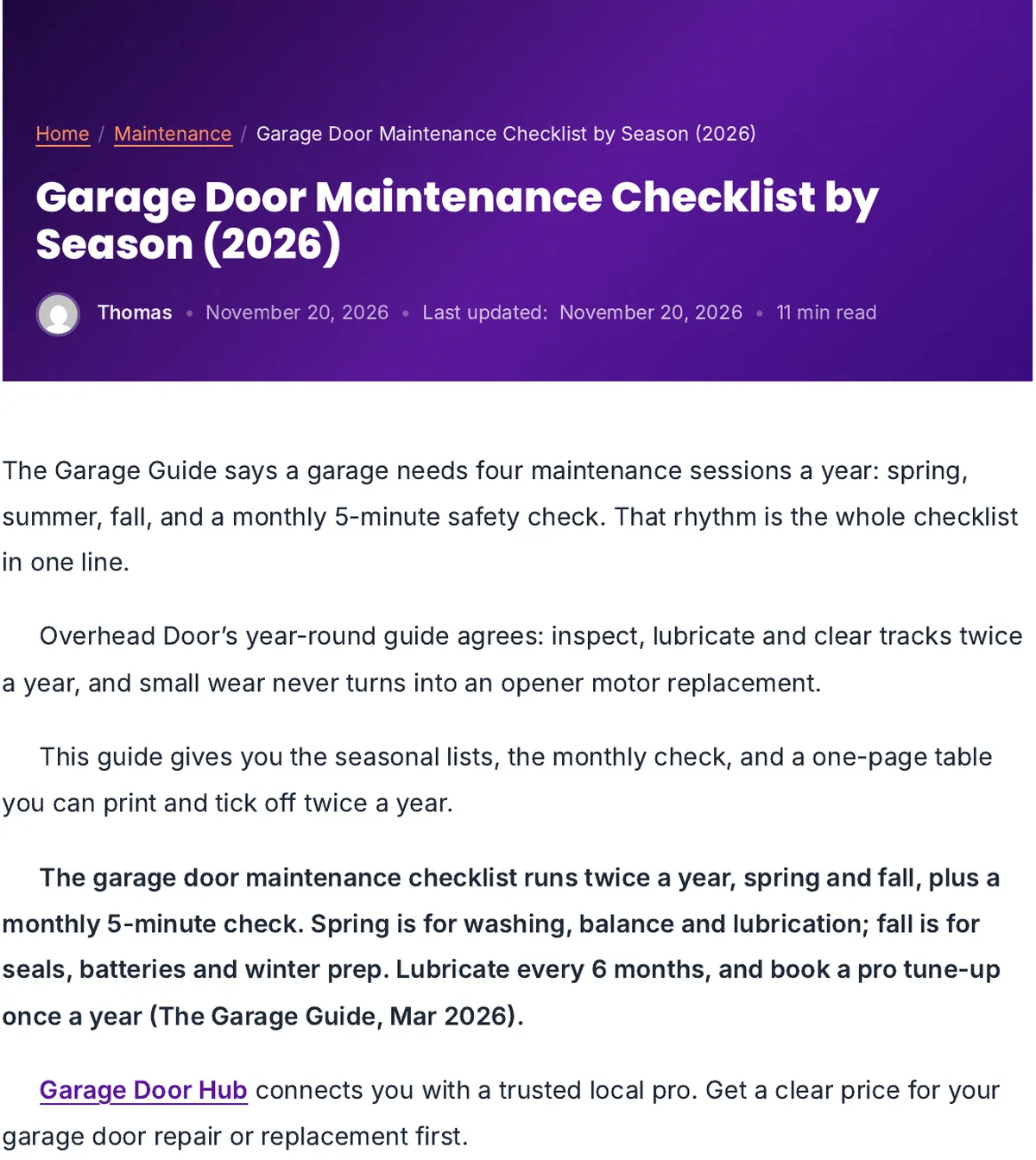
Lubricate every 6 months for a typical door, and every 3 to 4 months for a heavy-use door. Spring and fall are the natural times.
Twice a year is the baseline
Spring and fall lubrication catches the two things that change with the seasons: parts that stiffened over winter, and grease that thinned over summer.
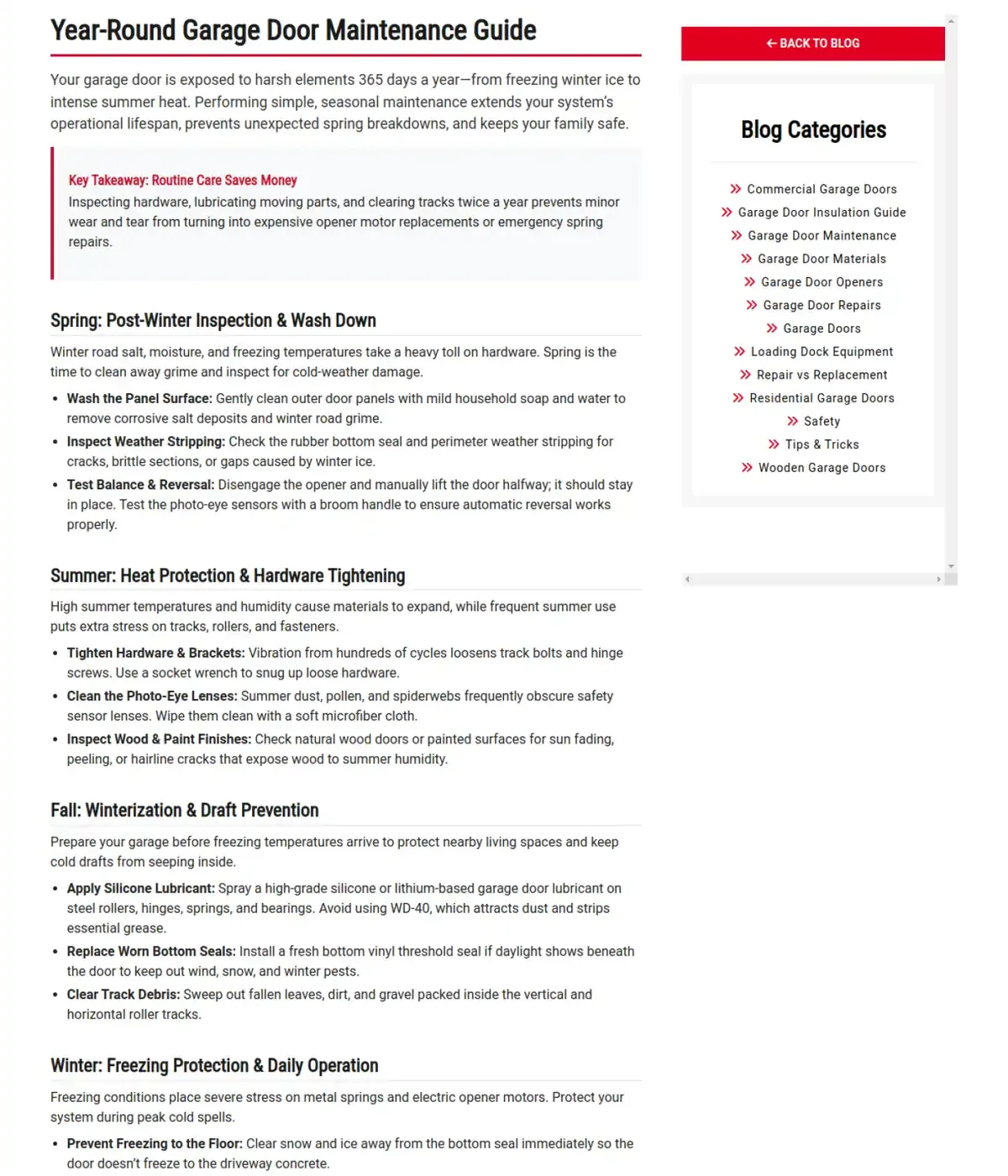
- Spring: after winter, when grease has thickened and salt has built up.
- Fall: before the cold, when old grease stiffens and seals dry out.
- Pair it with the garage door maintenance checklist by season.
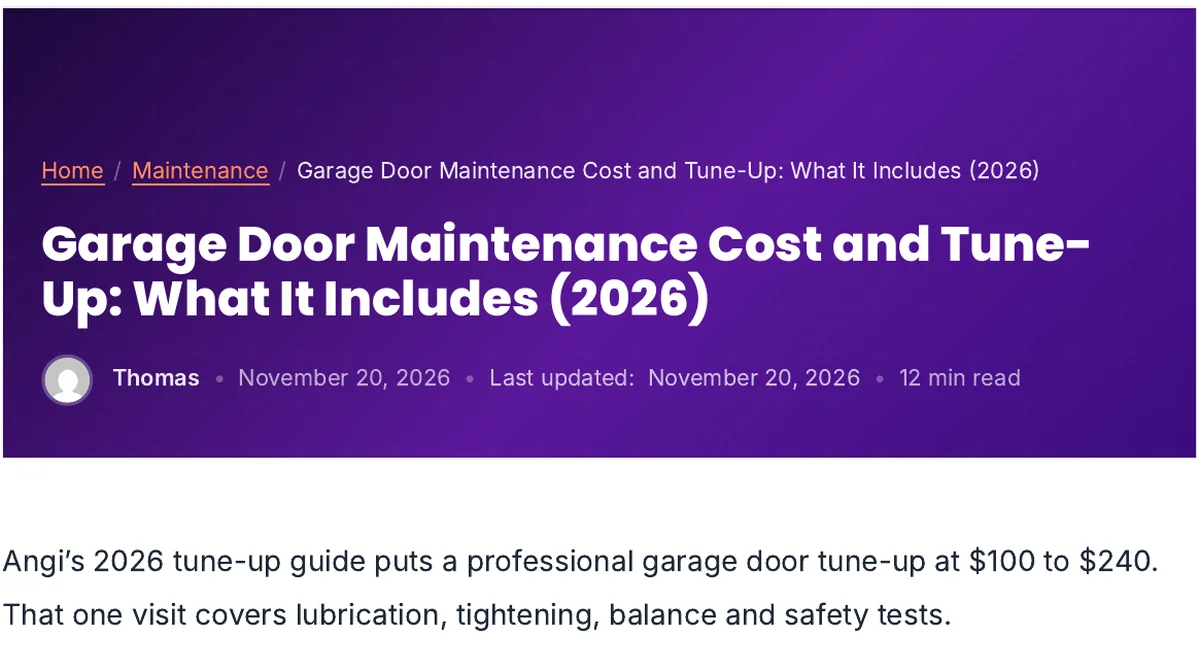
- A pro tune-up once a year covers the same points, plus the checks.
- For tune-up costs, see the garage door maintenance cost guide.
Heavy-use doors need more
A door opened 8 to 10 times a day reaches wear thresholds twice as fast as one opened 3 times a day. Lubricate by cycles, not just by calendar.
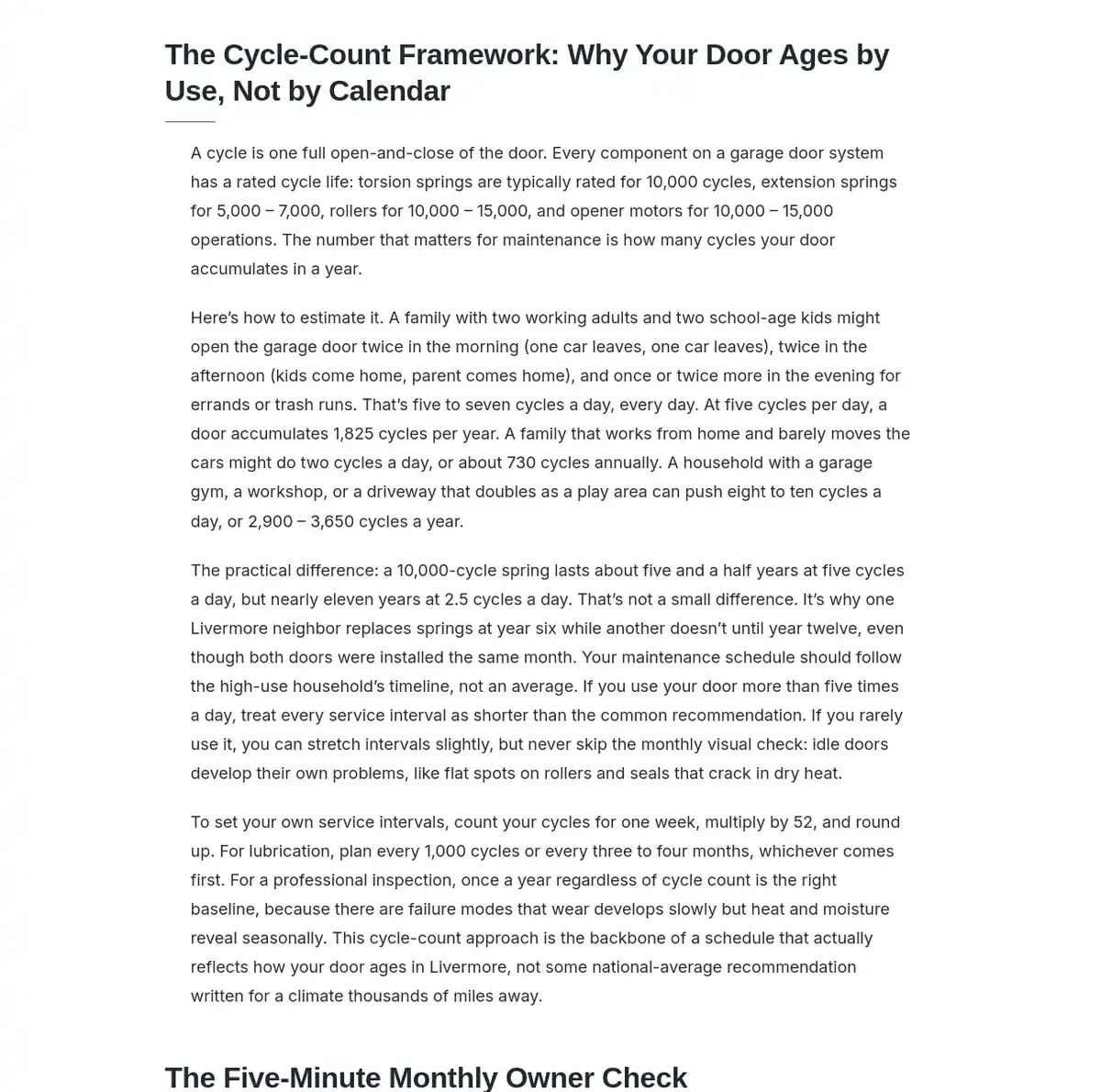
- Every 1,000 cycles, or every 3 to 4 months, whichever comes first.
- Coastal homes: salt air rusts metal faster, so step up to quarterly.
- A noisy door in summer heat may need a mid-summer pass.
- Count your cycles for one week, then multiply by 52.
- If noise returns within weeks, a part is worn — book a pro.
6. When lubrication does not fix the noise
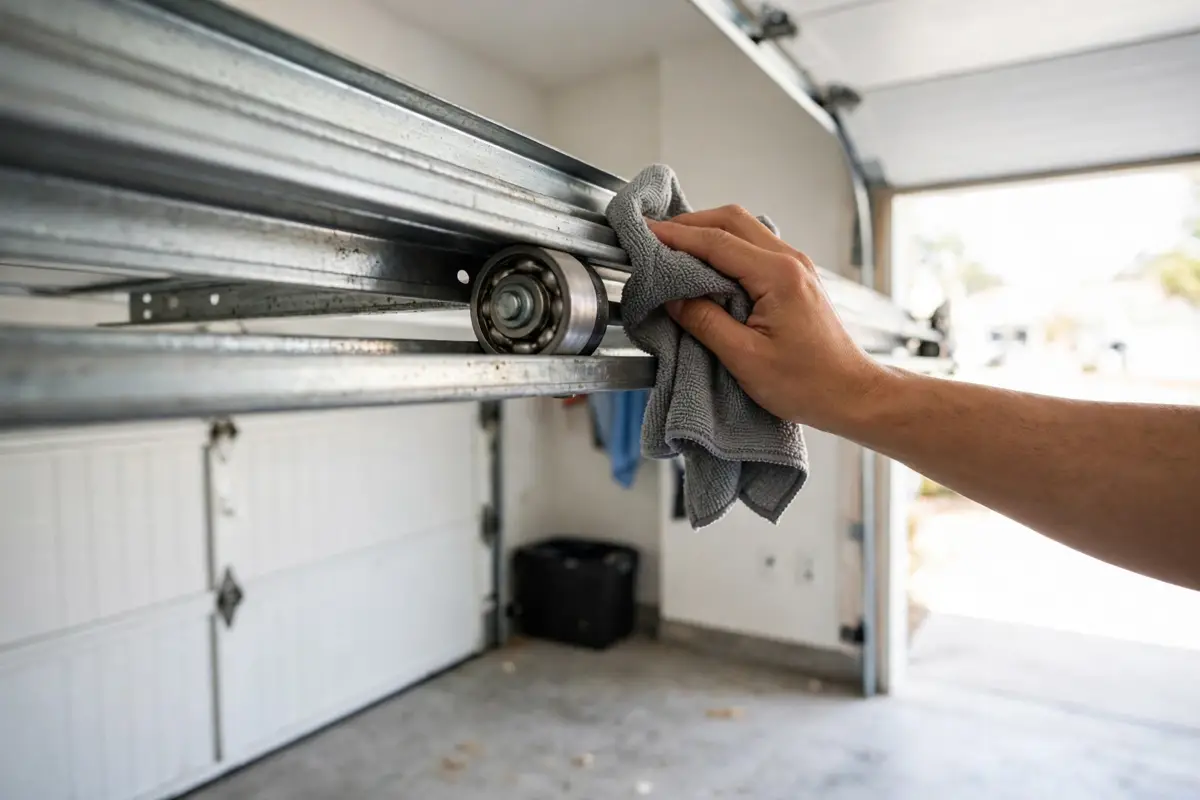
Lubrication fixes dry parts, not worn parts. A noise that stays after a proper pass is a symptom, and it points at the part that needs replacing.
Which noise points where
Each noise has a likely source, and the source decides the fix. Listen at the hinge, the roller and the spring in turn.
- Squeaking at the seams: hinge pivots, usually fixed by lubrication.
- Grinding in the track: worn rollers, or a roller dragging on a dirty track.
- Popping when the door bends: a loose hinge or a worn roller stem.
- A loud bang: a spring has snapped — stop and call a pro.
- For the full noisy-door guide, see the garage door repair guide.
Worn rollers: the common fix
Rollers last 10,000 to 15,000 cycles. A roller that grinds after lubrication has flat spots or a seized bearing, and it needs replacing.
- Nylon rollers run quieter than steel, and they last as long.
- A full roller set costs $150 to $250 (Angi, 2026).
- Roller replacement is a judgement-call job, not a first DIY job.
- Never replace rollers with the door under spring tension.
- If you are unsure, ask a pro to look first — a photo costs nothing.
7. Safety: what lubrication never includes
Lubrication is safe DIY, but it puts your hands near springs and cables. Know the line before you start, and stop at it.
Stay safe while you spray
Close the door, unplug the opener, and keep your hands off anything under tension. Lubrication is a spray job, not a repair job.
- Never adjust, wind or replace a spring while lubricating it.
- Never touch a cable, a drum, or a bottom bracket.
- Use a ladder safely, and keep clear of the door’s path.
- If a spring looks rusty, gapped or frayed, stop and call a pro.
- For the full safe line, see the garage door DIY vs professional guide.
When to call a pro instead
Call a pro when lubrication does not fix the problem, or when the problem is under tension. A pro visit costs less than a failed DIY repair.
- A door that feels heavy, drops fast, or will not stay up.
- A cable that is frayed, slack, or off its drum.
- A door that hangs crooked or has jumped its track.
- A spring that is gapped, rusty, or over 7 years old.
- Price the repair first with the Repair Cost Calculator.
Watch: How to lubricate a garage door the right way
Top Homeowner shows the right lubricant for each point and the steps in order in this YouTube video, including the two mistakes that make a door worse.
- Silicone spray is the versatile pick; white lithium grease is best for metal-on-metal points under load.
- Spray hinges, roller bearings, spring coils and end bearings — and never use standard WD-40.
- Never grease the tracks, and lubricate twice a year.
Video: Top Homeowner, YouTube. Checked 21 November 2026.
Garage Door Hub connects homeowners with trusted local garage door pros. Need a repair? Need a replacement? Start here. First, find out what it should cost. Then, price your exact job with our free calculator. Next, find a pro near you. Fast. No jargon. No guesswork. No surprise bills. Just clear prices, honest guides, and a local pro you can call today.
FAQ
What is the best lubricant for a garage door?
Silicone spray or white lithium grease made for garage doors. Silicone is the most versatile single can; white lithium is best for metal-on-metal points under load.
Can I use WD-40 on my garage door?
No. Standard WD-40 is a solvent, not a lubricant. It strips grease and attracts dust, and noise often comes back worse within a week.
Should I lubricate garage door tracks?
No. Tracks stay clean and dry. Wipe them with a damp rag. Grease in the track makes rollers slide, traps dirt, and can stall the door.
How often should I lubricate my garage door?
Every 6 months for a typical door, and every 3 to 4 months for a heavy-use door. Spring and fall are the natural times.
How long does it take to lubricate a garage door?
About 10 to 15 minutes per door, including cleaning the tracks first and running the door twice after spraying.
Sources
- Metro Garage Doors, 25 Aug 2026 — six points, 10 minutes, twice a year; silicone vs lithium table.
- SensibleDigs, 2026 — every 3–6 months, white lithium or silicone; never standard WD-40; never grease tracks.
- Farnsworth Garage, 2026 — silicone or white lithium; door closed, opener unplugged; wipe surplus.
- Overhead Door, 2026 — fall lubrication, avoid WD-40, clean sensor lenses.
- Angi, 2026 — roller set $150–$250; repair average $265.
- Garage Door Repair Livermore, 2026 — lubrication every 1,000 cycles or 3–4 months.
Last reviewed: 20 November 2026
Appendix — Related topics
You might have found this by these keywords — and if not, others might have:
how to lubricate a garage door, best garage door lubricant, garage door lubricant, how to lubricate garage door springs, garage door lubrication, silicone spray garage door, garage door rollers lubricant, garage door maintenance, how often to lubricate garage door, garage door noisy lubricant.