

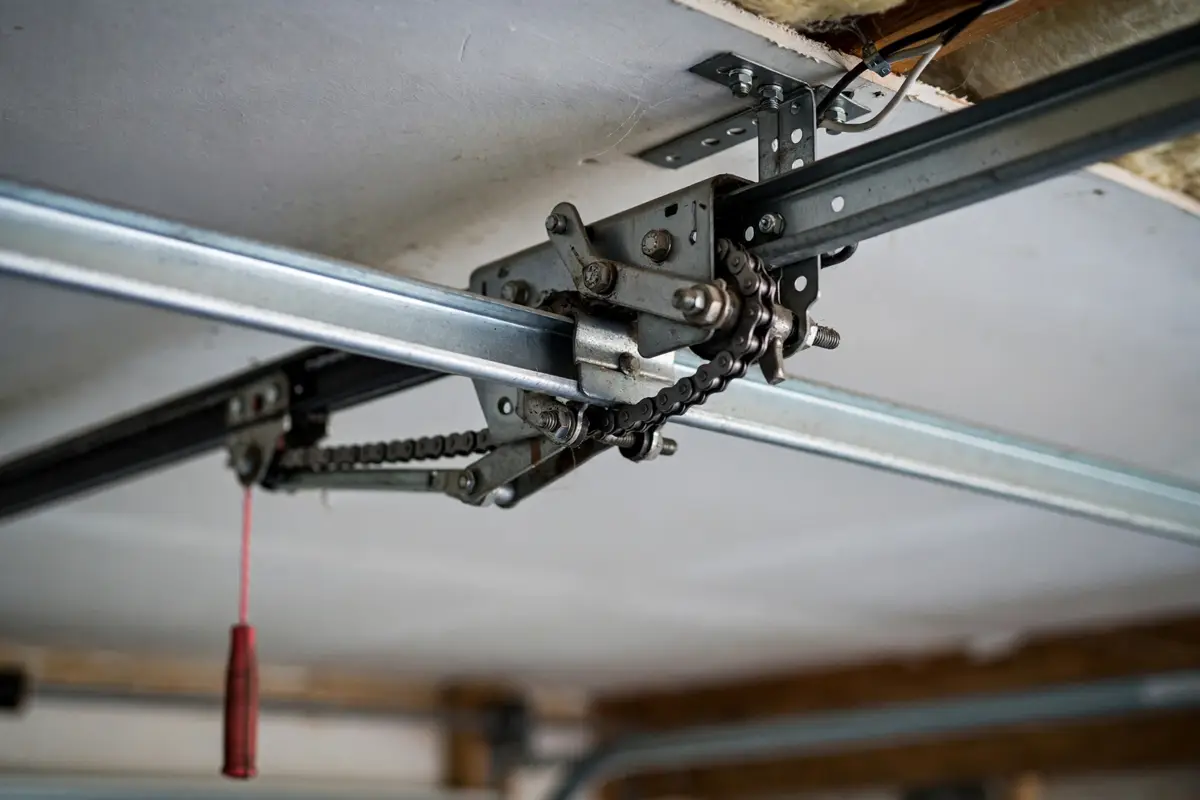
Family Handyman says every opener includes an emergency release cord, and it hangs from the trolley with a red, T-shaped handle. That cord is the whole trick.
A power cut or a dead opener does not lock you out. It just changes the job from pressing a button to pulling a cord and lifting by hand.
This guide shows the steps in order, how to get back in from outside, how to re-engage the trolley, and when lifting is unsafe.
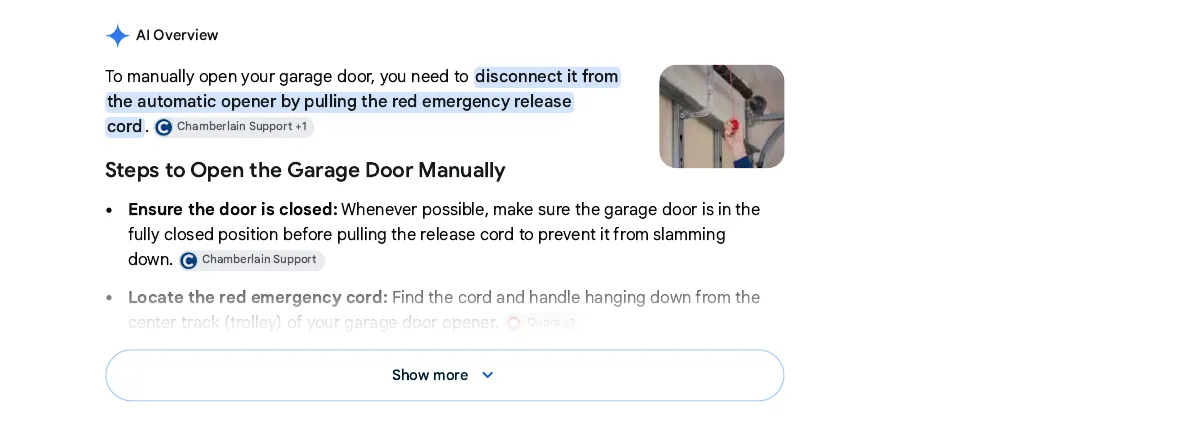
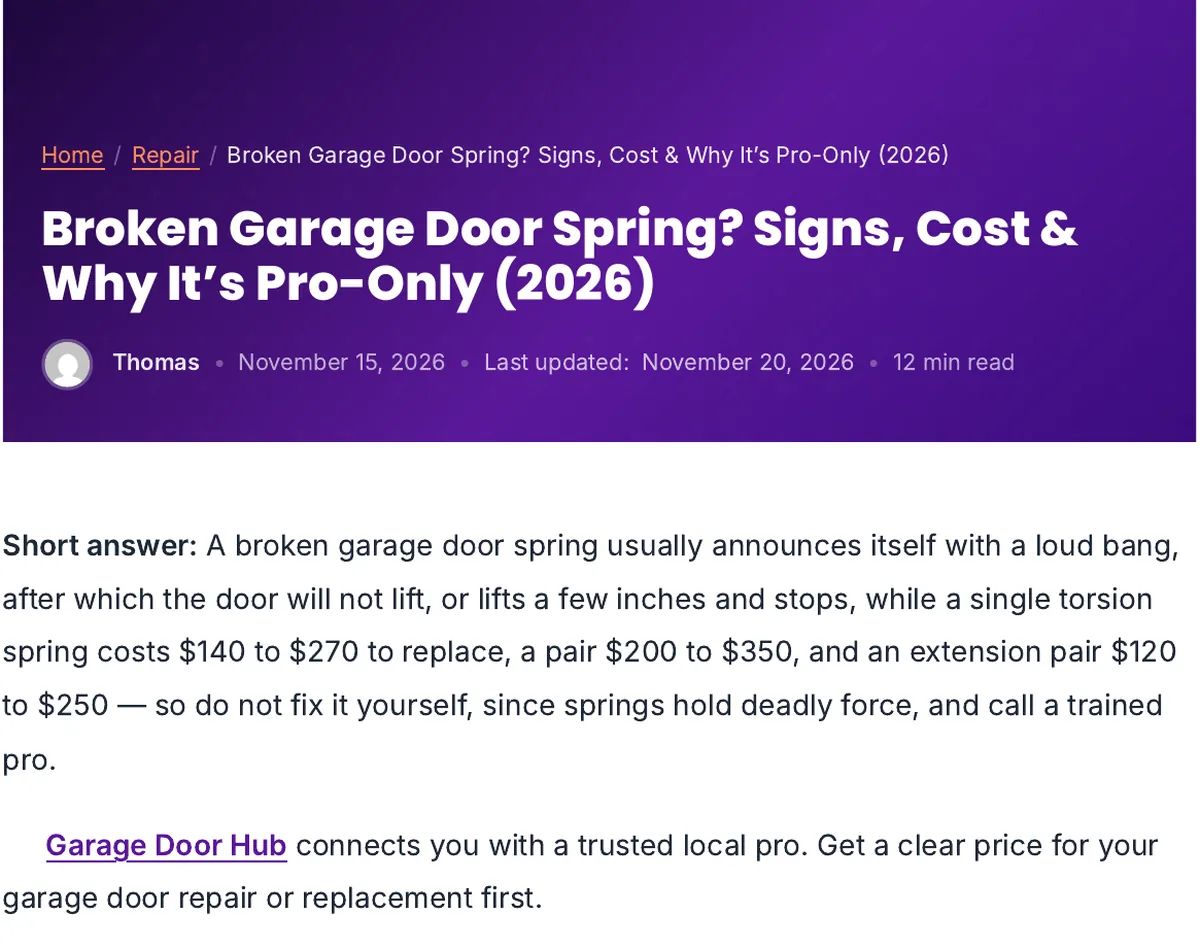
To open a garage door manually, pull the red emergency release cord down with the door fully closed, unplug the opener, unlock the door, and lift it with your legs to fully open. Never lift a door with a broken spring — it can weigh 150 to 400 pounds with no counterbalance (Family Handyman, 2026).
Garage Door Hub connects you with a trusted local pro. Get a clear price for your garage door repair or replacement first.
Price your job first with the free calculators below. They give you a number before you call anyone.
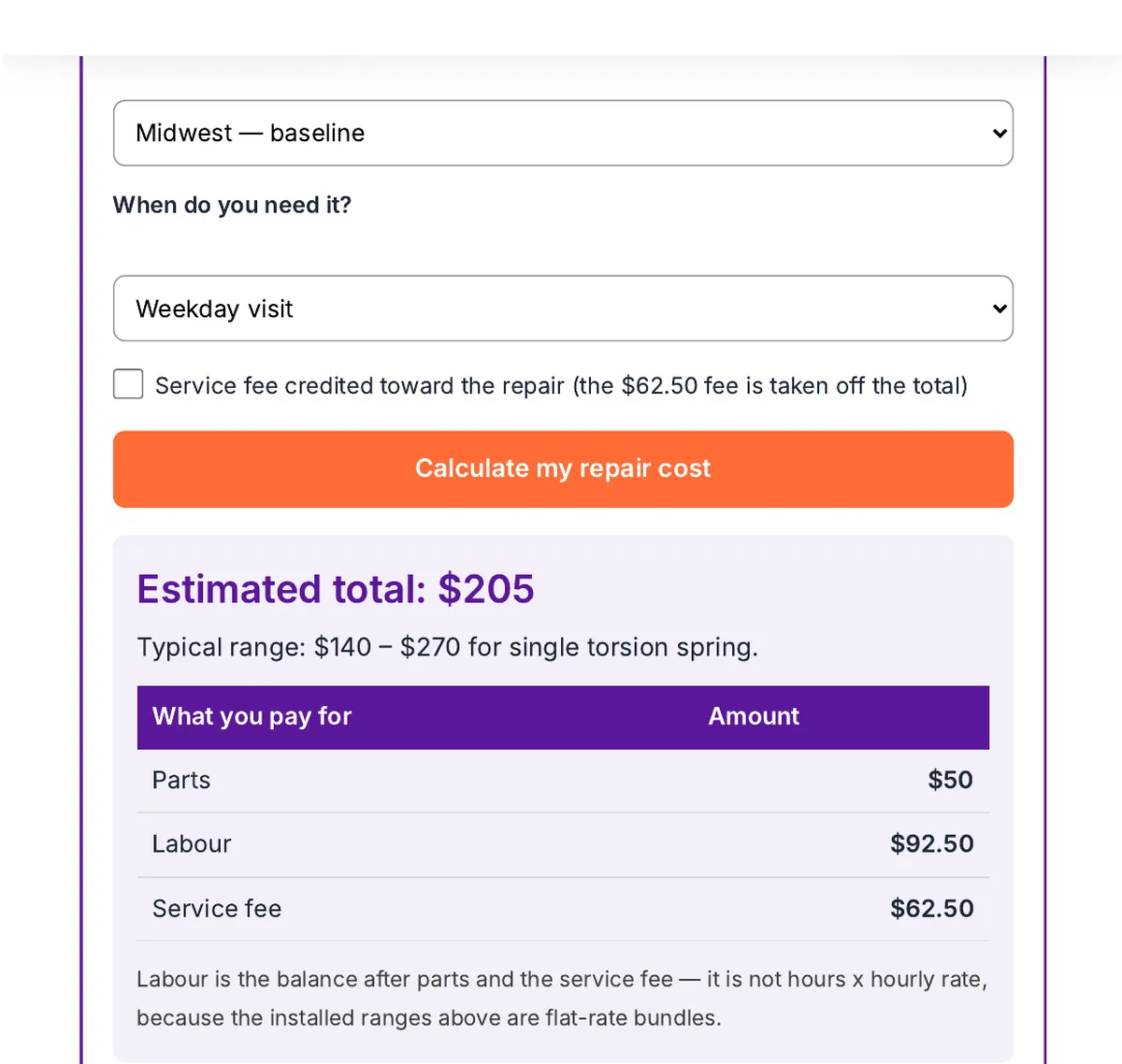
Repair Cost Calculator — price a repair if the opener or spring has failed.
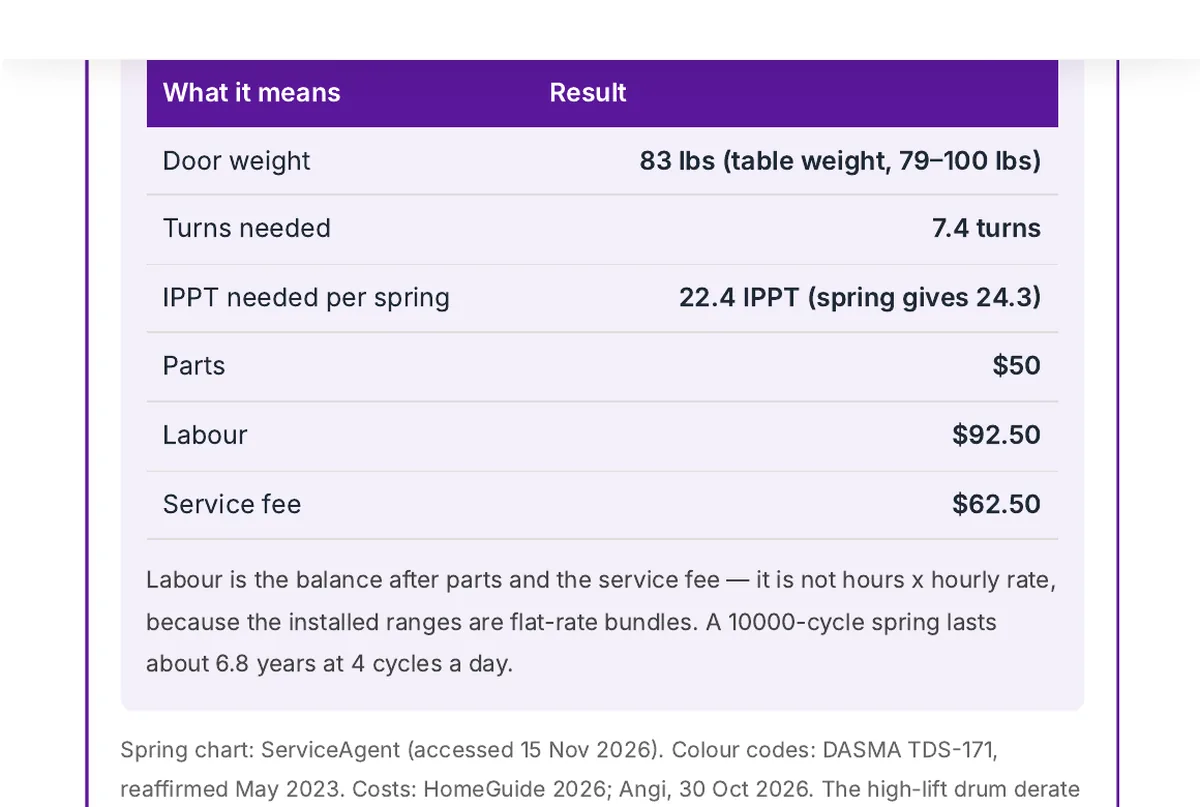
Spring Calculator — price a spring job if the door feels heavy.
- Enter your door size and the part that failed.
- Note the price, then read the key takeaways and Section 1.
- Use the price in the guide to check any quote you get.
Key takeaways
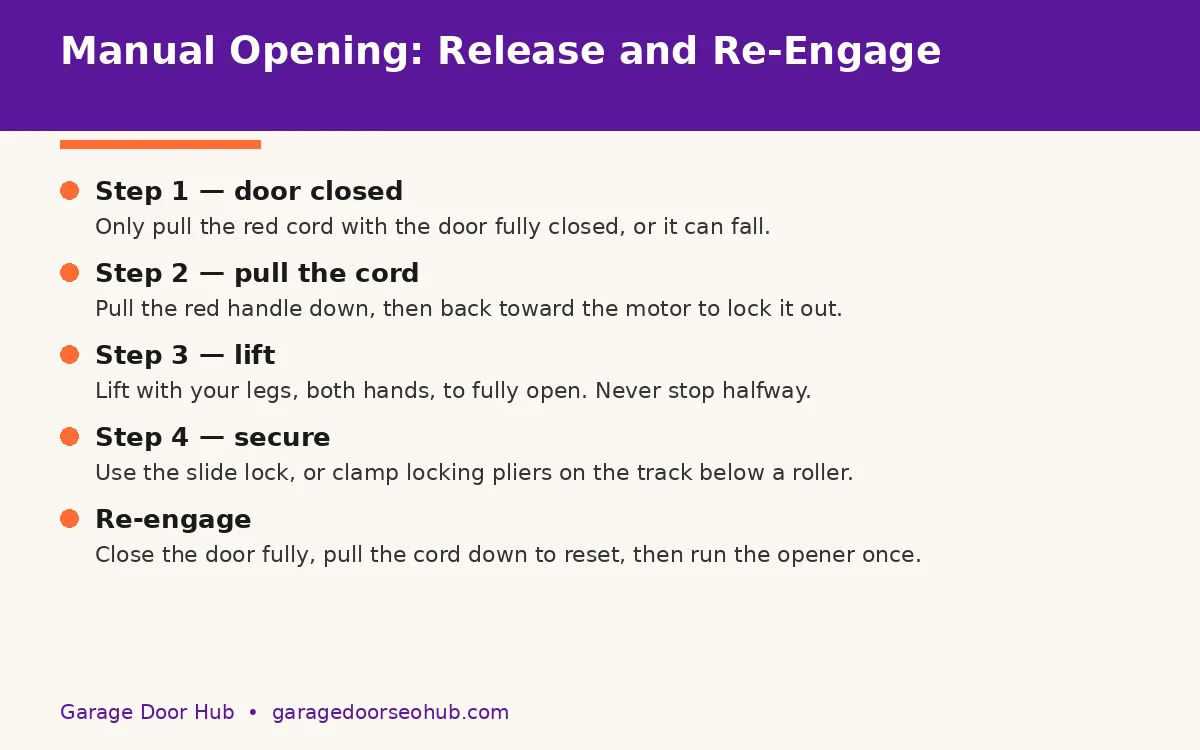
- Only pull the red cord with the door fully closed, or it can fall.
- Pull down, then back toward the motor, to lock the trolley out.
- Lift with your legs, both hands, to fully open — never stop halfway.
- A balanced door needs only 10 to 15 pounds of lift; a heavy door means a broken spring.
- Close the door fully before re-engaging the trolley, then run the opener once.
Table of Contents
-
1. Before you pull the cord
-
2. Pull the red release cord
-
3. Lift the door by hand
-
4. Locked out? Opening from outside
-
5. When lifting is unsafe — do not lift
-
6. Re-engage the trolley
-
7. After a power cut, and staying ready
- Watch: Opening a garage door by hand, step by step
- FAQ
1. Before you pull the cord
Two checks come before the cord: the door must be closed, and the springs must be intact. Skip either one, and the door can fall or crush.
The door must be fully closed
Use the emergency release cord only when the door is closed. If the door is open or partly open when you release the trolley, it can come crashing down.
- If the door is partly open, brace it firmly before you touch the cord.
- Never pull the cord under a door that is hanging in the air.
- Keep people and pets clear of the door’s path.
- If the door is stuck open, secure the home first, then call a pro.
- A door that is open and will not move is a pro job, not a DIY job.
Check the springs and cables first
Look at the springs above the door and the cables along the sides. A gap in the coils or a frayed cable means stop — the door is unsafe to lift.
- A gap in a torsion spring coil means the spring is broken.
- A door that feels enormous by hand means the spring has failed.
- Frayed, slack or loose cables mean the weight is uncontrolled.
- A crooked door or a roller out of the track means stop.
- If any of these show, do not lift — call a pro instead.
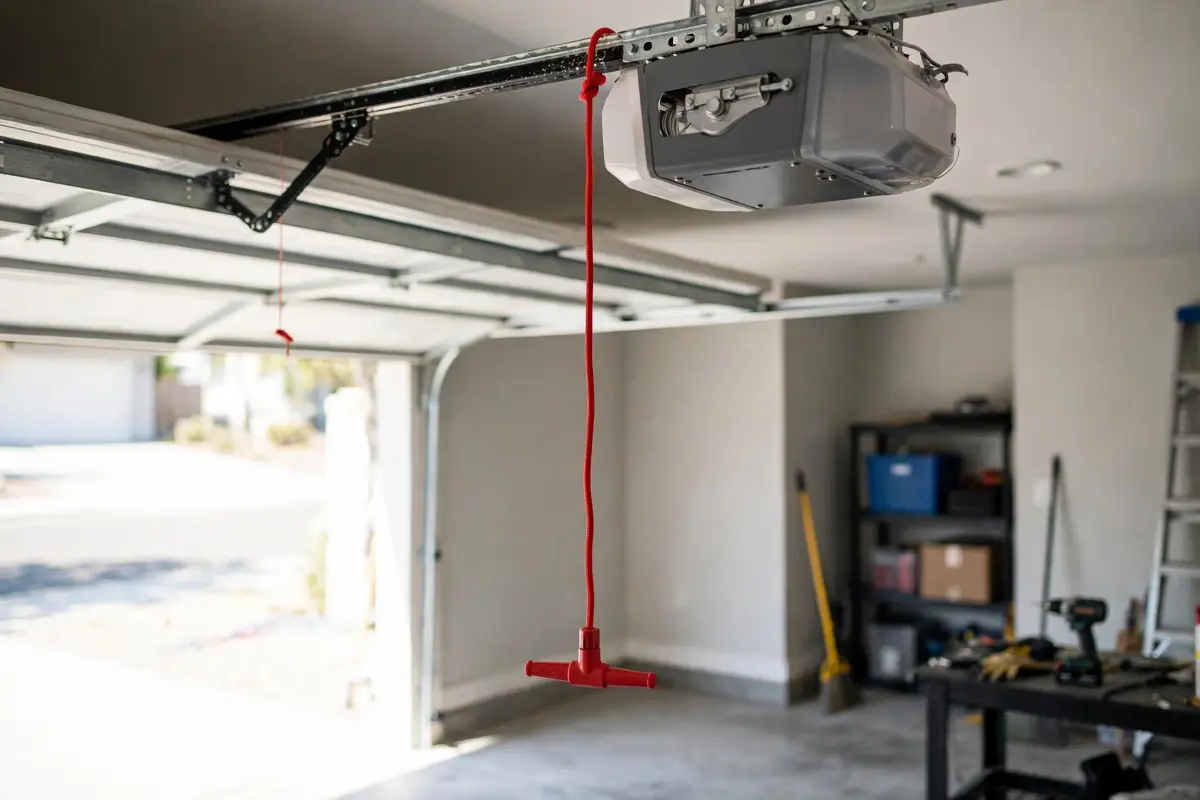
2. Pull the red release cord
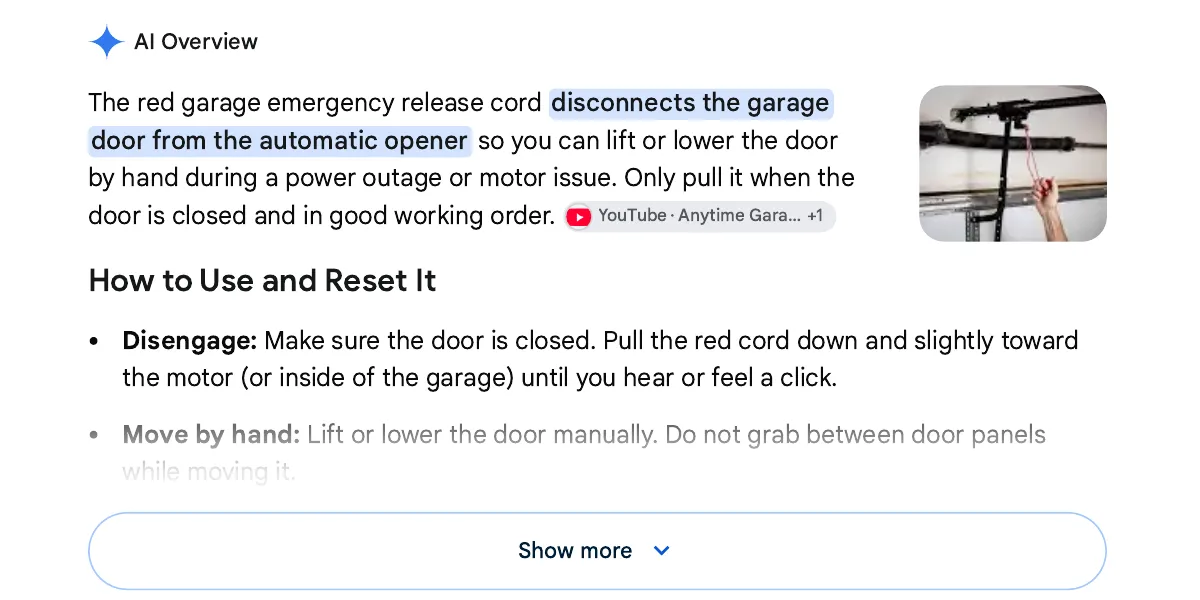
The cord hangs from the trolley, the part that connects the door arm to the overhead track. It usually has a red, T-shaped handle on the end.
Find the cord and the trolley
Look up at the center rail, above the door. The trolley rides the rail, and the cord hangs down from it, within easy reach.
- The cord is usually red, with a T-shaped handle.
- It connects to a spring-loaded lever on the trolley.
- On some models, the cord is near the motor head, not the door.
- If you cannot find it, check your opener manual first.
- Do not pull any other cable or wire — only the red cord.
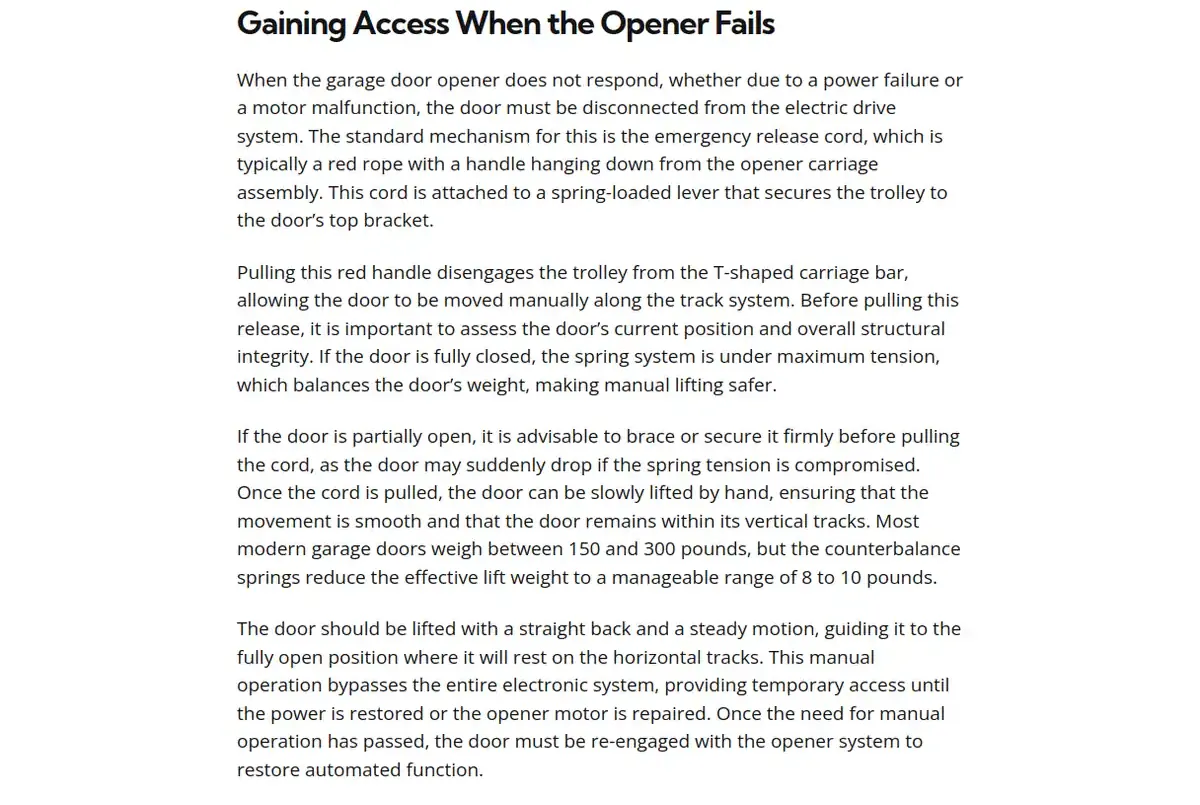
Pull down, then back toward the motor
Pull the red handle straight down until you hear a click. That click is the lever releasing the door from the inner carriage.
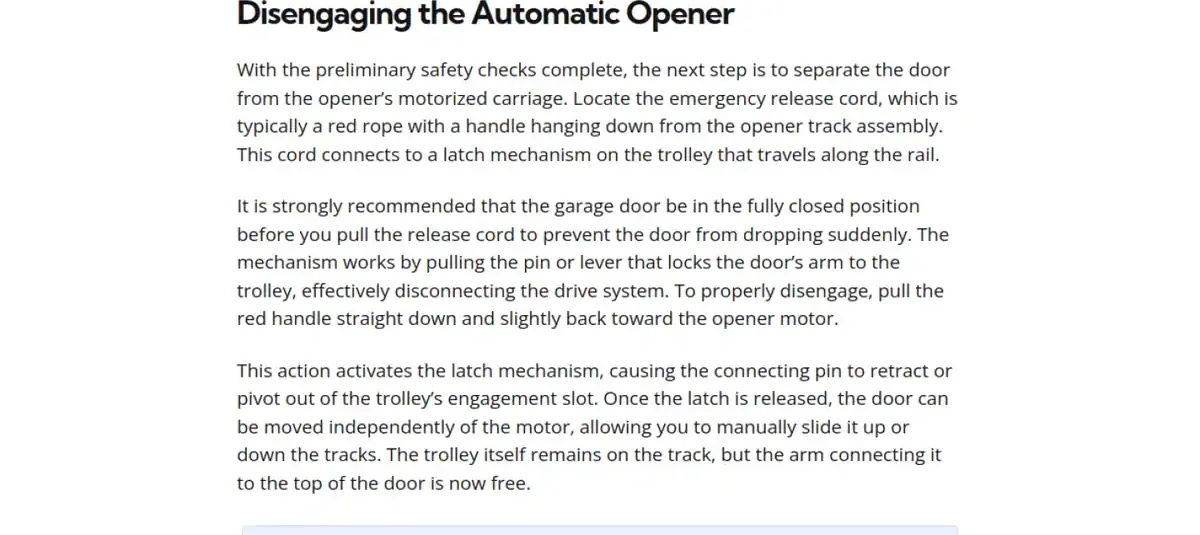
- Pull straight down first, then back toward the motor head.
- Pulling back engages a lockout that stops accidental re-engagement.
- You may need a sharp pull to keep the trolley disengaged.
- Unplug the opener, so it cannot start when power returns.
- The trolley stays on the track; only the door arm is now free.
3. Lift the door by hand
A properly balanced door should need only about 10 to 15 pounds of force to lift. The springs do nearly all the work, and your hands just guide it.
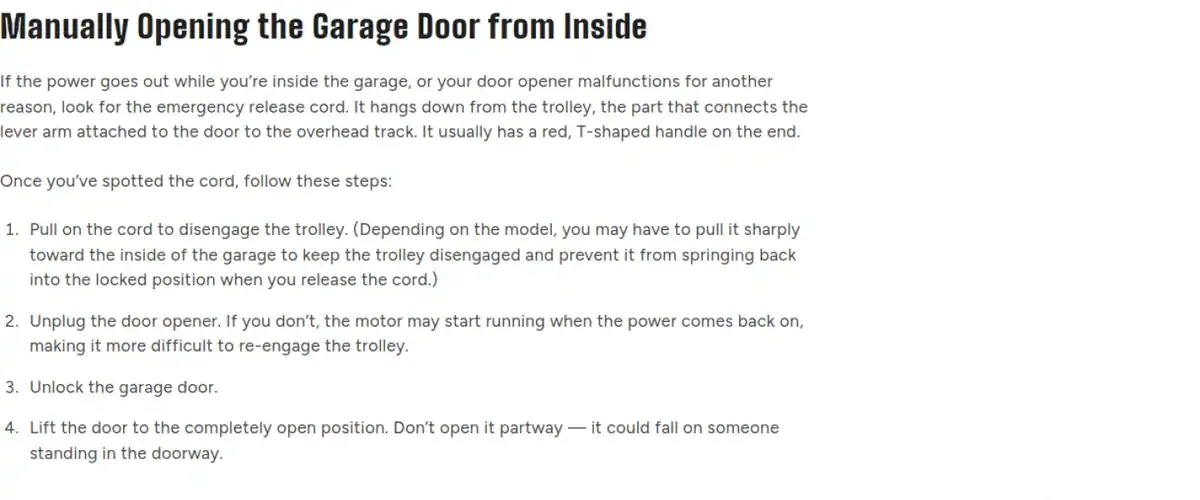
The steps, in order
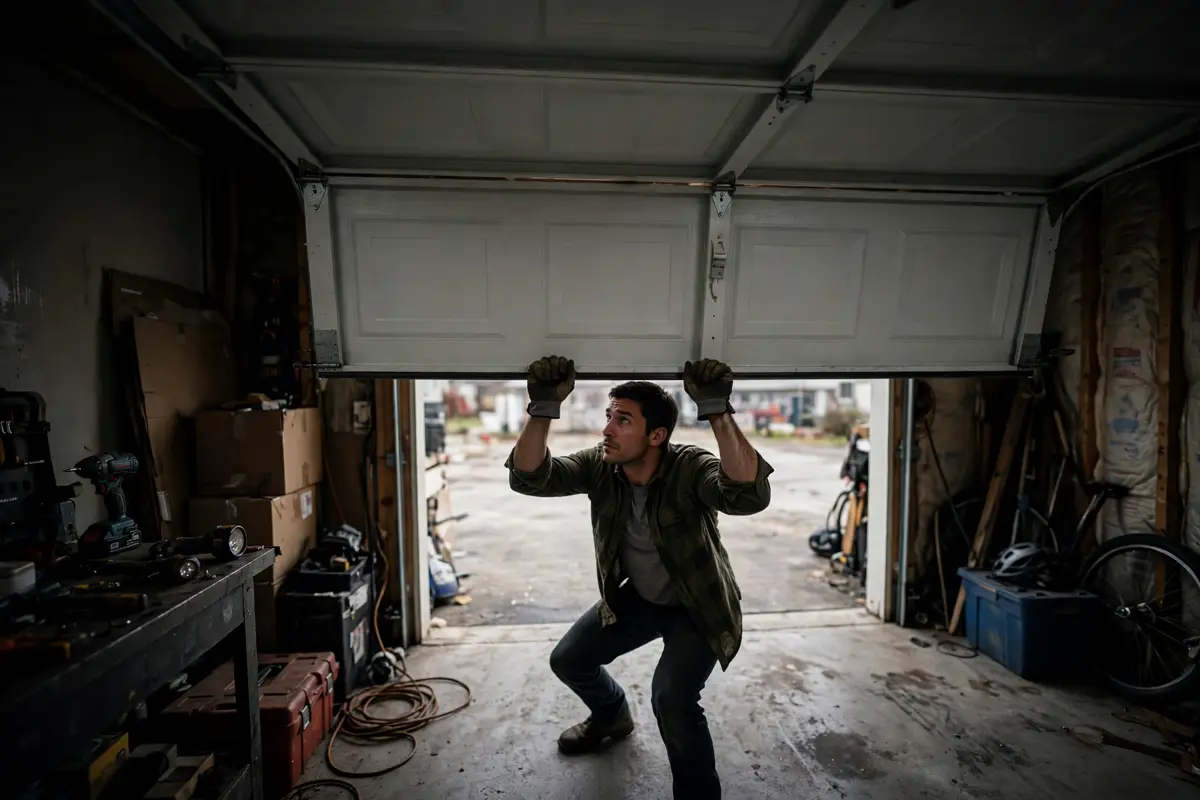
Lift slowly and evenly, with both hands on the handle or the bottom panel. Keep your back straight, and lift with your legs.
- Pull the red cord down and back, then unplug the opener.
- Unlock the door with the manual slide lock or handle lock.
- Grip the handle or the bottom edge with both hands.
- Lift slowly and evenly, keeping the rollers square in the track.
- Lift to fully open — never stop halfway, or it can fall.
- Secure the door open before you walk under it.
- A door that feels light and smooth means the springs are fine.
- A door that feels heavy, drops fast, or will not stay up means stop.
- Apply even pressure across the panel, so it does not bind.
- Wear sturdy gloves to guard against sharp edges and pinch points.
Secure the door open
Once the door is fully open, secure it before you walk under it. A door that is not secured can drop without warning.
- Use the manual slide lock, if your door has one.
- Or clamp locking pliers on the vertical track below a roller.
- The pliers act as a block that stops the door sliding down.
- Never trust the door to stay up on its own.
- Keep children and pets out of the garage until it is secured.
4. Locked out? Opening from outside
If your garage has no side entrance, you need a way to reach the cord from outside. Most doors have an access panel for exactly this job.
The external release lock
The access panel sits near the top center of the door, and it is locked. You need the key, so keep it somewhere you can reach in a power cut.
- Open the panel with the key, reach inside, and find the cord.
- Pull the cord to release the trolley, then unlock and lift the door.
- As soon as it is open, unplug the opener.
- Some locks use a cable loop you pull with a stiff wire.
- If you have no panel and no side door, call a pro — do not break in.
When there is no way in
A door with no side entrance, no panel and no working opener is a lockout. Forcing it breaks the door, the track, or both.
- Do not pry the door with a bar or a shovel.
- Do not cut the door or the track to get in.
- Call a pro: they carry the tools to open it without damage.
- Ask the pro to fit an external release lock while they are there.
- Keep the release key with your house keys from then on.
5. When lifting is unsafe — do not lift
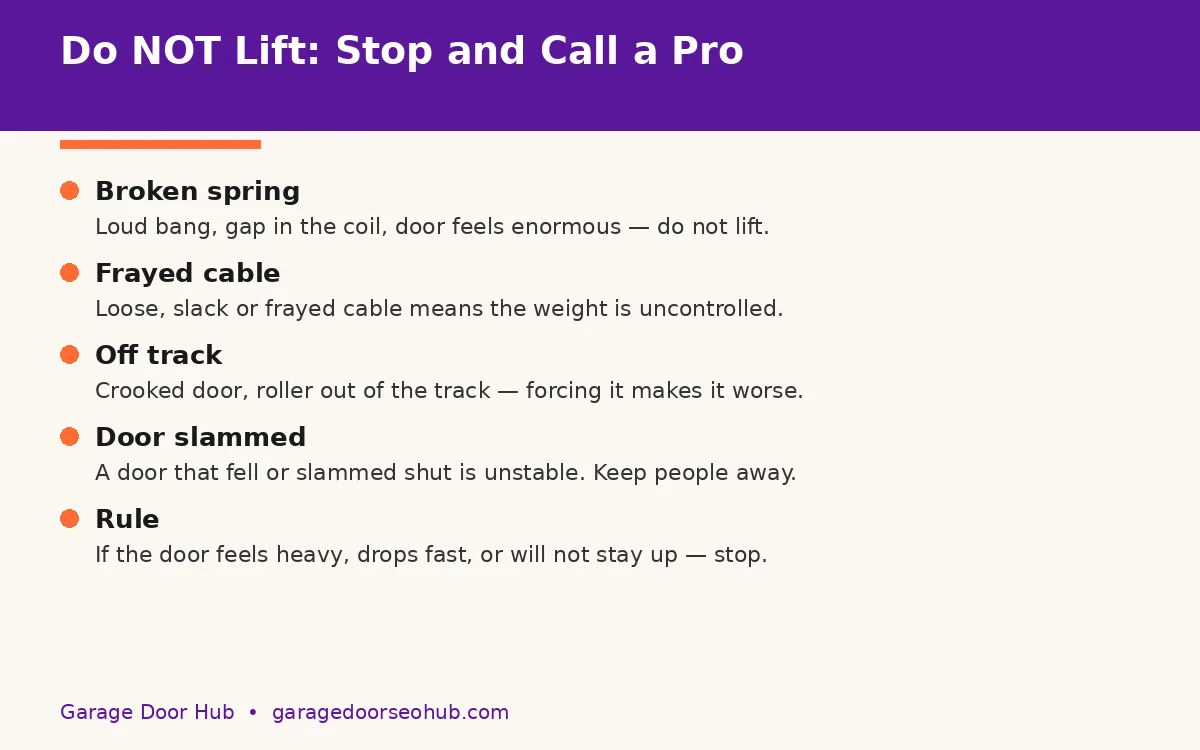
A broken spring turns a 150 to 400 pound door into its full weight, with no counterbalance. That is the most dangerous lift in this guide.
Broken spring: do not lift
If a spring is broken, the full weight of the door transfers at once to the person lifting it. That is a severe safety hazard, not a heavy lift.
- Signs: a loud bang, a coil gap, a door that feels enormous.
- A door that slams down or cannot stay halfway is the same warning.
- Do not try it with two people — the weight is still uncontrolled.
- Leave the door closed, secure the home, and call a pro.
- For the full signs list, see the broken garage door spring guide.
Other stop signs
A spring is not the only reason to stop. Any part that holds the door’s weight or guides its travel can make a lift unsafe.
- A cable that is frayed, slack, snapped or off its drum.
- A door that hangs crooked or has a roller out of the track.
- A door that slammed shut or fell on its own.
- A bent panel or a track that is bent or pulled off the wall.
- In every case: stop using the door, keep people away, call a pro.
6. Re-engage the trolley
Once the power is back or the opener is fixed, reconnect the trolley to the track. The method depends on your opener model, so check the manual.
Close the door fully first
Close the door all the way by hand before you re-engage. The trolley and the carriage must line up, and they only line up with the door closed.
- Lower the door slowly and evenly, with both hands.
- Remove any pliers or locks you used to secure it.
- Check the door is fully closed and square in the track.
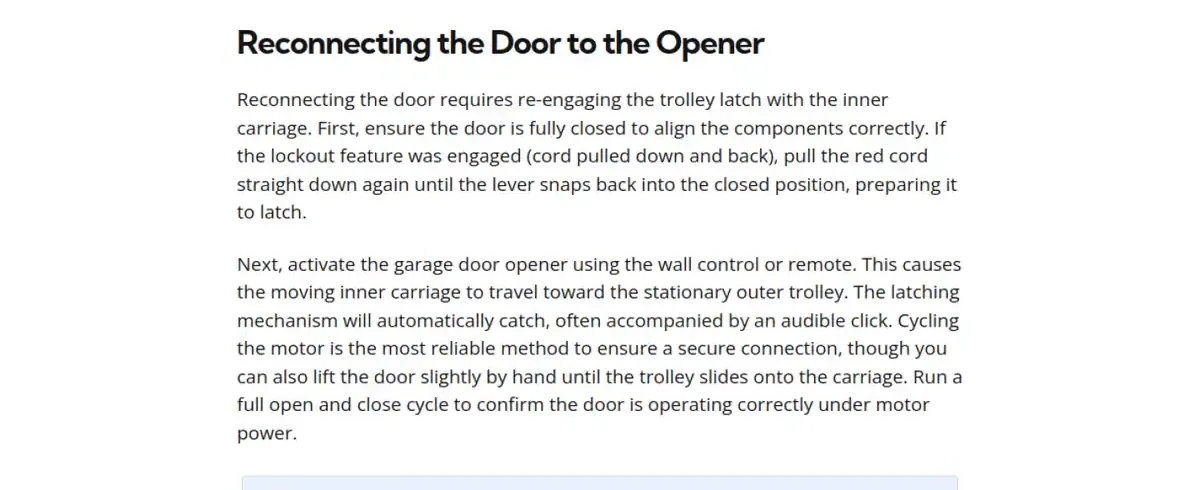
- If the lockout was engaged, pull the cord straight down to reset it.
- The lever snaps back, ready to catch the carriage.
Run the opener once
Start the opener, and the trolley should catch the carriage on its own. Watch one full cycle before you trust it again.
- Some models reconnect automatically when you run the opener.
- On others, pull the cord toward the door to release the lever.
- Listen for the click as the trolley snaps back onto the track.
- Run one full open and close, and watch for smooth travel.
- If it will not catch, stop and check the manual — do not force it.
7. After a power cut, and staying ready
A power cut is the most common reason to open a door by hand. A little prep turns it from a lockout into a five-minute job.
The power-cut routine
Know the routine before the power goes out. Practice it once, in daylight, when nothing is wrong, so it is easy when it matters.
- Practice pulling the cord and lifting the door once a year.
- Keep a torch in the garage, in case the cut is at night.
- Test the opener battery backup by cutting power and running the door.
- Replace a backup battery if it is over 2 years old.
- For the full winter routine, see the winter garage door problems guide.
Keep the release ready
A release cord that is tied up, painted over, or out of reach is no use in a power cut. Keep it free, visible and within reach.
- Do not tie the cord up out of reach, or tape it to the rail.
- Keep the external release key with your house keys.
- Show every adult in the house where the cord is.
- Add the manual-open test to your garage door maintenance checklist by season.
- For the whole schedule, see the garage door maintenance complete guide.
Watch: Opening a garage door by hand, step by step
Door to Door Design shows how to close a garage door manually and safely in this YouTube video, including the checks to run before you pull the release cord.
- The door must be fully closed before you pull the red release cord.
- Check the springs and cables first, and never lift a door with a broken spring — it can weigh 150 to 400 pounds with no counterbalance.
- Run the opener once to re-engage the trolley after you close the door.
Video: Door to Door Design, YouTube. Checked 21 November 2026.
Garage Door Hub connects homeowners with trusted local garage door pros. Need a repair? Need a replacement? Start here. First, find out what it should cost. Then, price your exact job with our free calculator. Next, find a pro near you. Fast. No jargon. No guesswork. No surprise bills. Just clear prices, honest guides, and a local pro you can call today.
FAQ
How do I open my garage door manually during a power outage?
Pull the red emergency release cord down with the door fully closed, unplug the opener, unlock the door, and lift it with your legs to fully open. Secure it open before walking under it.
Where is the emergency release cord on a garage door?
It hangs from the trolley on the center rail, above the door, and usually has a red, T-shaped handle. On some models it sits near the motor head.
How do I re-engage my garage door opener after opening it manually?
Close the door fully by hand, pull the cord down to reset the lever if lockout was engaged, then run the opener once. The trolley should catch the carriage on its own.
Can I open a garage door manually with a broken spring?
No. A broken spring means the door carries its full weight, 150 to 400 pounds, with no counterbalance. Do not lift it — leave it closed and call a pro.
How do I open a garage door from outside without power?
Use the external emergency release lock near the top center of the door. Open it with the key, reach inside, pull the red cord, then unlock and lift the door.
Sources
- Family Handyman, 2026 — red cord, trolley, lift to fully open, use only with door closed, reset by running opener.
- EngineerFix, 2026 — check springs and cables first, pull down and back, 10–15 lb lift on a balanced door.
- EngineerFix, LiftMaster, 2026 — lockout feature, secure with locking pliers, re-engage by closing fully.
- EngineerFix, broken door, 2026 — doors weigh 150–300 lb, springs cut lift to 8–10 lb; external release lock.
- The Garage Guide, Mar 2026 — balance test, battery backup test, monthly safety checks.
Last reviewed: 20 November 2026
Appendix — Related topics
You might have found this by these keywords — and if not, others might have:
how to open a garage door manually, garage door emergency release cord, garage door stuck closed, open garage door without power, garage door manual release, garage door won’t open, garage door trolley, garage door emergency release, how to open garage door from outside, garage door power outage