

The FBI recorded 779,542 burglaries in 2024, down 8.1% from 2023 — and the garage is the entry point in about 9% of home break-ins (FBI data via Modern Home Protection, 2026).

Worse, 37.8% of burglars gain entry with no force at all, through unlocked doors or open windows. Most garage break-ins are not break-ins at all — they are walk-ins.
This guide shows the fixes in order of impact. Most cost little, take minutes, and close the gaps burglars actually use.
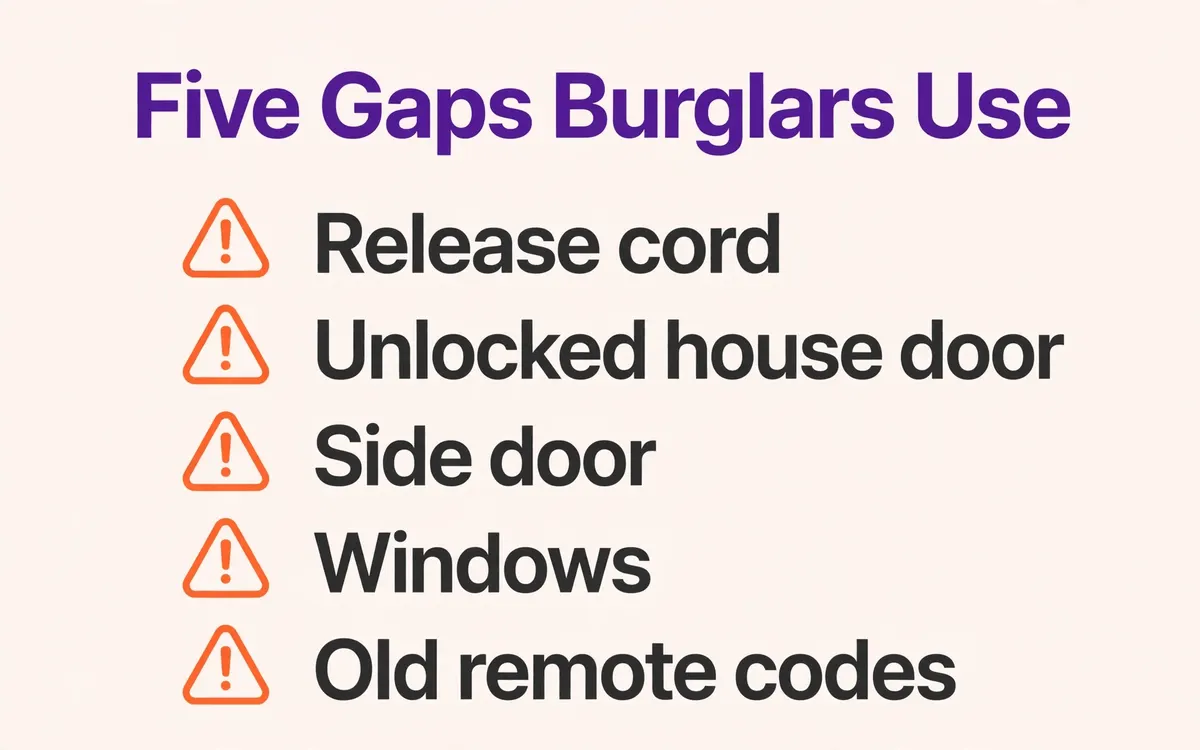
To prevent garage break-ins, lock the emergency release so it cannot be hooked from outside, fit a deadbolt on the house door, lock the side door, and cover garage windows (FBI, 2024). About 9% of burglaries enter through the garage, and 37.8% of burglars get in with no force at all. Close the door every night, and add a smart alert for every open.
Garage Door Hub connects you with a trusted local pro. Get a clear price for your garage door repair or replacement first.
Price your job first with the free calculators below. They give you a number before you call anyone.
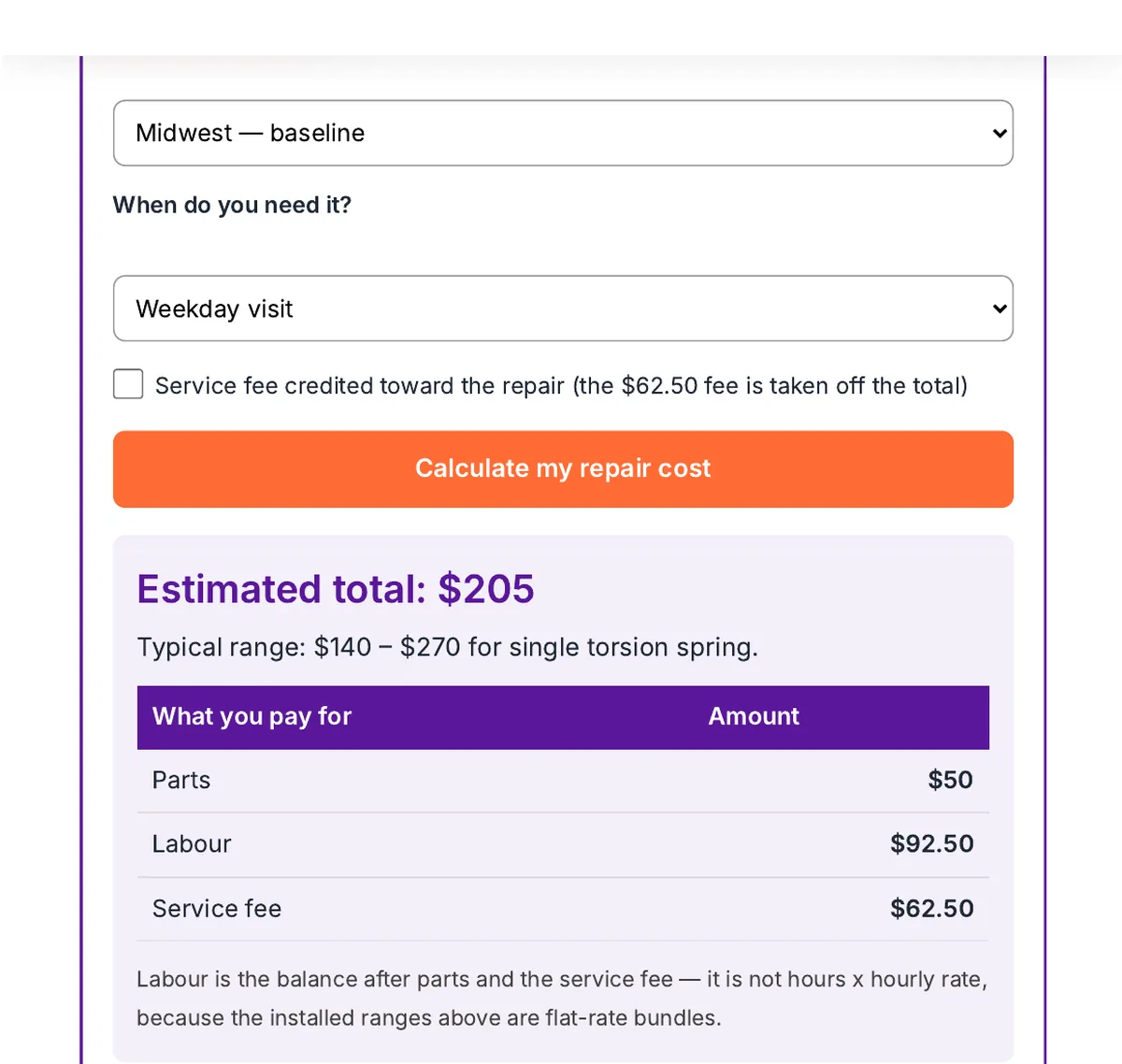
Repair Cost Calculator — price a lock, seal or track fix that closes a break-in gap.
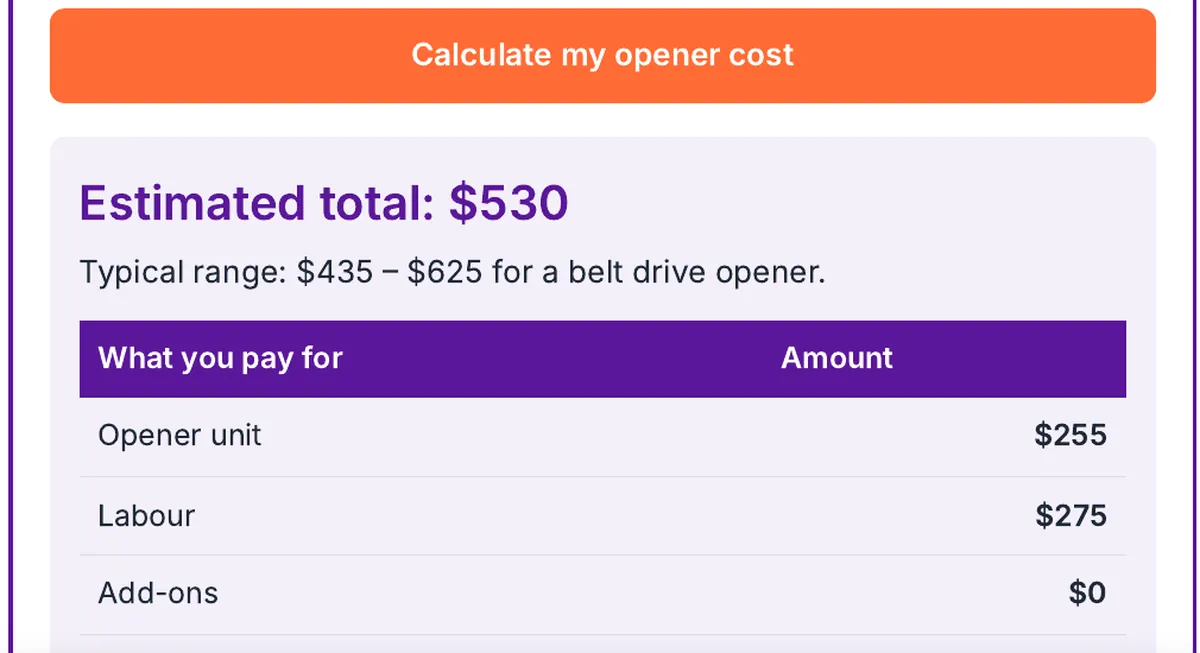
Opener Cost Calculator — price a smart opener with alerts and rolling-code remotes.
- Enter your door size and the part involved.
- Note the price, then read the key takeaways and Section 1.
- Use the price to check any quote you get.
Key takeaways
- About 9% of burglaries enter through the garage — lock it like a front door.
- 37.8% of burglars get in with no force, through unlocked doors.
- Lock the emergency release: it can be hooked from outside in seconds.
- The house door needs a solid core and a deadbolt, not a hollow door.
- A visible alarm deters 60% of burglars, and a camera deters 50%.
Table of Contents
-
1. How burglars get into garages
-
2. Lock the emergency release
-
3. Secure the main door
-
4. The side door, the house door and the windows
-
5. Smart alerts, lights and cameras
-
6. Habits: the daily routine
-
7. What break-in prevention costs
- Watch: How thieves get into garages — and how to stop them
- FAQ
1. How burglars get into garages
Burglars take the easiest way in, and the garage is often the easiest door in the house. FBI and insurance data show the same pattern year after year, and it starts with unlocked doors.
The garage is 9% of entries
The garage accounts for about 9% of break-in entries, behind the front door at 34%, first-floor windows at 23%, and the back door at 22% (FBI data, 2024). That is still roughly 1 in 11 burglaries.
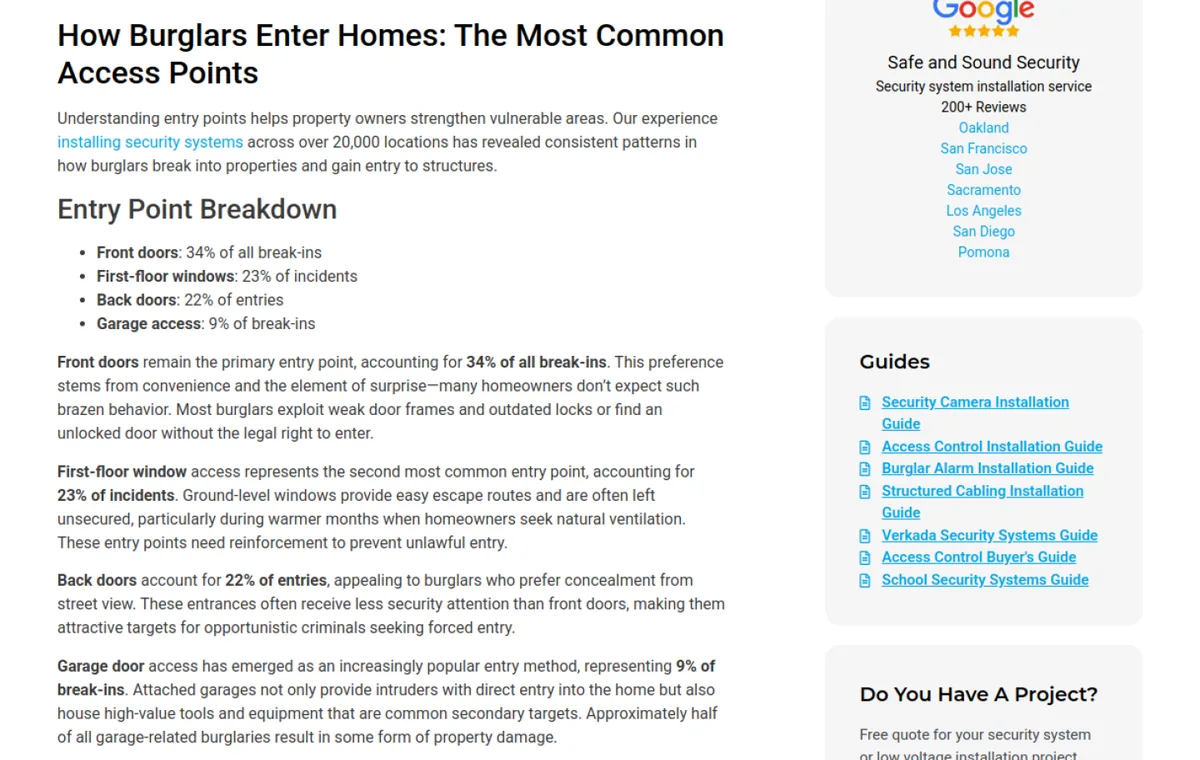
- Front door 34%, windows 23%, back door 22%, garage 9%.
- About 55% of burglaries involve forcible entry — the rest do not.
- Daytime burglaries outnumber nighttime ones (FBI, 2024).
- The average break-in lasts just 8 to 12 minutes.
No force at all: the unlocked door
About 37.8% of burglars gain entry with no force, through unlocked doors or open windows (FBI data, 2024). An unlocked garage door, or an unlocked house door inside the garage, is an invitation.
- An open garage door while you mow the lawn is an open invite.
- A house door left unlocked inside the garage defeats every lock.
- Garage windows left open for air are entry points too.
- Locking up is the single cheapest fix in this guide.
What burglars look for first
The UNC Charlotte study of 422 convicted burglars found 83% check for security measures before trying a home. They look for alarms, cameras, dogs, and signs that someone is home.
- 83% of burglars check for security before they try a home.
- 60% said an alarm would send them elsewhere.
- 50% said a visible camera would do the same.
- Every surveyed burglar knocked on the front door first.
Example: A burglar who sees a camera, a light, and a locked door moves on. A burglar who sees an open garage and no light stays.
2. Lock the emergency release
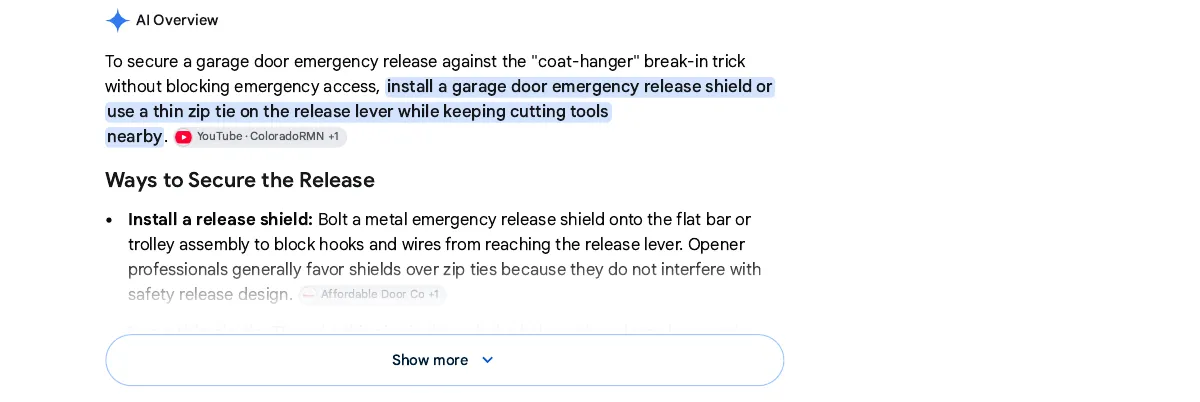
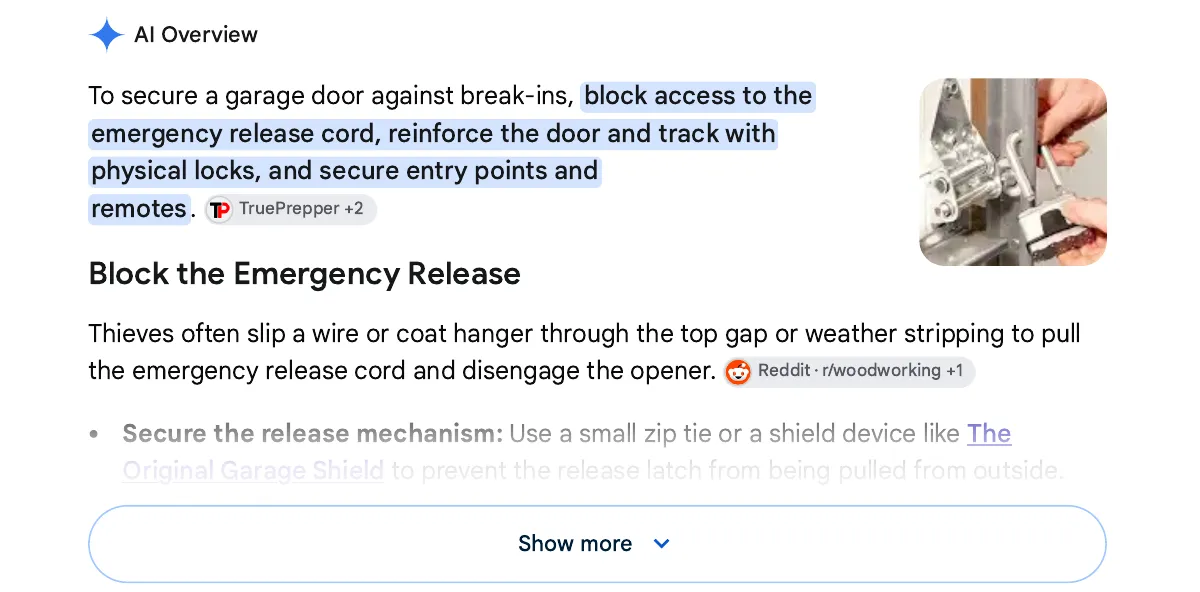
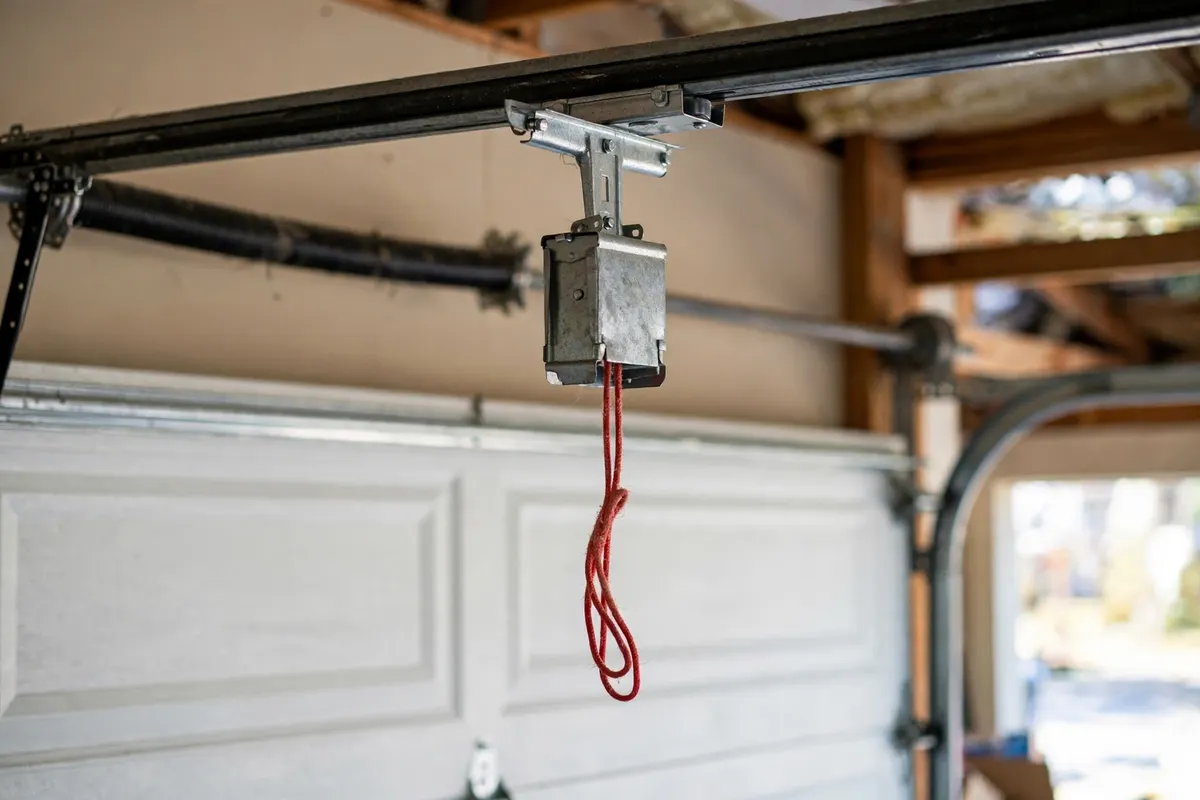
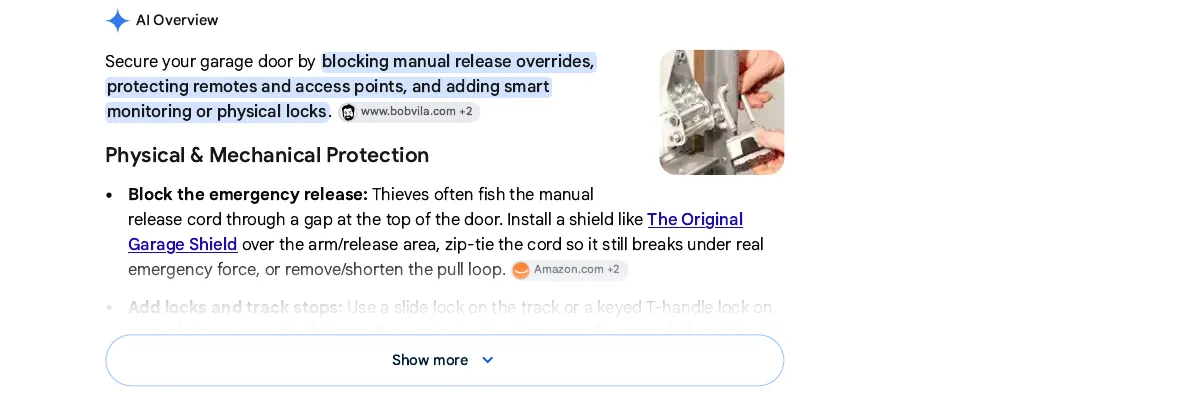
The red emergency release cord is the garage door’s best-known weak spot. A burglar can hook it from outside through the top of the door with a coat hanger, and the door opens by hand in seconds.
How the coat hanger trick works
A burglar pushes the top panel in, slides a hooked wire through the gap, catches the red cord, and pulls. The trolley releases, and the door lifts by hand. It takes seconds and leaves no damage.
- The gap at the top of the door is the entry point.
- A wire hook catches the cord and pulls it down.
- No damage is left behind, so it looks like no break-in happened.
- Older doors with a loose top seal are the easiest targets.
The fix: shield it or tie it
Fit a release shield over the cord, or zip-tie the cord so it cannot be hooked. Both fixes cost a few dollars, take minutes, and still let you pull the cord yourself in an emergency.
- A metal release shield covers the cord from above.
- A zip tie through the cord stops a hook from catching it.
- Keep the top seal tight so no gap opens at all.
- Test the release yourself after the fix, so it still works.
Keep the top seal tight
A worn top seal leaves the gap a hook needs. Replace a cracked or flattened seal, and check the door closes flush at the top, with no daylight showing through.
- Check for daylight at the top of a closed door.
- Replace a seal that is cracked, flat, or pulling away.
- A tight seal also keeps out rain, drafts and pests.
- A bottom seal costs $20 to $45 (The Garage Guide, Mar 2026).
3. Secure the main door
The main door itself needs to resist a push, a pry, and a remote attack. Most doors are strong enough — the weak points are the lock, the track, and the opener’s radio code.
Manual locks and slide bolts
A manual slide bolt on the inside of the door stops it from opening, even if the opener is tricked. Use it at night and when you go away, and fit one if your door has none.
- Fit a slide bolt on the inside track, on both sides if you can.
- Use it every night, and every time you leave for a trip.
- A bolt costs little and needs no power to work.
- Do not bolt the door when someone is inside without a way out.
Rolling-code remotes, not fixed codes
Old fixed-code remotes send the same code every time, and a scanner can copy it. Rolling-code remotes change the code with every press, so a copied code is useless the next day.
- Check your opener uses rolling code — most made since 1997 do.
- Replace a fixed-code opener or add a rolling-code receiver.
- Never leave a remote clipped to a car visor in the driveway.
- Clear lost remotes from the opener’s memory at once.
Tracks, rollers and the door itself
A door with a bent track or loose rollers can be forced off its track by hand. Keep the track bolts tight, the rollers in place, and the door balanced, so it cannot be lifted off its rails.
- Tighten loose track and hinge bolts every few months.
- Replace rollers that are cracked, wobbly, or out of the track.
- A door that hangs crooked is easier to force — call a pro.
- Never adjust springs or cables yourself to fix a loose door.
4. The side door, the house door and the windows
Burglars use the side door and the garage windows as often as the main door, and the house door inside the garage is the real prize. Secure all four, not just the big door.
The house door: solid core and deadbolt
The door from the garage into the house must be a solid-core door with a deadbolt, not a hollow interior door. A hollow door can be kicked through in seconds, and a latch alone will not stop it.
- Fit a solid-core door between garage and house.
- Fit a deadbolt, and lock it every night.
- Use long screws in the strike plate, into the stud.
- Treat this door like a front door, because it is one.
The side door
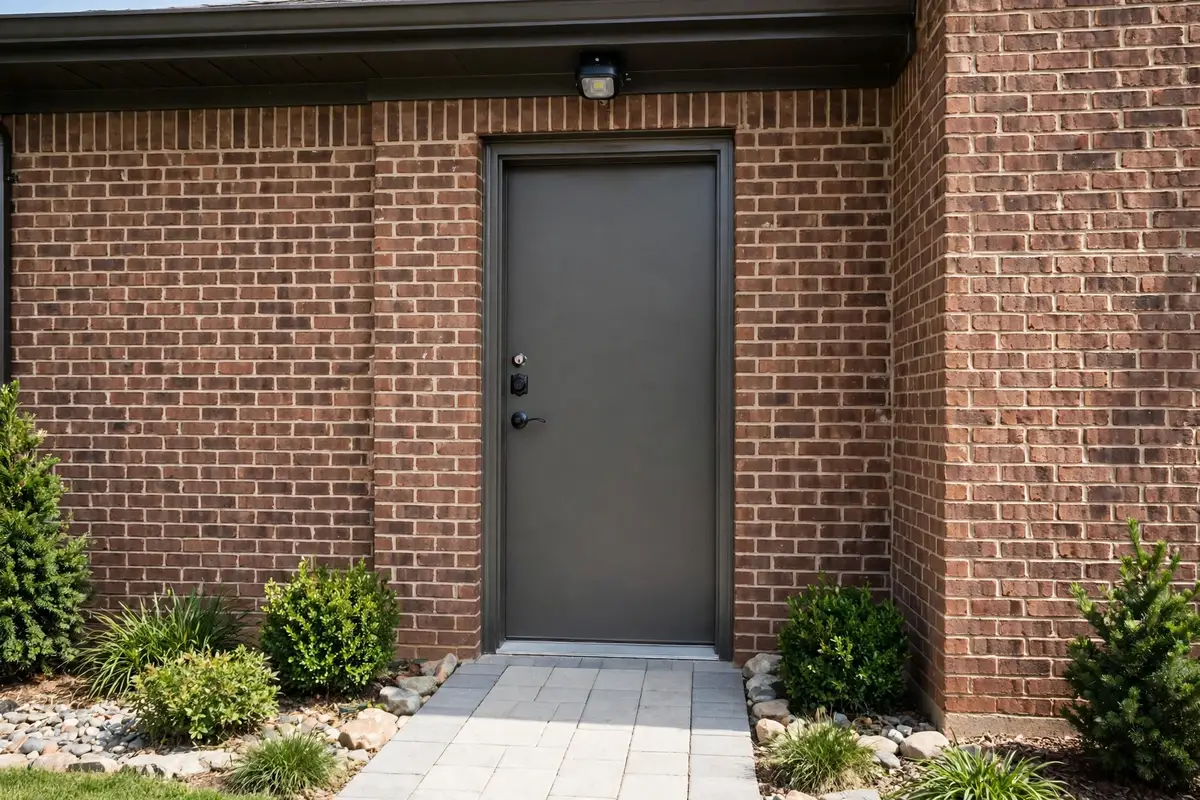
Side doors are often the weakest entry point, with a simple latch and a thin frame. Fit a deadbolt, reinforce the frame, and keep the door locked even when you are home.
- Fit a deadbolt on the side door, not a latch alone.
- Reinforce the frame with a strike plate and long screws.
- Add a motion light above the side door.
- Do not hide a key by the side door — burglars check there first.
Windows: cover them, lock them
Garage windows show burglars what is inside — tools, bikes, and the car. Frost them, cover them, or fit bars, and lock any window that opens.
- Frost or cover windows so tools are not on show.
- Lock any opening window, and pin it if it slides.
- Fit security film so a smashed pane stays in place.
- Keep ladders and tools out of sight from the street.
5. Smart alerts, lights and cameras
Smart openers, lights and cameras do two jobs: they warn you when the door moves, and they warn a burglar that the home is watched. The UNC Charlotte study says visible security moves 60% of burglars on.
Smart opener alerts
A smart opener sends a phone alert every time the door opens or closes, and lets you close it from anywhere. Set an alert for a door left open, and check it before bed each night.
- Set an alert for every open and close.
- Set a second alert if the door stays open for 10 minutes.
- Close the door from your phone if you forgot it.
- Use the vacation lock when you go away.
Smart opener setup is covered in the Opener Cost Calculator page.
Lights: motion, not always-on
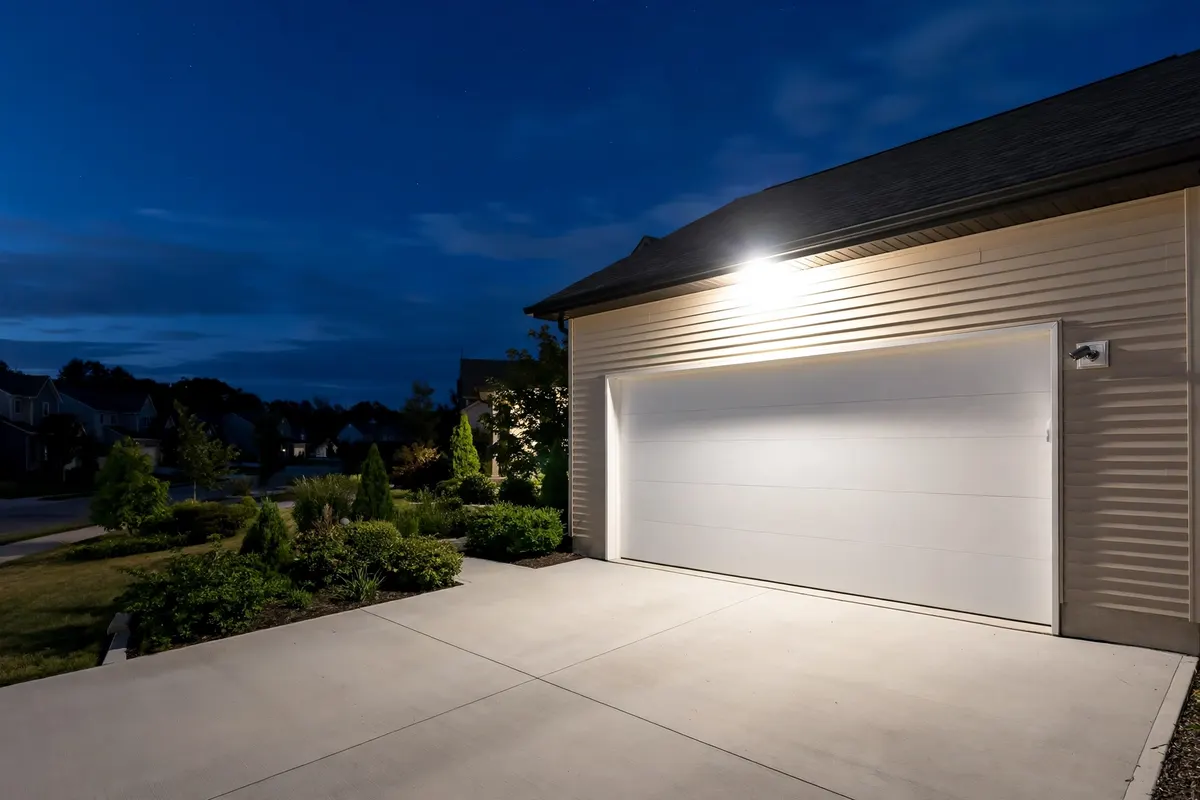
A motion light above the garage door switches on when someone approaches, which startles a burglar and lights them for a camera. An always-on light is easier to ignore, and costs more to run.
- Fit a motion light above the main door and the side door.
- Point it at the approach, not at the street.
- Use a bright LED, so the light is instant and white.
- Check the sensor range — it should cover the driveway.
Cameras that cover the door
A camera over the garage door records who approaches, and a visible camera deters half of burglars before they try. Point it at the door and the driveway, not at the sky.
- Mount the camera high, where it cannot be reached.
- Cover the door, the driveway, and the side door.
- Check the night view — a camera that is blind at night is useless.
- Keep the footage for at least a week, in case you need it.
6. Habits: the daily routine
Most garage break-ins happen because a habit slipped, not because a lock failed. A short nightly routine closes the gaps that hardware cannot, and it costs nothing.
The nightly close-and-check
Close the door every night, lock the house door, and check the side door. Do it at the same time each night, so it becomes a habit instead of a chore.
- Close the garage door before dark, every night.
- Lock the house door and the side door.
- Check the smart alert to confirm the door is closed.
- Do not leave the door open while you mow or work outside.
When you go away
An empty home with an open garage is a target. Lock the release, bolt the door, set the vacation lock, and ask a neighbor to check the door and collect the mail.
- Bolt the door and set the vacation lock before you leave.
- Unplug the opener if you will be away for weeks.
- Ask a neighbor to check the door and move the bins.
- Do not post holiday plans on social media.
What to do after a break-in attempt
If you find the door forced, a lock broken, or tools missing, do not touch anything and call the police. Photograph the damage, then call your insurer and a pro to secure the door the same day.
- Do not touch the door or clean up before the police arrive.
- Photograph every damaged part, inside and out.
- Call your insurer the same day, with the photos ready.
- Get a pro to secure the door before nightfall.
7. What break-in prevention costs
Most break-in fixes are cheap, and the dearest one — a smart opener — is still less than a single burglary. The FBI puts the average loss per burglary at $2,661 (2022 data).
Cost table: cheap fixes first
Start with the free habits and the cheap hardware, then add the smart gear. Every row below is a named source or a common retail range, not a quote for your home.
| Fix | Cost | Source + year |
|---|---|---|
| Release shield or zip tie | $5–$20 | Retail range, 2026 |
| Slide bolt, inside track | $10–$30 | Retail range, 2026 |
| Deadbolt, house or side door | $30–$80 fitted | Retail range, 2026 |
| Motion light, LED | $25–$60 | Retail range, 2026 |
| Bottom seal replacement | $20–$45 | The Garage Guide, Mar 2026 |
| Smart opener, fitted | About $530 | Opener Cost Calculator default, 2026 |
| Average loss per burglary | $2,661 | FBI UCR, 2022 |
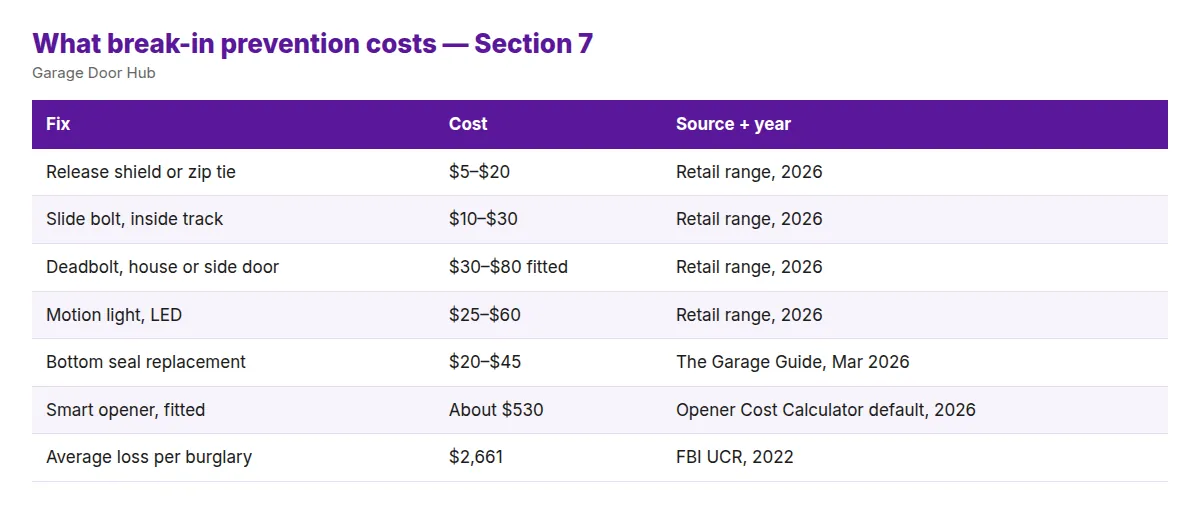
- The cheapest fixes — a zip tie and a bolt — cost under $30.
- A deadbolt on the house door is the best money in this table.
- A smart opener at about $530 still costs less than one burglary.
- The average burglary loss is $2,661 (FBI UCR, 2022).
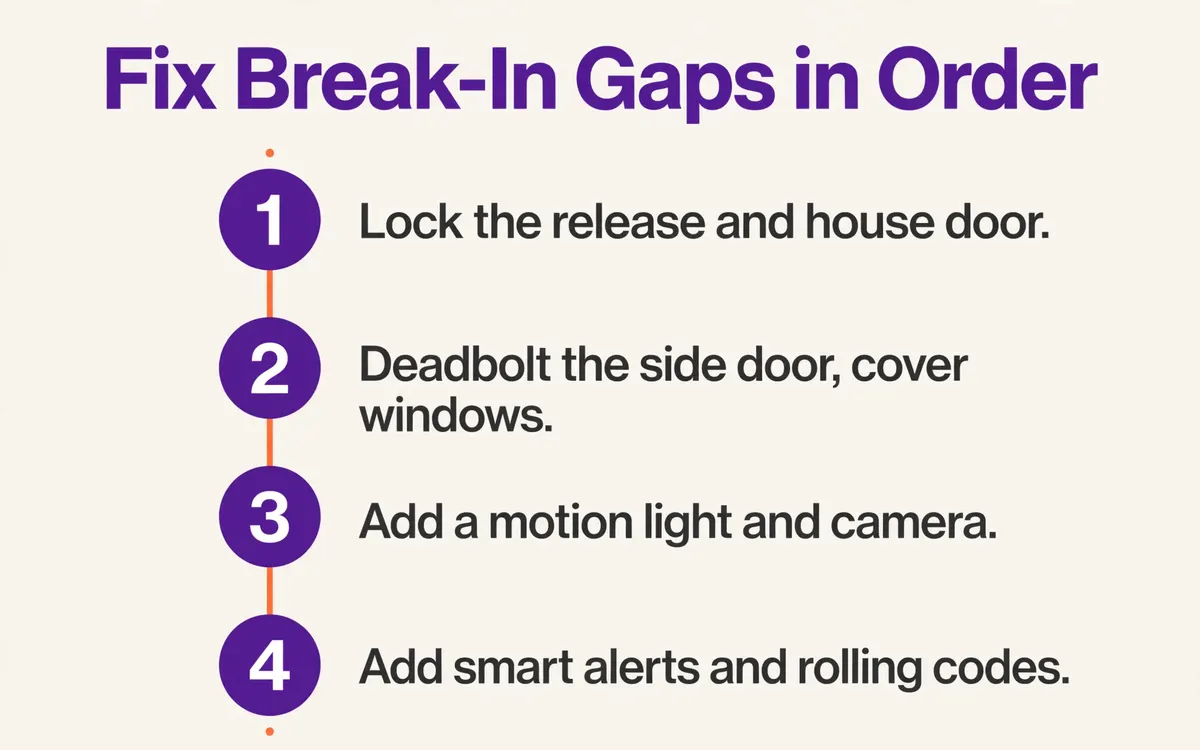
What to fix first, in order
Fix in the order burglars use: lock the release, lock the house door, cover the windows, then add lights and alerts. A camera on an unlocked garage is decoration, not security.

- First: lock the release and the house door.
- Second: deadbolt the side door and cover the windows.
- Third: add a motion light and a camera.
- Fourth: add smart alerts and a rolling-code opener.
Price a smart opener with the Opener Cost Calculator, and price any repair with the Repair Cost Calculator.
Watch: How thieves get into garages — and how to stop them
How To Home shows the coat-hanger release trick and the fixes that block it in this YouTube video. It also covers locks, remotes and smart alerts.
- A coat hanger through the top of the door can hook the emergency release, so shield the release or tie it off.
- Lock the door from the garage into the house, and never leave the garage door open and unwatched.
- A smart opener that alerts you when the door opens adds a layer the guide’s nightly routine relies on.
Video: How To Home, YouTube. Checked 21 November 2026.
Garage Door Hub connects homeowners with trusted local garage door pros. Need a repair? Need a replacement? Start here. First, find out what it should cost. Then, price your exact job with our free calculator. Next, find a pro near you. Fast. No jargon. No guesswork. No surprise bills. Just clear prices, honest guides, and a local pro you can call today.
FAQ
How do burglars break into garages?
Most use the easiest way in: an unlocked door, the emergency release hooked through the top of the door, or a side door with a weak latch. About 37.8% of burglars gain entry with no force at all (FBI data, 2024).
Can someone open my garage door with a coat hanger?
Yes, if the red release cord can be reached through the top of the door. A hooked wire catches the cord and pulls it, releasing the trolley so the door lifts by hand. A release shield or a zip tie stops it.
What percentage of burglaries enter through the garage?
About 9% of home burglaries enter through the garage (FBI data, 2024). The front door is 34%, first-floor windows 23%, and the back door 22%.
Is a smart garage door opener more secure?
Yes, if it uses rolling codes and sends open and close alerts to your phone. Rolling codes change with every press, so a copied code is useless, and an alert tells you at once if the door opens when it should not.
Should I lock the door from the garage into the house?
Yes, every night. It must be a solid-core door with a deadbolt, not a hollow interior door. A burglar who gets into the garage should still face a locked, solid door into the house.
Sources
- Modern Home Protection, 2026 — FBI 2024 data: 779,542 burglaries, down 8.1%; garage 9% of entries; 37.8% gain entry with no force; average loss $2,661 (2022).
- Gwinnett County Garage Door Vulnerability Study, 2026 — FBI NIBRS data; UNC Charlotte study: 60% deterred by alarm, 50% by camera, 83% check for security first.
- Get Safe and Sound, 2025 — FBI UCR data: 847,522 burglaries in 2022; entry points: front door 34%, windows 23%, back door 22%, garage 9%.
- The Garage Guide, Mar 2026 — bottom seal $20–$45; weatherstrip kit $15–$30.
- Angi, 21 Oct 2026 — average garage door repair $265, most $155–$379.
Last reviewed: 20 November 2026
Appendix — Related topics
You might have found this by these keywords — and if not, others might have: how to prevent garage break-ins, garage door security, garage door emergency release security, garage door lock, secure garage door, garage break-in statistics, garage door remote security, garage door security camera, garage door opener security, vacation garage security, garage door emergency release, garage door slide bolt.