

Palm Beach Doors, writing for Florida homeowners, puts the risk plainly: the garage door is often the weakest opening in a house — wide, light, and facing the wind head on.
A standard two-car door is 16 feet wide and 7 feet tall — 112 square feet of surface facing the wind (GoPro Garage Door Service, 2026). A Category 1 hurricane brings winds of 74 to 95 mph, and thunderstorms can top 120 mph.
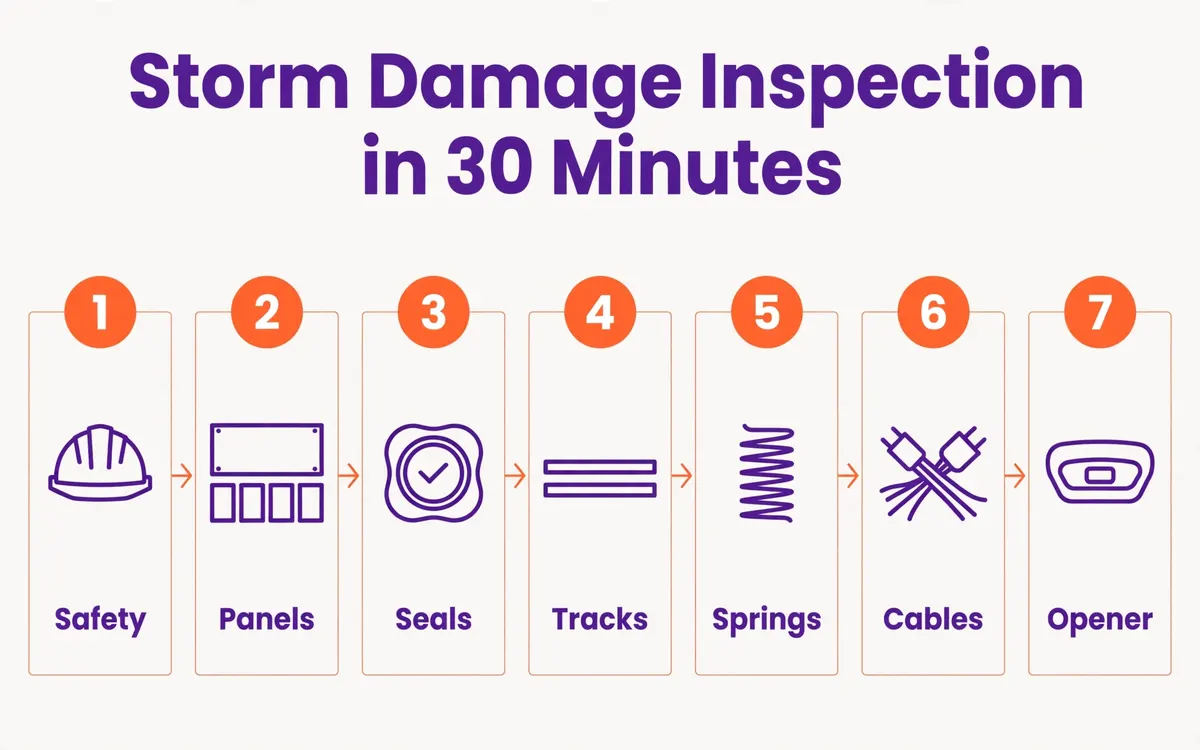
This guide gives you the check order after a storm: safety first, then panels, tracks, springs, cables and opener — then photos, insurance, and the repair-or-replace call.
After a storm, check your garage door for wind, impact and water damage in this order: safety first, then panels, tracks, springs, cables and the opener (GoPro Garage Door Service, 2026). Photograph everything before you touch the door, do not run a damaged door, and call your insurer before a repairer. Most wind and hail damage is covered, but get a written quote first.
Garage Door Hub connects you with a trusted local pro. Get a clear price for your garage door repair or replacement first.
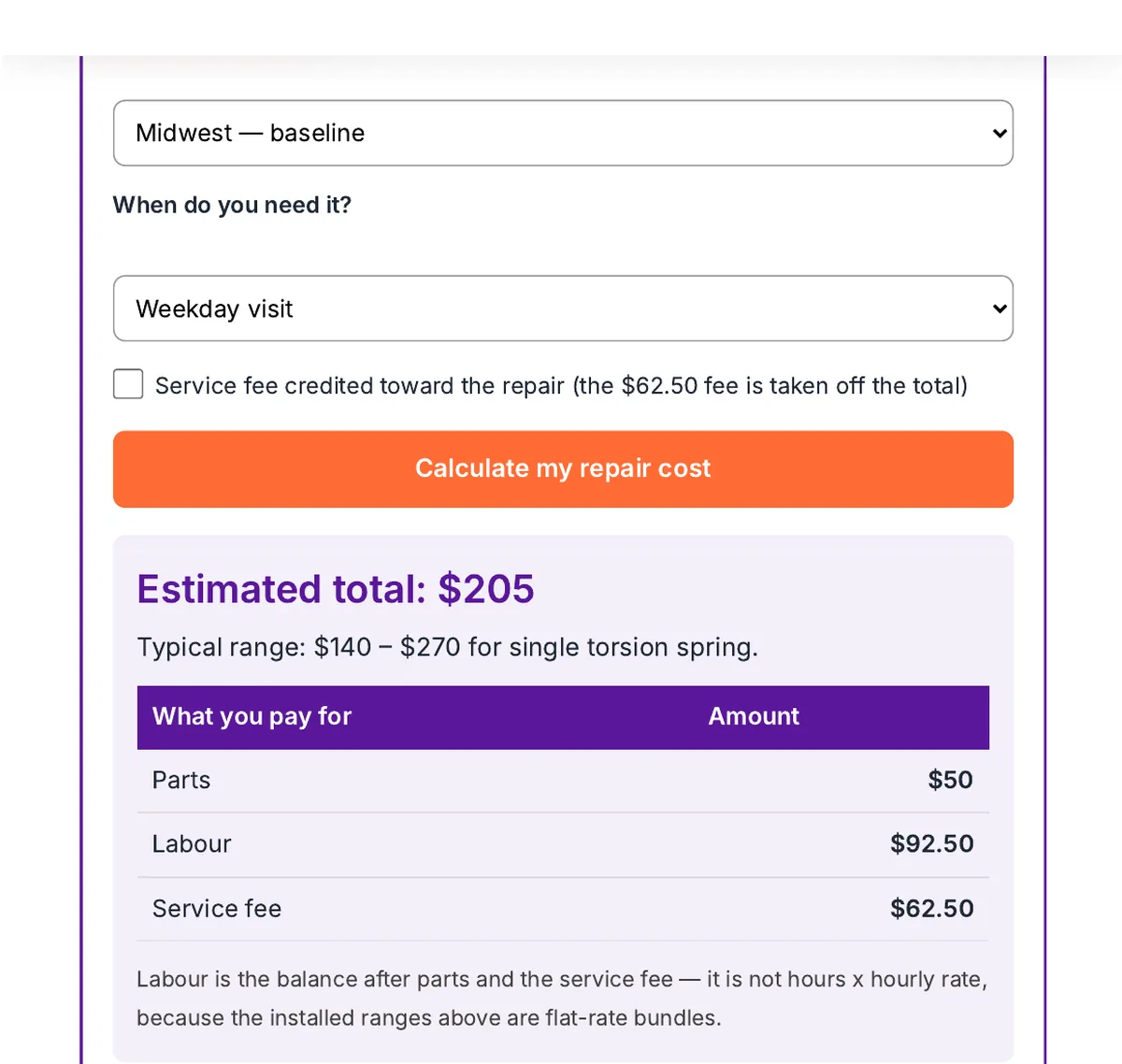
Price your job first with the free calculators below. They give you a number before you call anyone.
Repair Cost Calculator — price a storm repair, from a panel to a spring.
- Enter your door size and the part involved.
- Note the price, then read the key takeaways and Section 1.
- Use the price to check any quote you get.
Key takeaways
- Check for downed power lines and standing water before you touch the door.
- Photograph the whole door, then each damaged part, before any repair.
- Do not run a damaged door to test it — a bent track or broken spring can fail.
- Wind and hail damage is usually covered; wear and age usually are not.
- Storm chasers knock fast — check license, reviews and a written quote first.
Table of Contents
-
1. Safety first: before you touch the door
-
2. How storms damage a garage door
-
3. The 30-minute inspection, step by step
-
4. Photograph everything for insurance
-
5. Repair or replace after a storm
-
6. Storm chasers: the scam after the storm
-
7. What storm damage costs and what insurance pays
- Watch: Why the garage door is a home’s weakest link in high wind
- FAQ
1. Safety first: before you touch the door
A storm-damaged door can fall, spring back, or shock you. Slow down and work through the safety checks first — the door can wait, and your safety cannot.
Downed lines and standing water
Look for downed power lines and standing water before you walk toward the garage. Treat every line as live, and do not step into water near the opener or the breaker panel.
- Treat every downed line as live, and stay clear.
- Do not step into standing water near outlets or the opener.
- If water reached the breaker panel, call an electrician first.
- Keep children and pets inside until the area is checked.
Do not stand under a damaged door
A bent, buckled or crooked door is unstable, and it can fall or spring back without warning. Stand clear, do not stand under it, and do not try to hold it up by hand.
- Back away from a door that is bent, buckled or crooked.
- Do not operate it manually or with the opener.
- Disconnect the opener power at the breaker if it is safe to do so.
- Call a pro if the door is off its track or hanging unevenly.
Never touch springs or cables after a storm
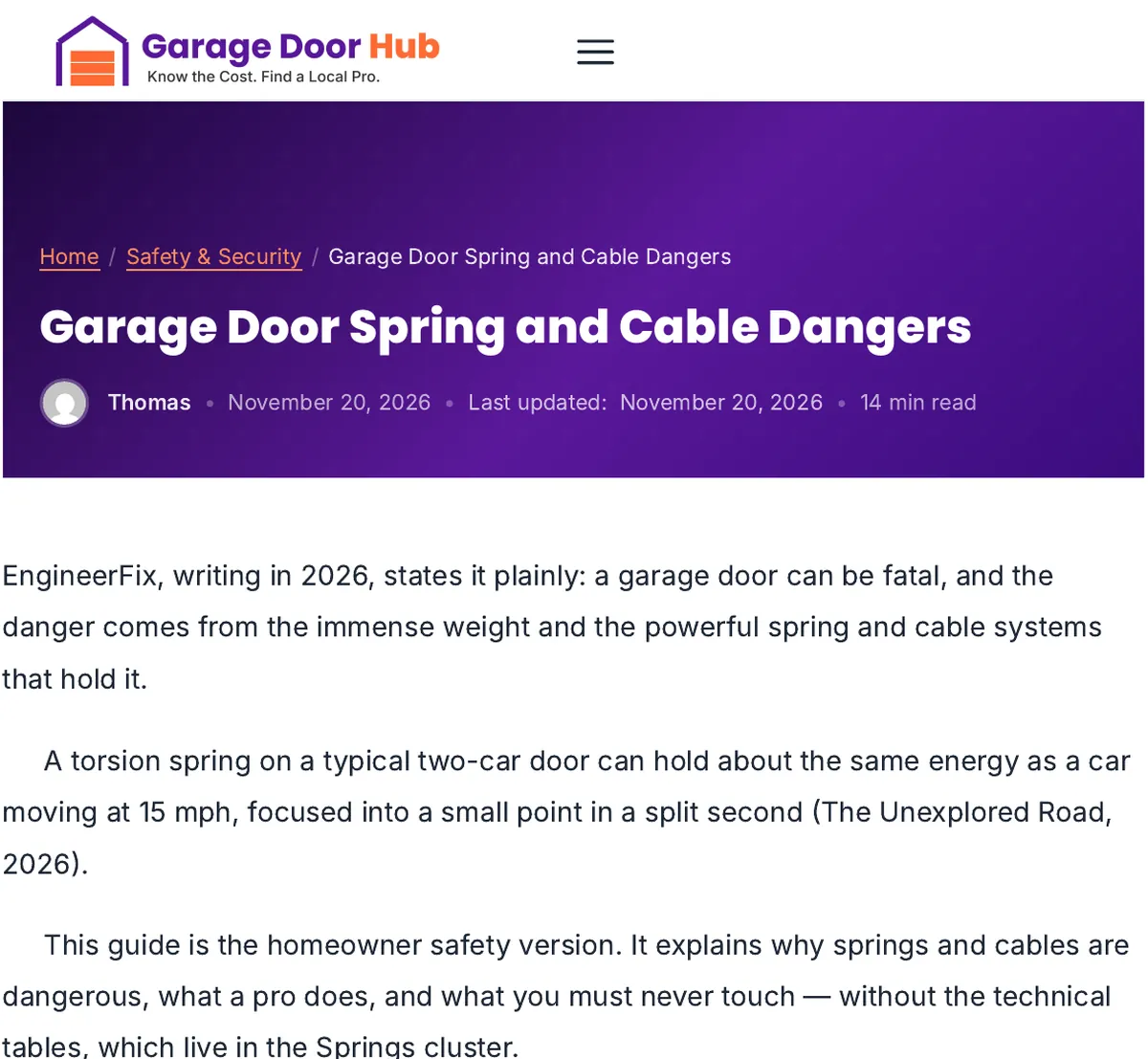
Storms can snap springs and cables, and a damaged spring holds the same stored energy as a healthy one. Never loosen the bottom brackets or spring hardware, and never touch a loose cable.
- Never loosen bottom brackets or spring hardware.
- Never touch a loose, frayed or hanging cable.
- A loud bang during the storm may mean a spring snapped.
- Call a pro, and say storm damage — it changes the job.
Broken-spring signs and costs are in broken garage door spring signs and cost.
2. How storms damage a garage door
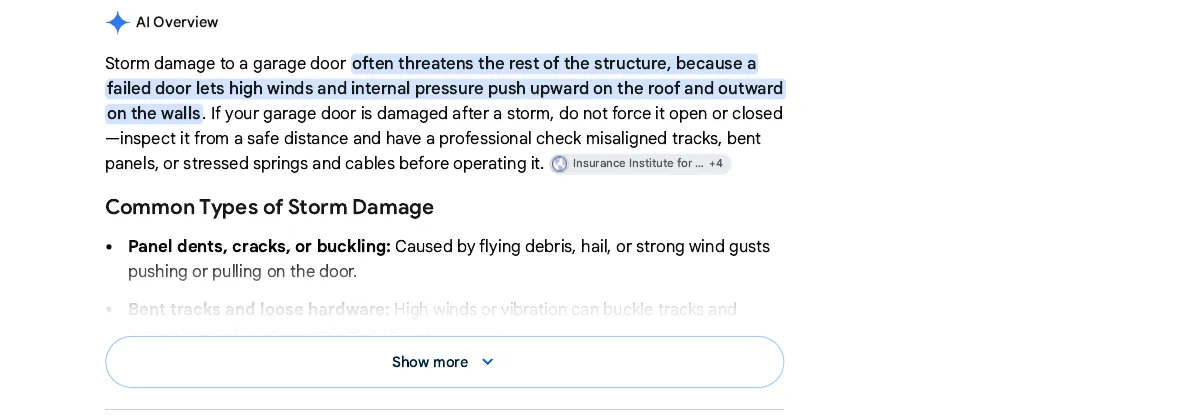
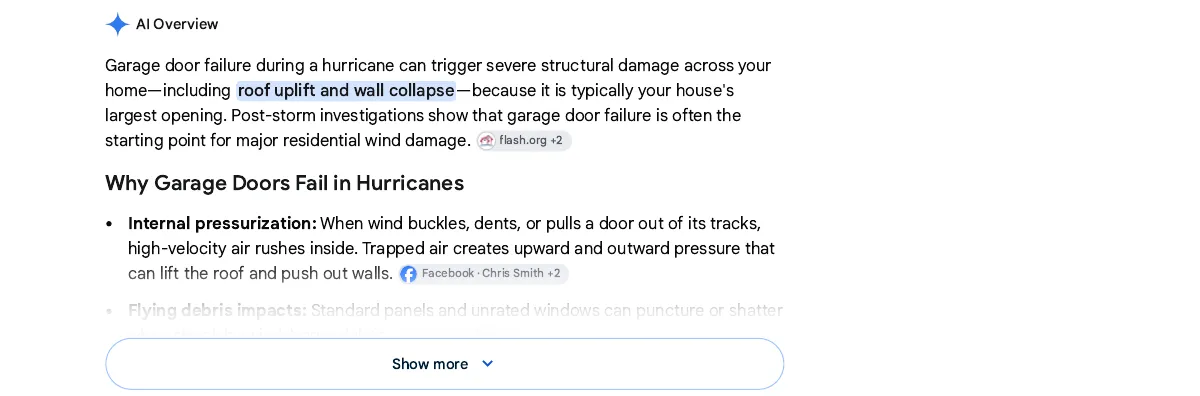
Wind, debris, hail and water each damage a door in a different way, and the damage is often hidden. A door can stay on its track and still carry harm that only shows when it runs.
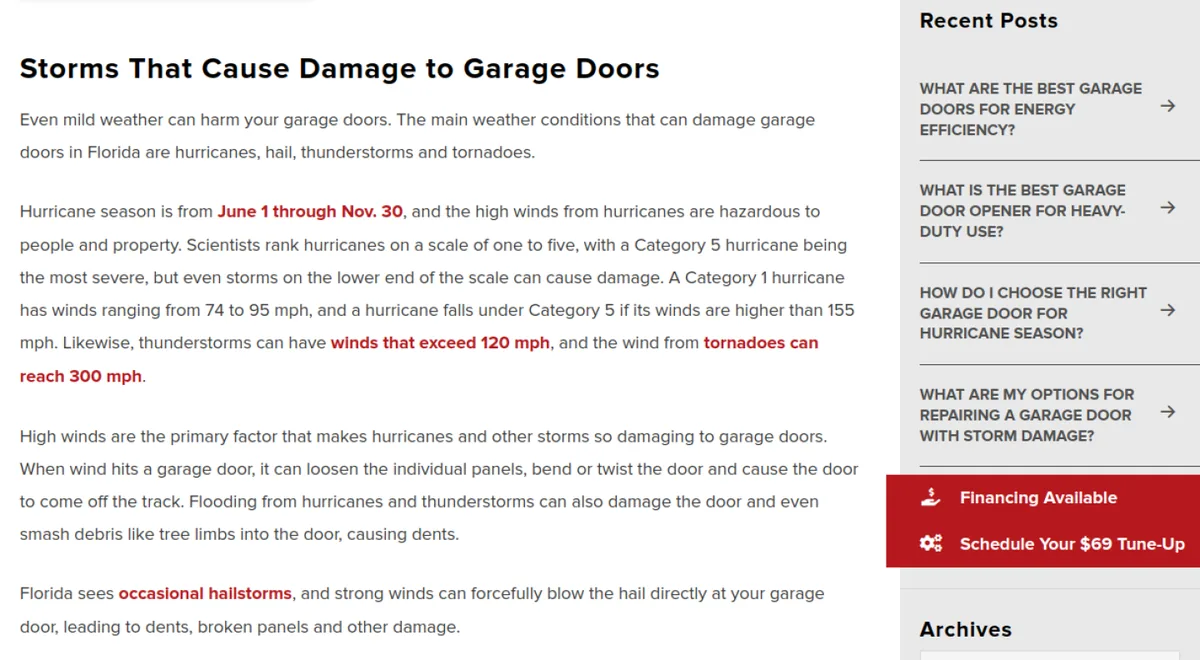
Wind pressure on the panels
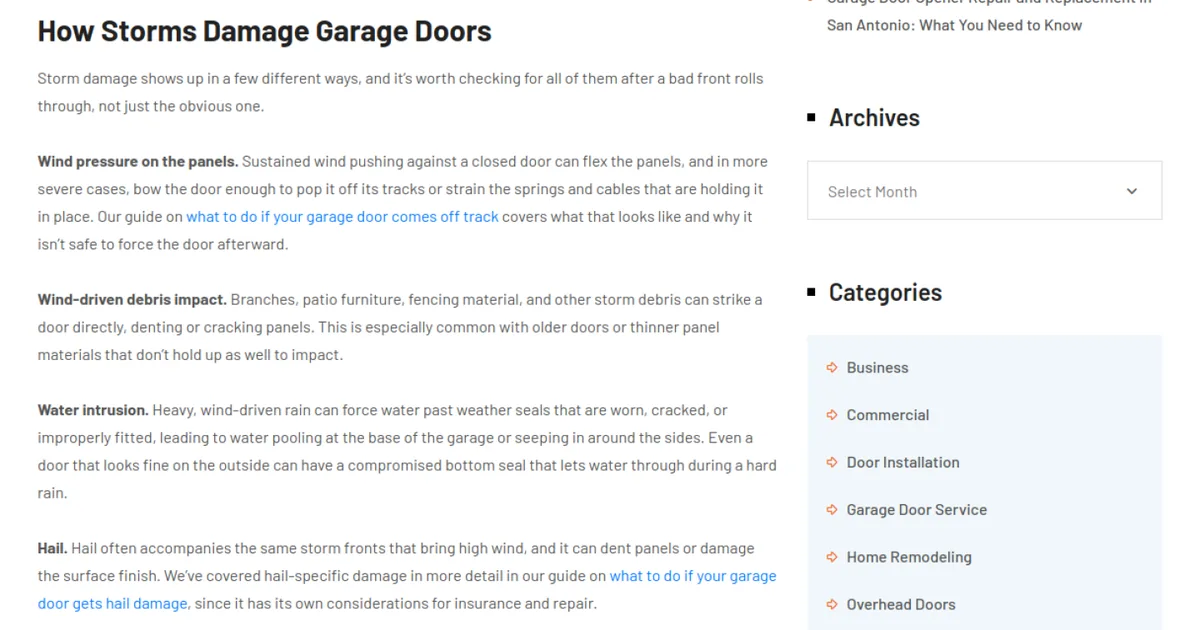
Sustained wind pushing against a closed door can flex the panels, bow the door, pop it off its tracks, or strain the springs and cables. A 16 by 7 foot door is 112 square feet facing the wind.
- Wind flexes panels and can bow the door inward.
- A bowed door can pop off its tracks or strain the springs.
- Category 1 winds run 74 to 95 mph; Category 5 tops 155 mph.
- Thunderstorm gusts can exceed 120 mph (Palm Beach Doors).
Debris impact and hail
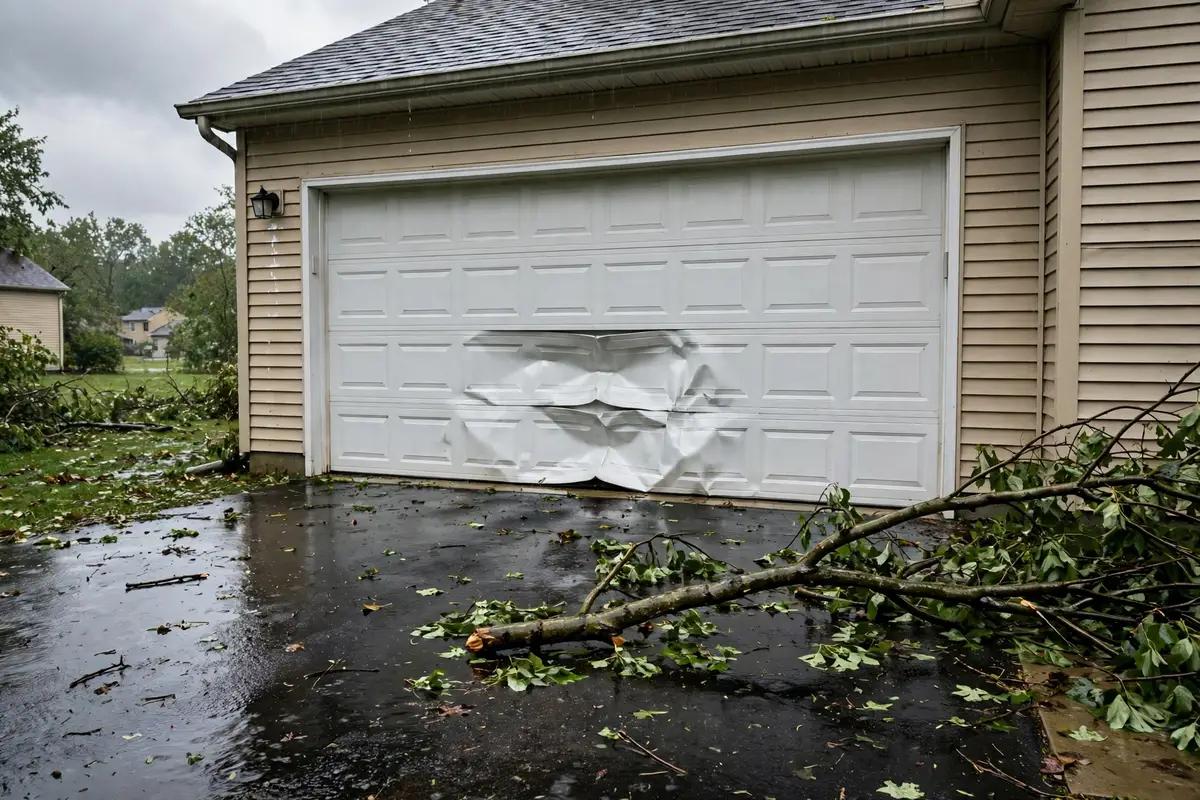
Branches, patio furniture and fencing can strike a door directly, denting or cracking panels. Hail dents panels and damages the surface finish, often in a pattern across the whole door.
- Debris dents or cracks panels, and can bend the track.
- Hail dents panels in a scatter pattern across the door.
- A single cracked panel may be repairable; several may not be. Check the part prices in garage door repair cost by part.
- Photograph each dent and crack, close up and wide.
Water intrusion and flooding
Heavy, wind-driven rain can force water past worn seals, pooling at the base of the garage or seeping in around the sides. Water in the opener or the sensors can short the electrics.
- Water pools at the base when seals are worn or torn.
- Water in the opener can short the motor or the board.
- Rust follows water: check rollers, hinges and the track.
- Keep power off if water reached the opener or outlets.
3. The 30-minute inspection, step by step
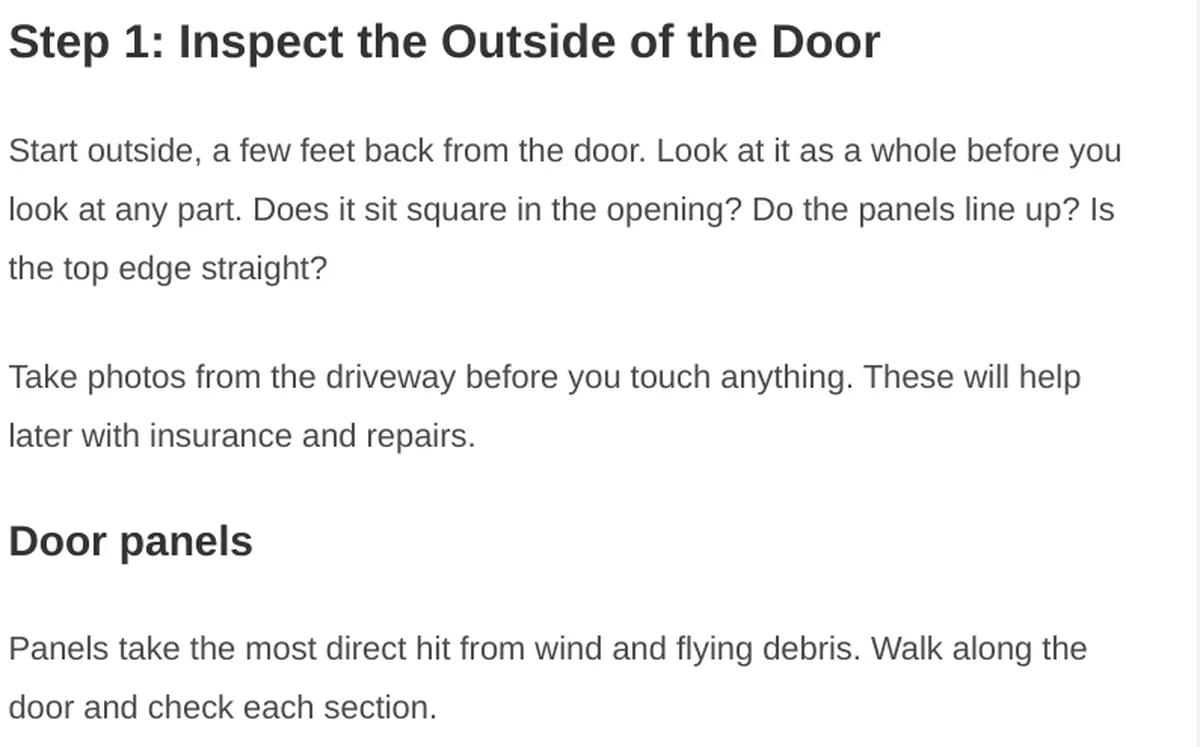
A full storm inspection takes about 30 minutes, needs no special tools, and follows a clear order: panels, seals, tracks, springs, cables, opener. Work through it one part at a time. For the routine version of the same checks, see the garage door maintenance complete guide.
Panels and seals
Look at the panels for dents, cracks, or bowing across the surface, and check the bottom seal for tears, gaps, or displacement. Light showing under a closed door means the seal has failed.
- Dents, cracks, or a crease across a panel.
- A panel that bows inward under light pressure.
- Bottom seal torn, flattened, or pulled away.
- Light under a closed door means the seal is gone.
Tracks, rollers and alignment
Check the tracks on both sides for anything bent, twisted, or pulled away from the wall. Look for a gap between a roller and its track, and a door that hangs unevenly.
- Track bent, twisted, or pulled from the wall.
- Roller out of its track, or a gap beside it.
- Door hangs crooked or lopsided.
- Do not run the door if the track looks bent.
Springs, cables and the opener
Look at the springs for a gap in the coil, the cables for slack or fraying, and the opener for water stains or a burnt smell. If the opener hums but the door does not move, cut the power and stop. If water killed the opener, a replacement starts with belt vs chain garage door opener.
- Gap in the spring coil, or a spring hanging loose.
- Cable slack, frayed, or off its drum.
- Opener hums but the door does not move.
- Water stains or rust on the opener, sensors, or wiring.
Price the fix with the Repair Cost Calculator, or price a new opener with the Opener Cost Calculator.
4. Photograph everything for insurance
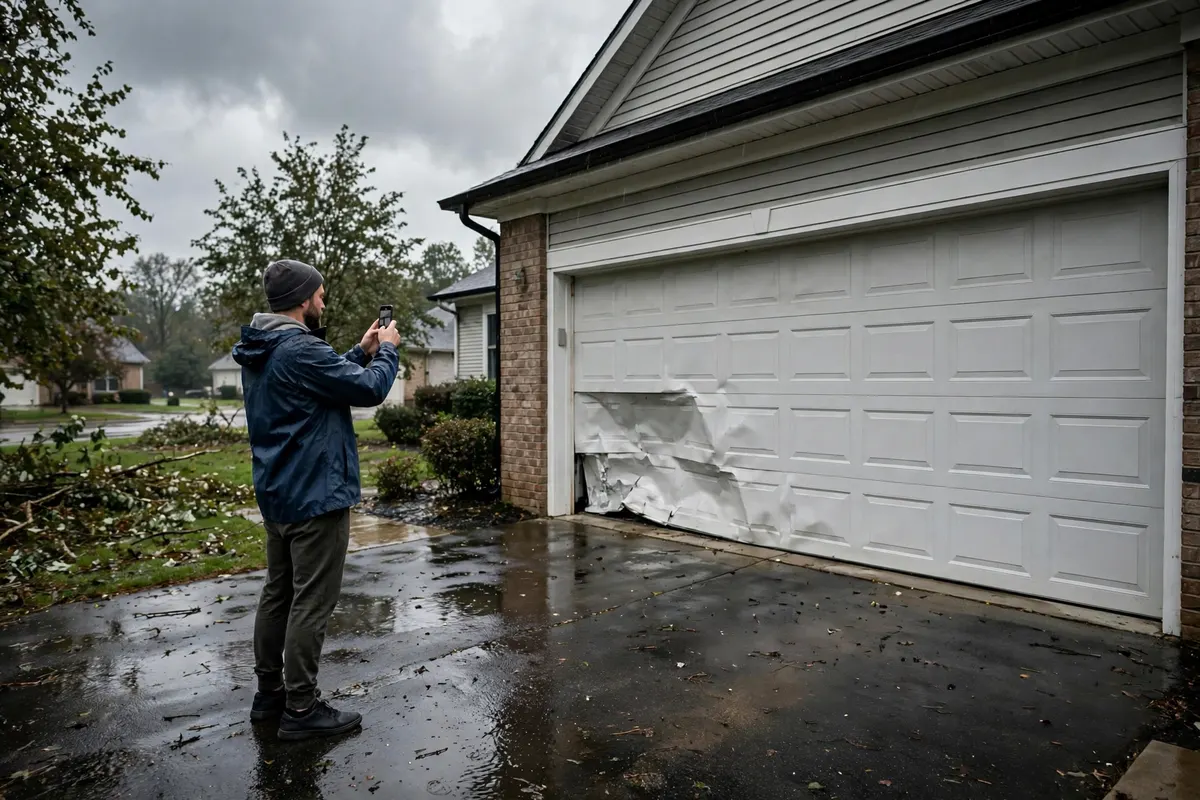
Photos are the claim. Take them before you touch the door, before any repair, and before any clean-up — because once the door is fixed, the damage is gone, and so is the proof.
What to photograph
Take pictures of the entire garage door, then each damaged part at close range, from different angles. Include one shot that shows the whole door and your street number, so the insurer can place it.
- The whole door, wide, from the street.
- Each dent, crack, and bent track, close up.
- The springs, cables, and opener, if damaged.
- One shot with your street number in the frame.
What to write down
Note the storm date and time, the wind speed if you know it, and the order you found the damage. Keep the photos, the notes, and the repair quotes together in one folder.
- Storm date, time, and type: wind, hail, flood, tornado.
- Wind speed, if a local report gives one.
- The order you found each fault, with times.
- Keep photos, notes and quotes in one folder.
Call your insurer before a repairer
Contact your insurance company as soon as possible after the damage, and before any repair. Your agent will likely want the photos to assess the damage, and may send an adjuster first.
- Call the insurer first, with the photos ready.
- Do not authorise a repair until the insurer has seen it.
- Ask what the deductible is, and what is covered.
- Get the claim number in writing, and keep it safe.
5. Repair or replace after a storm
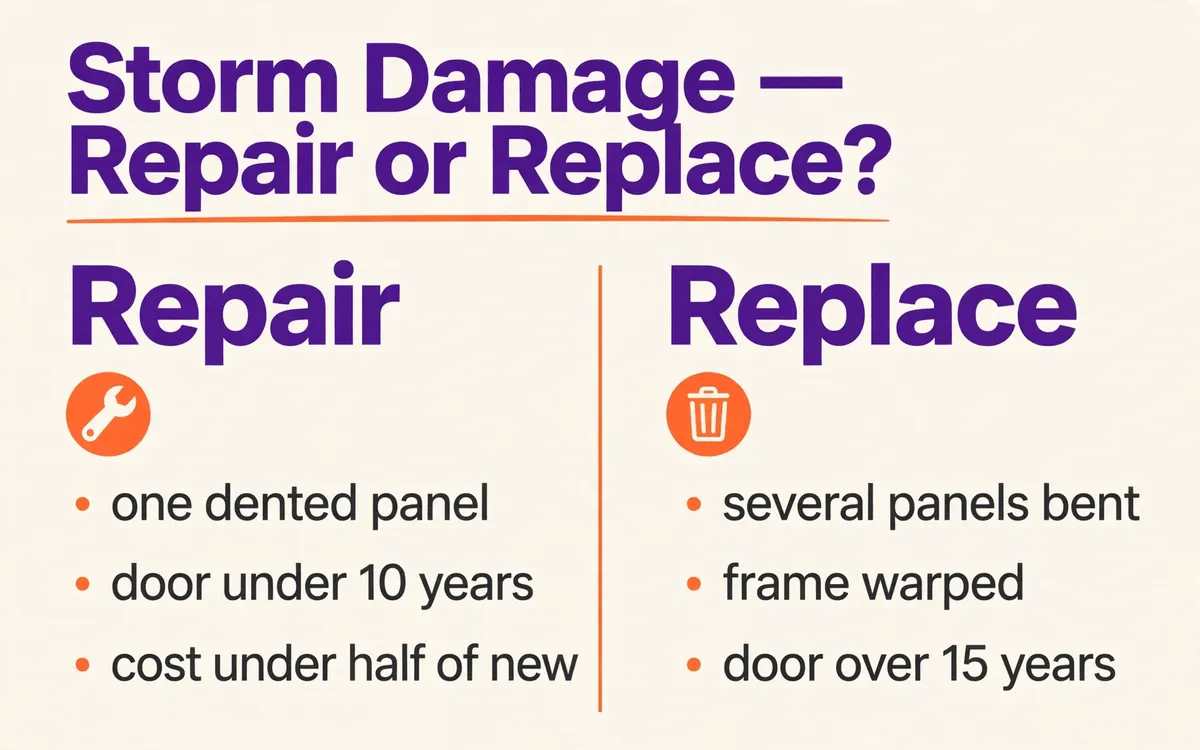
The repair-or-replace call depends on how bad the damage is, how old the door is, and what it costs. The 50% rule is the starting point: if the repair costs over half a new door, replace it — see garage door repair vs replace.
When repair is enough
Repair is enough for isolated cosmetic damage, a single dented panel, a minor track adjustment, or a torn seal — on a door under 10 years old, in good overall condition, that meets current wind codes.
- One dented panel, one bent track section, one torn seal.
- Door under 10 years old, in good overall condition.
- Repair cost under 50% of a new door.
- Door meets current wind-load codes for your area.
When replacement is the right call
Replace the door when the damage is structural: several panels bent, the frame warped, the track twisted, or the door no longer meets wind codes. An older door, over 15 years, with heavy wear, is also a replace case.
- Several panels bent, or the frame warped.
- Track twisted, or the door off its frame.
- Door over 15 years old, with prior wear.
- Repair cost close to or above 50% of a new door.
New door costs are in new garage door cost by size and material, and wind ratings are in the hurricane impact rated door guide.

Wind ratings for the replacement
In wind-prone areas, the replacement door should carry a wind-load rating for your zone, with reinforced struts and heavy-duty tracks. Florida requires WindCode rated doors, and other coastal zones have their own codes. Check the rating your zone needs with the Wind Load Calculator.
- Ask for the wind-load rating in writing, for your zone.
- Reinforced struts and heavy-duty tracks are the upgrade.
- Check the local building code before you order.
- A rated door can also cut your insurance premium.
6. Storm chasers: the scam after the storm
Storm chasers knock on doors within hours of a storm, offering fast repairs for cash. Some are honest; many are not. The same five-minute check that stops a repair scam stops a storm chaser too.
How storm chasers work
A storm chaser offers a fast, cheap fix, asks for cash up front, and disappears before the work is checked. They use the storm as pressure: decide now, or the price goes up, or the door will fail.
- Knocks within hours of the storm, uninvited.
- Offers a fast fix for cash, up front, with no written quote.
- Pressures you to decide now, before the insurer sees it.
- Disappears once paid, or does work that fails in weeks.
The five-minute check
Ask for the company name, license number, and street address, and verify the license with the state board. Check recent reviews under one name, and get the quote in writing before any work starts.
- License number, verified with the state board.
- Street address you can check on Street View.
- Recent reviews under one name, with real detail.
- Written, itemised quote before work starts.
Check a company before you pay — license, reviews and a written quote — see how to choose a garage door repair company.
Let the insurer go first
Never let a storm chaser start work before your insurer has seen the damage. A repair done before the adjuster visits can void the claim, and a cash payment with no receipt cannot be claimed back.
- Insurer first, repairer second, always.
- Do not pay cash up front, and never with no receipt.
- Get two quotes, and compare them line by line.
- If the price triples on site, stop the job.
7. What storm damage costs and what insurance pays
Wind, hail and storm damage are usually covered by a standard homeowner policy, but wear, age and poor maintenance are not. The table below gives the repair ranges to check a quote against.
Storm repair cost table
These are national guide ranges from named sources, not quotes for your door. A service call fee of $50 to $75 sits on top of most of them (Garage Door Hub standard, 2026).
| Job | Price | Source + year |
|---|---|---|
| Panel repair or replacement | $250–$900 | Garage Door Hub standard, 2026 |
| Spring pair, torsion | $200–$350 | Fixr, Jan 2025; HomeGuide, Nov 2026 |
| Cable pair repair | $150–$300 | Garage Door Hub standard, 2026 |
| Track realignment | $125–$350 | Garage Door Hub standard, 2026 |
| Opener repair | $100–$300 | Garage Door Hub standard, 2026 |
| Average garage door repair | $265; most $155–$379 | Angi, 21 Oct 2026 |
| Full replacement, new door | $754–$1,707; avg $1,231 | HomeAdvisor, 17 Jun 2026 |
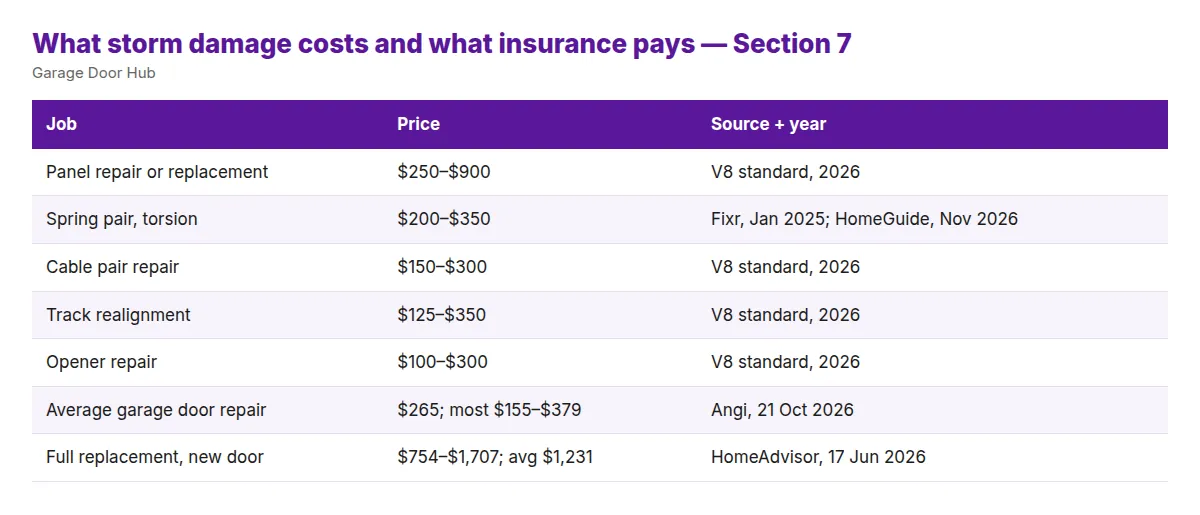
- A single panel at $250 to $900 is the most common storm fix.
- A spring pair at $200 to $350 is the range to check.
- A full replacement averages $1,231 (HomeAdvisor, 2026).
- Emergency after-hours calls add $75 to $150 — see emergency garage door repair cost.
What insurance usually covers
Wind, hail and storm damage are usually covered, including the door, the opener, and the track. Wear, rust, age, and a door that was already broken before the storm are usually not covered.
- Wind and hail damage: usually covered.
- Flood damage: usually needs separate flood cover.
- Wear, rust, and age: usually not covered.
- A pre-existing fault: not covered, even after a storm.

Watch: Why the garage door is a home’s weakest link in high wind
The Insurance Institute for Business & Home Safety (IBHS) shows why a garage door fails first in severe wind in this short YouTube video, and what a wind-rated door does differently.
- The garage door is often the weakest opening in a house, wide and light and facing the wind head on.
- A wind-rated door has heavier panels, steel bracing and stronger tracks.
- After a storm, check safety first, then panels, tracks, springs, cables and the opener — and photograph everything before you touch the door.
Video: Insurance Institute for Business & Home Safety (IBHS), YouTube. Checked 21 November 2026.
Garage Door Hub connects homeowners with trusted local garage door pros. Need a repair? Need a replacement? Start here. First, find out what it should cost. Then, price your exact job with our free calculator. Next, find a pro near you. Fast. No jargon. No guesswork. No surprise bills. Just clear prices, honest guides, and a local pro you can call today.
FAQ
What should I check on my garage door after a storm?
Check safety first — downed lines and standing water — then panels, seals, tracks, springs, cables and the opener, in that order. Photograph everything before you touch the door, and do not run a damaged door to test it.
Does insurance cover garage door storm damage?
In most cases, yes. Wind, hail and storm damage are usually covered by a standard homeowner policy. Flood damage usually needs separate flood cover, and wear, rust and age are usually not covered.
Should I open my garage door after a storm to test it?
No, not if it looks damaged. A bent track, a broken spring, or a loose cable can fail when the door moves. Cut the power if water reached the opener, photograph the damage, and call a pro.
How do I document garage door storm damage for insurance?
Photograph the whole door from the street, then each damaged part close up, from different angles, with one shot showing your street number. Note the storm date and time, and call your insurer before any repair.
How can I tell if a storm repair company is a scam?
Ask for the license number and street address, verify the license with the state board, check recent reviews under one name, and get a written, itemised quote before work starts. Never pay cash up front, and never let them start before your insurer has seen the damage.
Sources
- Palm Beach Doors, 2021 — hurricanes, hail, thunderstorms and tornadoes; Category 1 winds 74 to 95 mph, Category 5 over 155 mph; assess, photograph, contact insurer.
- GoPro Garage Door Service, 2026 — 30-minute inspection; 16 by 7 foot door is 112 square feet; safety steps; symptom guide for panels, tracks, springs, cables, opener.
- Helotes Overhead Doors, 2026 — wind pressure, debris impact, water intrusion, hail; visual inspection before operating; insurance usually covers wind and hail.
- Angi, 21 Oct 2026 — average garage door repair $265, most $155–$379.
- GDI (Doors Today), 2026 — storm chasers and the Indiana Attorney General's guide to avoiding them; cash-only and pressure tactics.
Last reviewed: 20 November 2026
Appendix — Related topics
You might have found this by these keywords — and if not, others might have: garage door storm damage, garage door hurricane damage, hurricane rated garage door, garage door wind load, garage door insurance claim, garage door storm damage repair cost, garage door dent repair, garage door replacement after storm, wind rated garage door, garage door storm damage repair, garage door hurricane damage repair, does insurance cover garage door storm damage.