
Appliance Analysts says a 1/2 HP opener lifts 300 pounds and a 3/4 HP opener lifts 600 pounds. That gap decides most double doors.
Home Depot ranks first for this question, with its Garage Door Opener Buying Guide. Lowe’s is second, and Precision Garage Door Service is third.
Those guides are a start. This guide sizes by door weight, use, and drive type, so you buy once and buy right.
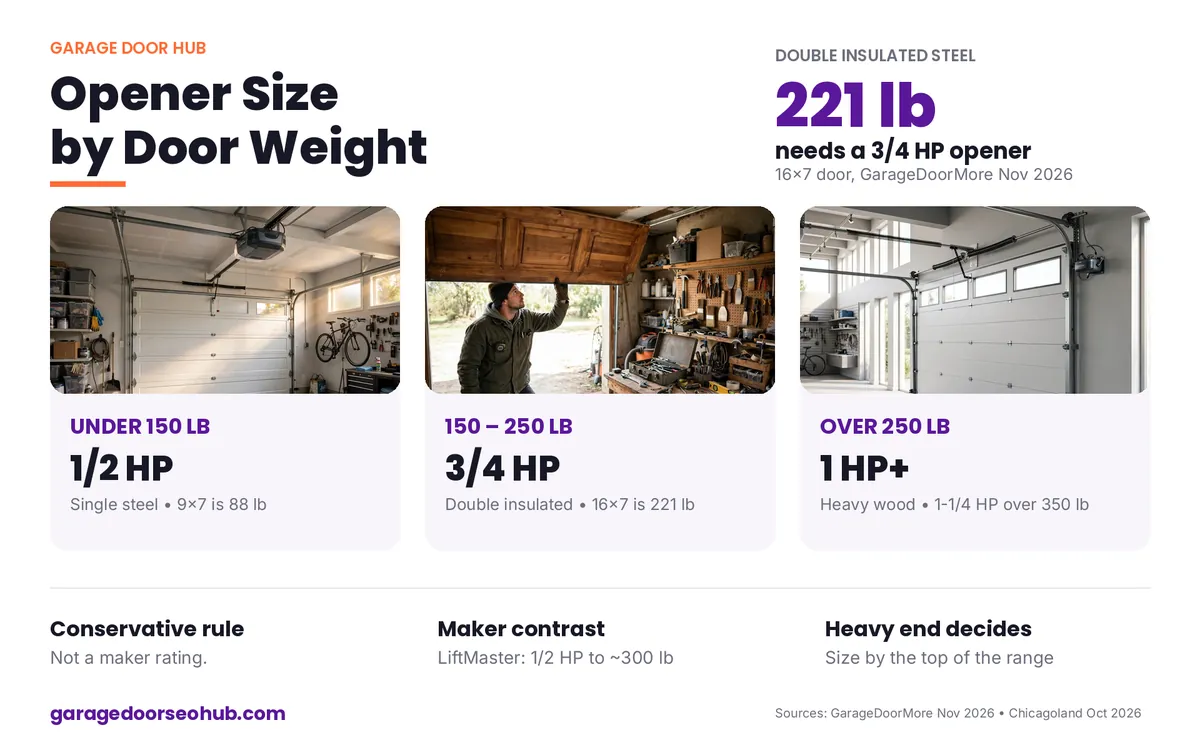
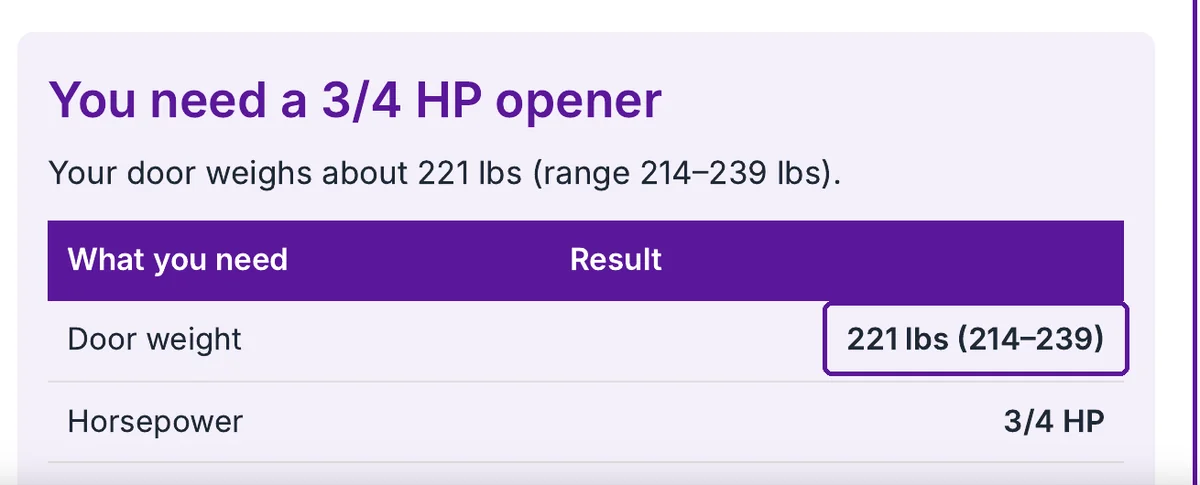
What size garage door opener do I need? Size it by door weight, not garage size. A 9×7 single steel door weighs 88 lb and needs 1/2 HP. A 16×7 double insulated door weighs 221 lb and needs 3/4 HP. Doors over 250 lb need 1 HP or more. Use the calculator below with your door weight. Weight decides horsepower.
Garage Door Hub connects you with a trusted local pro. Need a repair? Need a replacement? Start here. First, find out what it should cost.
Use the Opener Size Calculator below. Enter size and weight first.
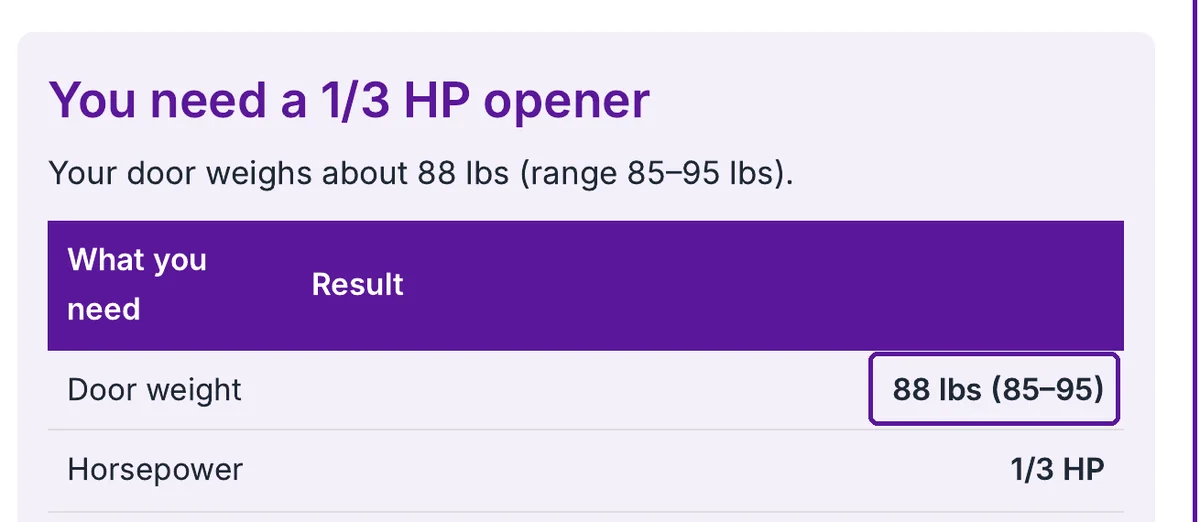
The live calculator defaults to an 88 lb door at 1/3 HP. Change the weight first, then read the HP answer.
Open the Opener Size Calculator — keep its answer open. You will use it in every step below.
Download the 1-page printable chart (PDF) — the opener size chart from this guide, free to print.
- Enter width, height, and material.
- Enter the real weight if you know it.
- Use the Weight Calculator if you do not know it.
- Note the HP answer, then read the key takeaways and Section 1.
Key takeaways
- Weigh the door first. Weight decides HP, not size alone.
- Single light steel: 1/2 HP. Double or insulated: 3/4 HP.
- Wood, glass, or tall doors: 1 HP or more.
- Belt drive is quietest. Chain drive costs less.
- Check your springs first. A weak spring makes any opener struggle.
Three steps: weigh, match, pick.
- Weigh your door, or use the Weight Calculator to find its weight.
- Match that weight to the HP chart in Section 2.
- Pick the drive type in Section 4, then check the price.
Table of Contents
- 1. Weigh Your Door First
- 2. What Size Garage Door Opener Do I Need for Each Door Size?
- 3. 1/2 HP vs 3/4 HP Garage Door Opener
- 4. Pick the Drive Type: Chain, Belt, Screw, or Wall-Mount
- 5. Check Use, Noise, and Features Before You Buy
- 6. When to Go Bigger — and When to Call a Pro
- Video: What Size Garage Door Opener Do I Need? (Coming Soon)
- FAQ
1. Weigh Your Door First
Weight decides horsepower, not size alone. Two doors can share a size and need a different opener, because material and insulation change weight.
How much does a garage door weigh?
A door’s weight is its area times its weight per square foot. The calculator shows the weight as a range, not a single number.
| Door type | Pounds per square foot |
|---|---|
| Steel, single layer, non-insulated | 1.40 |
| Steel, double layer, vinyl-backed | 1.50 |
| Steel, 1 3/8-in steel-backed | 1.63 |
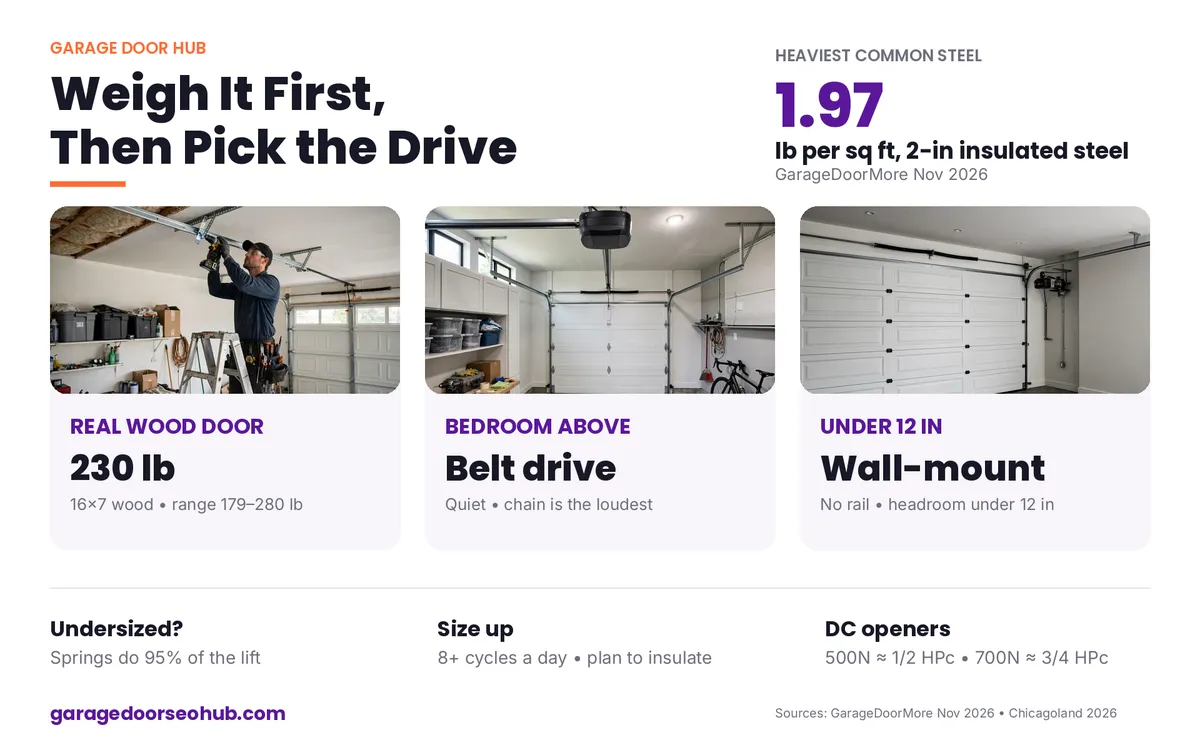
| Steel, 2-in steel-backed, insulated (Opener Size Calculator factor) | 1.97 |
| Aluminum | 1.20 |
| Fiberglass | 1.60 |
| Vinyl | 1.50 |
| Solid wood* | 3.50 |
Sources: GarageDoorMore, Nov 2026 and Atlanta Garage Doors, 2026. *Wood: the live tools give 379 lb and 230 lb for a 16×7 door.
- A 9 by 7 single steel door, non-insulated: 63 square feet times 1.40 is 88 lb, range 85 to 95 lb. That is a 1/2 HP opener.
- A 16 by 7 steel door, non-insulated: 112 square feet times 1.40 is 157 lb. That is a 3/4 HP opener by the conservative rule.
- A 16 by 7 steel door, 2-inch insulated: the Opener Size Calculator gives 221 lb from 112 square feet times 1.97. That is a 3/4 HP opener, belt drive if a bedroom sits above the garage.
- A 16 by 7 solid wood door: the Weight Calculator gives 379 lb, range 360 to 455 lb. The Opener Size Calculator gives 230 lb.
- The Weight Calculator’s wood figure is the heavier, real-wood build. The Opener Size Calculator uses 2.05 lb per square foot. Size for 1 1/4 HP to cover both.
- Windows and overlays add about 15 lb. Check your exact weight with the garage door weight calculator.
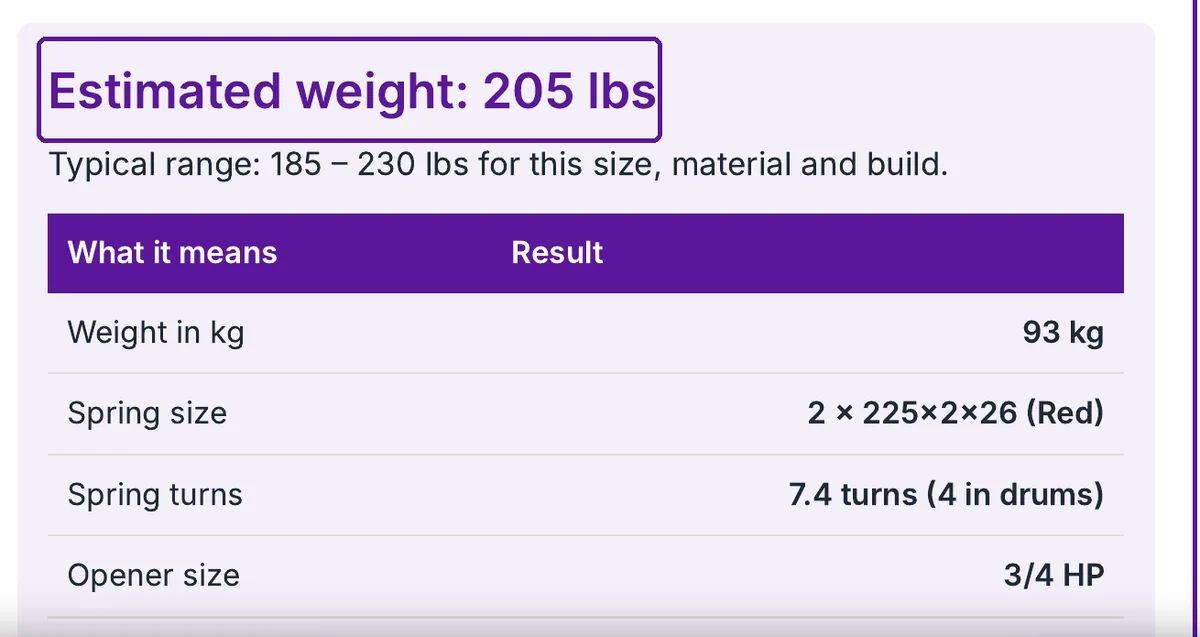
- The Weight Calculator gives 205 lb for triple-layer polyurethane, range 185 to 230 lb, and 180 lb for double-layer polystyrene, range 166 to 207 lb.
- The two tools assume different builds. All three weights sit in the 150 to 250 lb band, so all three need 3/4 HP.
Example: A homeowner in Columbus had a 16×7 ft insulated door. The chart said 1/2 HP, but the door weighed 290 lbs.
The right answer was 3/4 HP, so the chart alone would have bought the wrong opener.
Why the spring balance matters
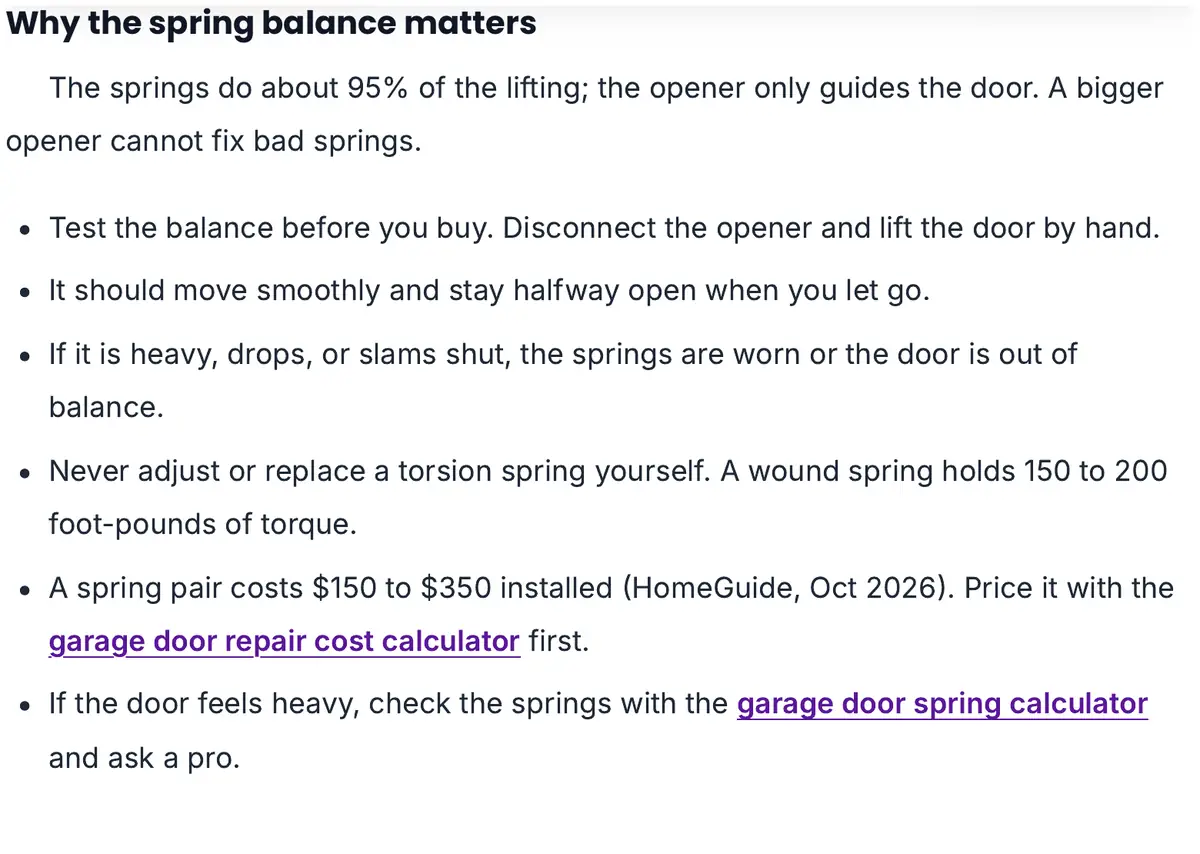
The springs do about 95% of the lifting; the opener only guides the door. A bigger opener cannot fix bad springs.
- Test the balance before you buy. Disconnect the opener and lift the door by hand.
- It should move smoothly and stay halfway open when you let go.
- If it is heavy, drops, or slams shut, the springs are worn or the door is out of balance.
- Never adjust or replace a torsion spring yourself. A wound spring holds 150 to 200 foot-pounds of torque.
- A spring pair costs $150 to $350 installed (HomeGuide, Oct 2026). Price it with the garage door repair cost calculator first.
- If the door feels heavy, check the springs with the garage door spring calculator and ask a pro.
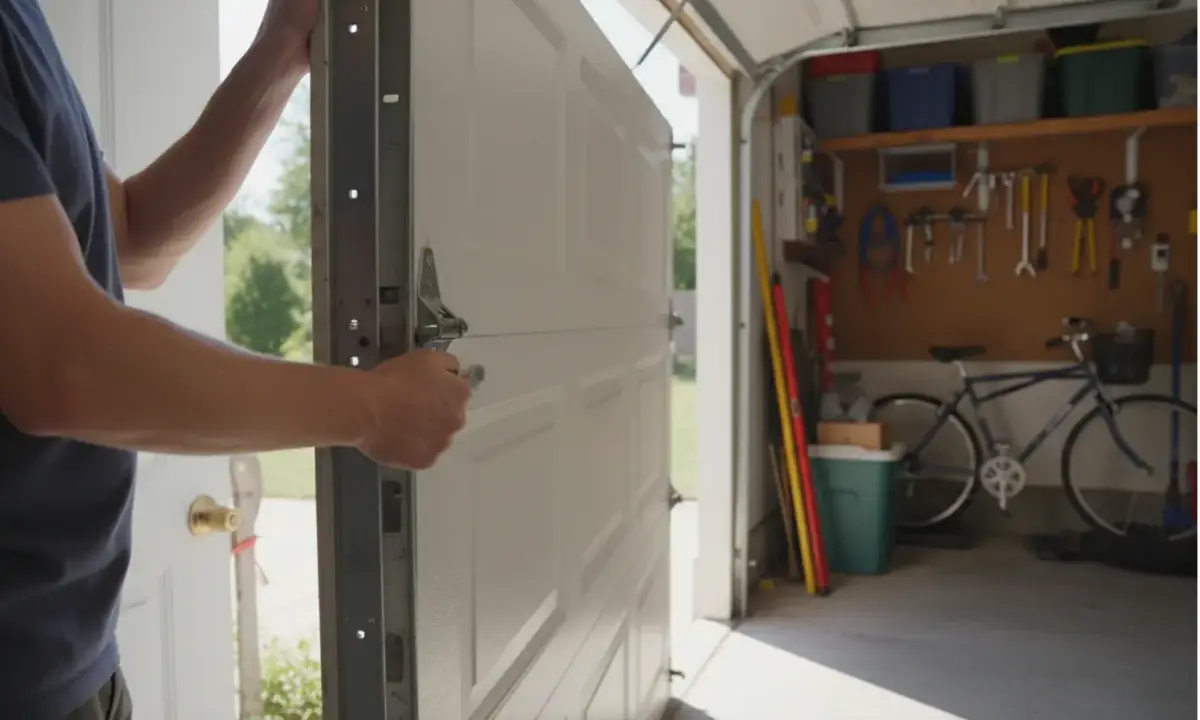
2. What Size Garage Door Opener Do I Need for Each Door Size?
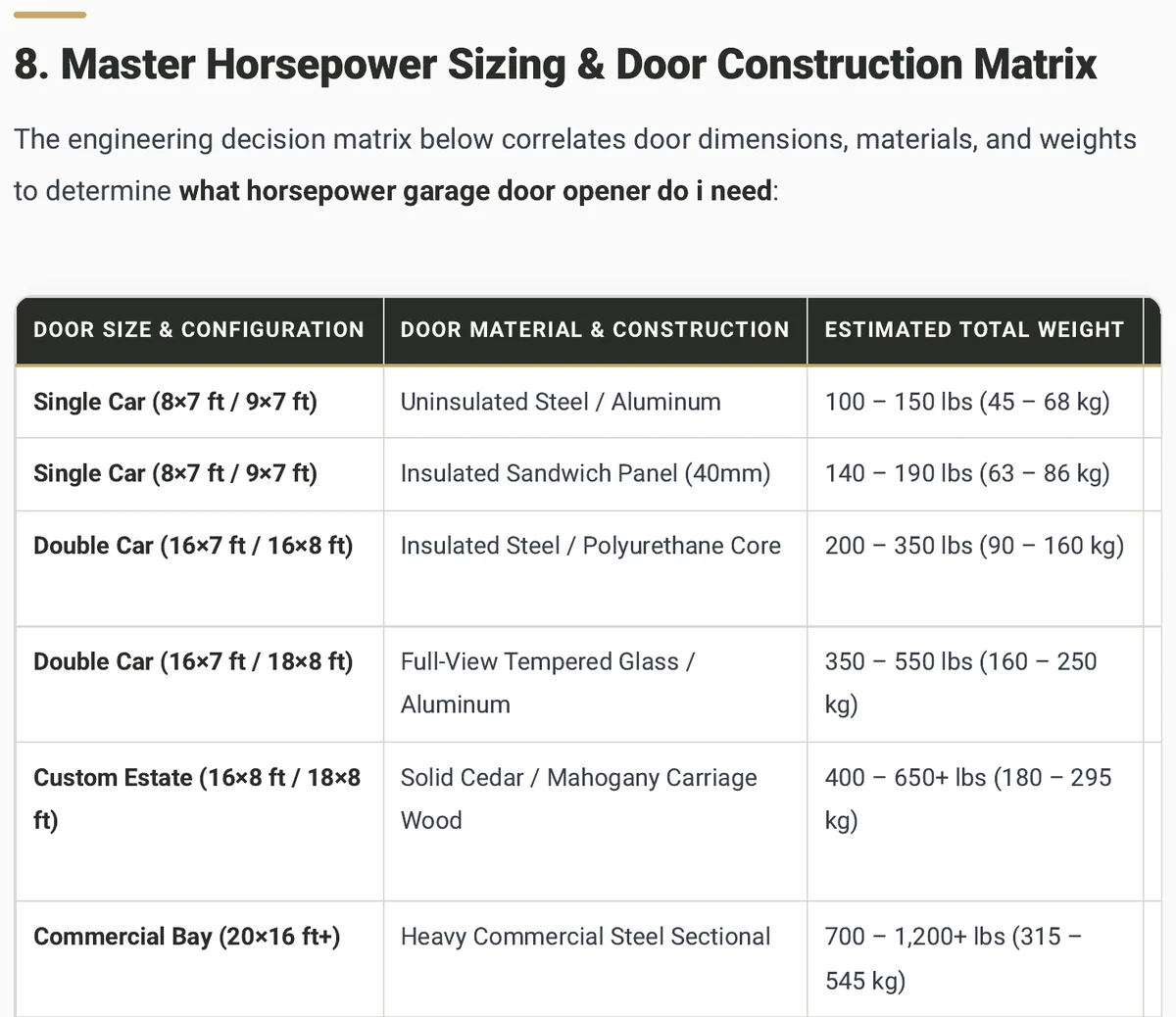
Find your door size on the left and your material next. Read the HP on the right.
Garage door opener size chart — HP by door weight
This chart is the page in one table. It uses the same weights as the calculator. Find your row, then confirm it.
| Door size | Material | Weight | Opener size |
|---|---|---|---|
| Single 8×7 / 9×7 ft | Light steel / aluminum, non-insulated | 80–150 lbs | 1/2 HP |
| Single 8×7 / 9×7 ft | Insulated steel | 140–190 lbs | 1/2 to 3/4 HP |
| Double 16×7 / 16×8 ft | Light steel | 150–250 lbs | 1/2 to 3/4 HP |
| Double 16×7 / 16×8 ft | Insulated steel | 200–350 lbs | 3/4 HP |
| Double 16×8 / 18×8 ft | Glass / aluminum | 350–550 lbs | 1 to 1-1/4 HP |
| Double 16×8 / 18×8 ft | Solid wood carriage | 400–650 lbs | 1-1/4 HP, wall-mount |
Sources: Rax Doors, EngineerFix, GarageTransformed, and GarageDoorGuide, all checked 20 Nov 2026.
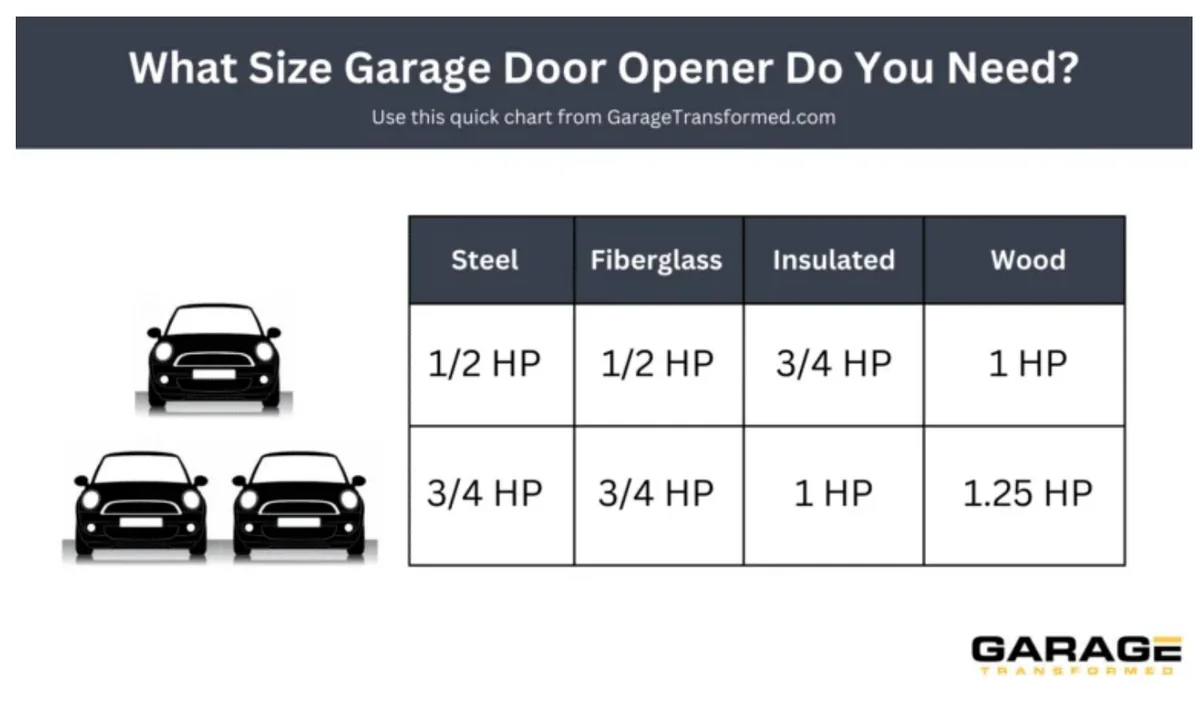
- Start with size, then correct for material.
- Insulation adds weight. Windows add weight. Wood adds the most weight.
- If you sit between two HP ratings, pick the higher one.
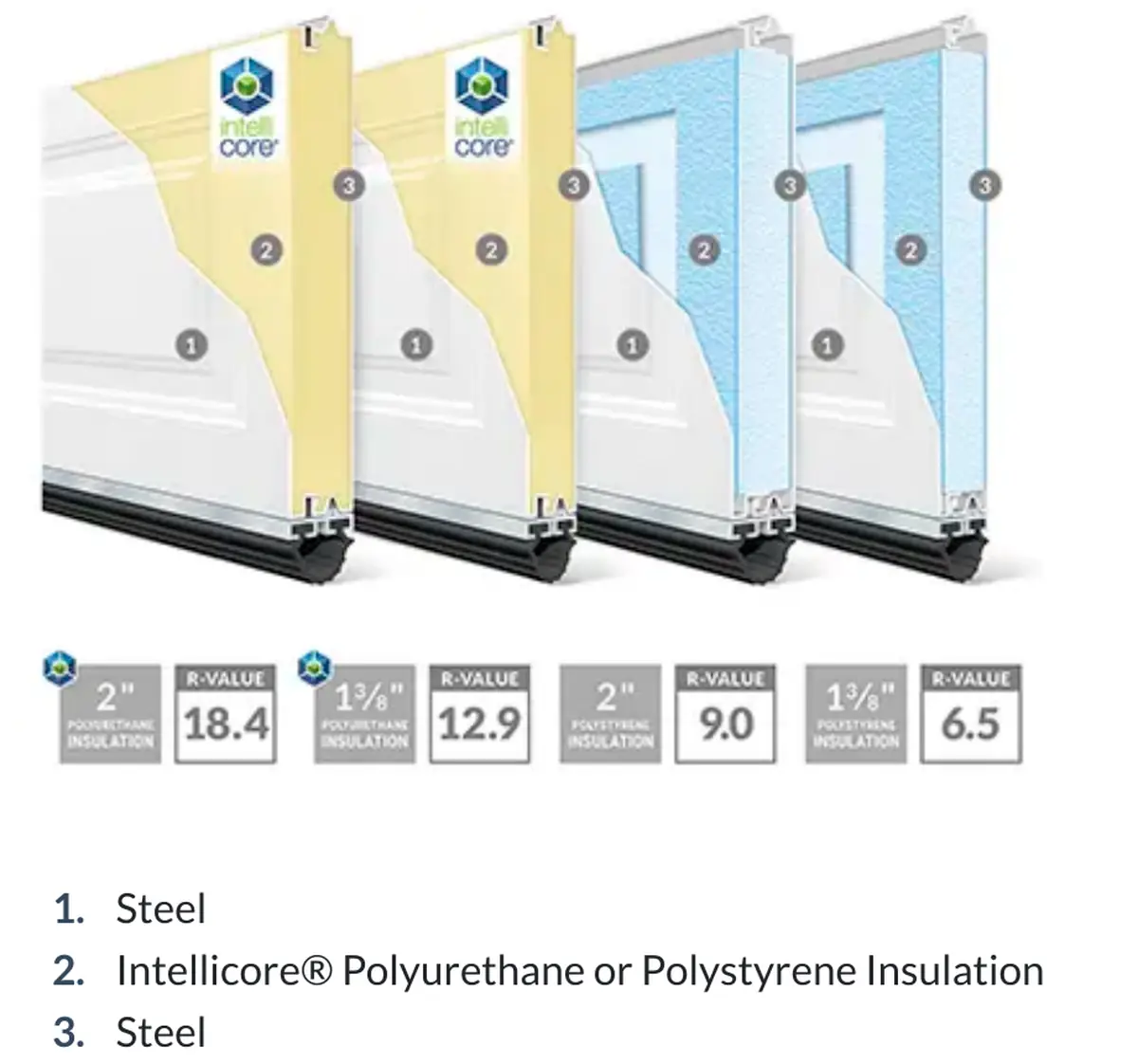
Example: Two 16×7 ft doors look the same from the street. One is light steel at 180 lbs, and one is insulated at 320 lbs.
The first can use 1/2 HP, but the second needs 3/4 HP. So what: size did not decide it — weight did.
When to pick the higher HP
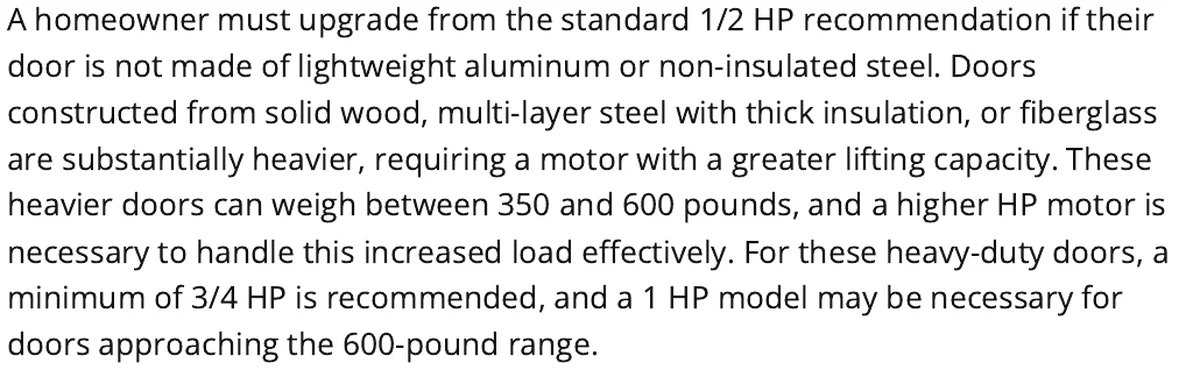
Pick the higher HP when the door is heavy, tall, old, or used a lot. An undersized opener is a false saving.
- Pick the higher HP if your weight range crosses a band edge.
- Pick the higher HP if you open the door 8 or more times a day.
- Pick the higher HP if you plan to insulate the door later.
- Pick the higher HP for a door over 10 years old and heavy.
3. 1/2 HP vs 3/4 HP Garage Door Opener
This is the choice most buyers face. The two motors look alike; they do not lift alike. The lift gap is the whole story.
The conservative rule
This calculator uses a conservative rule from Tallyard and Chicagoland Garage Door, Oct 2026; it sizes up on purpose.
| Door weight | Conservative size |
|---|---|
| Under 150 lb | 1/2 HP |
| 150 to 250 lb | 3/4 HP |
| 250 to 400 lb | 1 HP |
| 400 lb or more | 1 1/4 HP |
- Pick 1/2 HP for a single light door used a few times a day.
- Pick 3/4 HP for any double door, even a light one.
- Pick 3/4 HP for insulated steel, wood, or glass.
- Do not pick 1/3 HP for a double door. It will strain and fail early.
Example: A 1/2 HP opener on a double door can work at first, but it runs hot, runs slow, and wears out early.
A 3/4 HP opener on the same door runs cool and lasts longer. So what: the dearer motor is often the cheaper buy.
What the makers rate
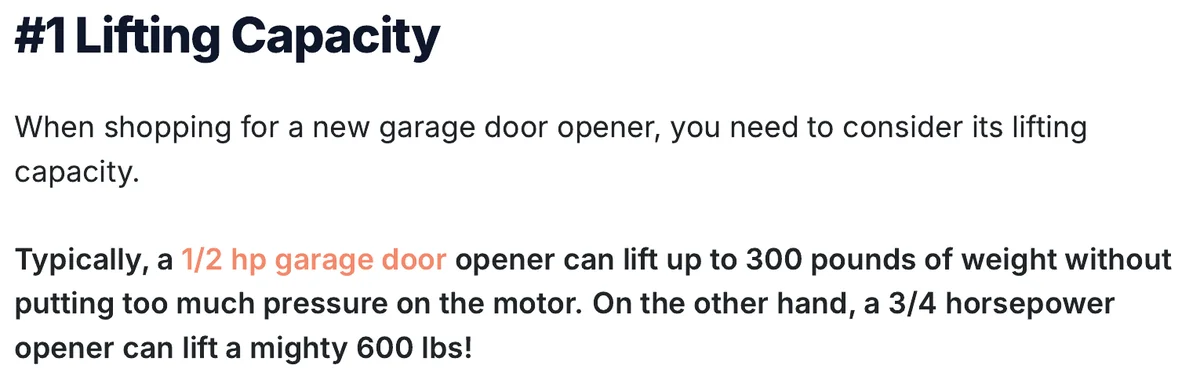
The makers rate their openers higher than this calculator does. LiftMaster rates 1/2 HP to 300 lb, and Genie rates 1/2 HPc to 350 lb.
Take a 16×7 steel door: 157 lb non-insulated, and 221 lb insulated by the Opener Size Calculator. The conservative rule says 3/4 HP, but the maker rating allows 1/2 HP.
- The calculator still recommends 3/4 HP, because an opener running well below its maximum lasts longer.
- It runs quieter, and it still lifts the door on a cold morning when the springs are stiff.
- The calculator sizes up one band when the door opens 8 or more times a day.
- It also sizes up when you plan to insulate the door later. Insulation adds about 40% more weight.
- If the top of your weight range passes 400 lb, the calculator moves you to 1 1/4 HP.
What HPc and newtons mean
Newer openers use DC motors, and DC motors are not rated in horsepower. They are rated in HPc, or horsepower comparable, or in newtons.
- Genie rates its DC openers in HPc; other makers use newtons. No standard converts them.
- There is no standard published figure for a 1 HP or 1 1/4 HP DC opener, so the calculator says so instead of inventing one.
- HPc is a marketing number, not a measured horsepower. Two openers labeled 3/4 HPc can lift different weights.
- The weight of your door is the number that matters. Size by weight, not by the label on the box.
- If your door needs 1 HP or more, check the maker’s newton rating for that model before you buy.

4. Pick the Drive Type: Chain, Belt, Screw, or Wall-Mount
Horsepower is only half the choice; drive type decides noise, cost, and space. Pick it after HP.
Chain vs belt
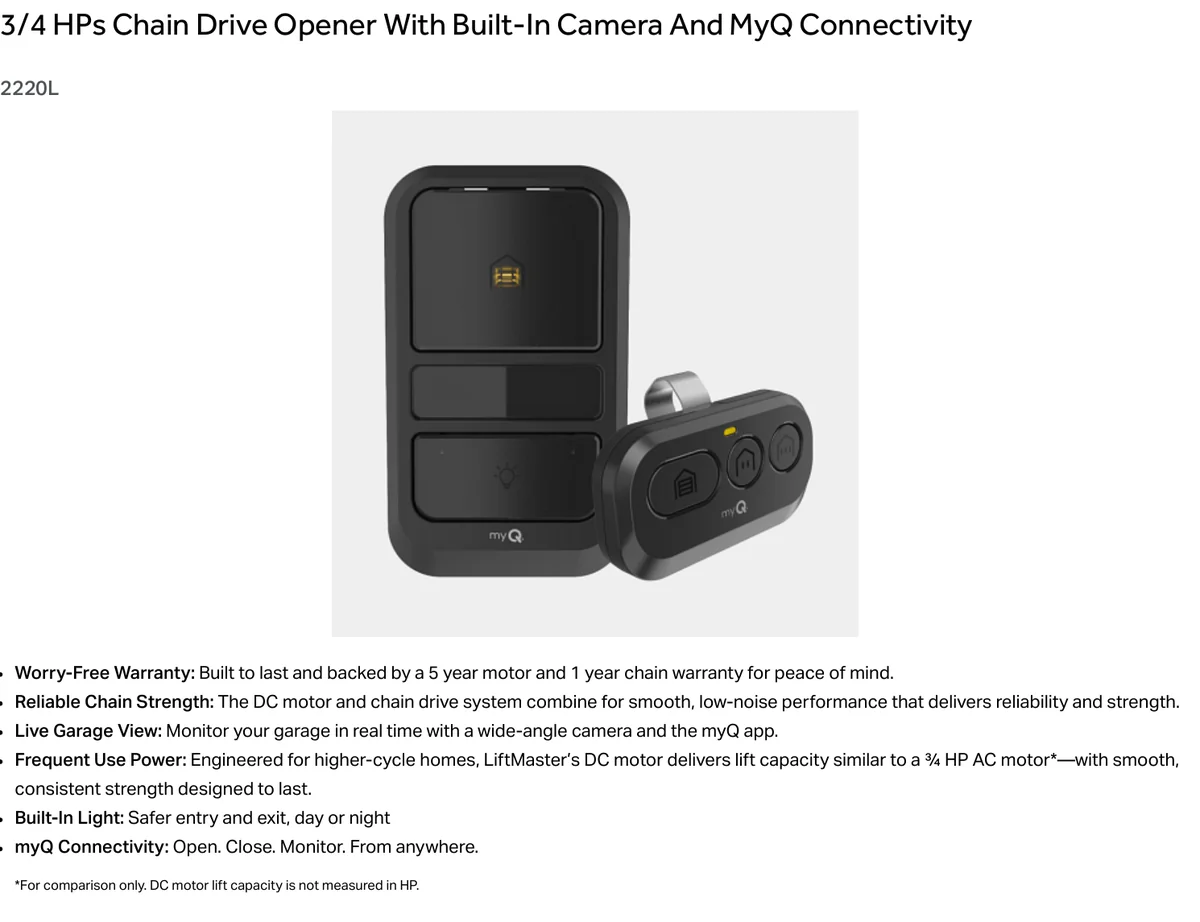
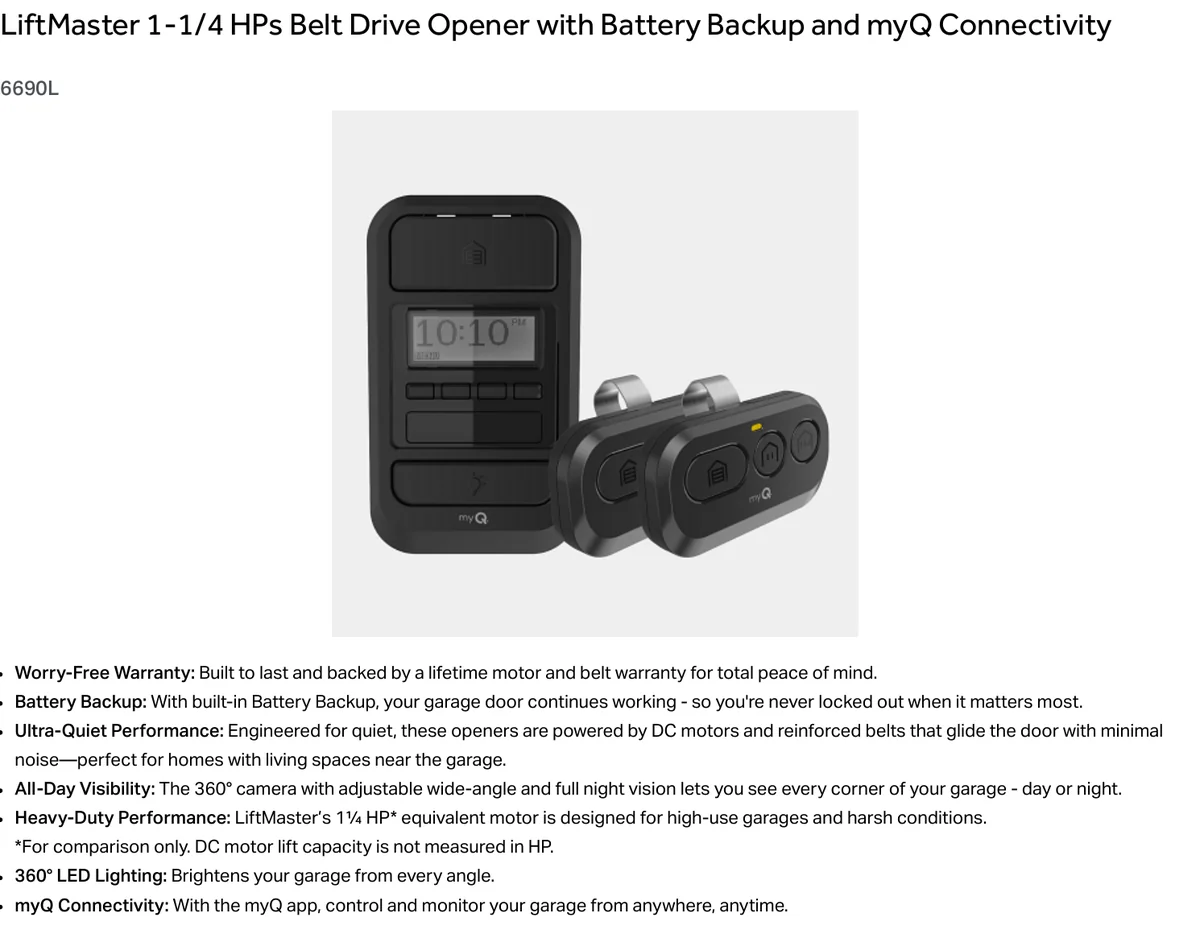
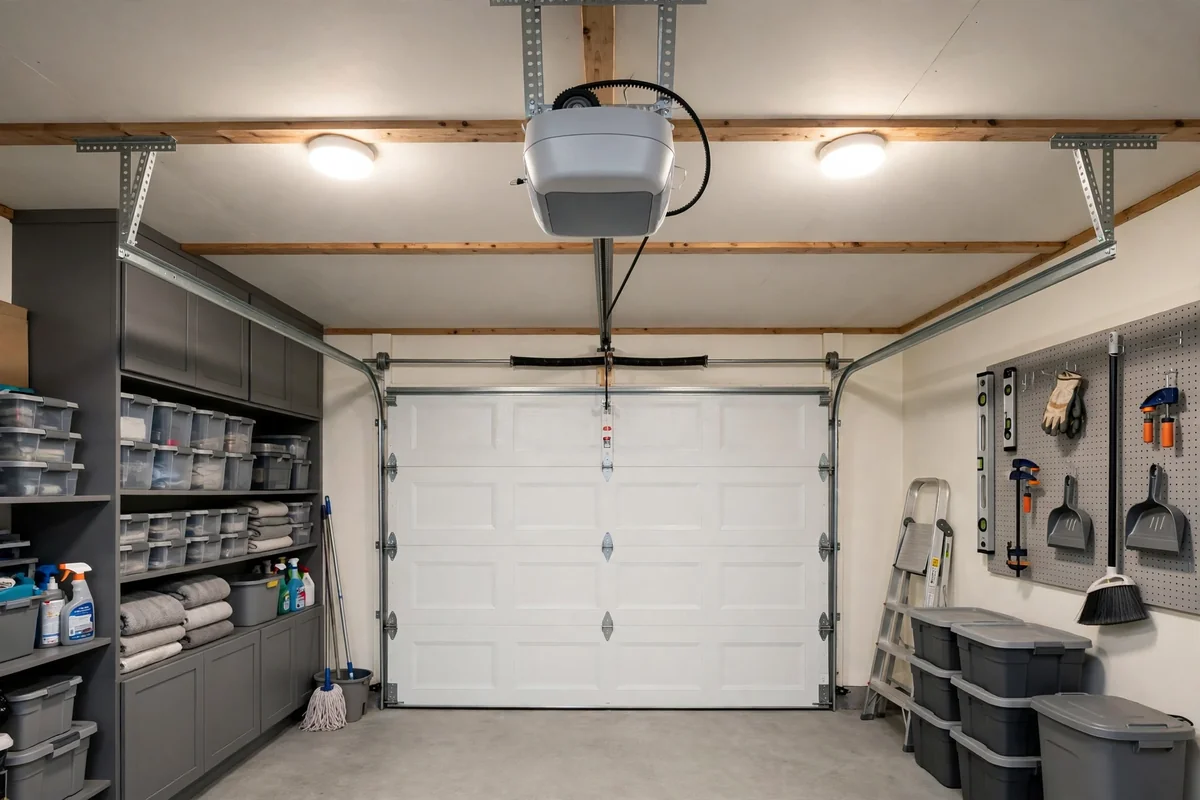
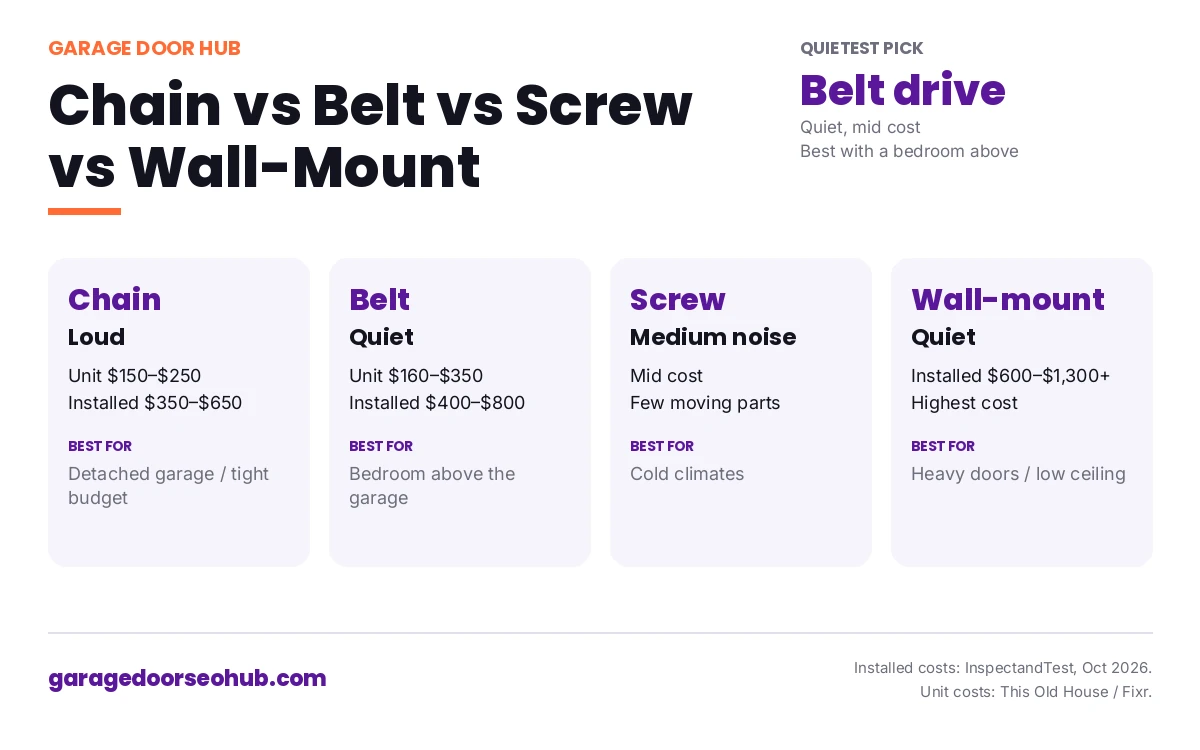
A chain drive costs less upfront, but it is more audible (Garage Reference, 2026). A belt drive costs more and runs quiet.
| Drive | Noise | Cost | Best for |
|---|---|---|---|
| Chain | Loud | Lowest | Detached garage, tight budget |
| Belt | Quiet | Mid | Living space nearby |
| Screw | Medium | Mid | Heavy doors, low maintenance |
| Wall-mount | Quiet | Highest | Heavy doors, low headroom, no rail space |
This Old House puts a new opener at $213–$371 on average, unit plus fitting.
Fixr puts typical installed cost at $300–$600. Its average for a 3/4 HP belt drive is $480 installed.
Chain units run $150–$250, and belt units run $160–$350. The Opener Cost Calculator gives $530 as its default for a fitted opener.
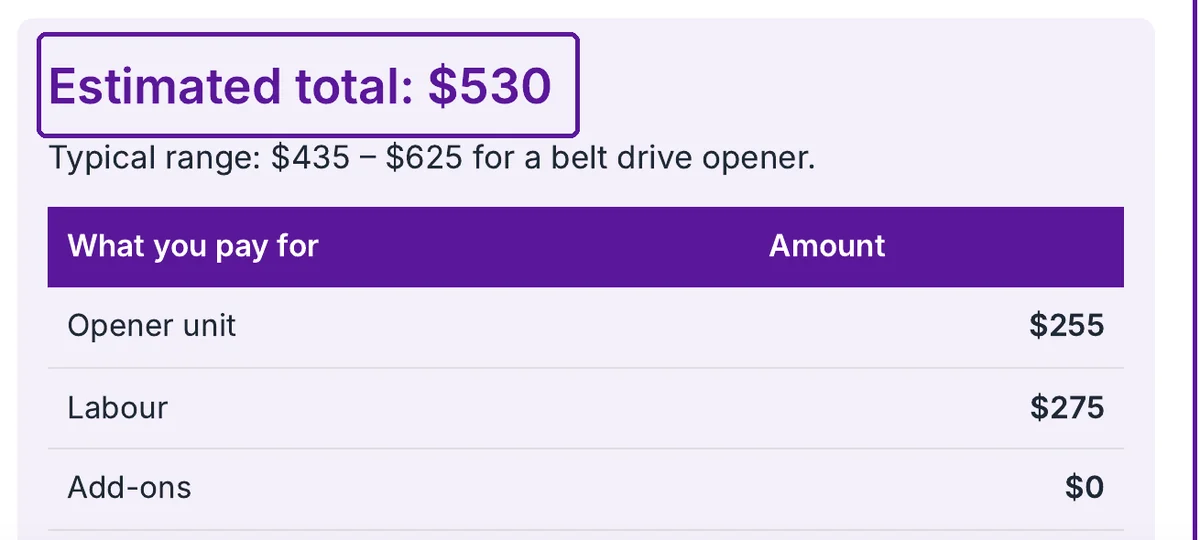
Installed costs by drive type, from InspectandTest, Oct 2026.
| Drive type | Installed cost |
|---|---|
| Chain-drive opener | $350 to $650 |
| Belt-drive opener | $400 to $800 |
| Wall-mount opener | $600 to $1,300 or more |
GarageCalculator, Oct 2026, puts typical installed figures lower, at about $405 for chain, $505 for belt, and $900 for wall-mount.
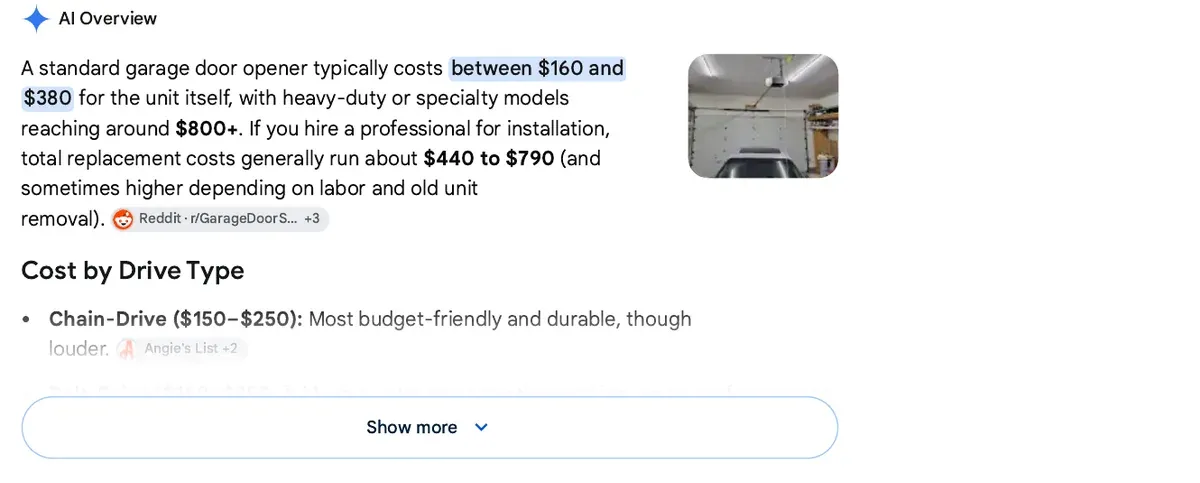
- Choose belt if a bedroom sits above the garage.
- Choose chain if the garage is detached and budget is tight.
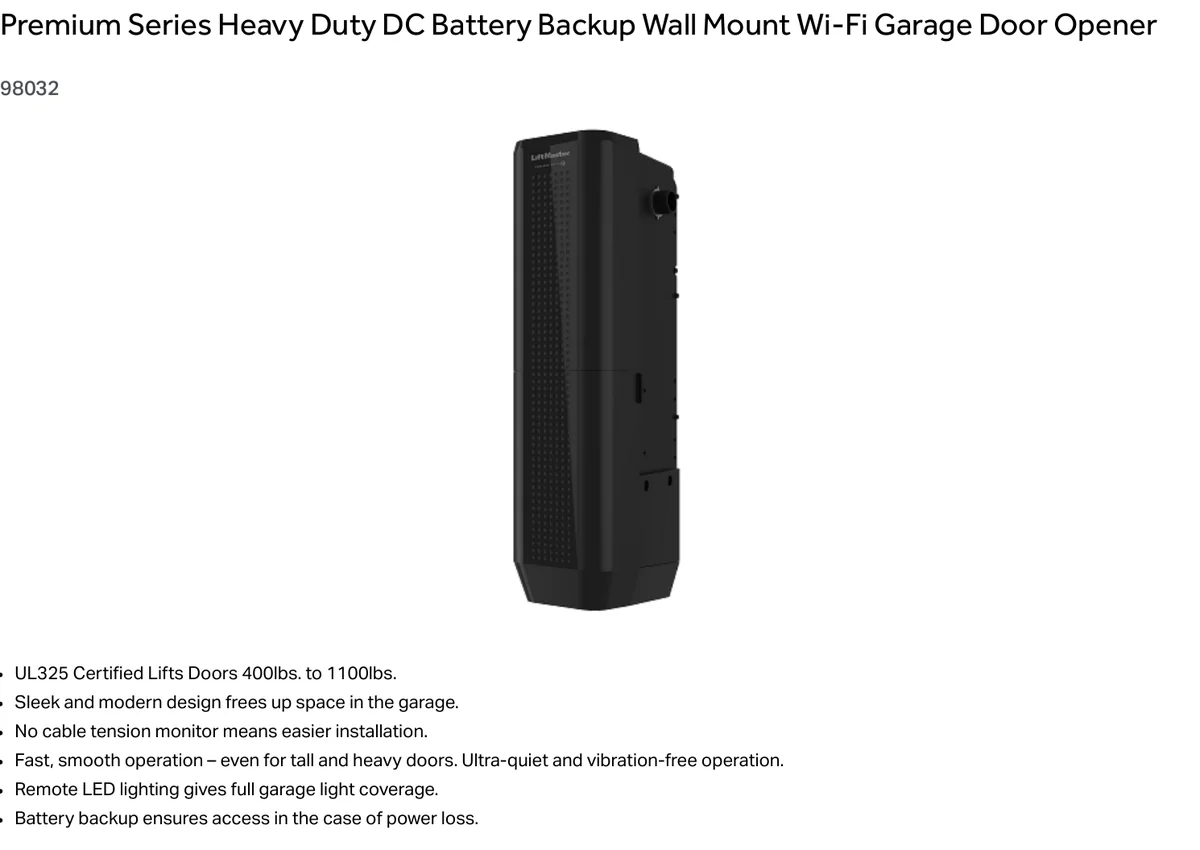
- Choose wall-mount for a heavy wood door or low headroom.
- Check headroom first. A rail drive needs ceiling space.
- Match the drive to the HP. A quiet belt will not fix an undersized motor.
Example: A family with a bedroom above the garage picked a chain drive to save money. The noise woke the kids each morning.
A belt drive would have cost more once. So what: it would have been quiet every day after.
Wall-mount for low headroom
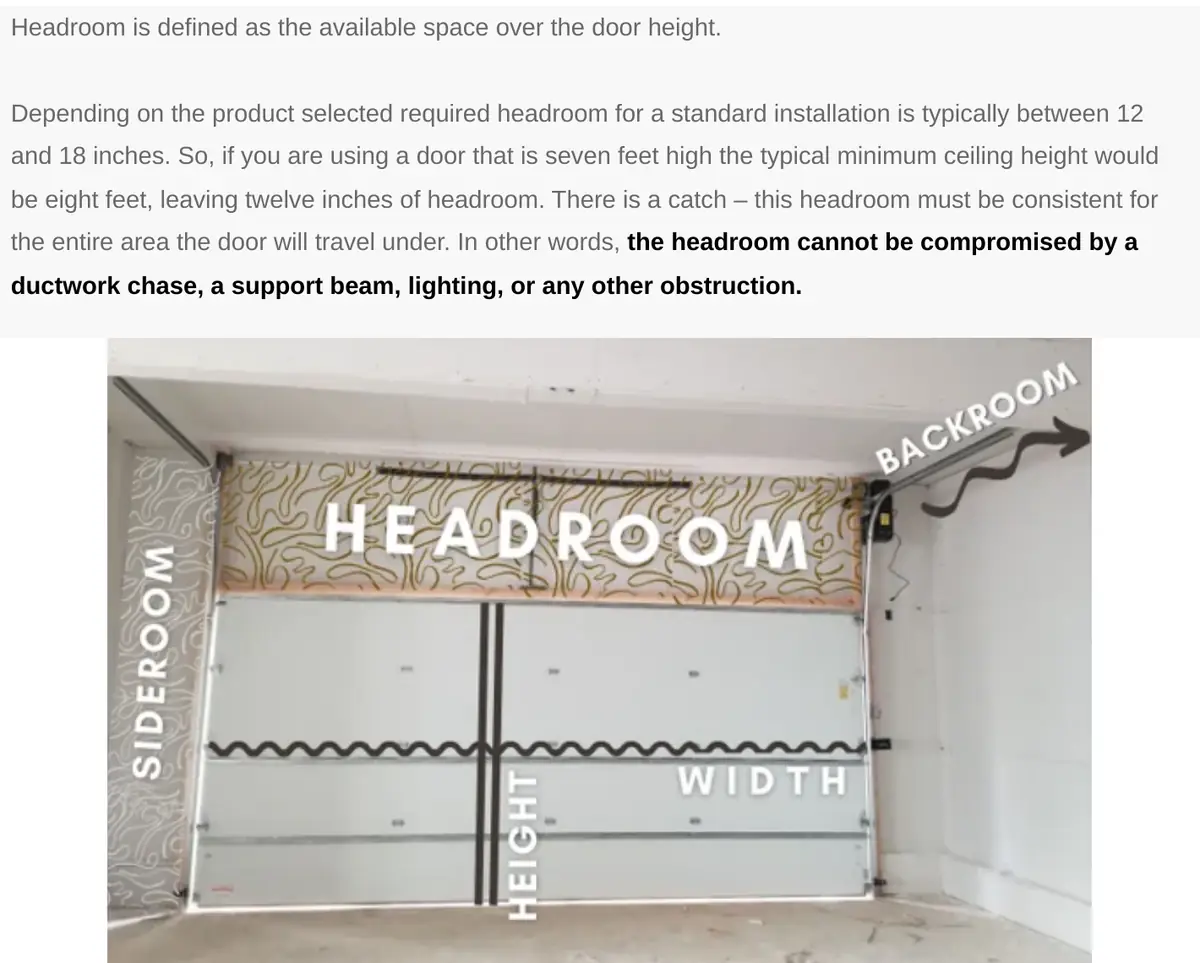
A wall-mount jackshaft has no rail, so it mounts on the wall and turns the torsion shaft directly. It fits headroom under 12 inches.
- A standard rail opener needs 12 to 18 inches of headroom (Overhead Door Co., 2026).
- A wall-mount opener costs $600 to $1,300 or more installed (InspectandTest, Oct 2026).
- Garaga’s rear-mounted low-headroom kit needs 5 inches, and a front-mounted torsion kit needs 8 inches.
- Below 5 inches, a sectional door may not fit at all. The calculator flags that; check with a pro.
5. Check Use, Noise, and Features Before You Buy
Use matters as much as weight. A door opened twice a day lives an easy life, but one opened ten times a day does not.
Count your daily cycles
Count your daily cycles first, adding school runs, work trips, and evening errands.
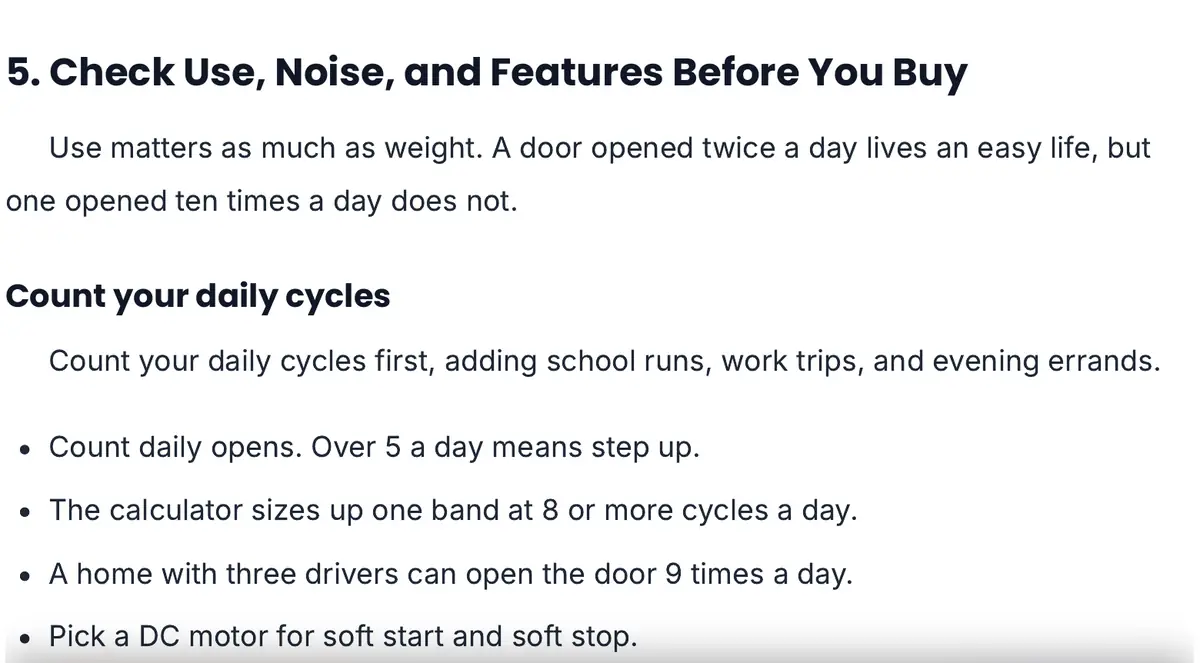
- Count daily opens. Over 5 a day means step up.
- The calculator sizes up one band at 8 or more cycles a day.
- A home with three drivers can open the door 9 times a day.
- Pick a DC motor for soft start and soft stop.
Example: A home with three drivers opened the door 9 times a day; a 1/2 HP opener failed in three years.
A 3/4 HP DC opener with a belt drive replaced it, and it has run quiet for five years since.
Features worth paying for
Pick features you will actually use. A smart opener you never open from your phone is wasted money.
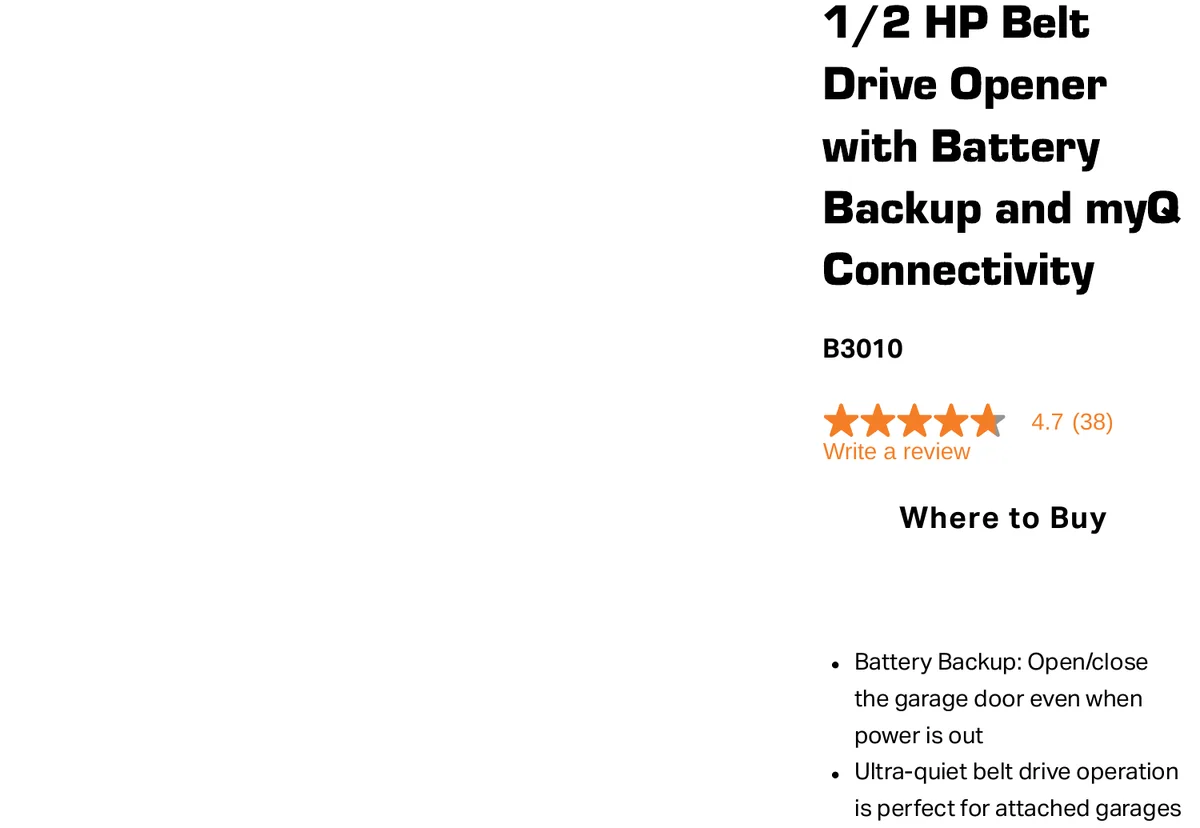
- Pick battery backup if power cuts are common in your area.
- Pick smart control (MyQ / app) only if you will use it.
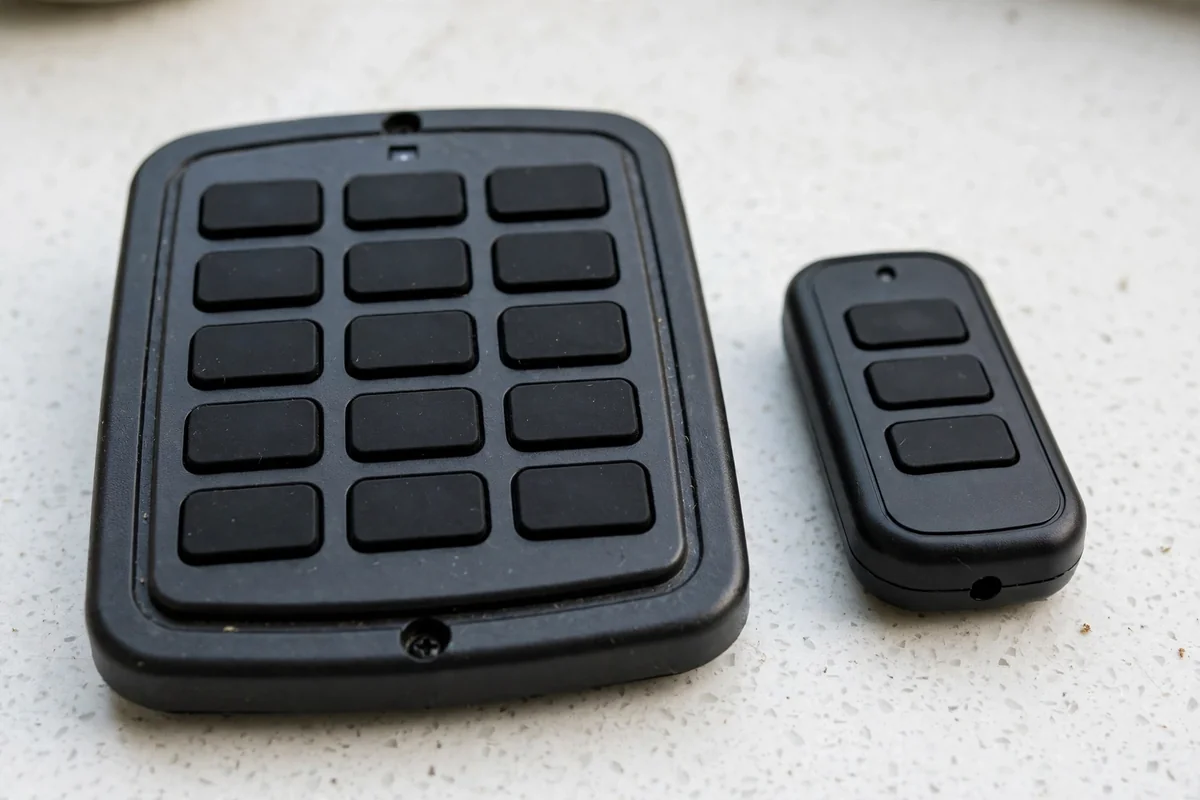
- Pick an LED light and a keypad if they save you a daily trip.
6. When to Go Bigger — and When to Call a Pro
Go bigger when the door is heavy, tall, old, or used a lot. Do not save money by sizing down.
Go bigger for heavy or tall doors
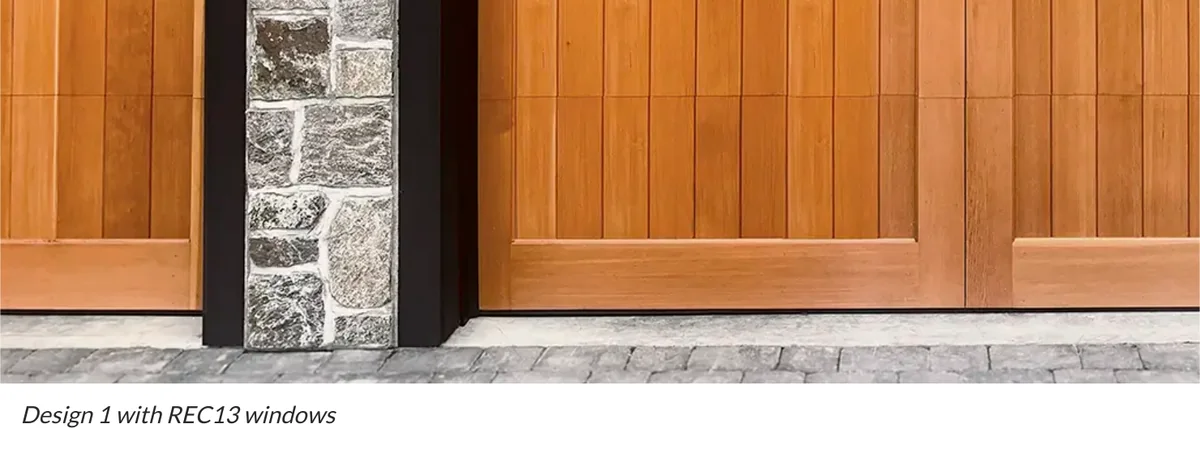
Go to 1 HP or 1-1/4 HP for solid wood, full-view glass, or a door over 14 ft wide. Go wall-mount over 400 lbs.
- Go bigger for wood, glass, tall, or very wide doors.
- Go bigger if the door is over 10 years old and heavy.
- Go bigger if winters are cold where you live.
Example: A wood carriage door weighed 520 lbs. The owner bought a 1/2 HP opener because it was on sale.
It stalled on cold mornings, but a 1-1/4 HP wall-mount opener fixed it. So what: the sale price cost more in the end.
Call a pro for springs and cables
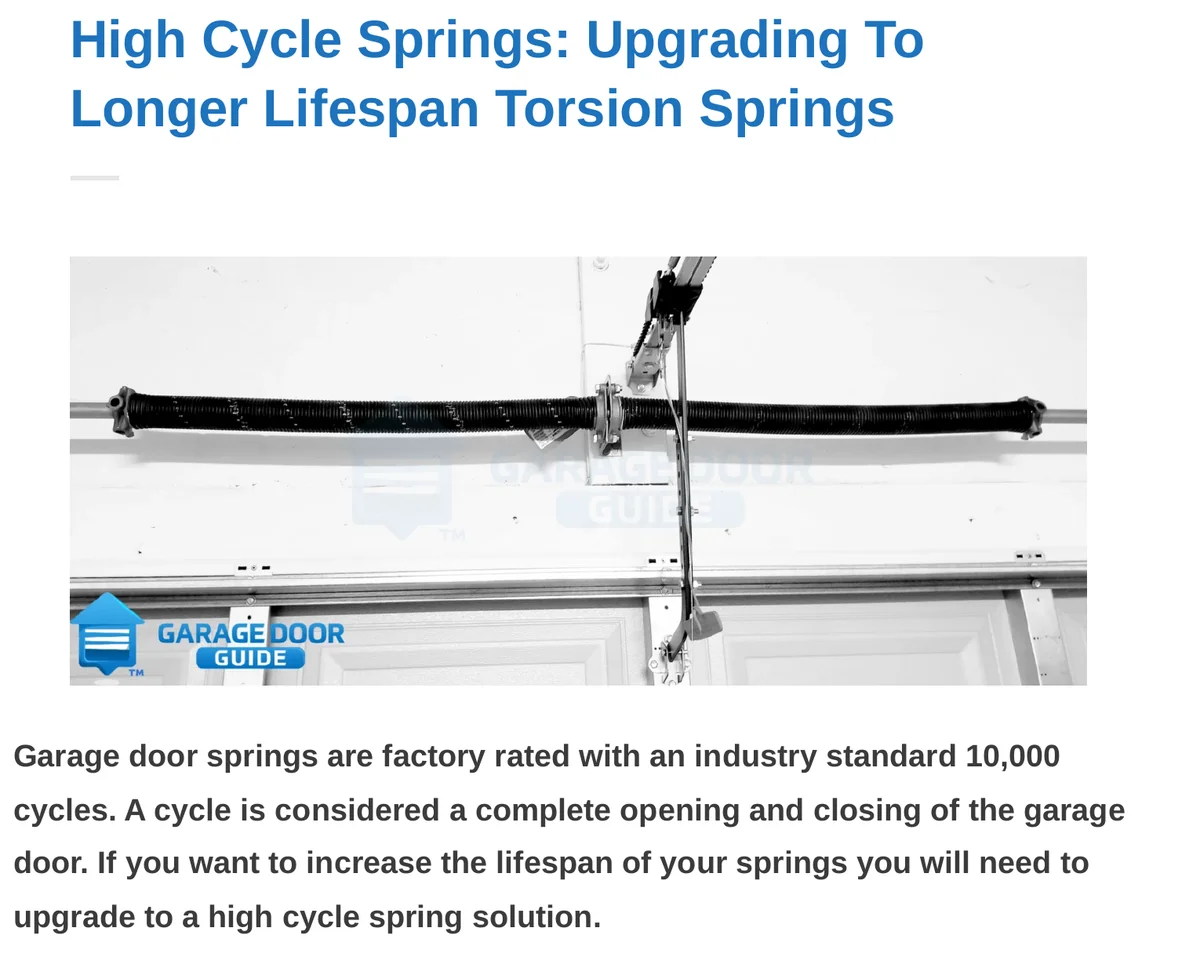
Never adjust springs or cables yourself, because springs are pro-only work; a torsion spring lasts 10,000 to 20,000 cycles.
- Call a pro if the door feels heavy, drops fast, or will not stay up.
- Call a pro if the door is out of balance or the cables look frayed.
- At 4 cycles a day, a 10,000-cycle spring lasts about 6.8 years.
- If your springs are near the end of that range, fix them before you buy an opener.
For the repair side, see the garage door repair guide. It covers costs, problems, and when to call a pro.
Video: What Size Garage Door Opener Do I Need? (Coming Soon)
A 60 to 120 second video for this guide is coming soon. It will cover weighing your door, matching HP, and picking a drive type. No video is embedded here yet.
Garage Door Hub connects homeowners with trusted local garage door pros. Need a repair? Need a replacement? Start here. First, find out what it should cost. Then, price your exact job with our free calculator. Next, find a pro near you. Fast. No jargon. No guesswork. No surprise bills. Just clear prices, honest guides, and a local pro you can call today.
FAQ
What size garage door opener do I need for a 16×7 double door?
A 16 by 7 steel door weighs about 157 lb non-insulated and 221 lb insulated, so a 3/4 HP opener is the conservative size. A 1/2 HP is rated to about 300 lb by LiftMaster, but 3/4 HP lasts longer.
Is 1/2 HP enough for a double garage door?
By the maker’s rating, yes — LiftMaster rates 1/2 HP to about 300 lb, and most double steel doors weigh 150 to 250 lb. By the conservative rule this calculator uses, no — a double door gets 3/4 HP for longer life.
What horsepower opener do I need for a wood garage door?
A 16 by 7 solid wood door weighs 379 lb (Weight Calculator, 1 1/4 HP) or 230 lb (Opener Size Calculator, 1 HP). Size for 1 1/4 HP to cover both.
What is HPc on a garage door opener?
HPc is horsepower comparable, the rating used for DC motors. HPc is not the same as measured horsepower, so size by your door’s weight, not by the label.
Do I need a jackshaft opener for low headroom?
Yes, if your headroom is under 12 inches. A standard rail opener needs 12 to 18 inches of headroom. A wall-mount jackshaft opener needs no rail. Below 5 inches of headroom, a sectional door may not fit at all.
Sources
- GarageTransformed — HP chart. Checked 20 Nov 2026.
- Appliance Analysts — 1/2 HP lifts about 300 lbs, 3/4 HP about 600 lbs. Checked 20 Nov 2026.
- Rax Doors — HP guide. Updated about 21 days before 20 Nov 2026.
- EngineerFix — HP for a 2-car door. Checked 20 Nov 2026.
- Tallyard — garage door calculator. Checked 13 Nov 2026.
- Chicagoland Garage Door, Oct 2026 — HP guide. Checked 13 Nov 2026.
- GarageDoorMore, Nov 2026 — HP guide. Checked 13 Nov 2026.
- Garage Reference — belt vs chain drive. Checked 20 Nov 2026.
- Genie — MachForce 4062 screw drive opener. Checked 20 Nov 2026.
- Garage Door Hub calculators — Opener Size 3824 (88 lb / 1/3 HP), Opener Cost 1538 ($530). Live 15 Nov 2026.
- Keyword volumes: searchvolume.io and The HOTH, 20 Nov 2026 — “what size garage door opener do i need” 590/mo; “1/2 hp vs 3/4 hp garage door opener” 320/mo; “garage door opener cost” 1,600/mo. Ubersuggest, 20 Nov 2026 — “how to measure garage door” 720/mo.