

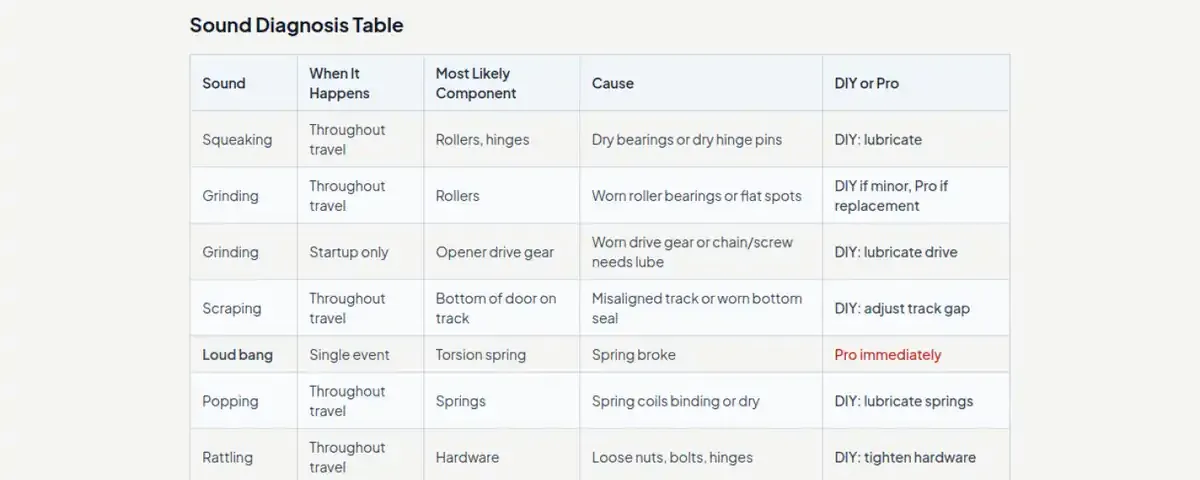
The Garage Guide says a single loud bang almost always means a spring broke, while popping through travel usually means dry or binding spring coils.
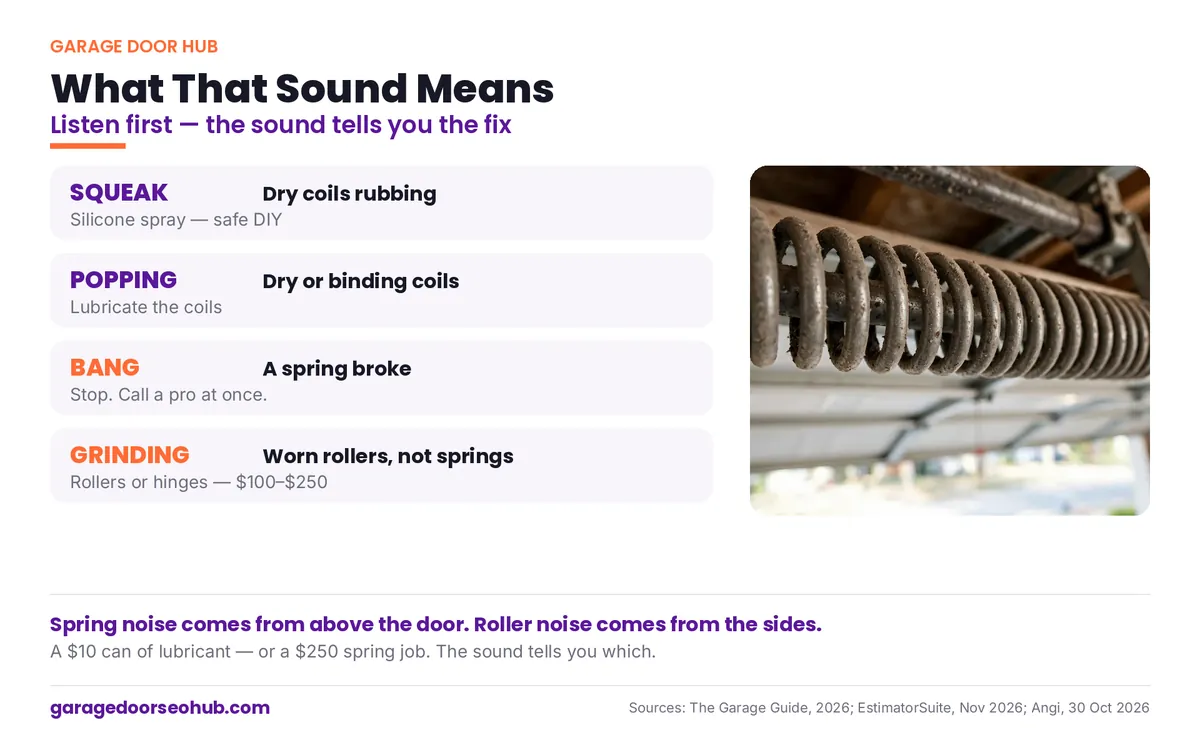
The difference between those two sounds is the difference between a $10 can of lubricant and a $250 spring job. The sound tells you which one.
This guide maps every spring sound to its cause, and shows which ones you can fix safely and which ones need a pro.
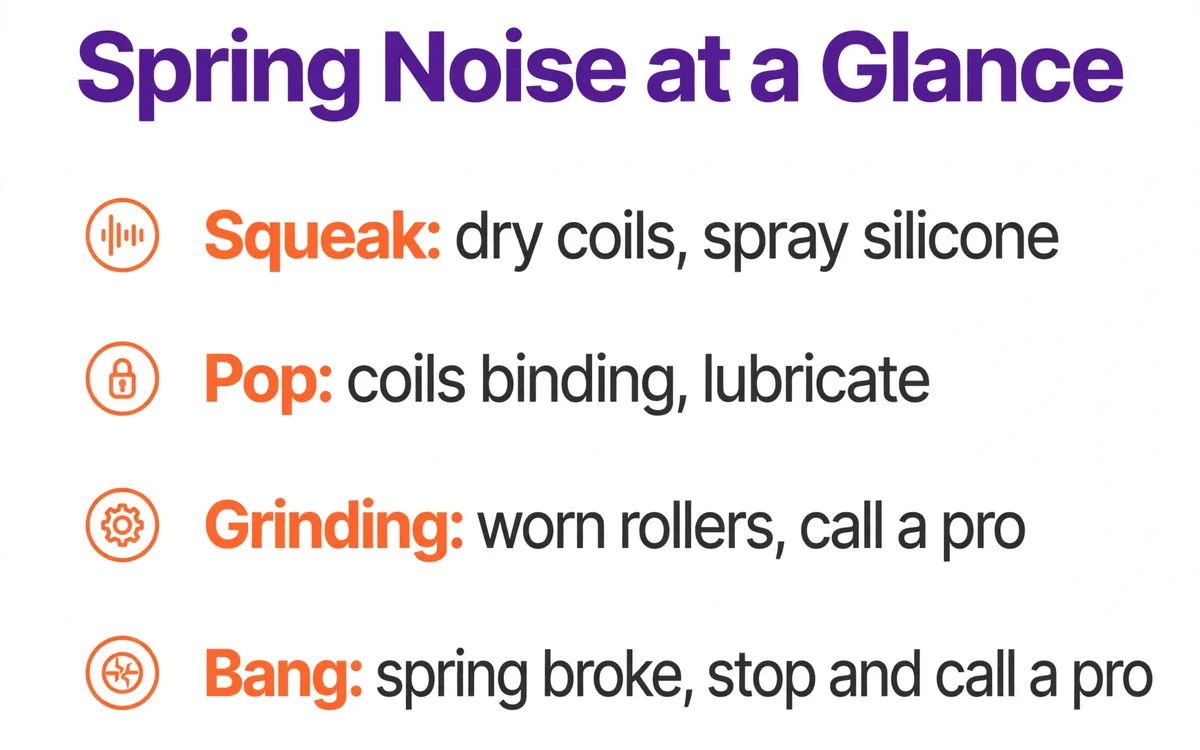
A squeaking garage door spring is usually dry coils rubbing as they wind, and a light spray of silicone lubricant quiets it. Popping through travel usually means dry or binding coils. A single loud bang almost always means a spring broke — stop using the door and call a pro (The Garage Guide, 2026). Never use WD-40 on springs.
Garage Door Hub connects you with a trusted local pro. Get a clear price for your garage door repair or replacement first.
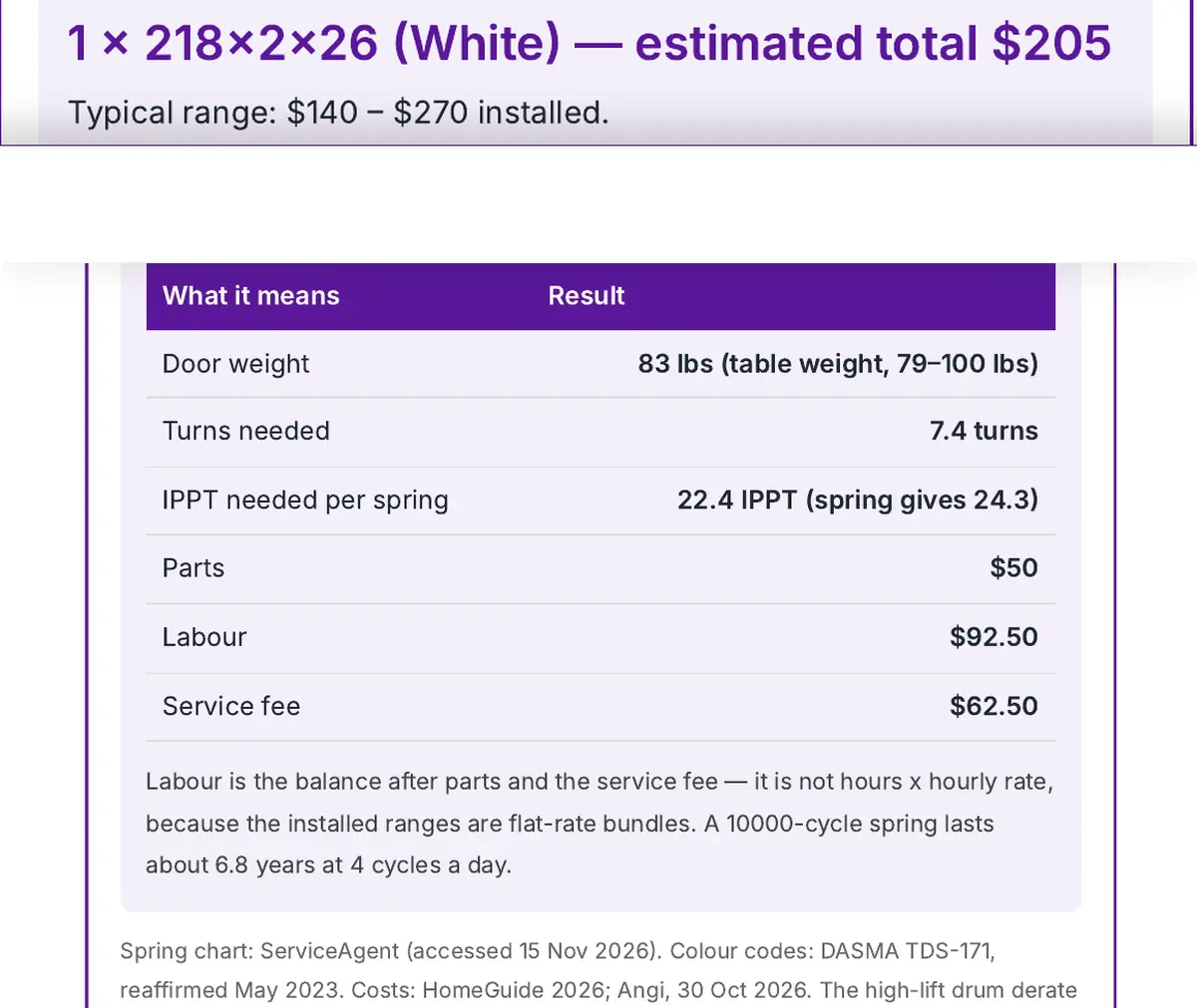
Price your spring job first with the free Spring Calculator below, in case the noise means a worn spring.
Spring Calculator — price a spring job by door size, weight and turns.
- Note the sound and where it comes from first.
- Enter your door size, weight and material.
- Note the spring size and price, then read the key takeaways.
Key takeaways
- Squeaking springs are usually dry coils — silicone spray fixes them.
- Popping through travel usually means dry or binding coils.
- A single loud bang means a broken spring — stop and call a pro.
- Spring noise comes from above the door; roller noise from the sides.
- Never use WD-40 on springs; never wind or adjust a spring.
Table of Contents
-
1. First listen, then look
-
2. Squeaking springs
-
3. Popping and banging
-
4. The safe fix: lubrication
-
5. Spring noise vs roller and hinge noise
-
6. When noise means a pro
-
7. Seasonal noise: cold mornings
- Watch: how to lubricate a noisy garage door — springs, rollers and hinges
- FAQ
1. First listen, then look
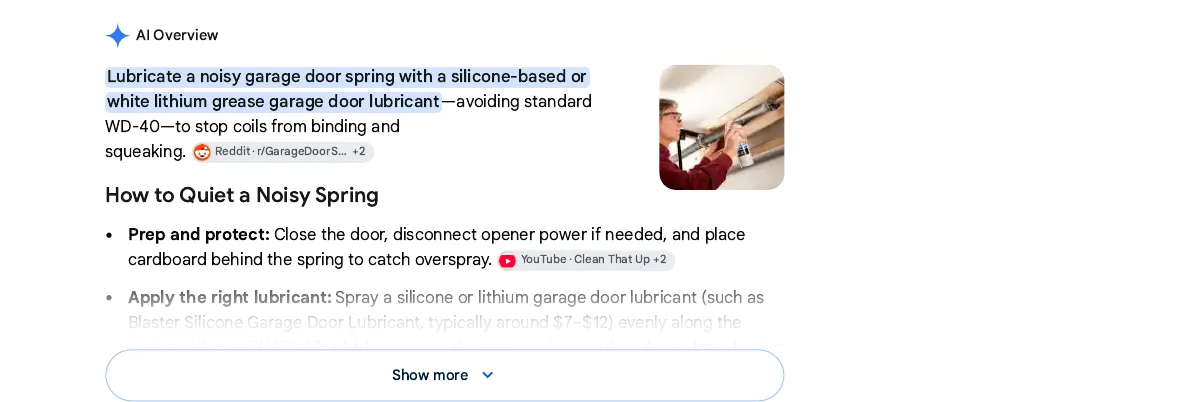
Start by listening, not by spraying. The sound and its place tell you whether the spring, the rollers, or the hinges are at fault.
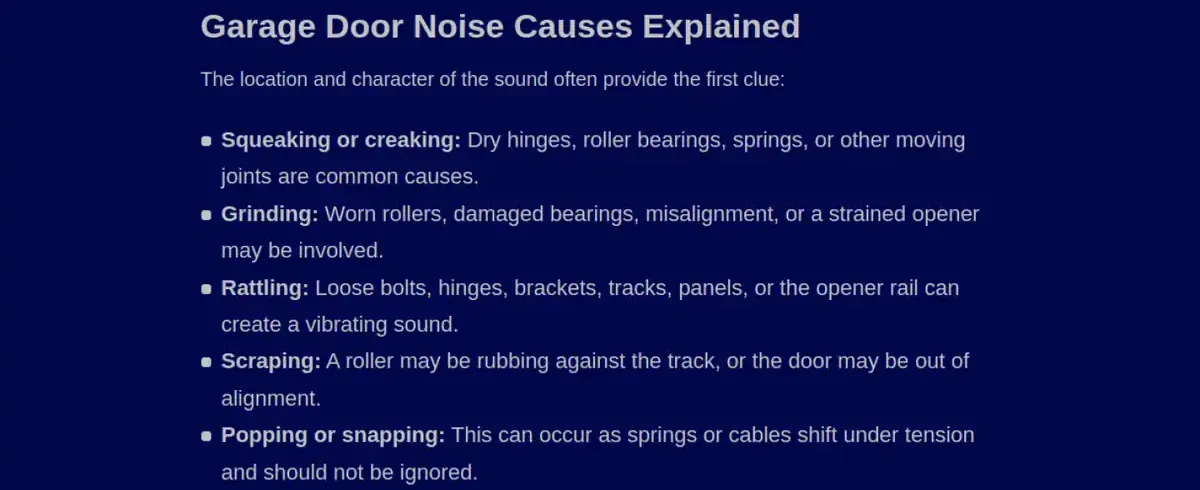
The sounds, and what they mean
Every garage door sound has a source. The sound, and where it comes from, points to the part that needs attention.
- Squeaking: dry coils, hinges or rollers rubbing.
- Popping: coils binding, or a spring shifting under tension.
- Grinding: worn rollers or dry hinges, metal on metal.
- A single loud bang: a spring broke, not a squeak.
Where the noise comes from
Place matters as much as sound. A noise from above the door is a spring noise; a noise from the sides is usually rollers or hinges.
- Spring noise comes from above the door, where the spring sits.
- Roller noise comes from the sides, along the tracks.
- Hinge noise follows the door sections as they bend.
- Stand inside and listen: up means spring, sides mean rollers.
2. Squeaking springs
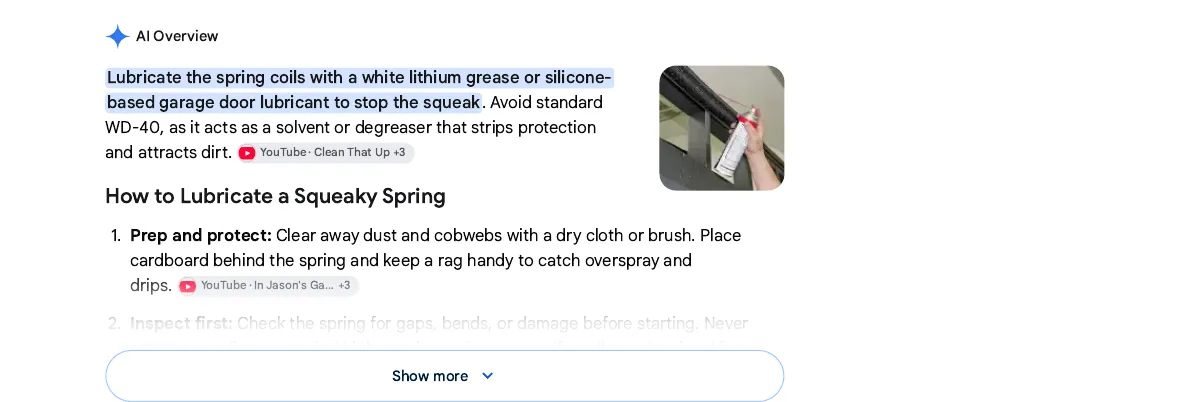
Squeaking is the most common spring noise, and the easiest to fix. Dry coils are the cause, and silicone spray is the cure.

Why springs squeak
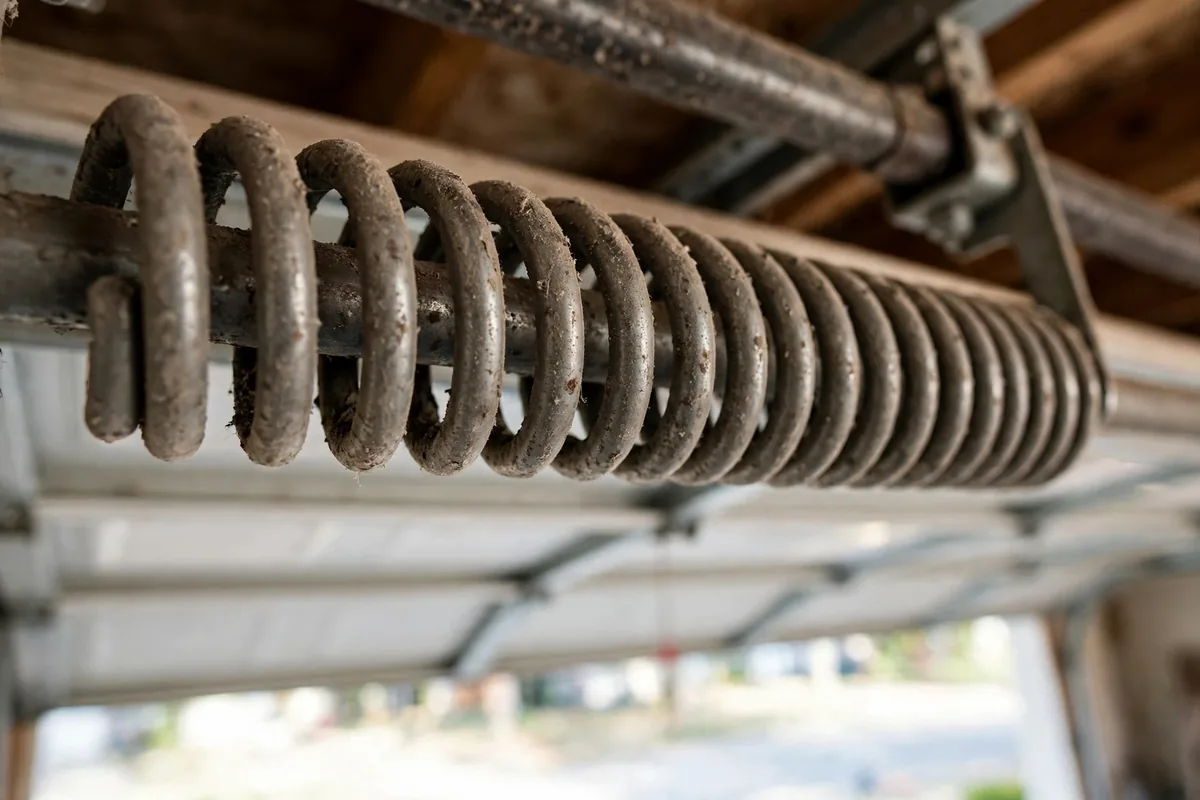
Torsion spring coils rub against each other slightly as they wind. Dry coils make a high-pitched metallic screech; oiled coils are quiet.
- Dry coils rub as they wind and unwind, making a high-pitched squeak.
- The squeak runs through the whole travel of the door.
- Bearing plates can whine as the shaft turns through them.
- Lubricated springs are nearly silent.
When squeaking means wear
Most squeaks are dryness, and lubrication fixes them. A squeak that stays after lubrication is wear, and wear needs a pro.
- The squeak is worse in cold weather, when grease thickens.
- Dust and moisture wear the lubricant off the coils over time.
- A squeak that stays after lubrication means wear, not dryness.
- A squeak plus a heavy door means the spring is tired.
3. Popping and banging
Popping and banging sound alike, but they mean different things. Popping is usually dryness; a bang is a broken spring.
Popping through travel
Popping through travel usually means dry or binding coils. A single loud bang is different, and it means a spring broke.
- Coils can bind and pop as they wind, if they are dry.
- A pop that repeats each cycle is usually binding, not breakage.
- A single loud pop or bang is different: it means a spring broke.
- Popping plus a gap in the coil means the spring has snapped.
The bang: stop at once
A single loud bang, like a gunshot from the garage, almost always means a torsion spring broke. Stop and call a pro.
- Stop using the door at once if you hear a bang.
- Do not run the opener again; it can burn out the motor.
- Look for a gap in the coil above the door.
- Call a pro; a broken spring is pro-only work.
Example: Broken-spring checks: broken garage door spring guide.
4. The safe fix: lubrication
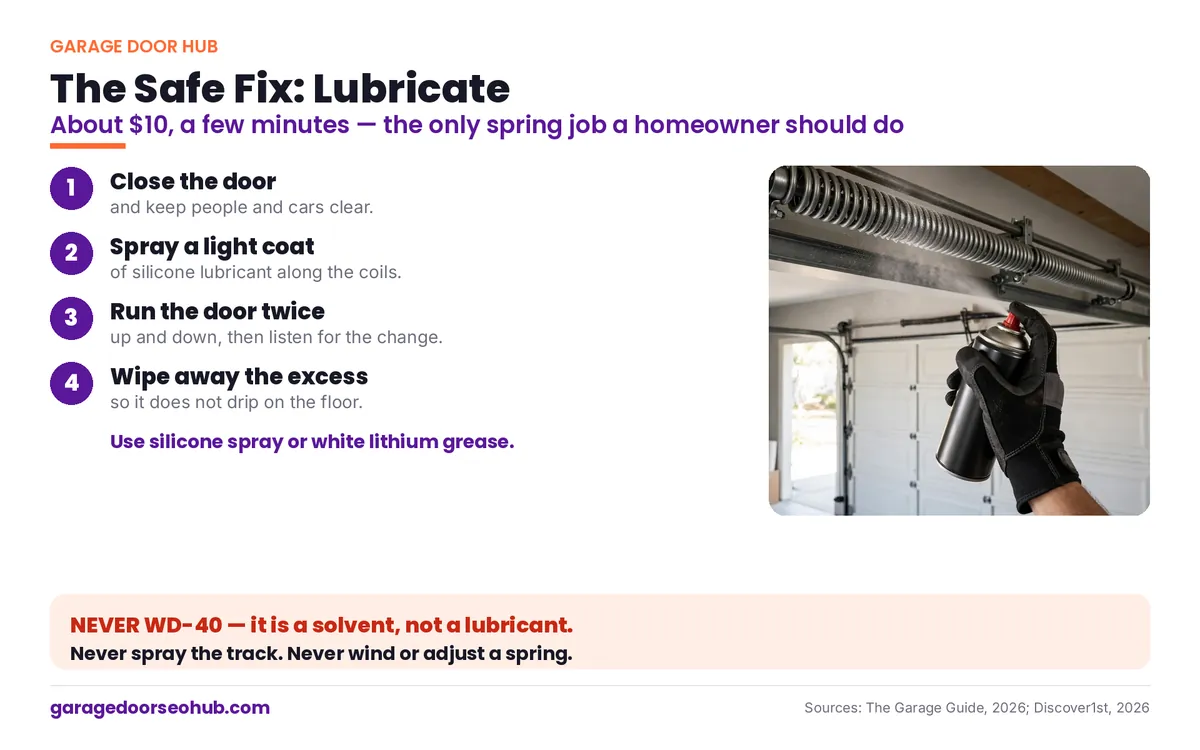
Lubrication is the safe fix for spring noise. It costs about $10, takes minutes, and it is the only spring job a homeowner should do.
How to lubricate a spring
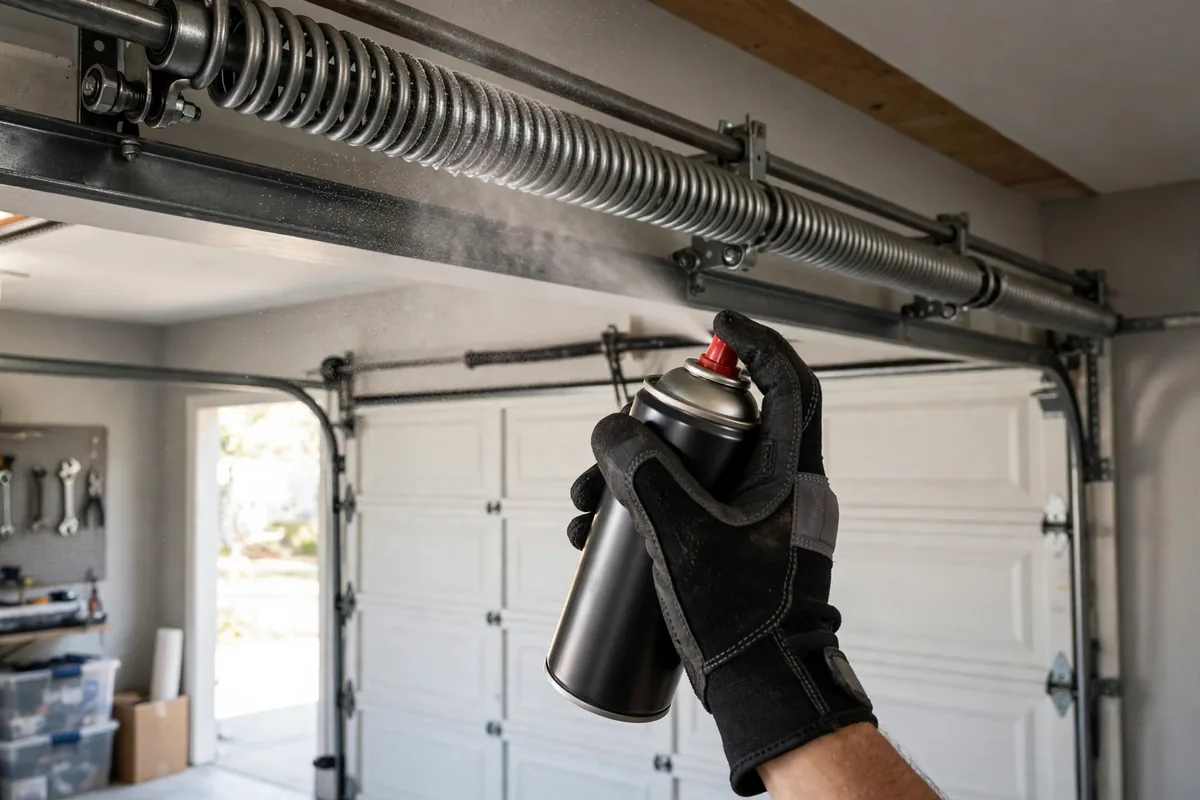
Lubricating a spring is safe DIY. Spray the coils lightly, run the door, and listen for the change.
- Close the door and keep people and cars clear.
- Spray a light coat of silicone lubricant along the spring coils.
- Run the door up and down twice, then listen.
- If the squeak is gone, the job is done; if not, call a pro.
- Use a silicone-based spray or white lithium grease.
- Spray a light coat along the spring coils.
- Run the door twice and listen for the change.
- Wipe away excess so it does not drip on the floor.
What never to use
The wrong product makes the noise worse. WD-40 strips grease and leaves no film, so the squeak comes back louder.
- Never use WD-40; it is a solvent, not a lubricant.
- Never spray the track; lubricant attracts dirt there.
- Never oil a spring that has a visible gap or break.
- Never wind or adjust a spring to fix a noise.
5. Spring noise vs roller and hinge noise
Not every garage noise is a spring noise. Rollers, hinges, and the opener all make their own sounds, from their own places.
Telling them apart
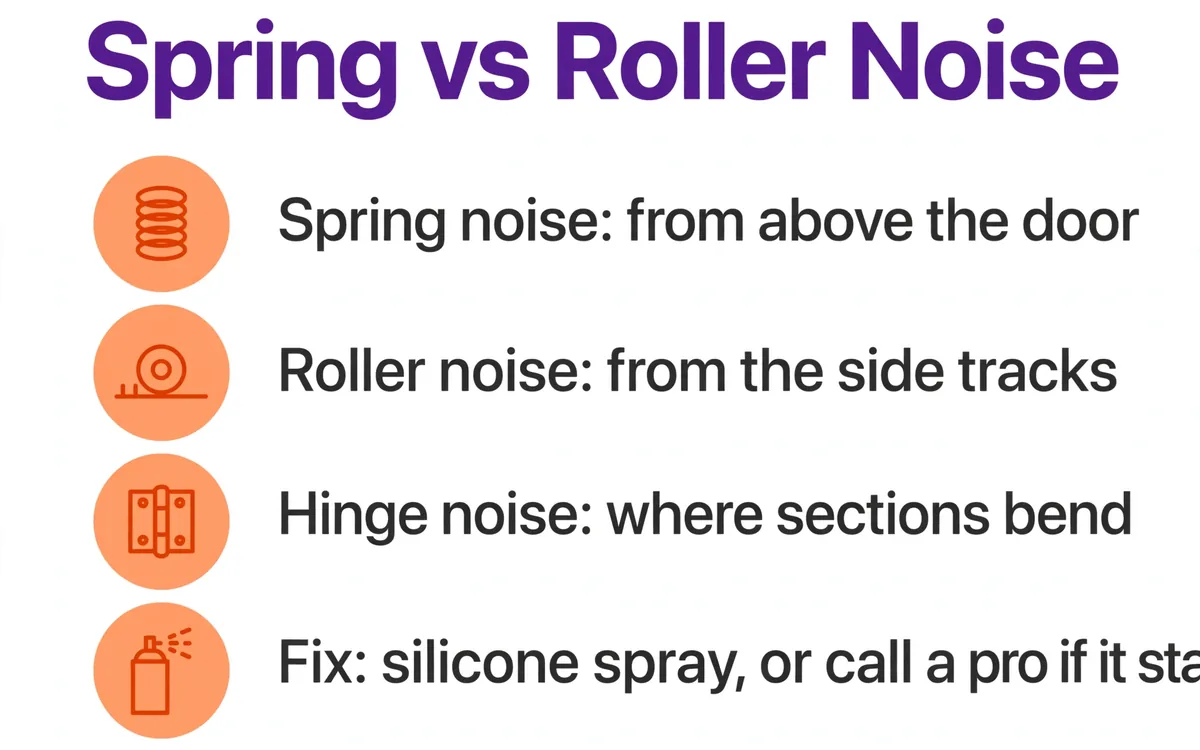
Spring noise and roller noise come from different places. Listen for the place first, then for the sound itself.
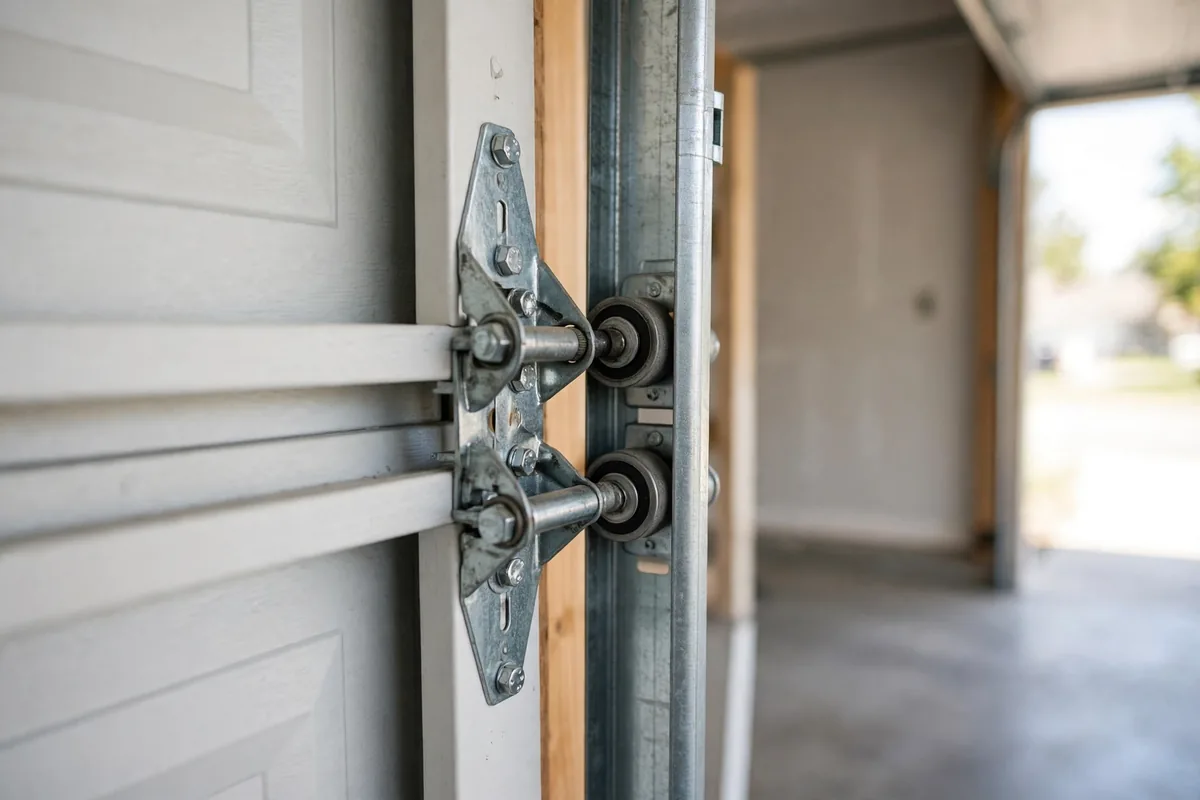
- Roller noise comes from the sides, along the tracks.
- Hinge noise follows the sections as they bend around the curve.
- Spring noise comes from above the door, and follows the winding.
- Grinding usually means worn metal rollers, not springs.
Roller and hinge noise
Rollers and hinges are the other common noise makers. They squeak when dry, grind when worn, and rattle when loose.
- Lubricate rollers and hinges with the same silicone spray.
- Tighten loose bolts and brackets that rattle.
- Worn rollers keep squeaking after lubrication, and need replacing.
- A roller job costs $100 to $250 (EstimatorSuite, Nov 2026).
Example: The general noisy-door guide: noisy garage door causes and fixes. It covers rollers, hinges, tracks and the opener.
6. When noise means a pro
Most spring noise is dryness, and it is cheap to fix. Noise that stays, noise with a heavy door, or noise with a bang needs a pro.

When to call a pro
Lubrication fixes dryness, not wear. If the noise stays after a proper spray, the part is worn and needs a pro.
- Noise that stays after lubrication needs a pro.
- Grinding that gets worse means a part is wearing out.
- A door that feels heavy plus a noise means spring trouble.
- A noise plus a gap in the coil means a broken spring.
What a pro checks
A pro checks the spring, the balance, and the rollers together. The noise is the clue; the check finds the cause.
- Run the balance test: a balanced door stays put at waist height.
- Check the spring for a gap, rust, or stretch.
- Note when the noise started, and whether cold made it worse.
- A spring pair costs $150 to $350 installed (HomeGuide, 2026).
Example: Upkeep in full: garage door spring maintenance guide. Full spring picture: garage door springs complete guide.
7. Seasonal noise: cold mornings
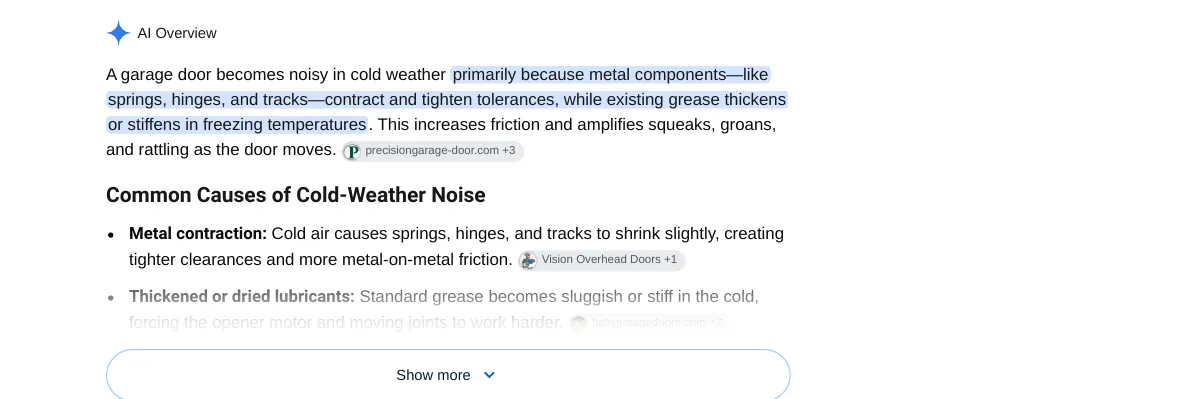
Spring noise has a season. Cold mornings make dry coils louder, and fall lubrication is the fix that lasts all winter.
Cold-morning noise
Cold mornings make spring noise louder. Grease thickens, coils bind, and an old spring shows its age at first light.
- Cold thickens grease, so coils bind and pop louder.
- A noise that starts on cold mornings is often dryness.
- Lubricate in fall, before the first hard freeze.
- A cold-morning bang is a broken spring, not dryness.
Fall preparation
Fall preparation stops most winter spring noise. One lubrication visit in October covers the whole cold season.
- Lubricate coils in October, before the cold arrives.
- Wipe sensor lenses and clear the threshold each night.
- Listen for new sounds in the first cold week.
- A new noise in winter deserves a pro check, not a wait.
Watch: how to lubricate a noisy garage door — springs, rollers and hinges
Is It Worth It shows on YouTube where to lubricate a noisy door and where never to spray: silicone on the springs, rollers and hinges, and nothing on the tracks — with the parts you must never loosen or adjust.
- Use silicone or white lithium spray; regular WD-40 is a cleaner, not a lubricant, and it attracts dirt.
- Spray the active coils of the spring lightly, and never lubricate the track itself.
- Never loosen a spring, adjust a set screw, or remove a bottom bracket — a gap or a bang means stop and call a pro.
Video: Is It Worth It, YouTube. Checked 21 November 2026.
Garage Door Hub connects homeowners with trusted local garage door pros. Need a repair? Need a replacement? Start here. First, find out what it should cost. Then, price your exact job with our free calculator. Next, find a pro near you. Fast. No jargon. No guesswork. No surprise bills. Just clear prices, honest guides, and a local pro you can call today.
FAQ
Why is my garage door spring squeaking?
Dry coils rubbing as they wind and unwind make a high-pitched squeak. A light spray of silicone lubricant on the coils usually quiets it. If the noise stays after lubrication, a pro should check the spring.
What does a loud bang from my garage door spring mean?
A single loud bang almost always means a torsion spring broke. Stop using the door, do not run the opener, and call a pro. A broken spring is pro-only work.
Can a garage door spring pop without breaking?
Yes. Spring coils can bind and pop as they wind, and dry coils pop louder. Lubricate the coils with silicone spray. If the popping stays, the spring may be worn and need a pro.
How do I tell spring noise from roller noise?
Spring noise comes from above the door, where the spring sits, and it follows the spring’s winding. Roller noise comes from the sides and hinges, and it follows the door sections as they bend.
What lubricant should I use on garage door springs?
Use a silicone-based spray or white lithium grease made for garage doors. Never use WD-40: it is a solvent, not a lubricant, and it leaves no lasting film on the coils.
Can cold weather make my garage door spring noisy?
Yes, if the noise started in cold weather and the spring is old. Cold stiffens grease and finishes off old springs. Check for a gap in the coil and run the balance test.
Sources
- The Garage Guide, 2026 — sound diagnosis table: bang means a broken spring, popping means dry coils. Verified live, 20 Nov 2026.
- Garage Door Locator, 2026 — dry torsion springs make a high-pitched metallic screech. Verified live, 20 Nov 2026.
- Discover1st, 2026 — popping or snapping as springs shift under tension. Verified live, 20 Nov 2026.
- HomeGuide, 2026 — torsion pair $150–$350. Verified live, 20 Nov 2026.
- Angi, updated 30 Oct 2026 — spring $150–$350 per spring, average $250. Verified live, 20 Nov 2026.
- EstimatorSuite, Nov 2026 — roller or hinge job $100–$250. Verified live, 20 Nov 2026.
- Garage Door Hub Spring Calculator 2818 — live calculator, defaults 218x2x26, 83 lb, 7.4 turns, $205. Live 20 Nov 2026.
Last reviewed: 20 November 2026
Appendix — Related topics
You might have found this by these keywords — and if not, others might have: garage door spring noise, garage door spring squeaking, garage door noisy in cold weather, noisy garage door spring squeaking popping, why is my garage door spring squeaking, what does a loud bang from my garage door spring mean, can a garage door spring pop without breaking, how do I tell spring noise from roller noise, what lubricant should I use on garage door springs, can cold weather make my garage door spring noisy, garage door spring maintenance, broken garage door spring signs, how long do garage door springs last, garage door spring replacement cost.