

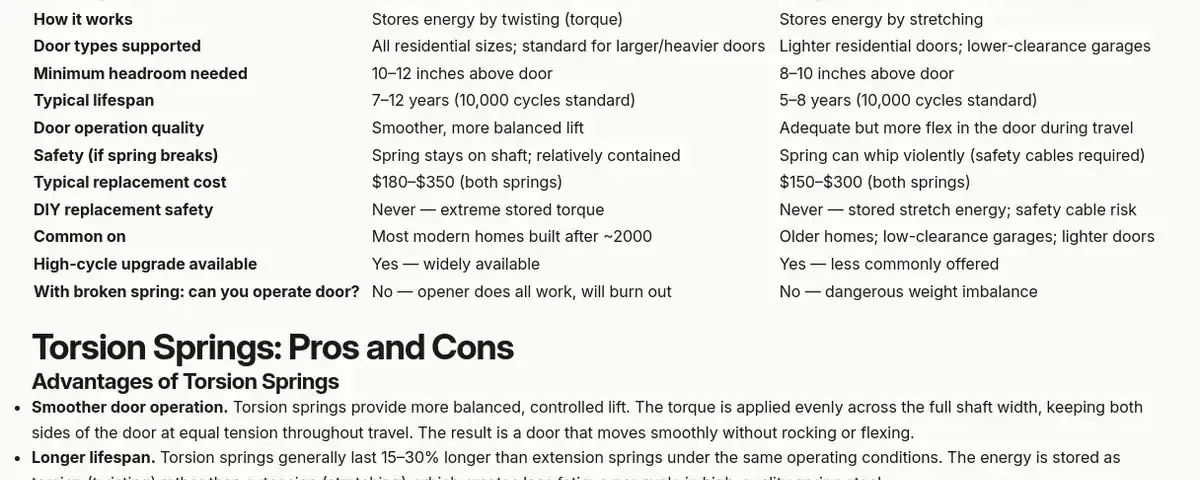
Garage Door Locator says a torsion spring pair costs $180 to $350, and most failures give warnings first. The loud bang is only the last one.
A gap in the coil, a loose cable, and a door that suddenly feels heavy all point to the same fault. Each one is easy to check from inside the garage.
This guide goes deeper than the homeowner signs list. It shows how to read the spring itself: wire, coils, gap, and balance.
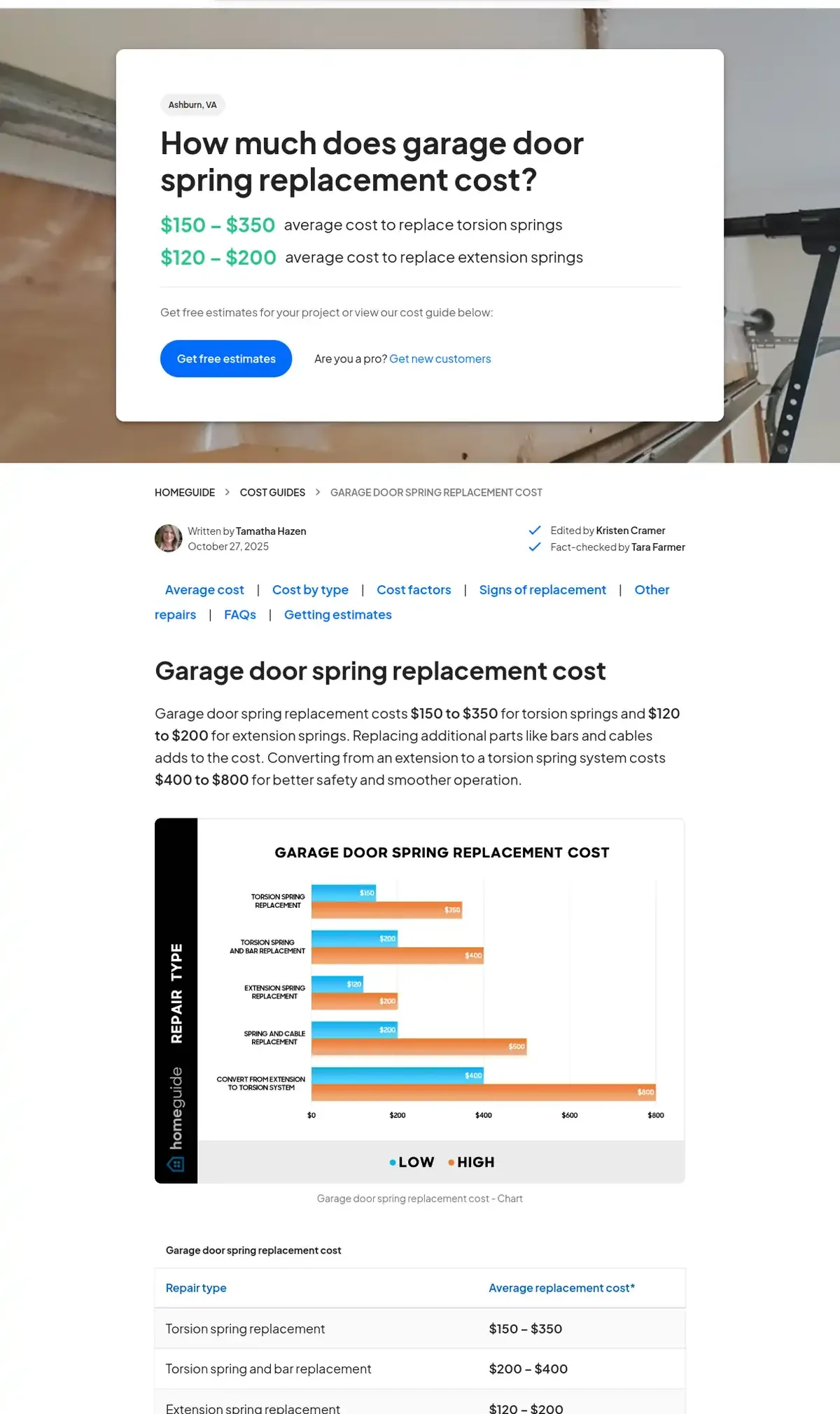
A broken garage door spring shows as a loud bang, a gap of 2 to 3 inches in the torsion coil, a loose cable, and a door that feels far too heavy. A matched torsion pair costs $150 to $350 installed (HomeGuide, 2026). Do not run the opener or lift the door — spring work is pro-only.
Garage Door Hub connects you with a trusted local pro. Get a clear price for your garage door repair or replacement first.
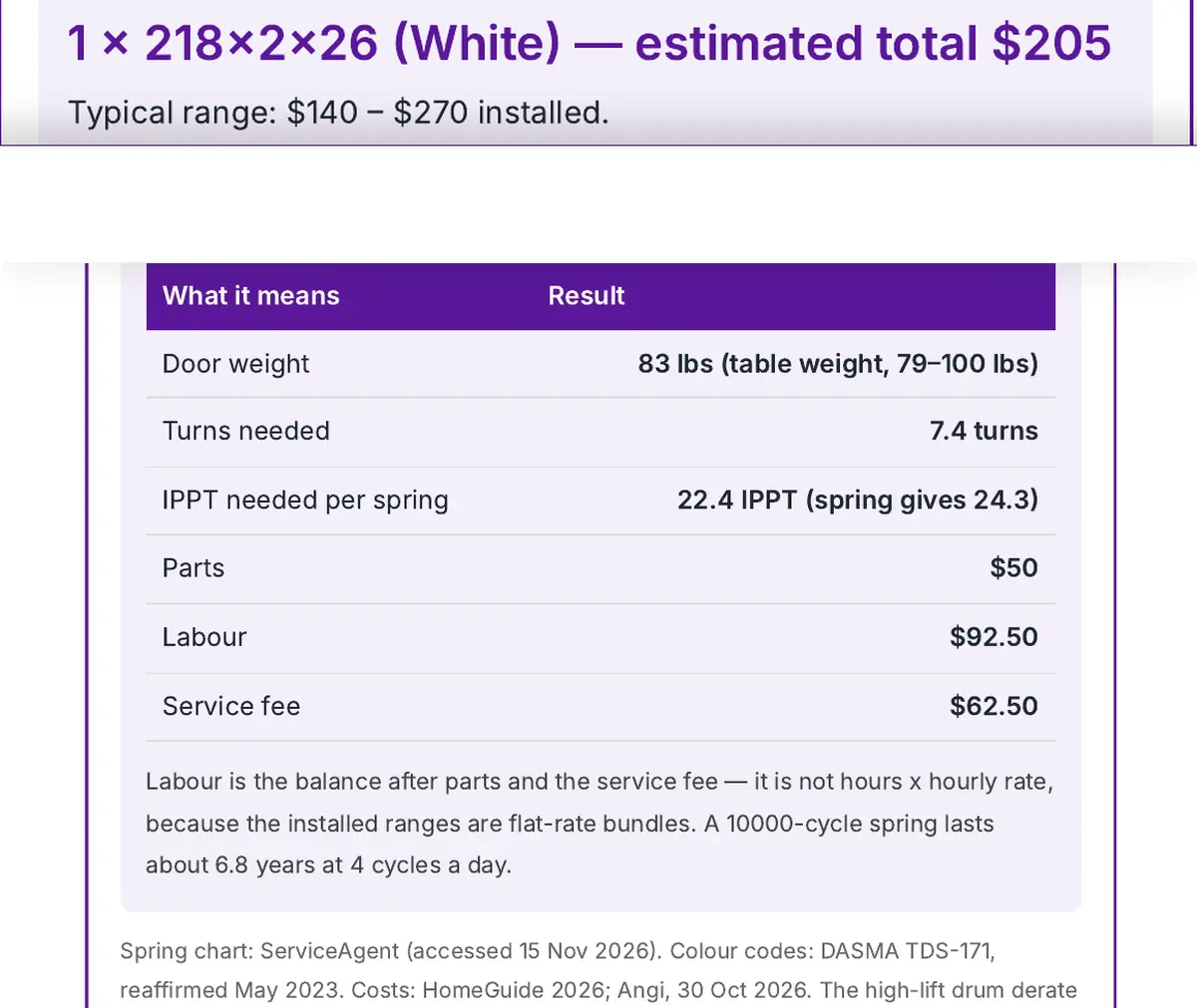
Price your spring job first with the free Spring Calculator below. It gives you a number before you call anyone.
Spring Calculator — price a spring job by door size, weight and turns.
- Pick the signs you found: gap, cable, heavy door, or balance.
- Enter your door size, weight and material.
- Note the spring size and the price, then read the key takeaways.
Key takeaways
- A gap of 2 to 3 inches in the coil means the spring has snapped.
- A loose cable and a heavy door point to the same failure.
- The balance test checks the whole system in one minute.
- Extension springs stretch and sag before they snap.
- Spring work is pro-only — never wind, adjust or lift a broken-spring door.
Table of Contents
-
1. Two kinds of signs
-
2. The gap test: reading a broken torsion spring
-
3. Wire, coils and size: what the spring tells you
-
4. The balance test
-
5. Extension springs: stretch, sag and cable checks
-
6. What to do next, and what never to do
-
7. After the pro visit
- Watch: how to spot a broken garage door spring in under two minutes
- FAQ
1. Two kinds of signs
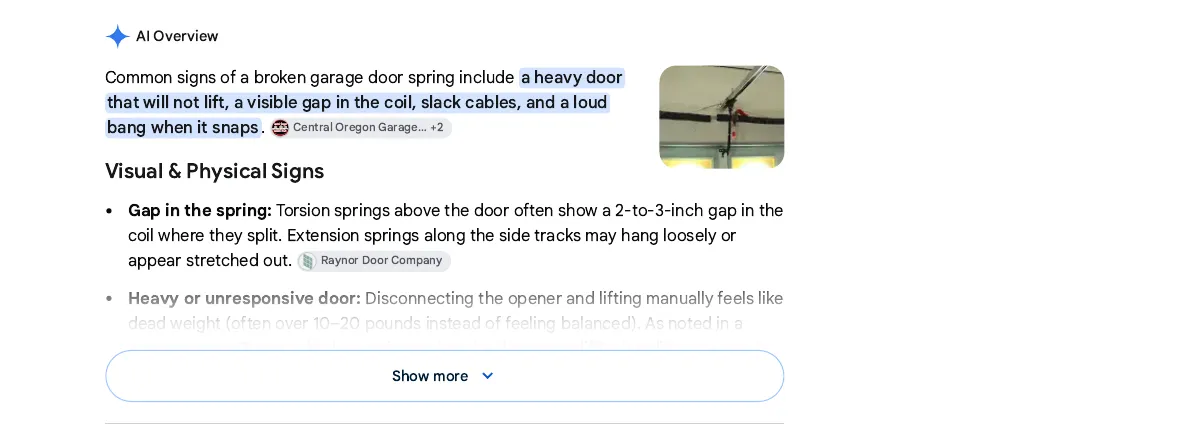
Two kinds of signs point to a broken spring. The first kind is what you hear and feel; the second is what the spring itself shows.
The homeowner signs, in brief
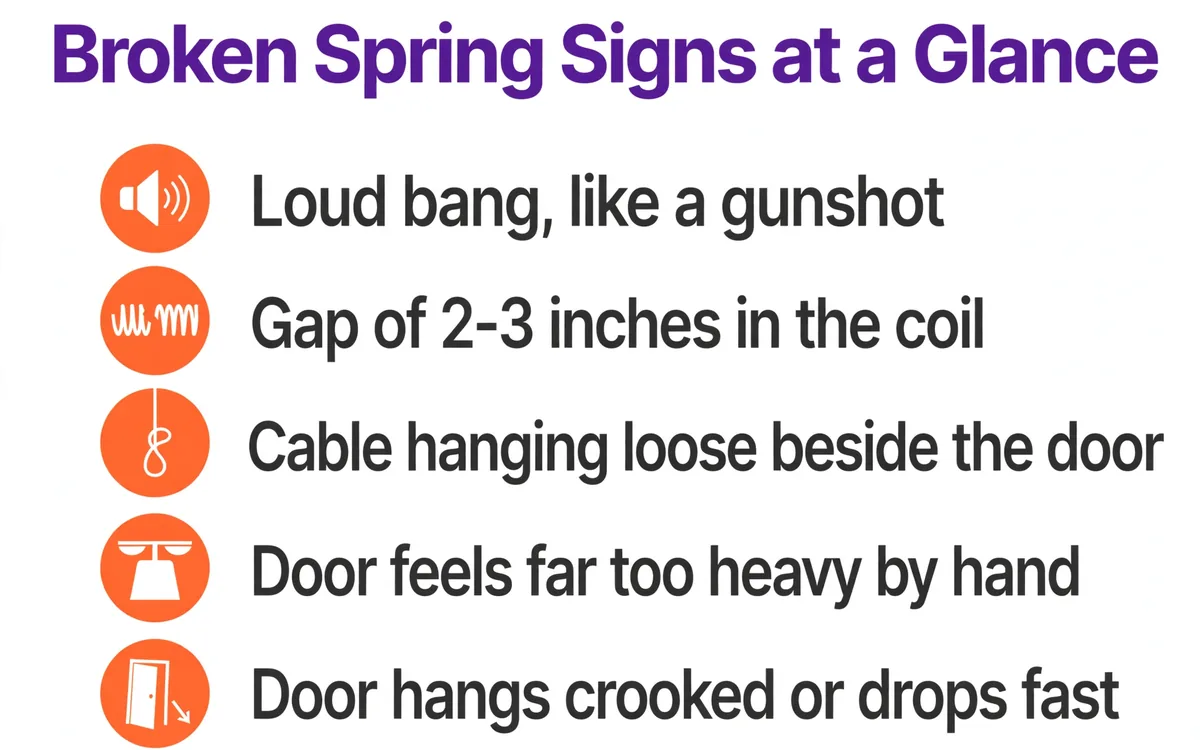
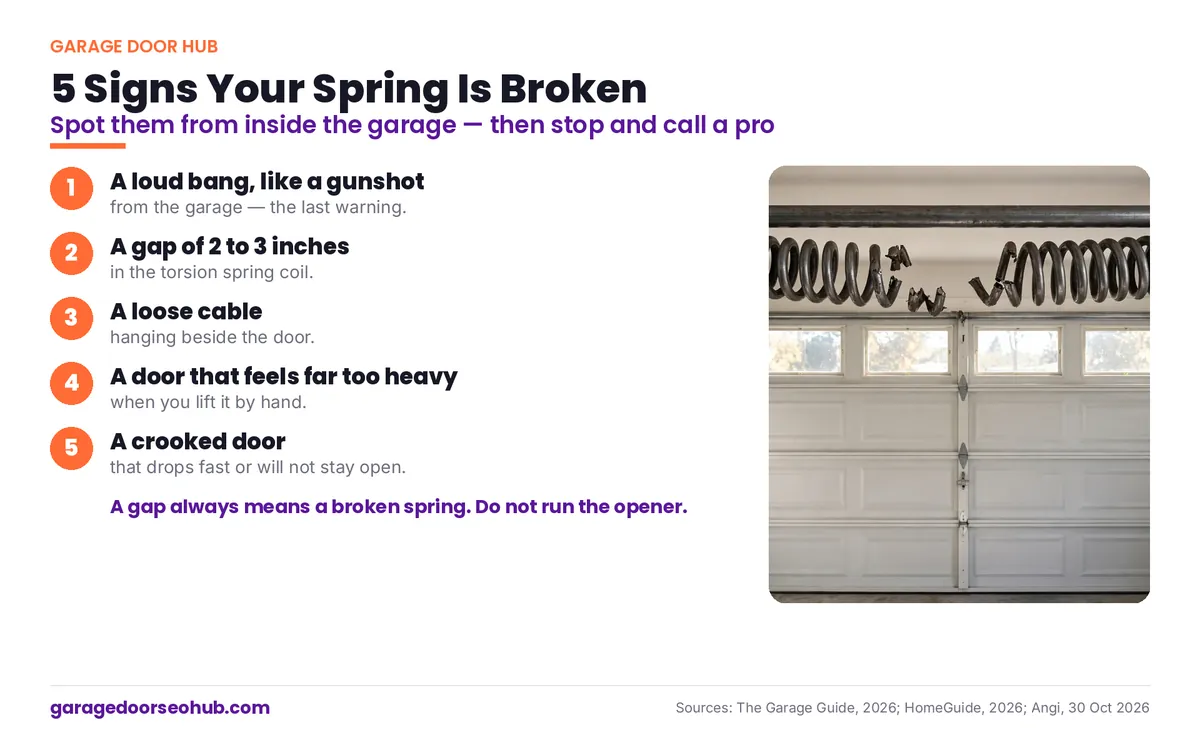
The homeowner signs are loud and clear: a bang, a door that will not move, and a cable out of place. The full list lives in our repair guide.
- A loud bang from the garage, like a gunshot.
- A door that will not open, or opens only a few inches.
- A door that feels far heavier than usual by hand.
- A cable hanging loose beside the door.
The technical checks this guide adds
The technical checks read the spring itself. Wire size, coil count, gap size, and balance together say how bad the failure is.
- Measure the gap in the coil: 2 to 3 inches means a snap.
- Count the coils and check the wire for rust pits.
- Note the spring code: wire, inside diameter and length.
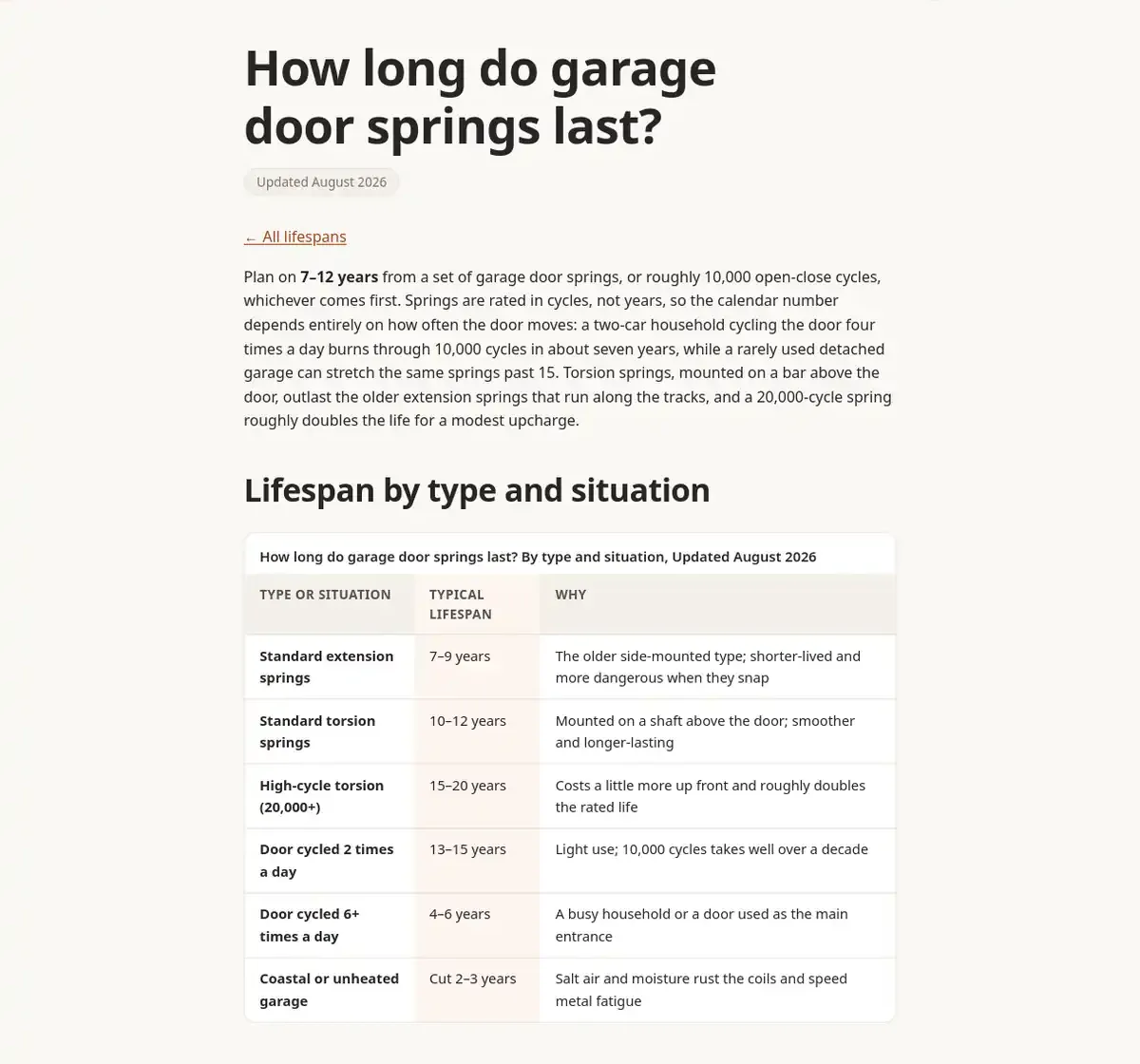
- Check the door age against the 10,000-cycle rating.
Example: For the homeowner signs list and repair costs, see the broken garage door spring signs and cost guide. This post goes deeper: it reads the spring itself.
2. The gap test: reading a broken torsion spring
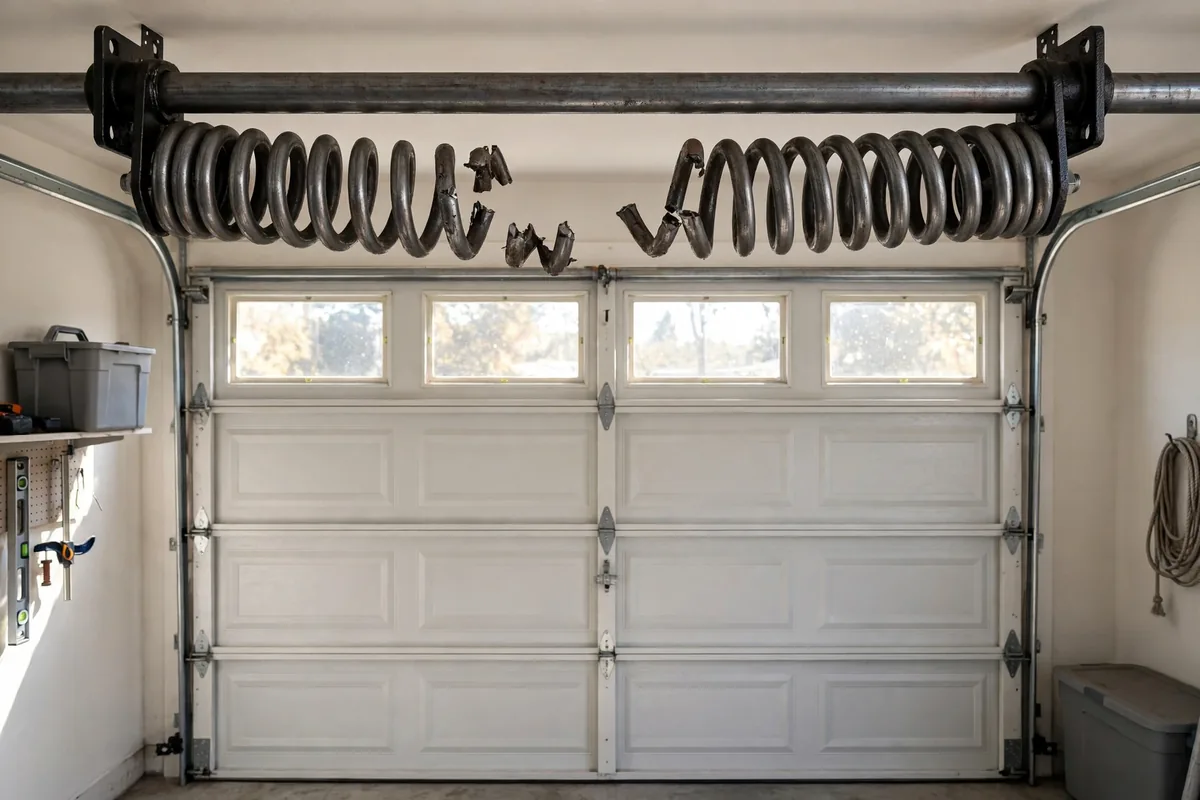
The gap test is the fastest way to confirm a broken torsion spring. It needs no tools, only a look up at the shaft.
Reading the gap
A torsion spring that snaps pulls apart at the break. The gap is the surest sign, and you can see it from the floor.

- Close the door fully and stand inside the garage.
- Look at the torsion spring on the shaft above the door.
- Look for a gap in the coil, usually 2 to 3 inches wide.
- If you see a gap, do not run the opener and call a pro.
- Stand inside with the door closed and look up.
- A clean break shows as a gap of 2 to 3 inches.
- The two halves pull apart because the tension is gone.
- A gap always means a broken spring, never a loose one.
The loose cable sign
When a spring breaks, the cable on that side can unwind and hang loose. A loose cable is a second sign of the same failure.
- A cable off its drum means the spring lost tension.
- A cable hanging loose beside the door is a clear sign.
- A frayed cable is a second fault to fix at the same visit.
- Cables are under high tension, so never touch them.
3. Wire, coils and size: what the spring tells you
The spring carries its own record. Wire size, coil count, and length together say what it can lift and how much life is left.
Wire size and rust
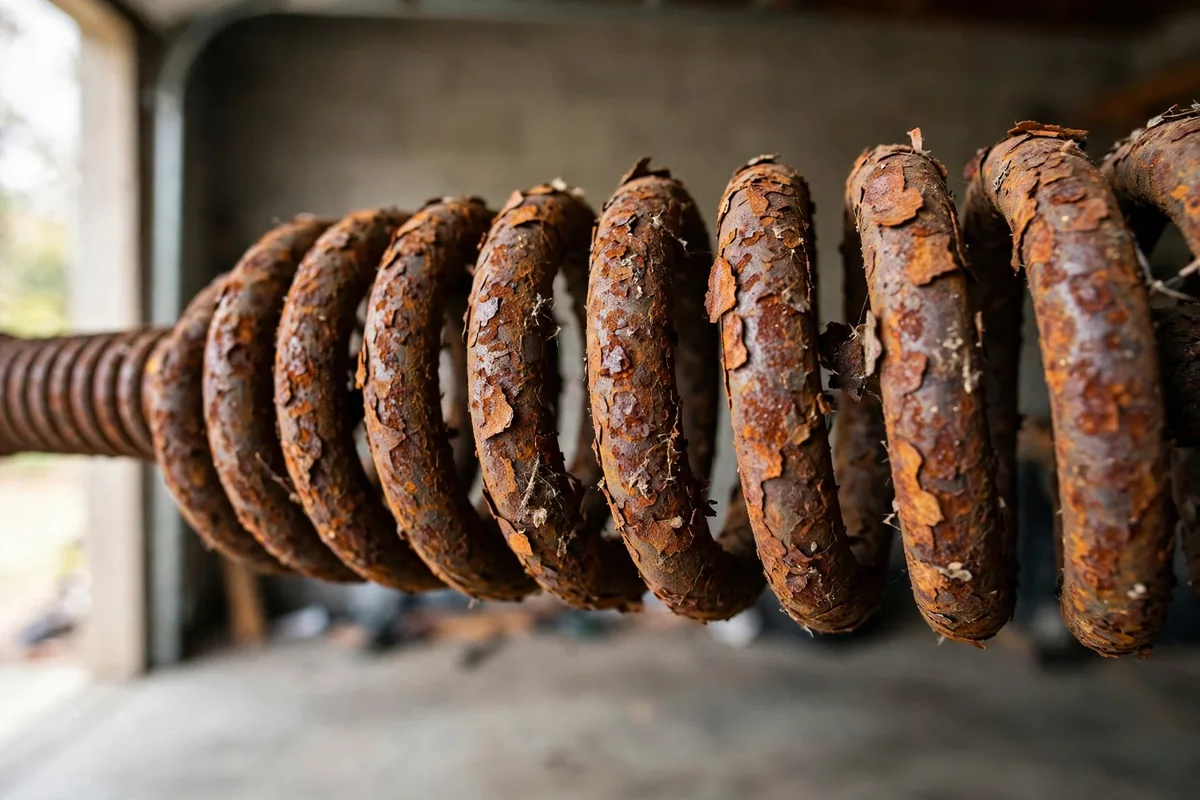
Wire size is the thickness of the steel wire, and it decides how much the spring can lift. A worn wire shows rust pits and flaking.
- Measure 20 coils end to end, then divide by 20.
- A 0.207-inch wire is yellow coded; 0.218 is white.
- Rust pits in the wire are weak points that snap first.
- Thinner wire on a heavy door wears out faster.
Coils and length
Coil count and length say whether the spring matches the door. A wrong-size spring wears out early and leaves the door heavy.
- Count the coils along the spring body, cones left out.
- Fewer coils than the size chart says means the wrong spring.
- A spring that looks stretched has lost its temper.
- Match the code: wire, inside diameter and length.
Example: Sizing in full: garage door spring size, wire, length and turns guide.
4. The balance test
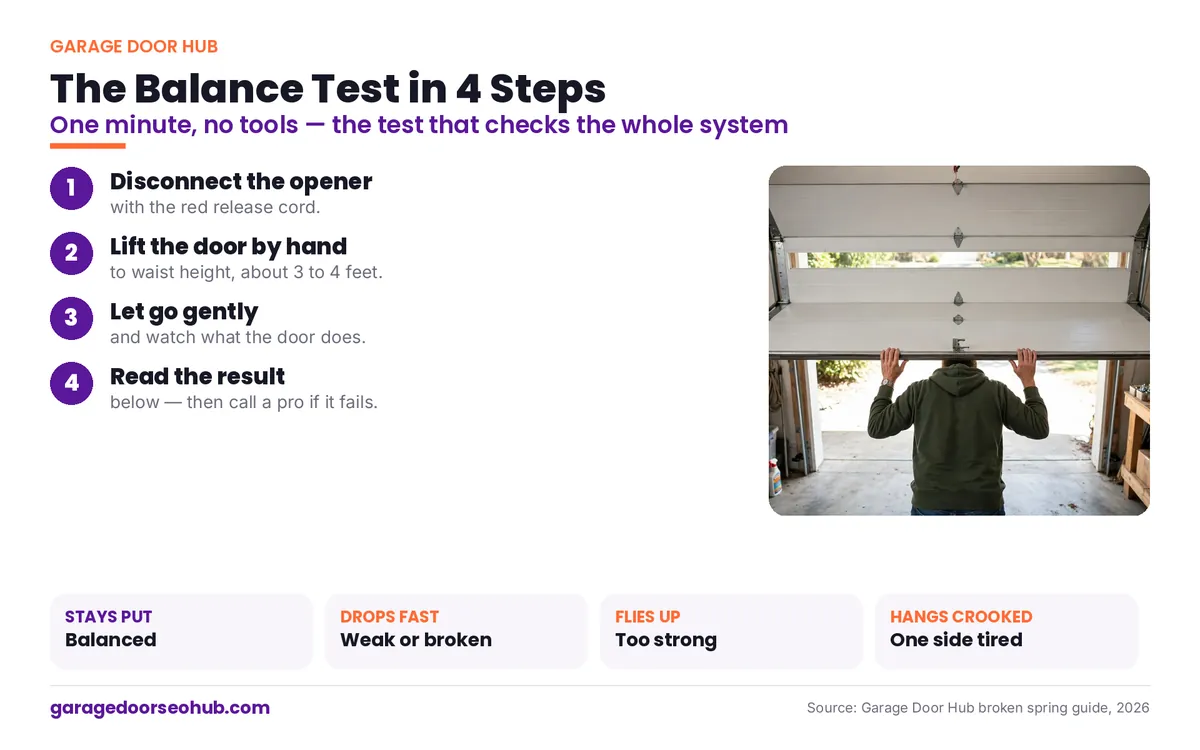
The balance test tells you in one minute whether the springs still match the door. A door that will not hold still is out of balance.
How to run the test
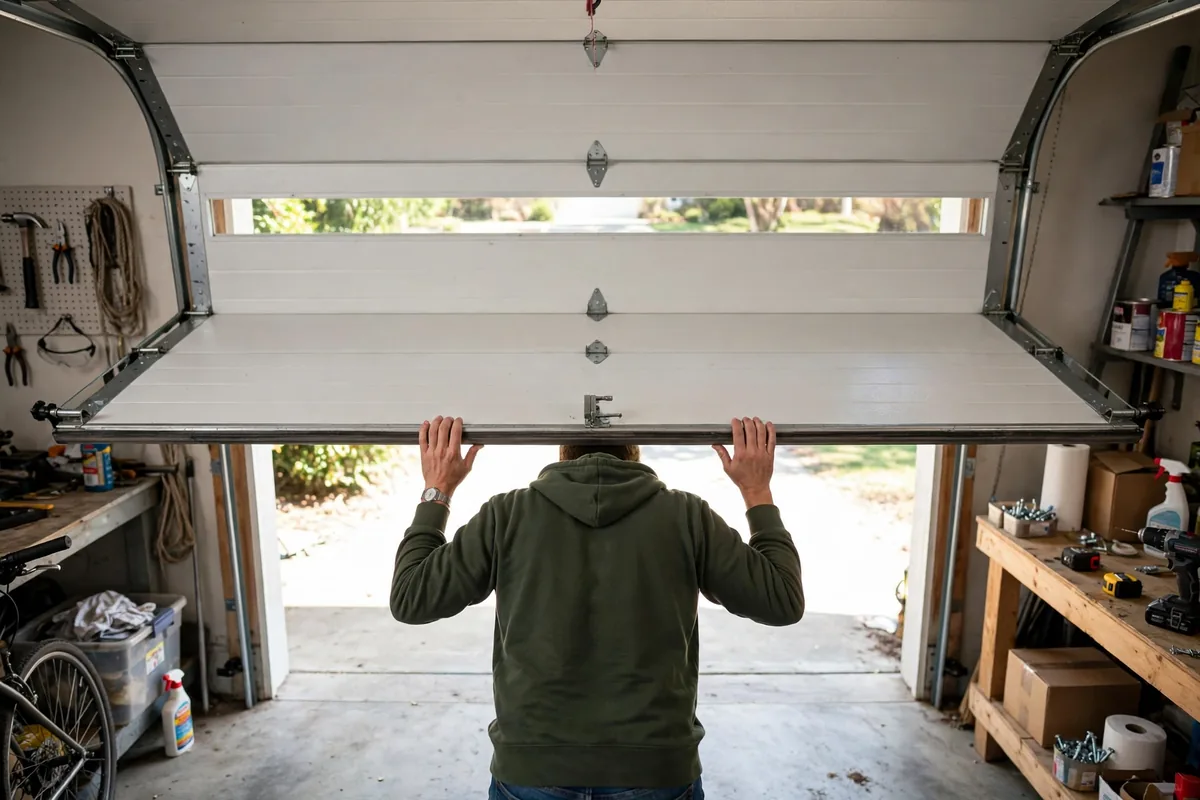
The balance test is the one test that checks the whole system. It takes a minute, and it needs no tools at all.
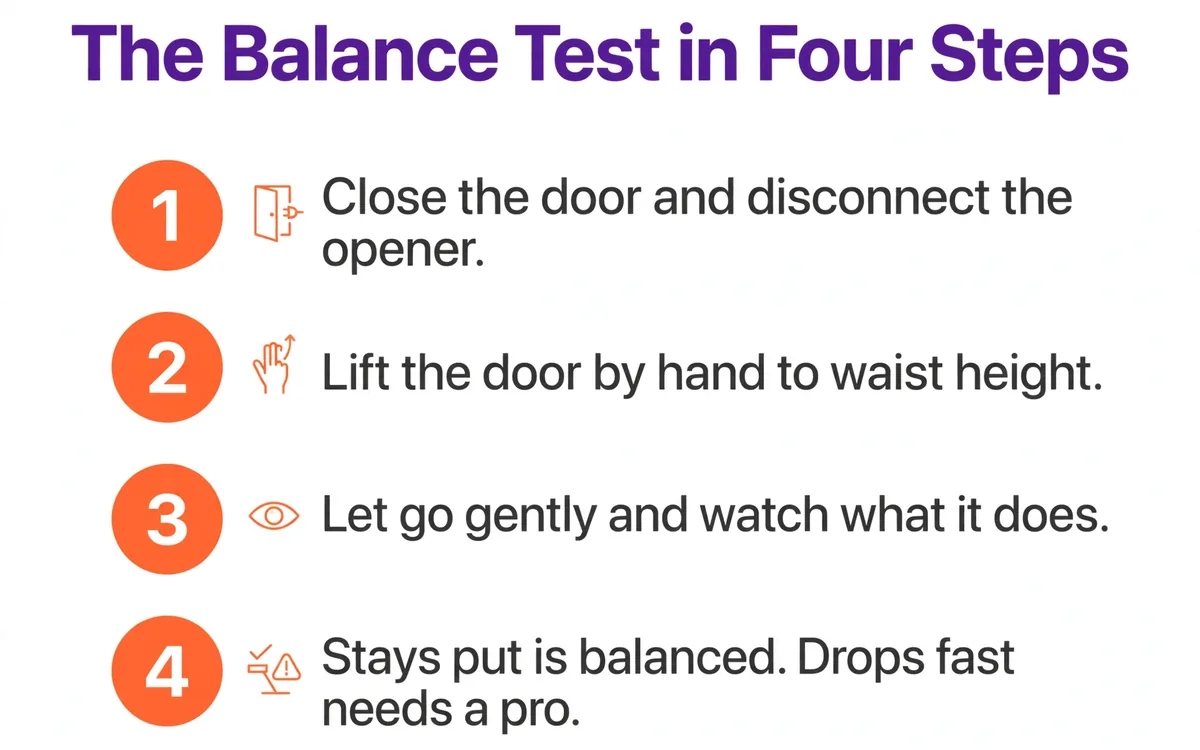
- Close the door and disconnect the opener with the red cord.
- Lift the door by hand to waist height, about 3 to 4 feet.
- Let go gently and watch what the door does.
- If it drops fast or flies up, the springs need a pro.
- Disconnect the opener with the red release cord.
- Lift the door by hand to waist height, then let go.
- A balanced door stays put at waist height.
- A door that drops fast has lost spring tension.
What the result means
A balanced door holds still at any height. Any other result points to the springs, the track, or the rollers, in that order.
- Drops fast: the springs are weak or broken.
- Flies up: the springs are too strong for the door.
- Sticks halfway: the track or rollers may bind.
- Hangs crooked: one side has lost more tension than the other.
5. Extension springs: stretch, sag and cable checks
Extension springs show failure differently from torsion springs. They stretch and sag first, and they snap without a shaft to hold them.
Stretch, sag and gaps
Extension springs fail by stretching and sagging before they snap. Compare the two sides: a longer spring is the tired one.
- A stretched extension spring looks longer than its pair.
- A sagging spring hangs loose when the door is closed.
- A visible gap in the coil means it has snapped.
- Compare both sides: they should match in length.
Cable and pulley checks
Extension springs must have safety cables, and the pulleys must spin freely. Both checks take seconds and need no tools.
- Look for a steel cable threaded through each spring.
- No cable means a broken spring can fly across the garage.
- A frayed cable needs replacing at the same visit.
- Pulleys should spin freely; a stuck pulley strains the spring.
6. What to do next, and what never to do
A broken spring is a pro job, full stop. Your part is to spot the signs early, leave the door shut, and call the right pro.

Call a pro, and say what you saw
Call a pro as soon as the signs point to a spring. Say what you saw: gap, cable, heavy door, or a failed balance test.
- Leave the door shut and do not run the opener.
- Call a pro and say which signs you found.
- A matched torsion pair costs $150 to $350 (HomeGuide, 2026).
- An extension pair costs $120 to $200 (HomeGuide, 2026).
What never to do
Some things must never be tried with a broken spring. A wound spring holds hundreds of foot-pounds of energy, and it can break a wrist.
- Never wind, adjust, or replace a spring yourself.
- Never lift a door with a broken spring.
- Never prop the door open with a broken spring.
- Never run the opener to force a heavy door.
Example: Which spring type you have: torsion vs extension springs guide. Full spring picture: garage door springs complete guide.
7. After the pro visit
A spring job does not end when the pro leaves. Two quick checks and a note on the invoice keep the next failure from surprising you.
Check the work before the pro leaves
After a spring job, check the work before the pro leaves. The balance test is the fastest check, and it takes one minute.
- Run the balance test: the door should stay put at waist height.
- Listen for new squeaks or pops on the first few cycles.
- Check that both cables sit on their drums, evenly.
- Note the install date and the cycle rating on the invoice.
Record the job for next time
Record the job so the next failure is not a surprise. The install date and cycle rating tell you when the next pair is due.
- Note the spring size, cycle rating and install date.
- Write the date on the invoice and keep it with the house papers.
- A 10,000-cycle spring at 4 cycles a day is due in about 7 years.
- Set a reminder to inspect the springs each spring and fall.
Watch: how to spot a broken garage door spring in under two minutes
Anthony at Continental Door Company shows the check on YouTube: the gap in the coil, the door that stops partway up, and the loose cable — and why to stop running the door and call a pro.
- A gap of 2 to 3 inches in the torsion spring coil means the spring has snapped.
- A door that feels far too heavy, or an opener that strains partway up, points to the same fault.
- Do not run the opener and do not try to lift the door — spring work is pro-only.
Video: Continental Door Company, YouTube. Checked 21 November 2026.
Garage Door Hub connects homeowners with trusted local garage door pros. Need a repair? Need a replacement? Start here. First, find out what it should cost. Then, price your exact job with our free calculator. Next, find a pro near you. Fast. No jargon. No guesswork. No surprise bills. Just clear prices, honest guides, and a local pro you can call today.
FAQ
What are the signs of a broken garage door spring?
A loud bang, a gap in the coil, a loose cable, and a door that feels far too heavy are the clear signs. A crooked door or an opener that strains partway up are slower warnings.
Does a gap in the spring mean it is broken?
Yes, a gap of 2 to 3 inches in the torsion spring coil means the spring has snapped. The two halves have pulled apart, and the spring holds no tension.
Can I still open my garage door with a broken spring?
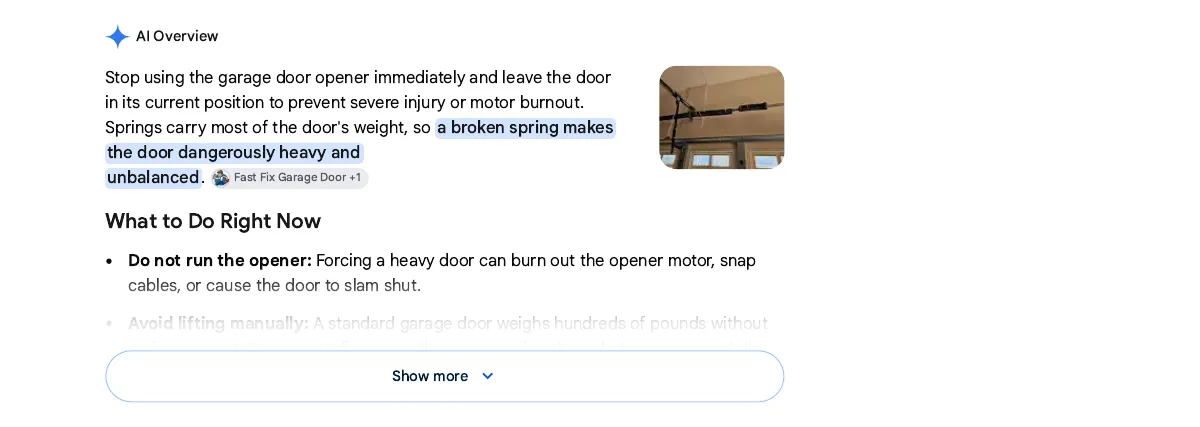
Do not run the opener and do not try to lift the door. A door with a broken spring can weigh its full weight, and the opener can burn out trying to lift it.
How do I test my garage door balance?
With the door closed, disconnect the opener and lift the door to waist height by hand. A balanced door stays put. A door that drops fast has lost spring tension.
Should I replace both springs when one breaks?
Both. Both springs share the same age and cycles, so the second spring is usually close behind the first. A matched pair also keeps the door level and the opener unstrained.
Can I fix a broken garage door spring myself?
No. Springs hold hundreds of foot-pounds of stored energy, and a wound torsion spring can break a wrist or worse. Spring replacement, winding and tension adjustment are pro-only work.
Sources
- Garage Door Locator, 2026 — torsion vs extension comparison, gap and safety signs. Verified live, 20 Nov 2026.
- The Garage Guide, 2026 — a single loud bang almost always means a spring broke. Verified live, 20 Nov 2026.
- HomeGuide, 2026 — torsion pair $150–$350, extension pair $120–$200. Verified live, 20 Nov 2026.
- Angi, updated 30 Oct 2026 — spring $150–$350 per spring, average $250. Verified live, 20 Nov 2026.
- OnOtto, updated Aug 2026 — 7–12 years, 10,000 cycles standard. Verified live, 20 Nov 2026.
- ServiceAgent, accessed 20 Nov 2026 — wire size chart, turns by door height. Verified live, 20 Nov 2026.
- Garage Door Hub Spring Calculator 2818 — live calculator, defaults 218x2x26, 83 lb, 7.4 turns, $205. Live 20 Nov 2026.
Last reviewed: 20 November 2026
Appendix — Related topics
You might have found this by these keywords — and if not, others might have: broken garage door spring, garage door spring broke signs, garage door spring replacement near me, what are the signs of a broken garage door spring, does a gap in the spring mean it is broken, can I still open my garage door with a broken spring, how do I test my garage door balance, should I replace both springs when one breaks, can I fix a broken garage door spring myself, garage door spring replacement cost, garage door balance test, broken torsion spring gap.